Hi, what do you want to do?





TeachEngineering
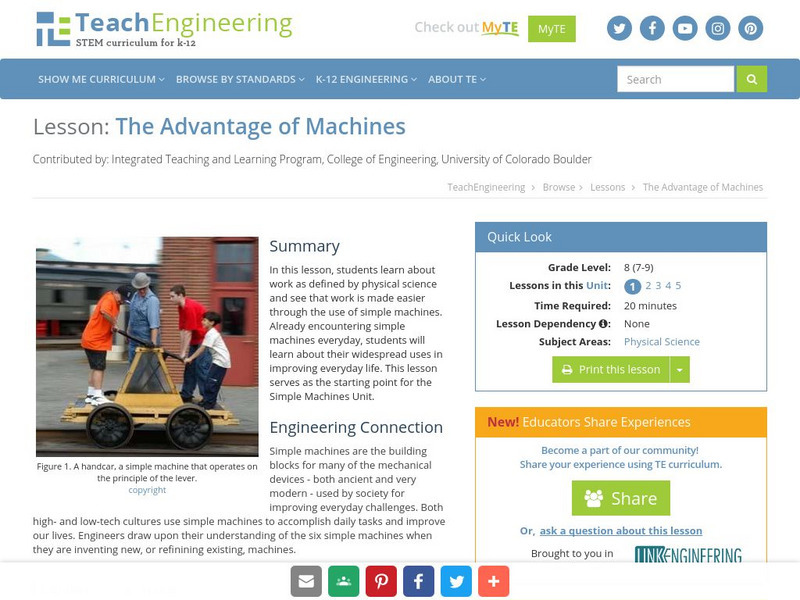
Teach Engineering: The Advantage of Machines
For this lesson, learners learn about work as defined by physical science and see that work is made easier through the use of simple machines. Already encountering simple machines everyday, students will be alerted to their widespread...
TeachEngineering
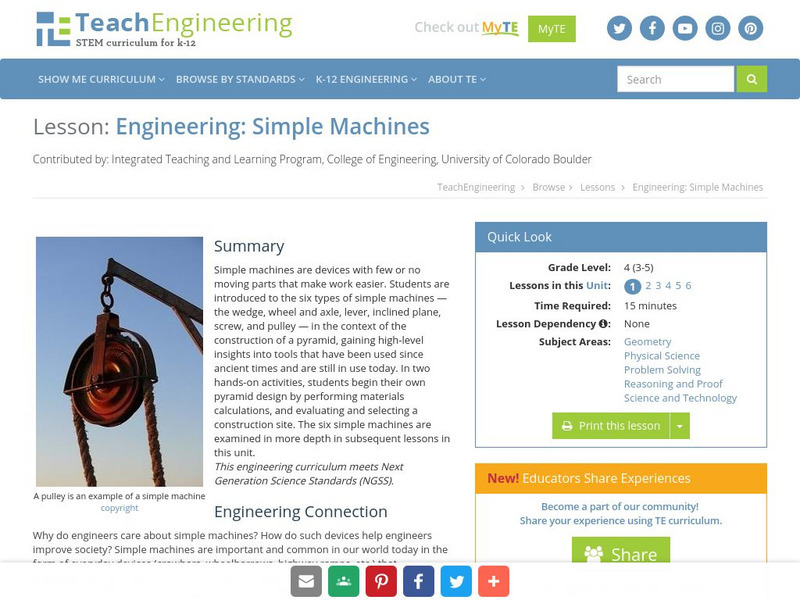
Teach Engineering: Engineering: Simple Machines
Simple machines are devices with few or no moving parts that make work easier. Students are introduced to the six types of simple machines - the wedge, wheel and axle, lever, inclined plane, screw, and pulley - in the context of the...
TeachEngineering
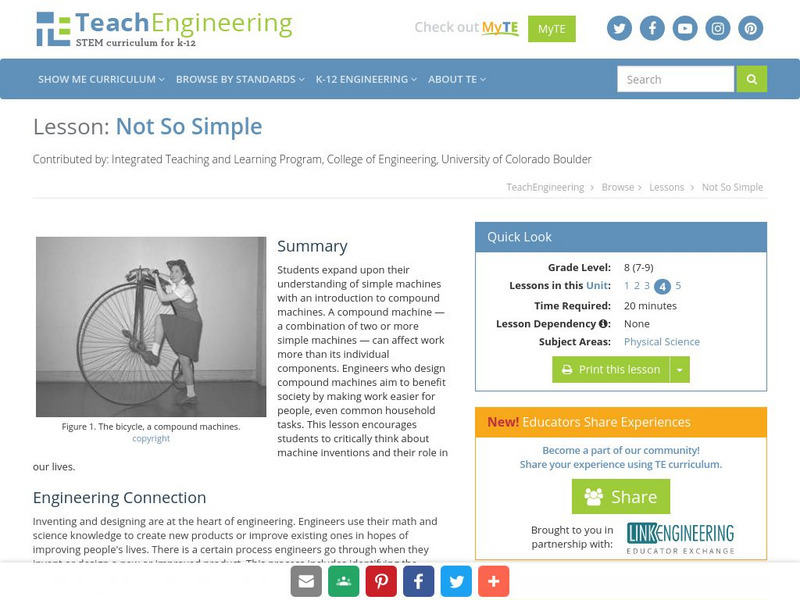
Teach Engineering: Not So Simple
Middle schoolers expand upon their understanding of simple machines with an introduction to compound machines. A compound machine - a combination of two or more simple machines - can affect work more than its individual components....
TeachEngineering
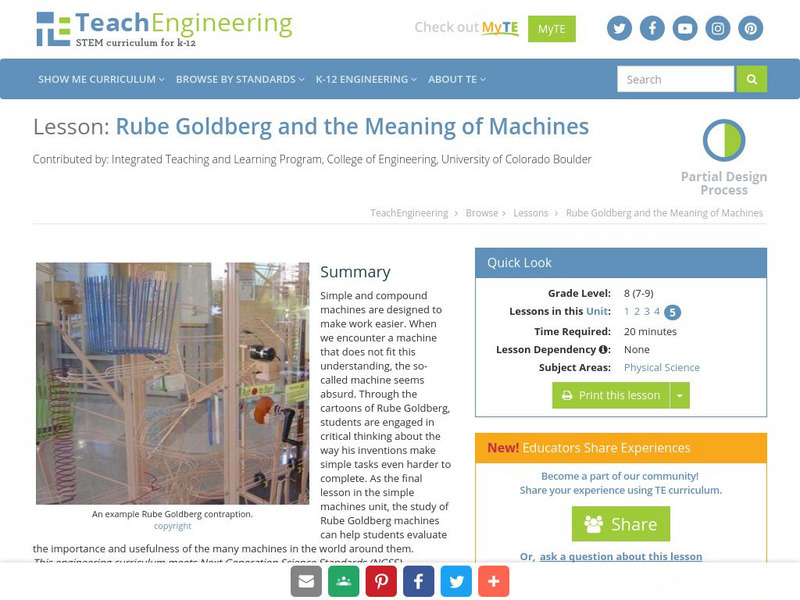
Teach Engineering: Rube Goldberg and the Meaning of Machines
Simple and compound machines are designed to make work easier. When we encounter a machine that does not fit this understanding, the so-called machine seems absurd. In this lesson, the cartoons of Rube Goldberg are introduced and engage...
TeachEngineering
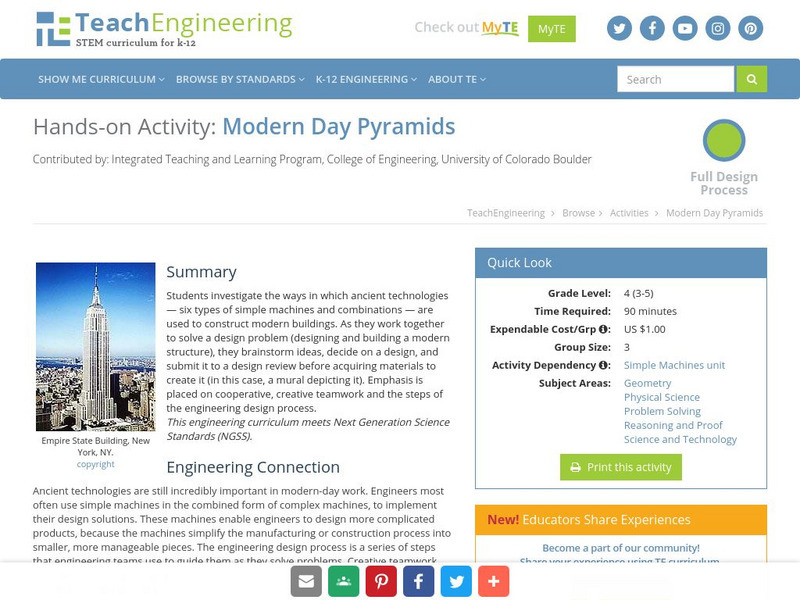
Teach Engineering: Modern Day Pyramids
Students investigate the ways in which ancient technologies - six types of simple machines and combinations - are used to construct modern buildings. As they work together to solve a design problem (designing and building a modern...
TeachEngineering
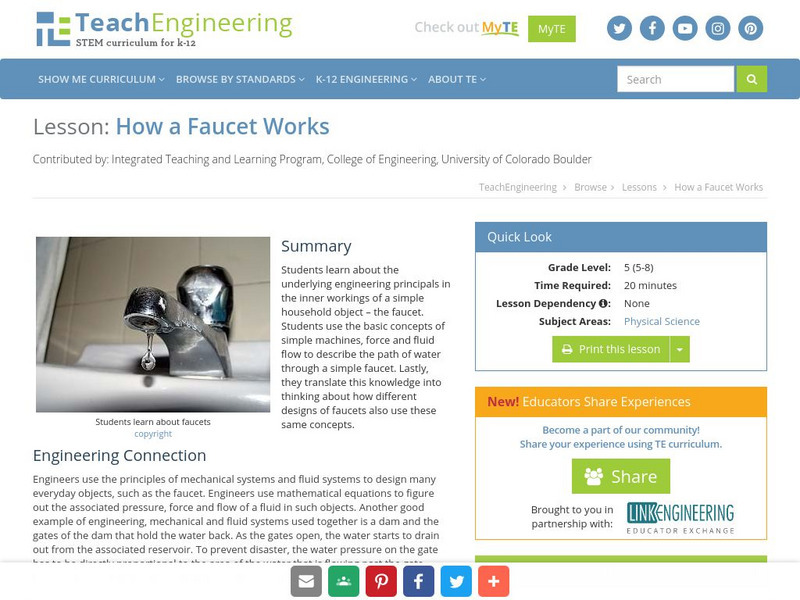
Teach Engineering: How a Faucet Works
Students learn about the underlying engineering principals in the inner workings of a simple household object - the faucet. Students use the basic concepts of simple machines, force and fluid flow to describe the path of water through a...

TryEngineering
Try Engineering: Simple Kitchen Machines
Team lesson focuses on the different types of simple machines, how they work, and how they can be found in daily life.
TeachEngineering
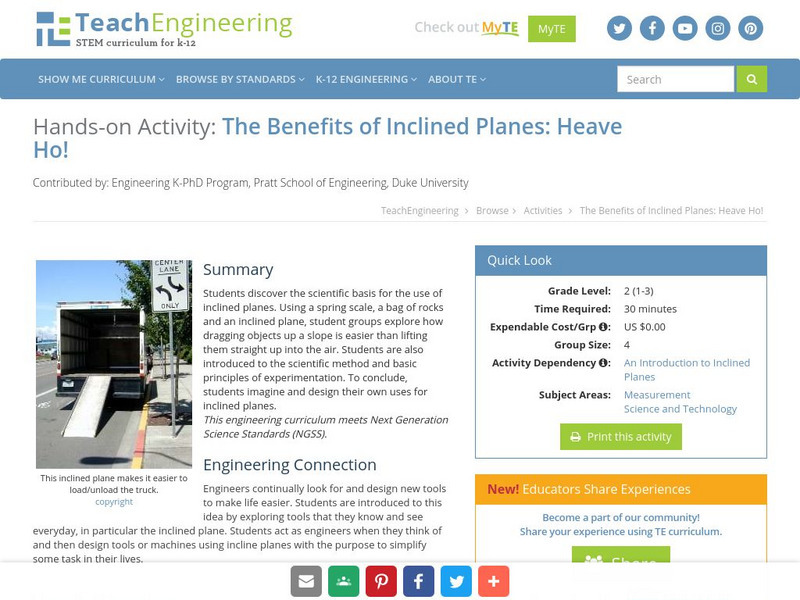
Teach Engineering: Heave Ho!
Students will discover the scientific basis for the use of inclined planes. They will explore, using a spring scale, a bag of rocks and an inclined plane, how dragging objects up a slope is easier than lifting them straight up into the...
Science and Mathematics Initiative for Learning Enhancement (SMILE)
Smile: Simple Machines
Good combination of teacher demonstration and student interaction for this simple machine lesson. Great for talking about force and work. Plans are for grades 2-4, yet are adaptable.
TeachEngineering
Teach Engineering: Pyramid Building: How to Use a Wedge
Students learn how simple machines, including wedges, were used in building both ancient pyramids and present-day skyscrapers. In a hands-on activity, students test a variety of wedges on different materials (wax, soap, clay, foam)....
Alabama Learning Exchange
Alex: Levers Weight Lifters
During this lesson, students will have the opportunity to explore levers through hands-on experiences and by navigating the Internet. This lesson allows students to use their experiences to determine how levers and other simple machines...
Science Buddies
Science Buddies: Gears Go Round!
Music boxes, bicycles, and clocks all have one thing in common: GEARS. You might say that gears make the world turn, since they are in so many mechanical instruments. How do they work and how do you know which gears to use? Find out in...