Other
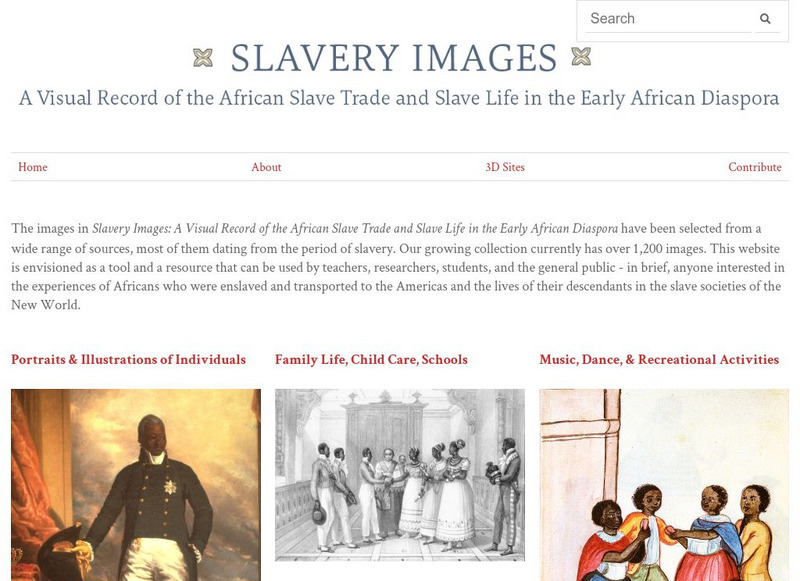
Slave Images: Atlantic Slave Trade and Slave Life in the Americas
This site has thousand of photos, drawings, and prints dealing with slavery, most of them dating from the period of Atlantic slave trade and slavery in the Americas.
Smithsonian Institution
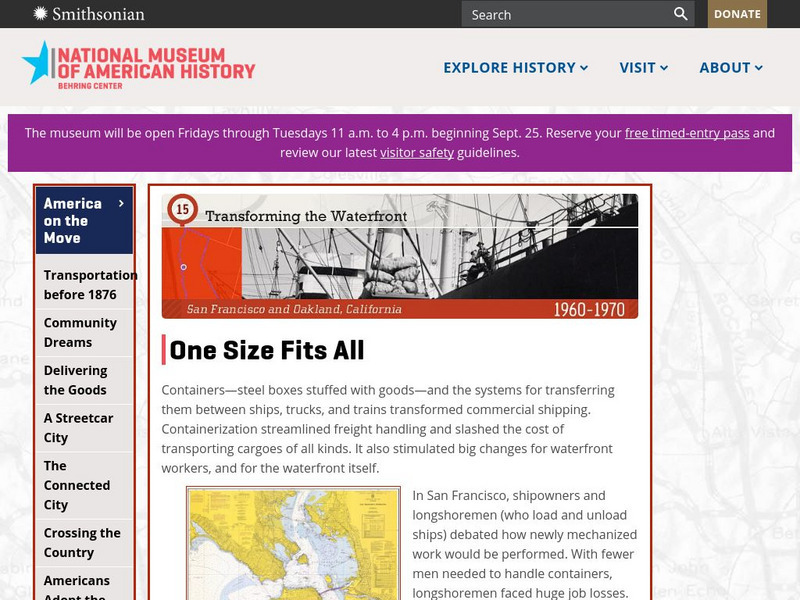
National Museum of American History: Transforming the Waterfront: San Francisco and Oakland, Ca.
Containers-steel boxes stuffed with goods-and the systems for transferring them between ships, trucks, and trains transformed commercial shipping. Containerization streamlined freight handling and slashed the cost of transporting cargoes...
State Library of North Carolina
N Cpedia: Fur and Skin Trade
The fur and skin trade was a significant industry from the earliest permanent settlement of the region that became North Carolina. Pelts shipped to Europe included beaver, bear, deer, raccoon, mink, muskrat, opossum, wolf, and fox. Many...

Khan Academy
Khan Academy: Arrival of a Portuguese Ship
In 1543, three Portuguese travelers aboard a Chinese ship drifted ashore on Tanegashima, a small island near Kyushu. They were the first Europeans to visit Japan. In 1548, Francis Xavier, a Jesuit, arrived from Goa to introduce...

Ohio State University
Osu History Teaching Institute: Slave Ships
After analyzing the engraving and accompanying text, students will discuss the point of view of the resources using a compare and contrast diagram.
British Library
British Library: Discovering Literature: Britain's Involvement With New World Slavery and the Transatlantic Slave Trade
With a focus on the 17th and 18th centuries, this article traces the history of Britain's large-scale involvement in the enslavement of Africans and the transatlantic slave trade.
University of Groningen
American History: Outlines: War and Neutral Rights
This resource presents a brief discussion of U.S. neutrality early in World War I and of the events which brought the country closer to war.
University of Illinois
University of Illinois: Early Trade With China: Trading Strategies [Pdf]
Americans wanted to buy tea, silk, nankeen (a strong, coarse cloth used to make workclothes), and chinaware from China. To pay for these goods, it was necessary to find products that the Chinese would take in trade. Initially, Americans...
BBC
Bbc: The Triangular Slave Trade
The slave trade made many people very rich but also ruined the lives of those captured into slavery. As resistance grew and profit declined, the trade was finally abolished. Included is a map showing where the slaves were traded and...
University of Illinois
University of Illinois: Early American Trade With China: John Swift's Letter Home [Pdf]
The American ship Empress of China left New York on February 22, 1784 and arrived in Canton, China six months later on August 18. John White Swift, the ship's purser, wrote the following letter to his father in Philadelphia in July,...
University of Illinois
University of Illinois: Early American Trade in China: The Sea Man's Vade Mecum, 1707 [Pdf]
The following is excerpted from a book called Vade Mecum published in France in 1707. Although the book was written to establish basic standards of behavior, punishment, protocol, and procedure on French naval ships, it served as...
University of Illinois
University of Illinois: Early American Trade With China: Log of the Empress of China [Pdf]
The following are excerpts from logs of the Empress of China, the first American ship to sail toChina after American independence. The ship left New York on February 22, 1784 and reached Canton on August 28. All excerpts are taken from...
Hanover College
Hanover College: Slave Narrative of Olaudah Equiano Vol. 1
The complete text of a famous slave narrative from the late 18th century (1789), it tells the story on how Equiano is captured in Africa, transported to the Americas and his experiences as a slave. It provides rich details about the...
PBS
Pbs: Cet: Africans in America: The Middle Passage
This website contains pictures and descriptions of the Middle Passage voyage. Click on Teacher's Guide for teacher resources.
Digital History
Digital History: Middle Passage
The number of Africans who died or were enslaved as a result of slave trading both across the Atlantic and into the Arabian peninsula is truly shocking. Read about the Middle Passage which brought millions of slaves to the New World, see...
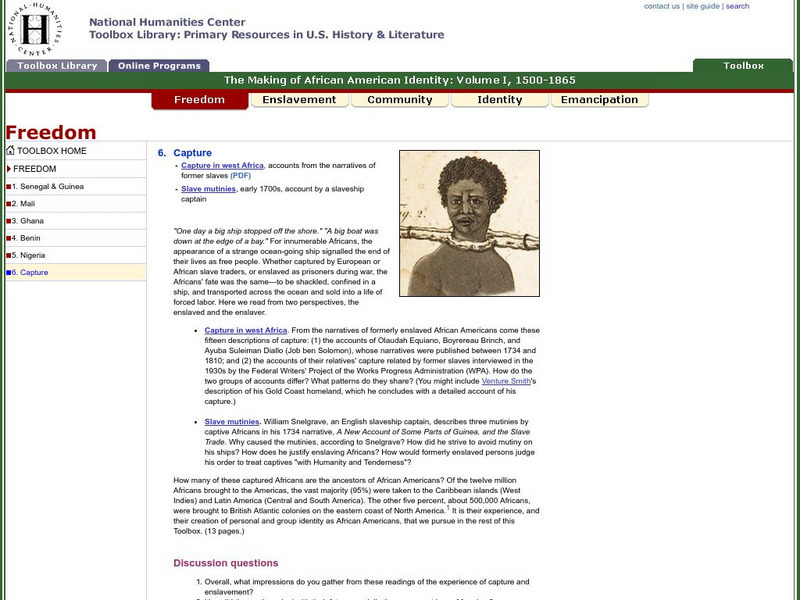
National Humanities Center
National Humanities Center: Toolbox Library: Capture, Making of African American Identity: V. 1
Several narratives of the capture of West Africans, including the famous autobiography of Venture Smith, from the eighteenth century, two accounts of conditions on slave ships, and an audio recording of the memories of the descendants of...
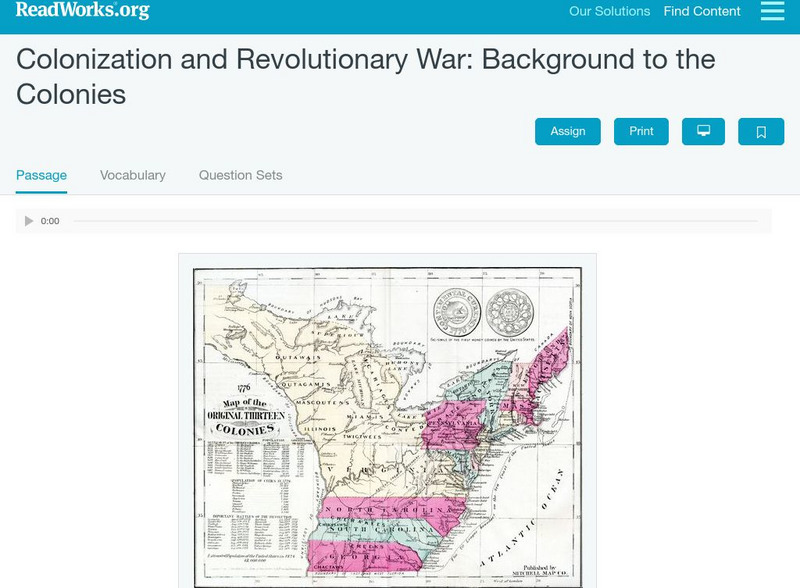
Read Works
Read Works: Colonization & Revolutionary War: Background to the Colonies
[Free Registration/Login Required] An informational text about the thirteen original colonies. A question sheet is available to help students build skills in reading comprehension.
Other
Mel Fisher Maritime Heritage Society: The Henrietta Marie
Description and pictures of what was found on the shipwreck, the Henrietta Marie. This ship contained many important objects from the early years of the slave trade.

Understanding Slavery Initiative
Understanding Slavery Initiative: Atlantic Crossing
Discover the period some refer to as "Middle Passage," when enslaved Africans were transported across the Atlantic Ocean to the Caribbean or America. Read first-hand accounts of the torture and deprivation experienced by thousands of...

Understanding Slavery Initiative
Understanding Slavery: Atlantic Crossing: First Hand Accounts Case Study
Read eye-witness accounts of the brutality and cruelty suffered by enslaved Africans as they traveled across the Atlantic on slave ships.
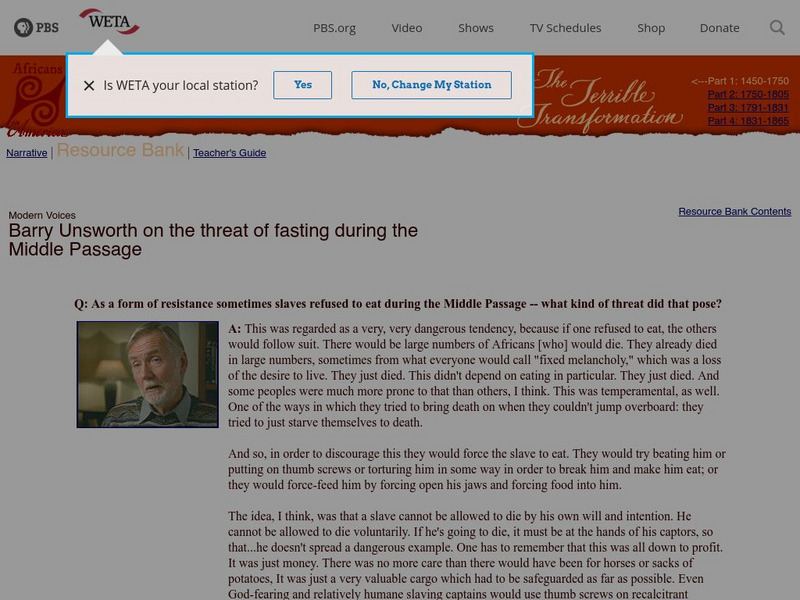
PBS
Pbs: Cet: Africans in America: The Threat of Fasting During the Middle Passage
Description of how slaves tried to starve themselves to death on slave ships as a form of resistance, and how the slave traders forced them to eat so they would not lose money. Click on Teacher's Guide for teaching resources.
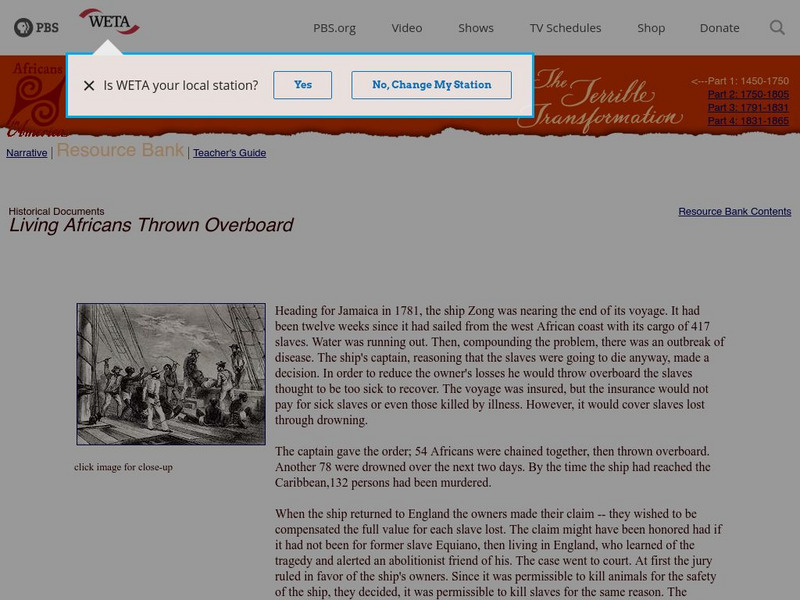
PBS
Africans in America: Living Africans Thrown Overboard
This site is provided for by PBS. In order to receive insurance money, a captain ordered 132 slaves thrown overboard alive. The case went to court, and a landmark decision was made that the Africans on the ship were actually people.
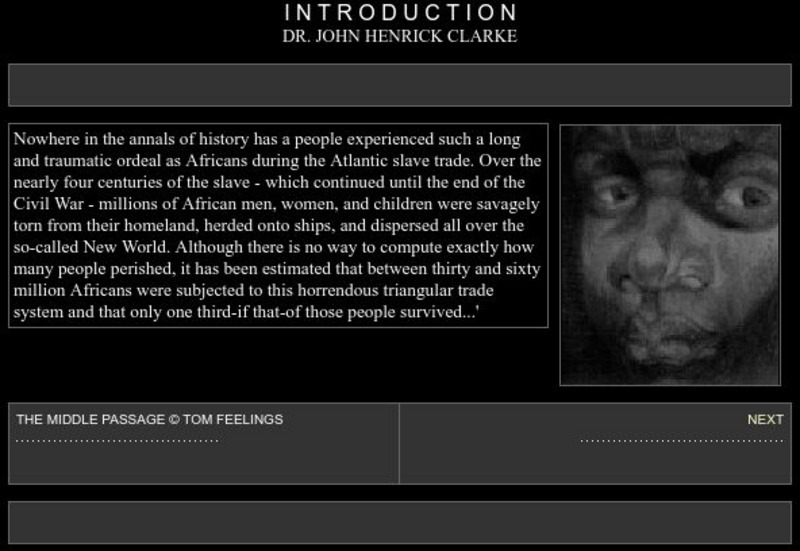
Other
Juneteenth: The Middle Passage
Moving description of the Middle Passage and African American trauma through the perspective of the artist, Tom Feelings.
British Library
British Library: Discovering Literature: The Rise of Consumerism
With the increasing variety in clothes, food, and household items, shopping became an important cultural activity in the 18th century. This article describes buying and selling during this period and explains the connection between many...