Hi, what do you want to do?





Exploratorium
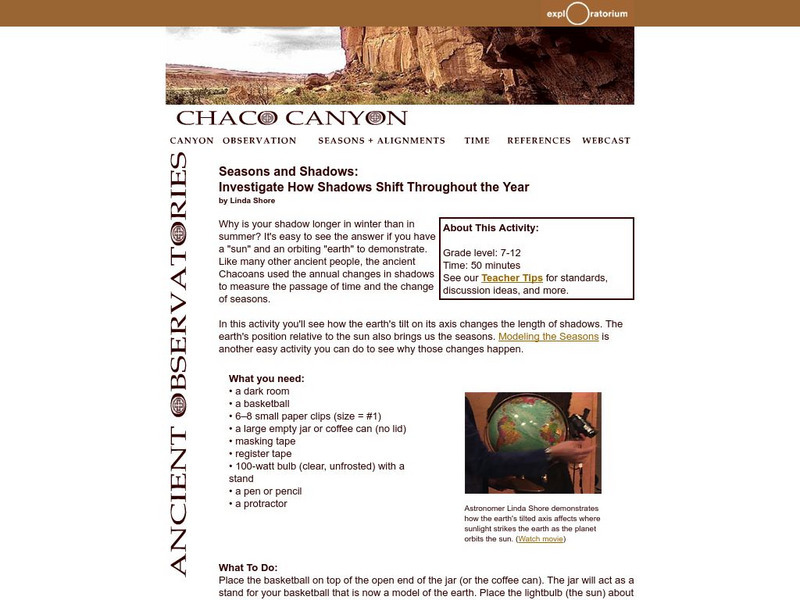
Exploratorium:seasons/shadows: Investigate How Shadows Shift Throughout the Year
Ancient Chacoans used shadows to tell daily time and seasons. Build a model that demonstrates the changes in Earth's tilt that affect the length of shadows relative to the sun that determines the seasons. The lesson plan uses everyday...

Environmental Education for Kids
Eek!: Seasonal Observations: Summer
While many of us consider it summer once school is released, this season technically begins with the summer solstice - the longest day of the year - on June 21 and continues until the fall equinox in September.
Environmental Education for Kids
Eek!: Seasonal Observations: Fall
Fall begins with the autumnal equinox, usually around September 22 or 23. The equinox is the time of the year when we have equal length of night and day.
Other
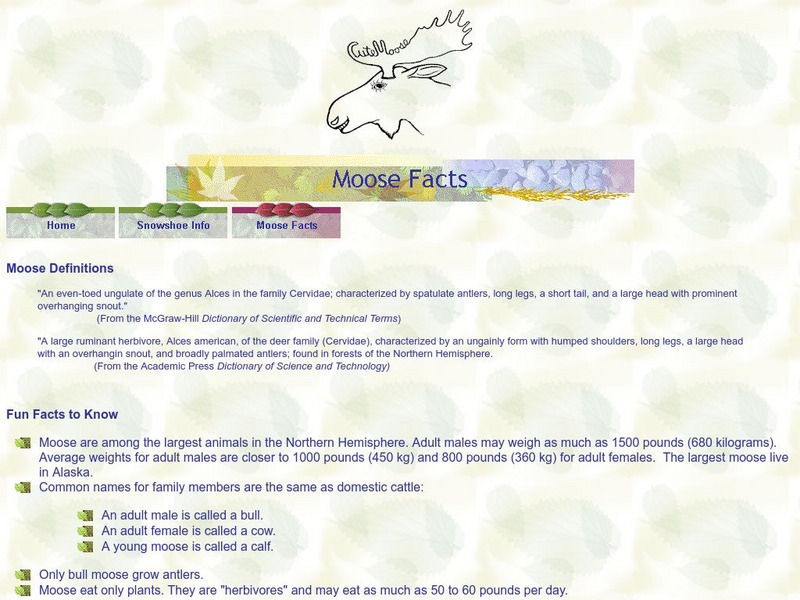
Moose Facts
Did you know that the adult moose may weigh as much as 1500 pounds and can eat about 50 to 60 pounds of plants per day? Find out more interesting facts about the moose and its evolution, habitat, diet, antlers, and behavior during...
PBS
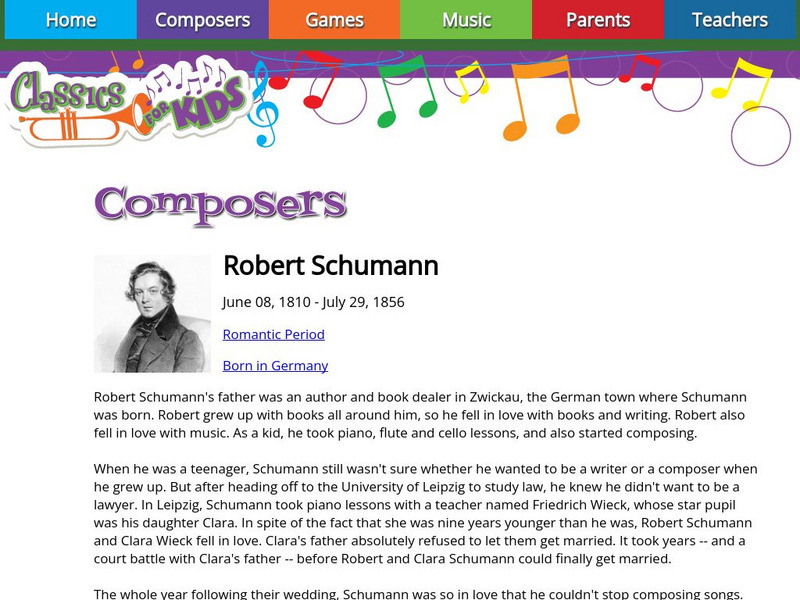
Classics for Kids: Robert Schumann
A short biography of Robert Schumann (1810-1956 CE). Click to the past radio shows to hear his music and more about this famous composer.

National Geographic
National Geographic: 45 Bce: Julius Caesar Takes a Leap
Why do we have an extra day at the end of February every four years? We have Julius Caesar to thank! Read this short explanation about how the calendar kept falling out of step with the seasons and Caesar's solution to the problem.