Hi, what do you want to do?






American Museum of Natural History
Train of Thought
Hop aboard the train of thought. A remote learning resource has learners consider thought experiments to consider scientific theories. It provides two examples, one on orbiting bodies and the other on the speed of light, for them to work...
NASA
Nasa: Rockets Educator Guide: Applying Newton's Laws
Learn how Newton's Laws apply to rocketry. Discover how rockets work, including the engines and propellants.

Other
Math Matters Every Day: Newton's Laws
Looks at how Newton's three laws of motion apply to an analysis of the forces being exerted when playing football.
NASA
Nasa: Rockets Educator Guide: How Rockets Work
In this article, learn how rockets work. Discover Newton's Law of Motion and learn how it supports rocketry.
Wolfram Research
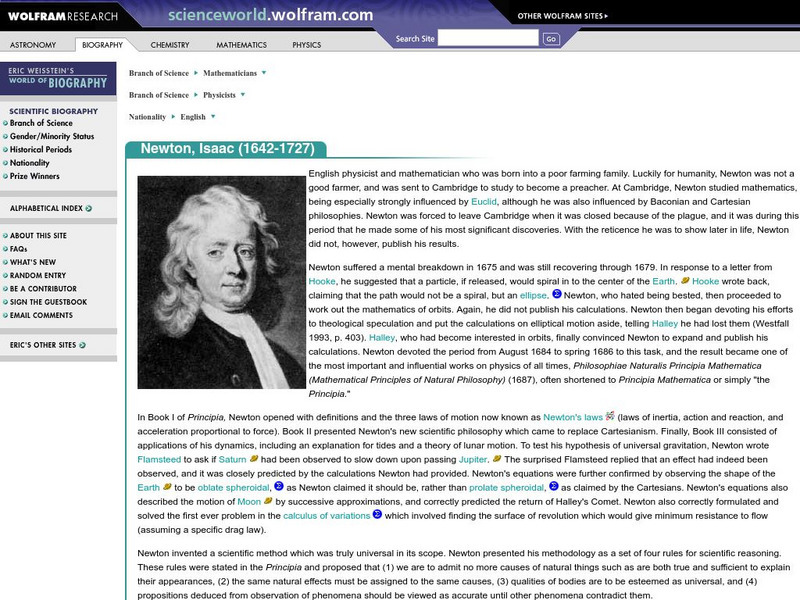
Wolfram Science World: Life of Sir Isaac Newton
This site from ScienceWorld provides an interesting biographical sketch of the English physicist and mathematician, Isaac Newton. The biography is a good size in length and very informative, with links provided throughout for additional...

Ducksters
Ducksters: Physics for Kids: Laws of Motion
Kids learn about the science behind the basic three Laws of Motion. Forces theory discovered by Isaac Newton.
Exploratorium
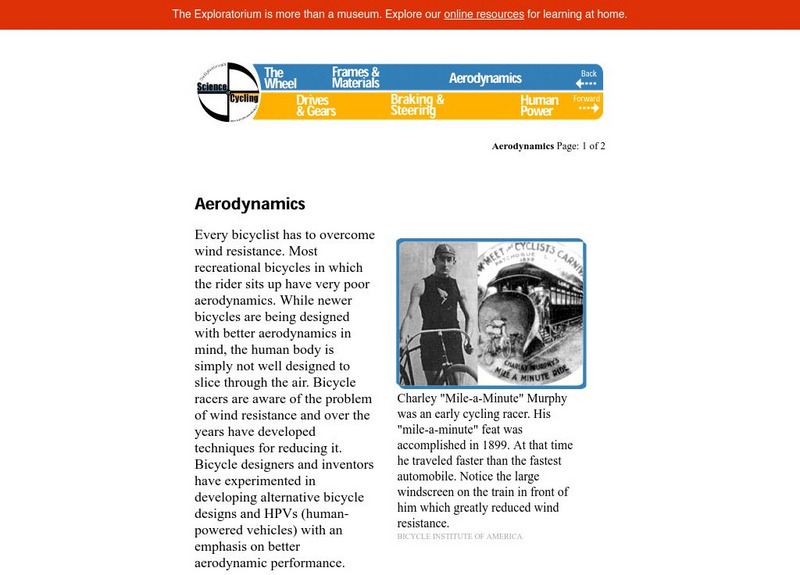
Exploratorium: The Science of Sports Cycling
A detailed look at the aerodynamic principles associated with cycling. Good science and even better web page design. Includes an online calculator that allows the user to calculate the aerodynamic drag and propulsive power of a bicyclist...
NASA
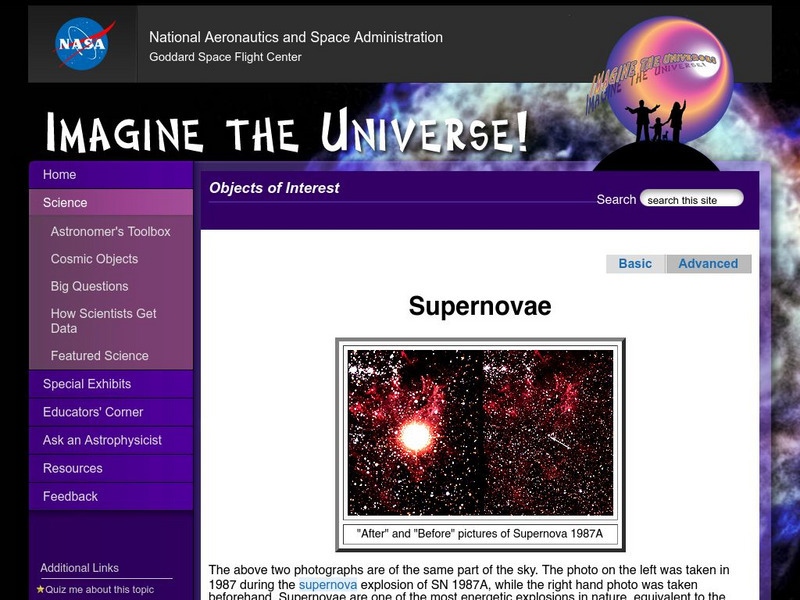
Nasa: Imagine the Universe: Supernovae (Advanced)
Supernovae are divided into two basic physical types, including a description of supernova types and how they are classified based on the existence of hydrogen spectral lines. Definitions of key terms are provided.