Hi, what do you want to do?





University of Utah
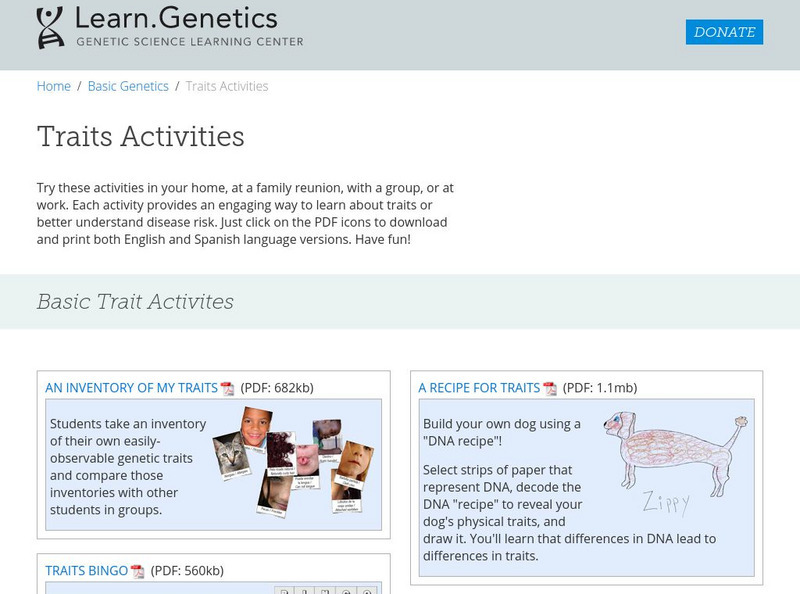
University of Utah: Genetic Science Learning Center: Traits Activities
A collection of genetic learning activities provides an engaging way to learn about traits, or better understand disease risk.
University of Utah
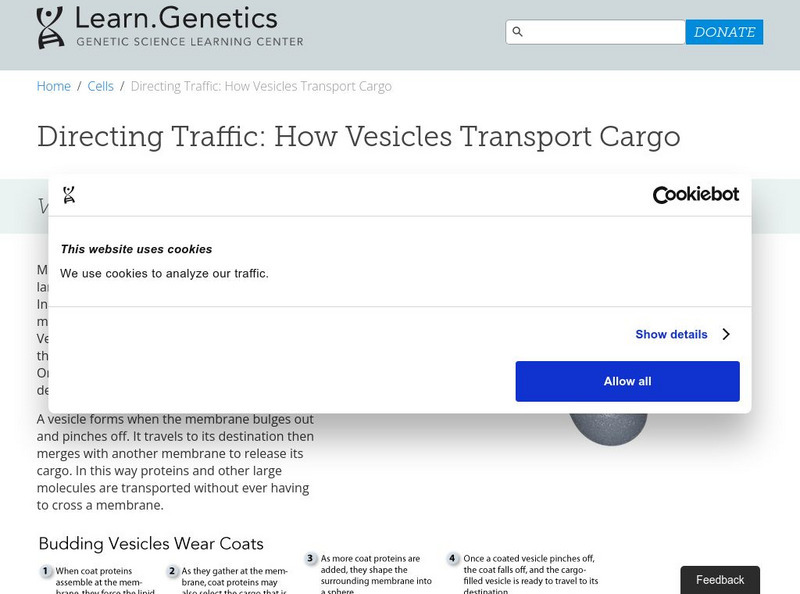
University of Utah: Genetic Science Learning Center: How Vesicles Transport Cargo
A detailed explanation, accompanied by labeled illustrations and real-time movies, showing how vesicles move molecules around, both inside and outside a cell.
University of Utah
University of Utah: Learning Center: learn.genetics: Epigenetics: Gene Control
Turn the control knob in this interactive to change the level of gene expression in a cell. Find out how gene, mRNA, and protein production are linked.
Smithsonian Institution
Smithsonian Science Education Center: Science: A Work in Progress
The scientific method is more than just a series of steps to be followed like a recipe. It is a fluid, ever-changing process. This video discusses student's perception of the scientific method and how to make learning science in the...
University of Utah
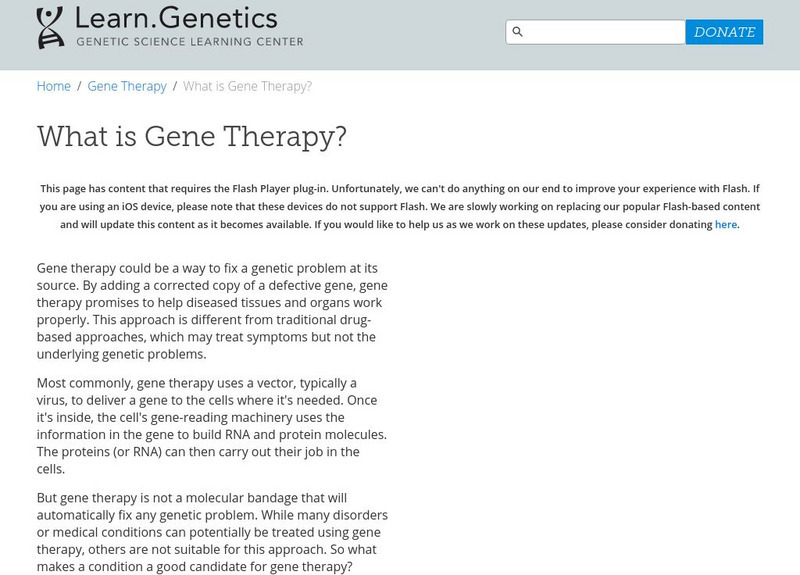
University of Utah: Learn Genetics: What Is Gene Therapy?
Learn how gene therapy is being used to help patients with cystic fibrosis. The first part briefly introduces gene therapy and explains in detail the cause of cystic fibrosis. The second section considers the question of whether cystic...
Smithsonian Institution
Smithsonian Science Education Center: Conceptual Change: How New Ideas Take Root
Develop a more nuanced understanding of how student ideas are formed both in and outside of the classroom. By understanding the student's misconceptions on scientific ideas, you can better structure your lesson to be more effective. This...
University of Utah
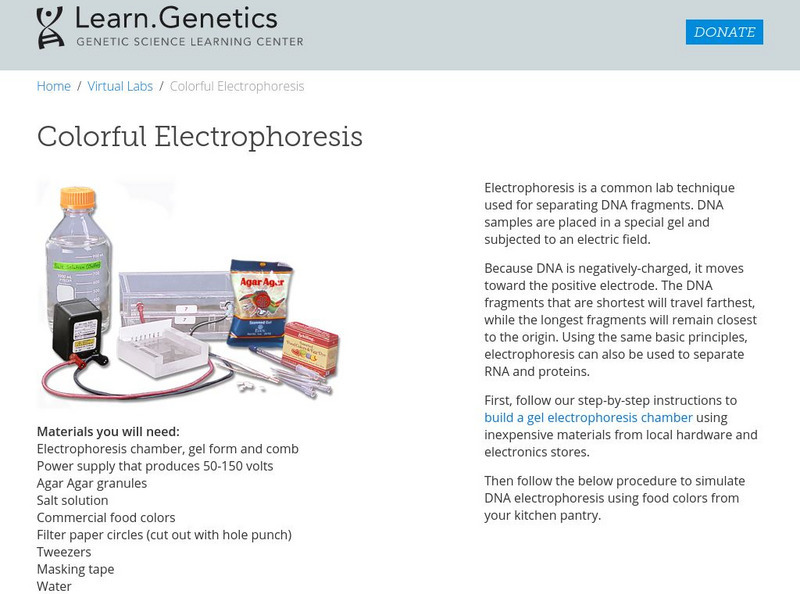
University of Utah: Learn Genetics: Colorful Electrophoresis
Make electrophoresis easy by following the steps of this relatively simple lab. Instead of using DNA, you will use food coloring which shows up very well in the gel.

University of Utah
University of Utah: Learn Genetics: How Do Mutations Cause Genetic Disorders?
Get a brief overview of the connection between mutations and genetic diseases. Several causes of mutations are also presented.
Smithsonian Institution
Smithsonian Science Education Center: Attack the Knack
Science is more than "eureka" moments. Science is about trying, asking good questions, failing, and learning from mistakes. Learn how to help motivate those students who believe science isn't their "thing"!
Cosmo Learning
Cosmo Learning: Physics 240: Science and Engineering I
A collection of video lectures from a physics for science and engineering course taught at the University of Missouri-Kansas City. The course discusses the concepts of mechanics, wave motion, sound, heat and thermodynamics in thirty-five...
University of Arizona
Center for Insect Science Education: Darkling Beetle/mealworm Information
Learn all about mealworms: their diet, life cycle, habitat, and how to learn about them in the classroom.
Edutopia
Edutopia: Room to Learn: Mystery Science Theatre
Read and see examples of how one physics teacher turns his classroom into a student-centered, project-based and fun place to be.
REMC Association of Michigan
Remc Association of Michigan: 21 Things4 Students: 15. Design Thinking
Design Thinking is a process for designing something to solve a problem. It shares a lot of similarities to the Engineering Design Process you might learn in a STEM class and the Scientific Method you learn in science. However, it tends...
University Corporation for Atmospheric Research
Ucar: Hurricanes Impact Our Lives
Web weather site for kids highlights hurricanes. Discover how they are formed, the damage they can cause as well as read a weather story about surviving a hurricane.
Science and Mathematics Initiative for Learning Enhancement (SMILE)
Smile: Relationships: Pressure, Volume, and Temperature
From the Science and Mathematics Initiative for Learning Enhancement (SMILE) program. A lesson plan that centers around a lab investigating the gas laws of Boyle, Charles, and Gay-Lussac. Data is collected, analyzed and discussed.