Hi, what do you want to do?





Smithsonian Institution
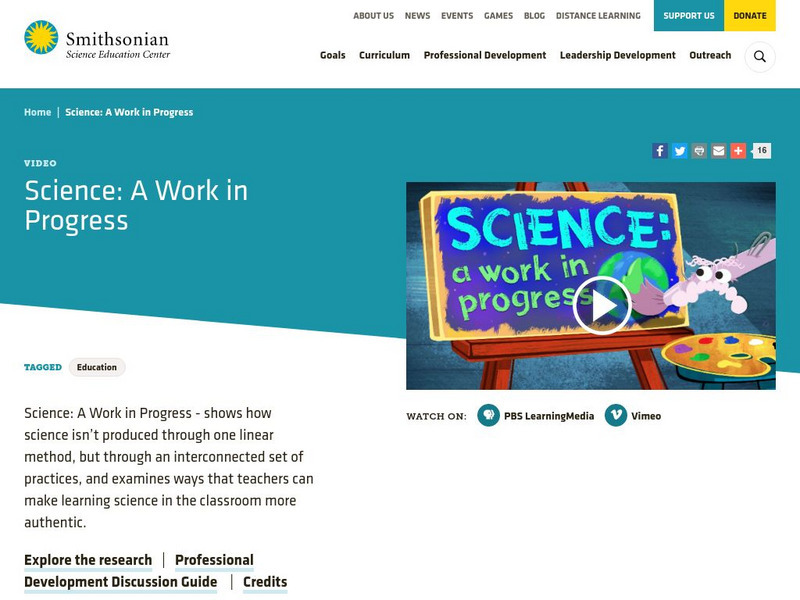
Smithsonian Science Education Center: Science: A Work in Progress
The scientific method is more than just a series of steps to be followed like a recipe. It is a fluid, ever-changing process. This video discusses student's perception of the scientific method and how to make learning science in the...

Cosmo Learning
Cosmo Learning: Physics 240: Science and Engineering I
A collection of video lectures from a physics for science and engineering course taught at the University of Missouri-Kansas City. The course discusses the concepts of mechanics, wave motion, sound, heat and thermodynamics in thirty-five...
University of Arizona
Center for Insect Science Education: Darkling Beetle/mealworm Information
Learn all about mealworms: their diet, life cycle, habitat, and how to learn about them in the classroom.

Centers for Disease Control and Prevention
Centers for Disease Control: Bam! Body and Mind: Surfing
Meet an expert at surfing and learn some basics on how to play. Find out what gear you'll need, safety tips, and how it relates to science.
Other
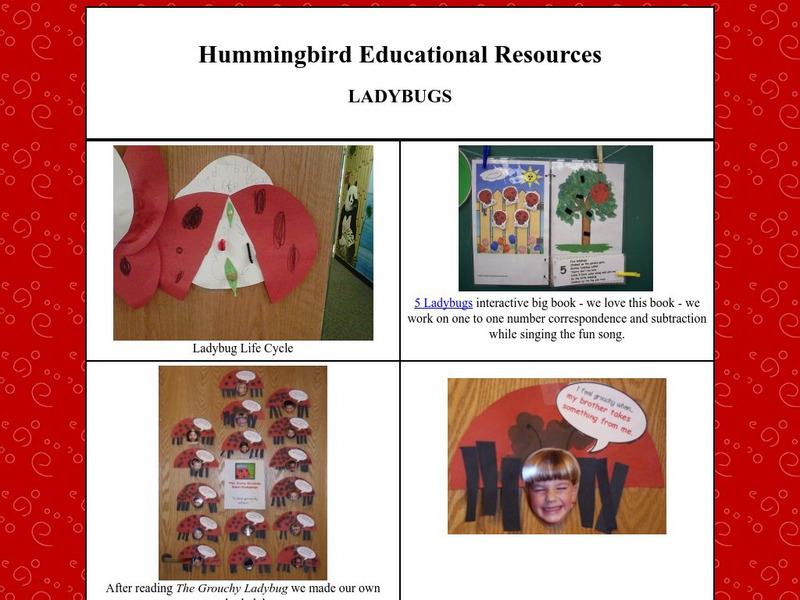
Hummingbird Educational Resources: Ladybugs and Insects
This is a resource for any teacher looking for some ideas to use to complement a unit on bugs. Scroll down for songs, center ideas, crafts, science discovery, math ideas, dramatic play ideas and much more!
University Corporation for Atmospheric Research
Ucar: Hurricanes Impact Our Lives
Web weather site for kids highlights hurricanes. Discover how they are formed, the damage they can cause as well as read a weather story about surviving a hurricane.
Science and Mathematics Initiative for Learning Enhancement (SMILE)
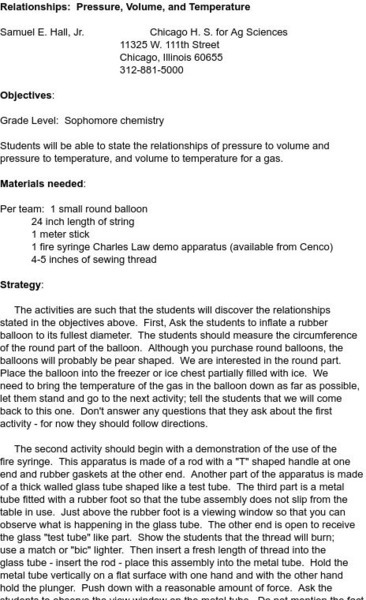
Smile: Relationships: Pressure, Volume, and Temperature
From the Science and Mathematics Initiative for Learning Enhancement (SMILE) program. A lesson plan that centers around a lab investigating the gas laws of Boyle, Charles, and Gay-Lussac. Data is collected, analyzed and discussed.