Hi, what do you want to do?





Ohio State University
Beyond Penguins and Polar Bears: Common Misconceptions About Day and Night
Misconceptions about the causes of seasons and day and night are common through all ages. Use the information on this site to help your students understand these concepts. Included are links to many resources and lesson plans for...
Science Education Resource Center at Carleton College
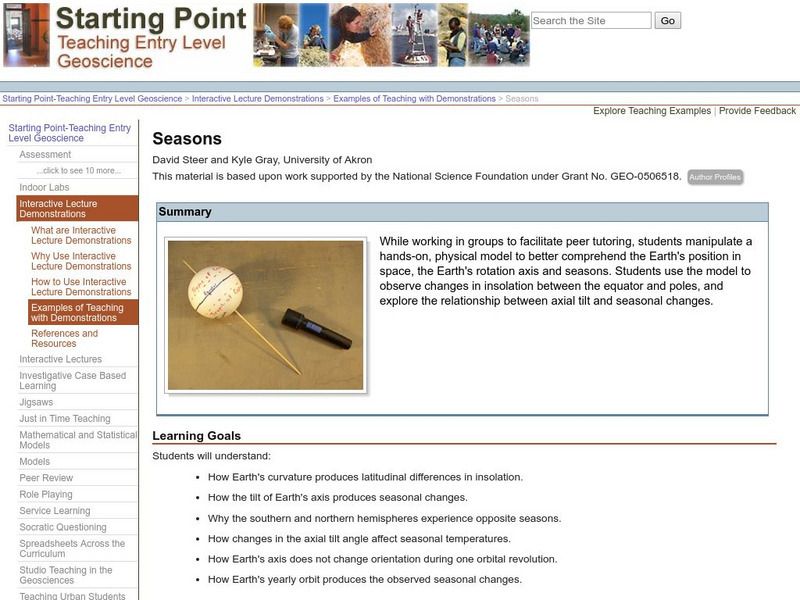
Serc: Seasons
For this activity, students create a small model of the Earth using a styrofoam ball and a skewer. They then explore the relationship between the Earth and the Sun (a flashlight) to understand why it is hottest at the Equator, and why we...
Other
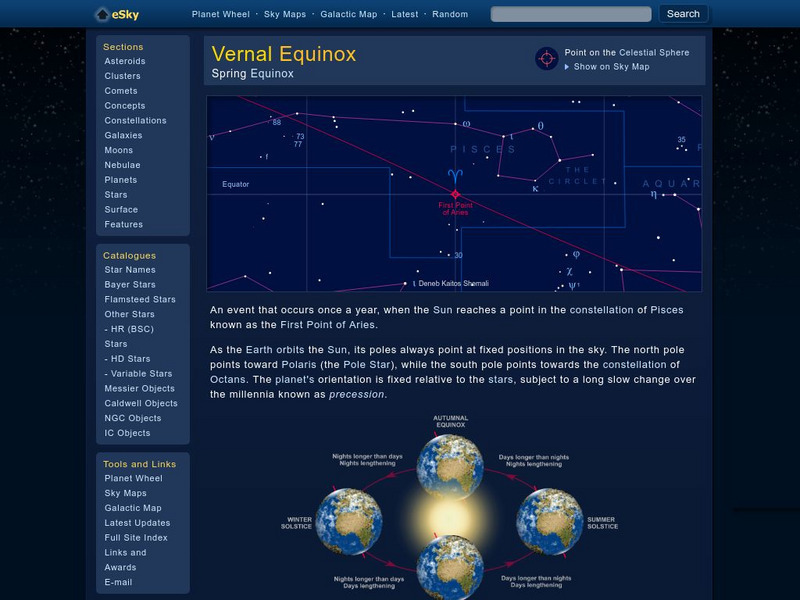
Electric Sky: Vernal Equinox
This site, created by an amateur who has studied astronomy for thirty years, provides a scholarly explanation of the vernal equinox. Links to definitions of significant terms.
Math Is Fun
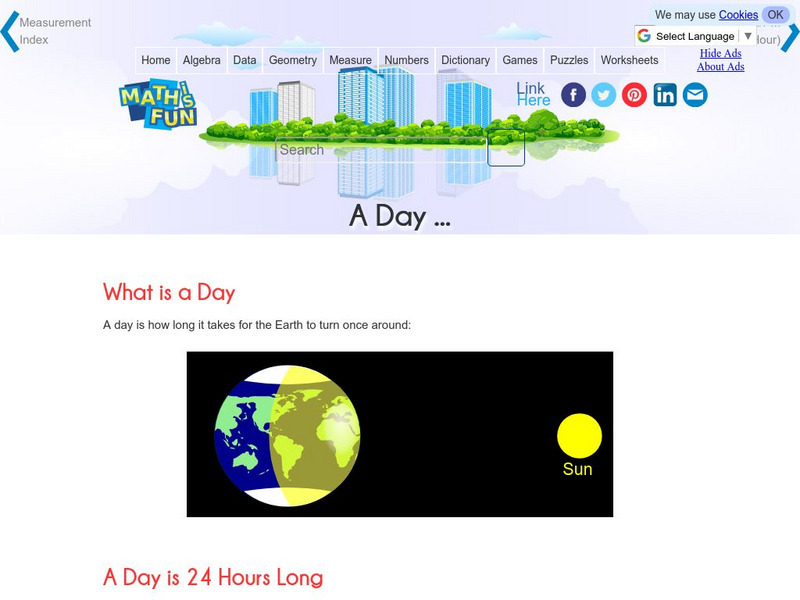
Math Is Fun: A Day
How long is a day? What do most children do during certain hours of the day? What is day? This site offers the answers to these questions, lists the days of the week, and provides a hour-by-hour listing of what a typical kid's day...

PBS
Pbs Learning Media: Giving Rise to the Jet Stream
This interactive activity from NOVA Online uses animation and graphics to offer a detailed explanation of the jet stream. A thorough account is given of the role played by the Sun's heat and Earth's shape and rotation, among other factors.
American Association of Physics Teachers
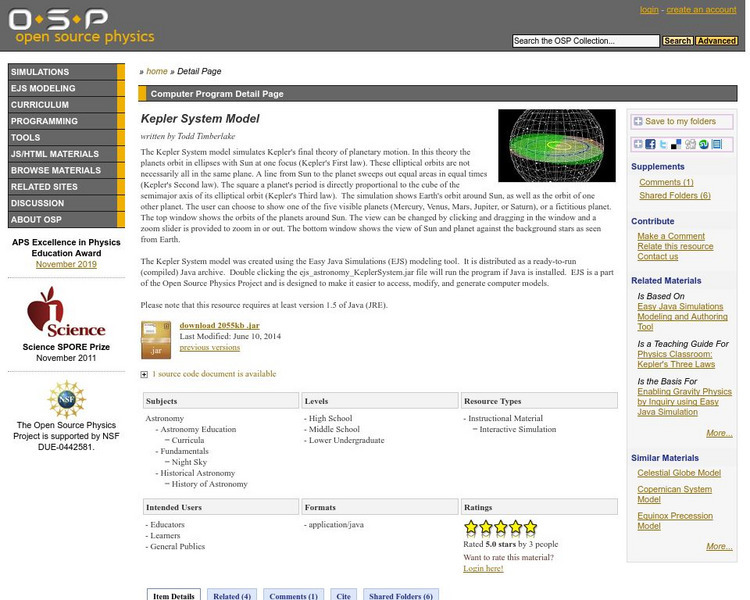
Com Padre Digital Library: Open Source Physics: Kepler System Model
This site from Open Source Physics offers a file with a simulation of Kepler's theory of planetary motion, tested with the Earth rotating around the sun and another planet of the user's choosing. The download requires Java.
BioEd Online
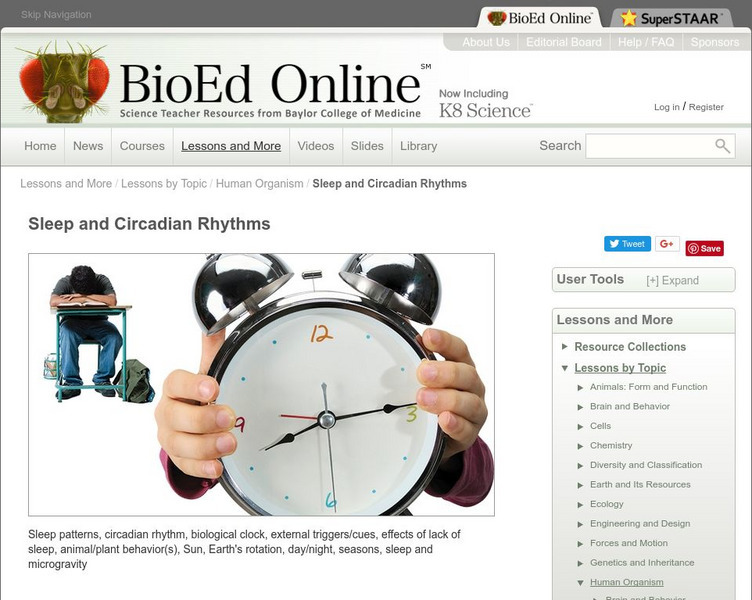
Bio Ed Online: Sleep and Circadian Rhythms
The following lessons help middle schoolers from grades 6-8 understand sleep and circadian rhythms. Lesson topics iinclude: day and night, seasons, sundails, clocks, sleep and sleep patterns and sleeping in space.
Other
Bad Astronomy/phil Plait: Tides and Why Our Days Are Getting Longer
Why does the Moon always shows the same face to the Earth? Why is the Moon's rotation period the same as the length of time it takes to orbit the Earth? Why are there two tides a day? These questions and more are answered here.
NASA
Nasa: From Stargazers to Starships: The Calendar
A lesson plan that gives an overview of solar and lunar calendars, their history and lore. Also, of the day and the month, and their relations to the rotational period of the Earth and the orbital period of the Moon.For versions in...