Hi, what do you want to do?






Yale University
Yale Law School: Resolutions of the Continental Congress, 1765
Contains the primary text of the resolutions against the Stamp Act sent to King George III.
Colonial Williamsburg Foundation
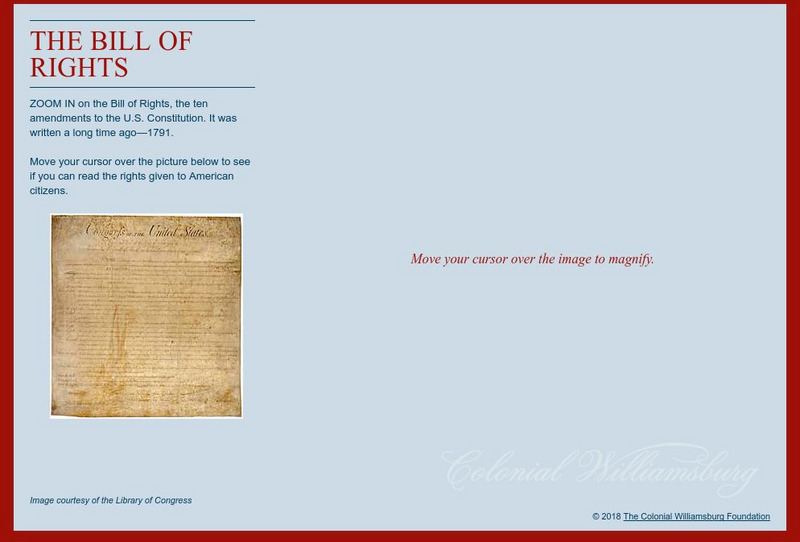
The Colonial Williamsburg Foundation: The Bill of Rights
Take a close look at the United States Bill of Rights, the ten amendments to the U.S. Constitution. It was written a long time ago-1791. Move your cursor over the picture below to see if you can read the rights given to American citizens.
PBS
Wnet: Thirteen: Freedom: A History of the u.s. Independence Webisode 1
Webisode 1-Independence. The history of the United States is presented in a series of webisodes, within each are a number of segments.Included are links to lesson plans, teacher guides, resources, activities, and tools.

University of Oklahoma
University of Oklahoma College of Law: Resolutions of the Stamp Act
Presents the complete text of the Resolutions of the Stamp Act Congress which included fourteen resolutions and was accompanied by several petitions denying Parliament's authority to tax the thirteen colonies.
Bill of Rights Institute
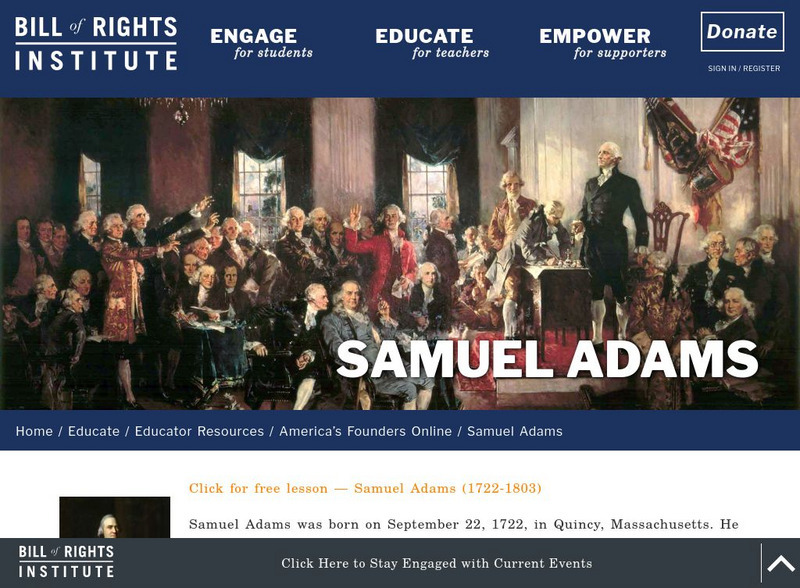
Bill of Rights Institute: Samuel Adams
Samuel Adams was born on September 22, 1722, in Quincy, Massachusetts. He entered Harvard College at the age of 14. During the 1760s, Adams became a leader of the Patriot resistance to the British government's attempt to tax the American...
Constitutional Rights Foundation
Constitutional Rights Foundation: Jonathan Edwards and the Great Awakening in Colonial America
Learning activity on religion and society in which students explore the ideas and events of the Great Awakening and determine the impact they may have had on the American Revolution. Site provides links to wide variety of resources for...
University of Illinois
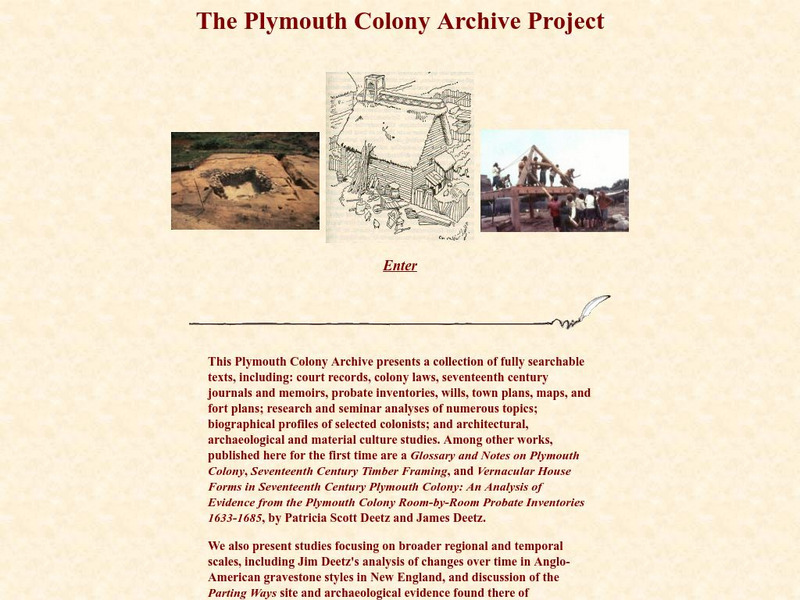
University of Illinois: The Plymouth Colony Archive Project
This resource presents a collection of searchable texts, including court records, Colony laws, seminar analysis of various topics, and biographical profiles of selected colonists. It also includes a search engine and images.
BBC
Bbc History: British History: Empire: Was the American Revolution Inevitable?
An interesting article that looks at the question of what England could have done to prevent a revolution of the American colonists in 1776. The author believes that there are lessons that one can draw from this series of particular...
Independence Hall Association
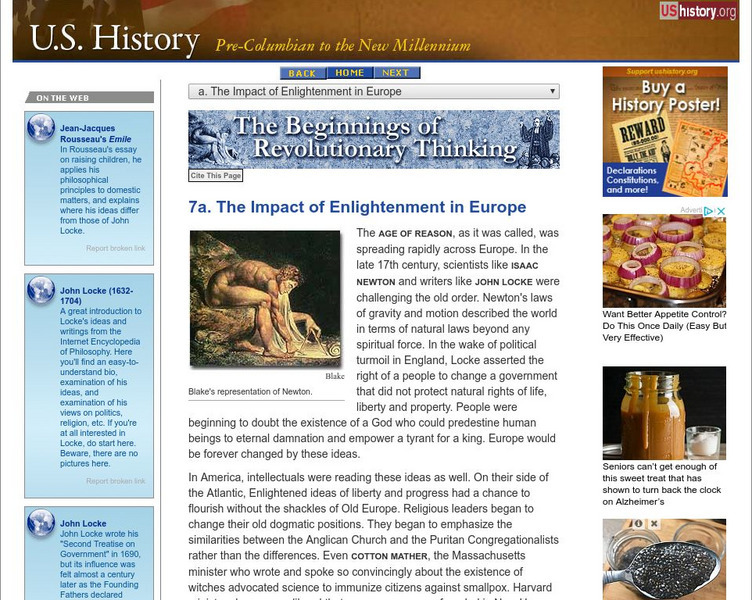
U.s. History: Beginnings of Revolutionary Thinking: Impact of Enlightenment
The ideas of the Enlightenment began in Europe, but they were acted upon in the American colonies. See how the philosophies of John Locke and Rousseau influenced the thoughts and actions of Puritan clergy and political figures like...
Independence Hall Association
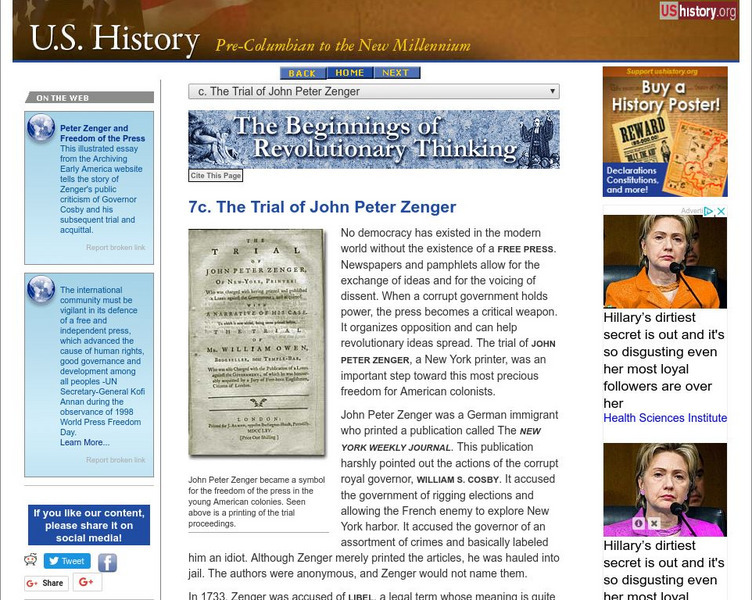
U.s. History: Beginnings of Revolutionary Thinking: Trial of John Peter Zenger
Freedom of the press? That was not always an accepted right. Read about the trial of John Peter Zenger, who was accused of libel for printing truths about the royal governor of New York. Find out the outcome of the trial and what it...
University of Groningen
American History: Documents: Pitt on the Stamp Act
The original text of British Prime Minister William Pitt's actual speech to Parliament describing his disapproval of the Stamp Act and why he felt it should be repealed.
University of Groningen
American History: Outlines: A New Colonial System
Overview of the development of a strengthening identity within the colonies and the number of Acts imposed by the British Parliament intended to exercise central control over the colonies.
University of Groningen
American History: Outlines: Women's Rights
Such social reforms brought many women to a realization of their own unequal position in society. From colonial times, unmarried women had enjoyed many of the same legal rights as men, although custom required that they marry early. With...
Bill of Rights Institute
Bill of Rights Institute: Thomas Paine
Thomas Paine was a major figure during the early years of the American Revolution. One of the foremost propagandists for American liberty in the 1770s, Paine penned words that rallied the war-weary spirit of the colonists and that still...
University of Virginia
University of Virginia: A View of the Rights of British America
Before writing the Declaration of Independence, Thomas Jefferson made his views known through "A Summary View of the Rights of British America" and other essays. This essay discusses the historical roots of independence and inalienable...
Digital History
Digital History: The Boston Massacre [Pdf]
This excellent recounting of the days that led up the Boston Massacre and the massacre itself fills in a lot of information that is lacking in textbooks because of space contraints. Read about the British soldiers' and the colonists'...
Bill of Rights Institute
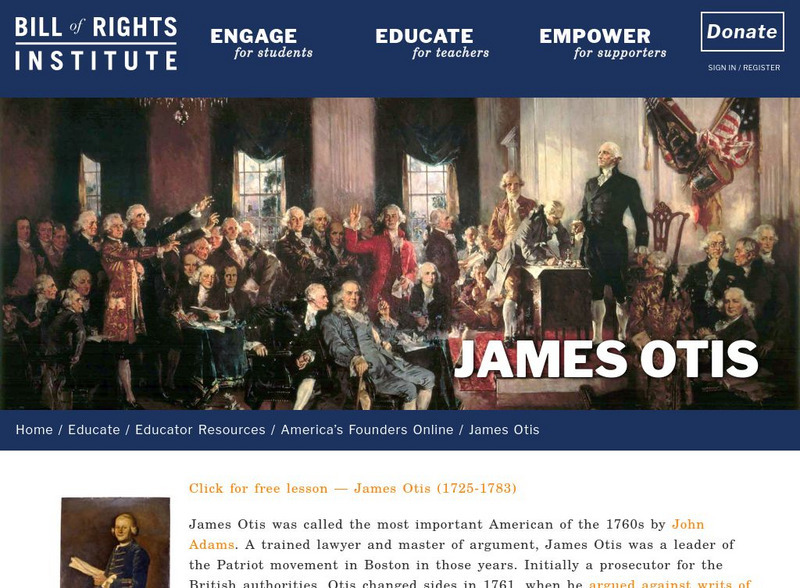
Bill of Rights Institute: James Otis
James Otis was called the most important American of the 1760s by John Adams. A trained lawyer and master of argument, James Otis was a leader of the Patriot movement in Boston in those years. Initially a prosecutor for the British...
Digital History
Digital History: The Age of Constitution Writing [Pdf]
See how colonial and state constitutions differed and how the idea of a social contract between a government and its citizens is reflected in the state constitutions. The second half of this site gives an abbreviated text of the Articles...
Digital History
Digital History: By What Right [Pdf]
Two opposing philosophies concerning the relationship between government and its citizens were expressed by Thomas Hobbes and John Locke in the 17th century. Compare these two philosophies and see how they were related to the colonists'...
BBC
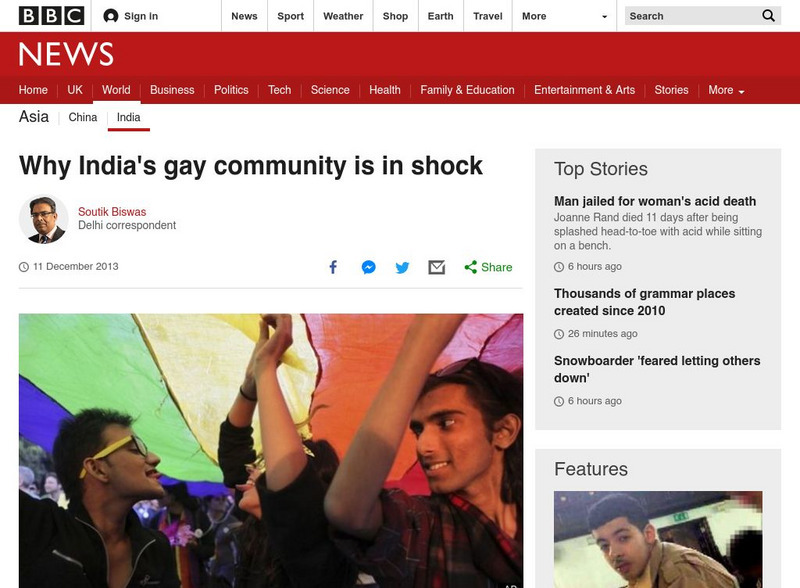
Bbc: Week of 12 16 13: Why India's Gay Community Is in Shock
Recently, the goverment of India shocked its LGBT population by deciding to enforce a colonial-era law that forbids same sex relationships. Learn why so many Indians view this as a devastating step backwards in the battle for human rights.
University of Groningen
American History: Outlines: The Coercive Acts
Overview of the series of restrictive and punitive measures imposed by British Parliament on the colonists in response to the Boston Tea Party.

ClassFlow
Class Flow: Causes of the American Revolution
[Free Registration/Login Required] This interactive flipchart includes activities incorporating art to teach causes of the American Revolution. It is based on the Houghton Mifflin series.
Colonial Williamsburg Foundation
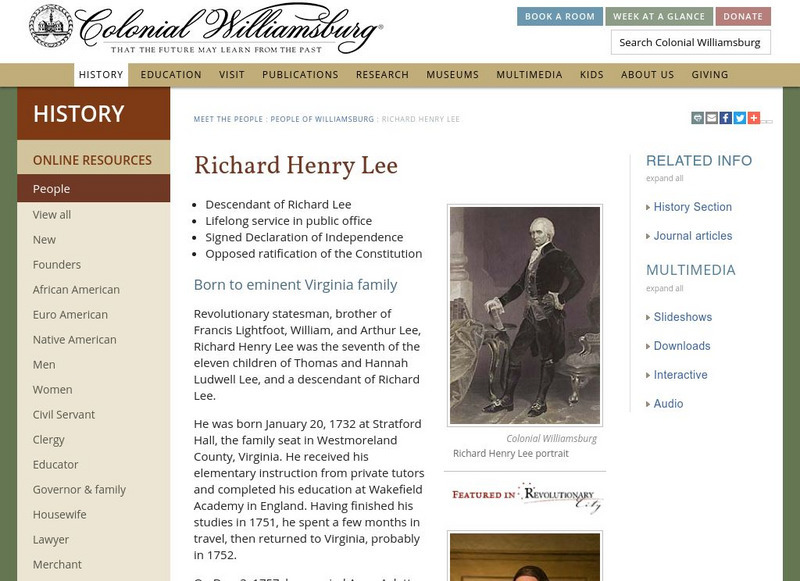
Colonial Williamsburg: Richard Henry Lee
This is a brief, chronological history of the important events in the life of Richard Henry Lee. Provides good information and links.
Independence Hall Association
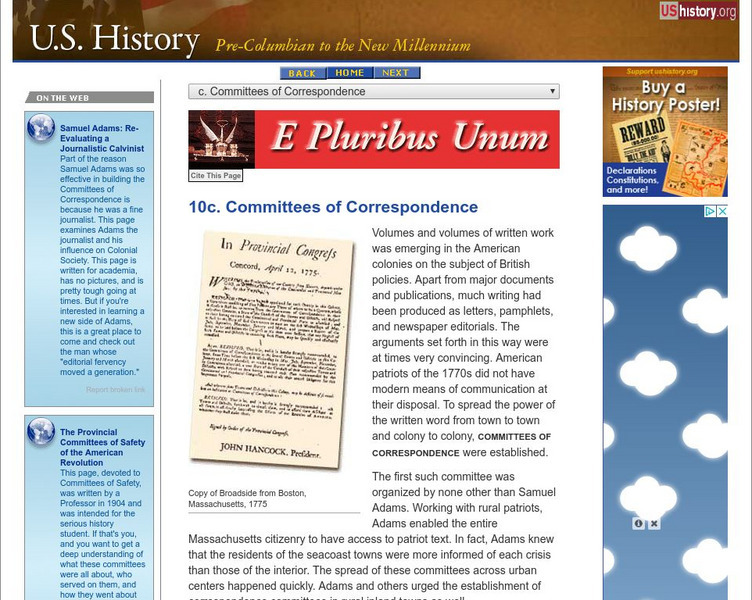
U.s. History: Committees of Correspondence
See how organization can be a stepping stone to freedom. Read about the actions and the reasons behind those actions of the Committees of Correspondence prior to the Revolutionary War.