Hi, what do you want to do?





TeachEngineering
Teach Engineering: Beating the Motion Sensor
Lighting is responsible for nearly one-third of the electricity use in buildings. One of the best ways to conserve energy is to make sure the lights are turned off when no one is in a room. This process can be automated using motion...

Science Museum, London
Science Museum: Online Stuff: Atomic Firsts
Read about three famous British atomic physicists, each of whom won a Nobel Prize. J.J. Thompson discovered the electron, Ernest Rutherford successfully split an atom, and George Paget Thomson proved that electrons had wave-like properties.
Sophia Learning
Sophia: Electromagnetic Spectrum: Lesson 2
This lesson will introduce the electromagnetic spectrum and the properties and uses of the waves it contains. It is 2 of 4 in the series titled "Electromagnetic Spectrum."
Sophia Learning
Sophia: Electromagnetic Spectrum: Lesson 3
This lesson will introduce the electromagnetic spectrum and the properties and uses of the waves it contains. It is 3 of 4 in the series titled "Electromagnetic Spectrum."
Sophia Learning
Sophia: Electromagnetic Spectrum: Lesson 4
This lesson will introduce the electromagnetic spectrum and the properties and uses of the waves it contains. It is 4 of 4 in the series titled "Electromagnetic Spectrum."
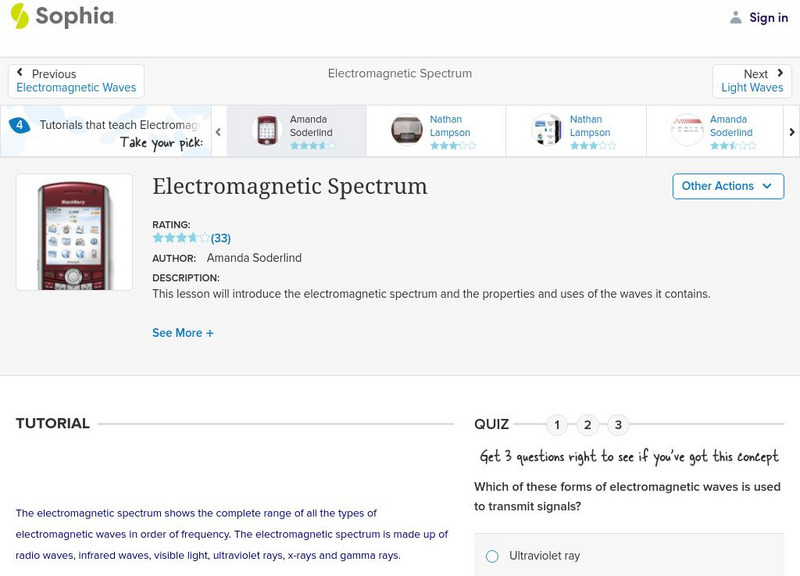
Sophia Learning
Sophia: Electromagnetic Spectrum: Lesson 1
This lesson will introduce the electromagnetic spectrum and the properties and uses of the waves it contains. It is 1 of 4 in the series titled "Electromagnetic Spectrum."
Other
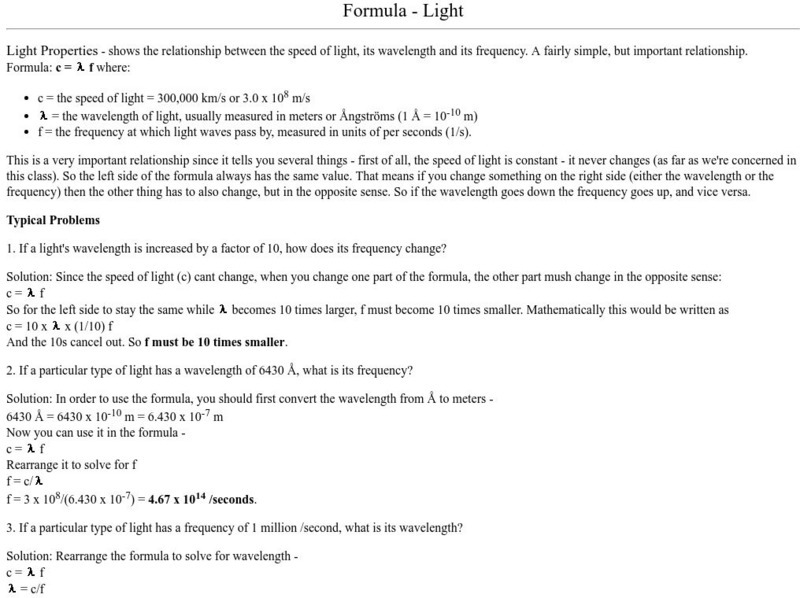
Uni: Astronomy: Formula Light
Learn about light properties through practice with formulas. This resource shows the relationship between the speed of light, its wavelength, and its frequency. A fairly simple, but important relationship.
Concord Consortium
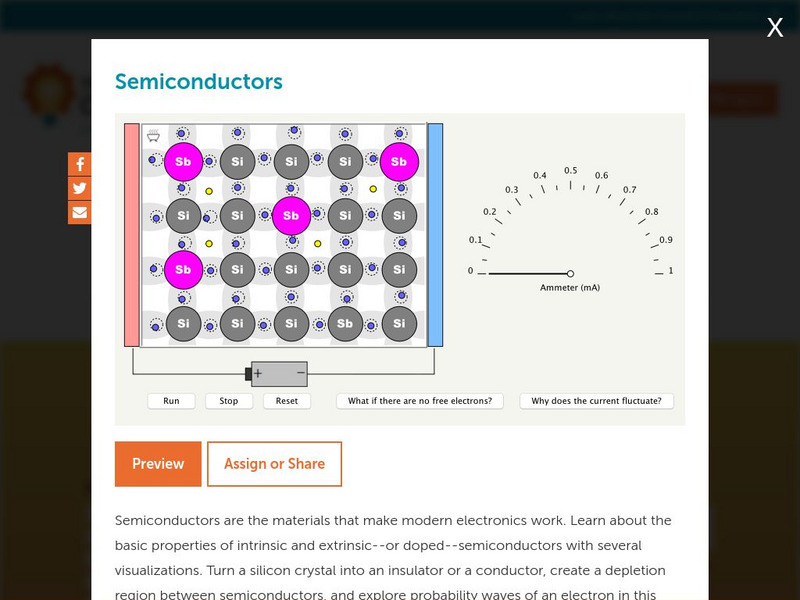
Concord Consortium: Semiconductors
Semiconductors are the materials that make modern electronics work. Learn about the basic properties of intrinsic and extrinsic- or doped- semiconductors with several visualizations. Turn a silicon crystal into an insulator or a...

Concord Consortium
Concord Consortium: Stem Resources: Semiconductors
Several visualizations that help students understand the basic properties of semiconductors. Students can turn a silicon crystal into an insulator or a conductor, investigate the probability waves of an electron, and make a depletion...
Florida State University
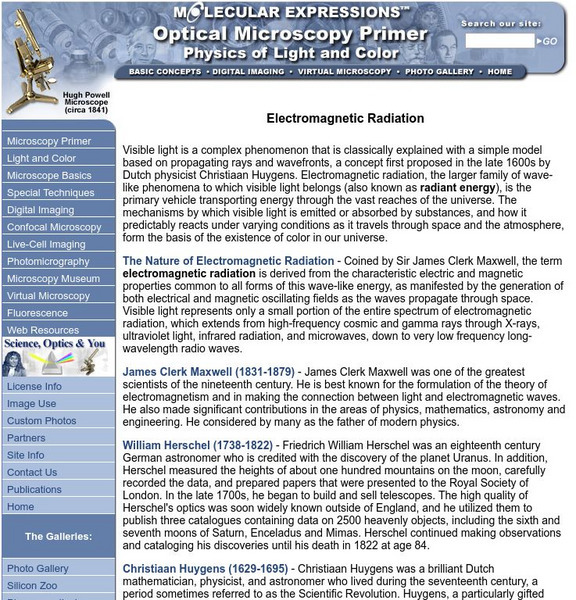
Florida State University: Molecular Expressions: Electromagnetic Radiation
This Florida State University page introduces light as an electromagnetic wave and discusses the frequency and wavelength range of the various regions of the electromagnetic spectrum. Includes links to some interactive Java applets.
Concord Consortium
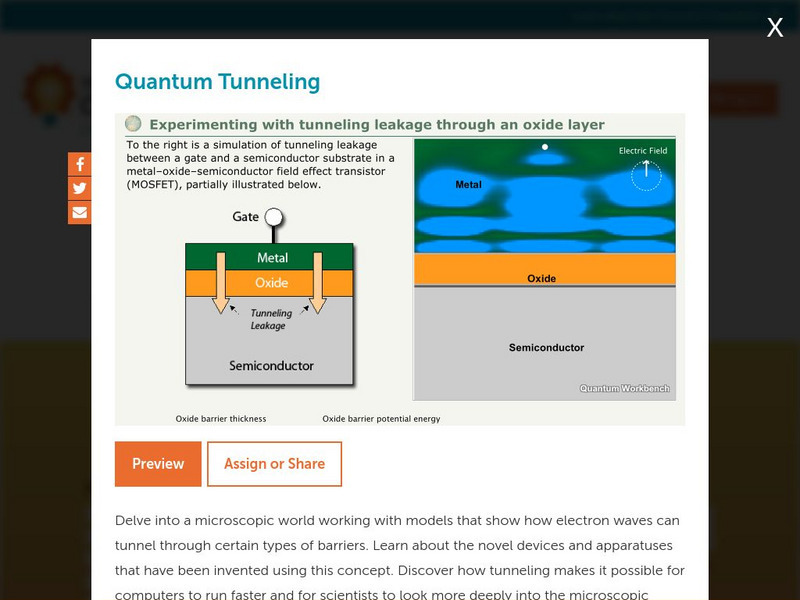
Concord Consortium: Quantum Tunneling
Delve into a microscopic world working with models that show how electron waves can tunnel through certain types of barriers. Learn about the novel devices and apparatuses that have been invented using this concept. Discover how...
CK-12 Foundation
Ck 12: Photoelectric Effect
[Free Registration/Login may be required to access all resource tools.] Students will understand the photoelectric effect and that light has both particle and wave properties. Includes a simulation for exploring the photoelectric effect.

ClassFlow
Class Flow: Thermal Energy
[Free Registration/Login Required] This flipchart reviews properties of thermal energy. Examples of Electrical energy, light waves, sound waves and conduction, convection and radiation are given.
Other
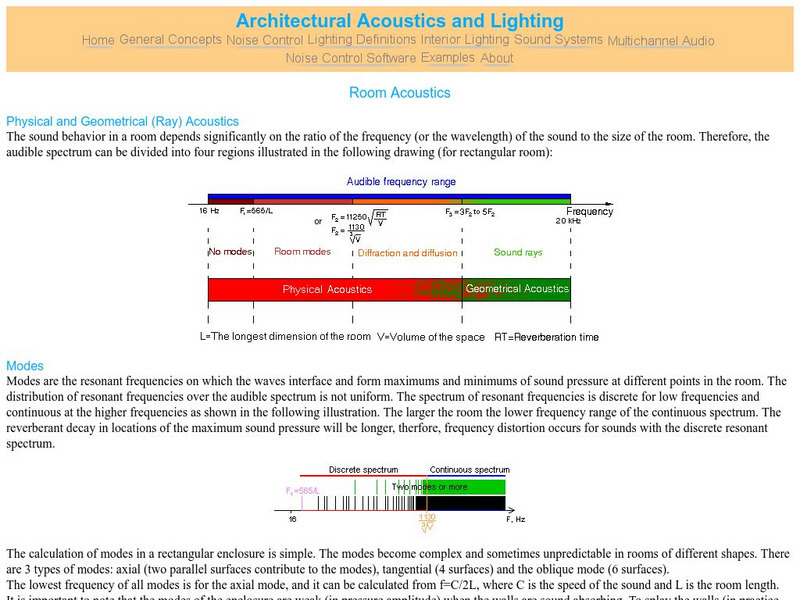
Architectural Acoustics and Lighting: Room Acoustics
This site from Architectural Acoustics and Lighting provides a discussion of various factors affecting the acoustics of a given room. Room dimensions, the wavelength of the sound wave, the physical characteristics of the walls, the...
Science and Mathematics Initiative for Learning Enhancement (SMILE)
Smile: Light (K 4)
This site provides two activities that pupils can do in class. One uses mirrors to reflect light beams whole another is making a kaleidescope.
Open Ed
Open Ed Sci: 6.5 Natural Hazards
This unit begins with students experiencing, through text and video, the 2011 Great Sendai or Tohoku earthquake and subsequent tsunami that caused major loss of life and property in Japan. Students will think about ways to detect...