Hi, what do you want to do?






Curated OER
Breakfast Before School
Are the events "I eat breakfast" and "I am late for school" independent events? Assess learners' understanding of independence in a simple context with this short worksheet. Use as an opener, as part of an assignment, or discuss together...

Curated OER
Alex, Mel, and Chelsea Play a Game
This short probability question may look simple at first, but it is actually quite complex! Learners must understand independent events in context and must take into account several different scenarios. Use as an individual assignment...
Beacon Learning Center
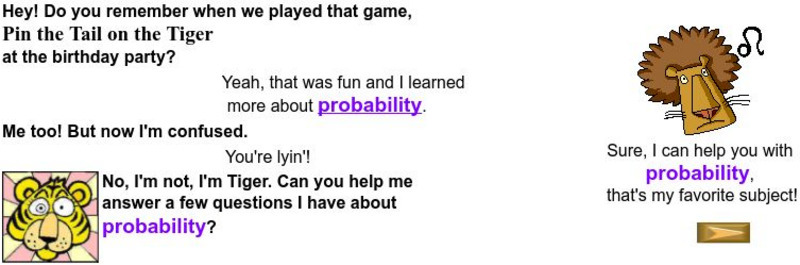
Beacon Learning Center: Lions, Tigers, and Probability
Students explore the probabilities of simple events, such as rolling a dice, in this interactive web lesson.
Texas Instruments
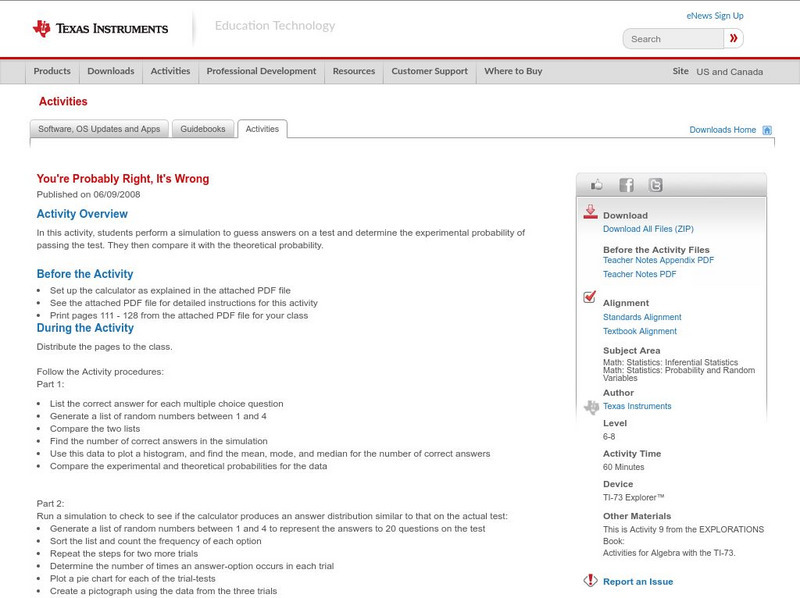
Texas Instruments: You're Probably Right, It's Wrong
In this activity, students perform a simulation to guess answers on a test and determine the experimental probability of passing the test. They then compare it with the theoretical probability.
University of Cambridge
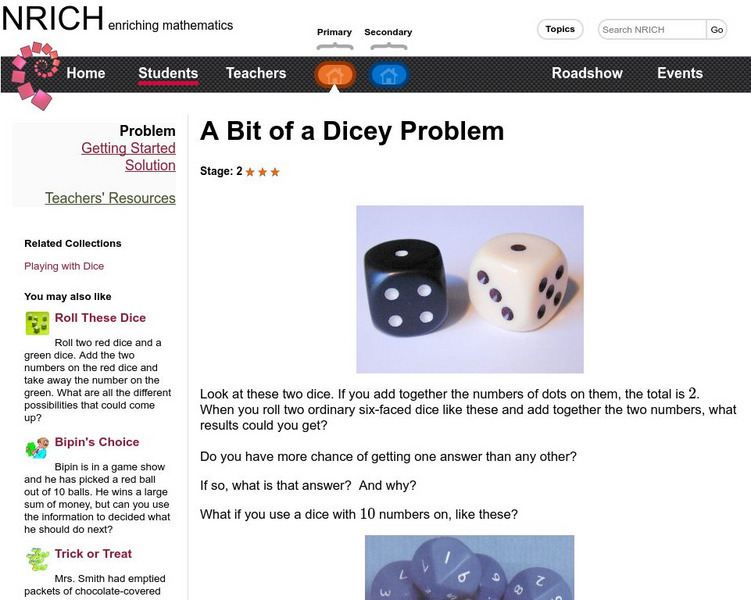
University of Cambridge: Nrich: A Bit of a Dicey Problem
Short website offers a look into the theoretical probability of tossing dice. Several questions related to the throwing of dice are included.
Texas Instruments
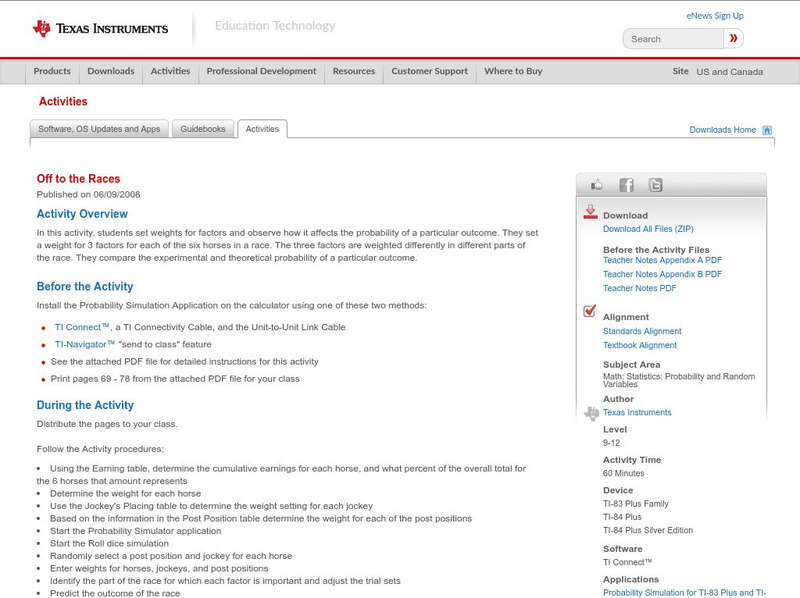
Texas Instruments: Off to the Races
In this activity, students set weights for factors and observe how it affects the probability of a particular outcome. They set a weight for 3 factors for each of the six horses in a race. The three factors are weighted differently in...
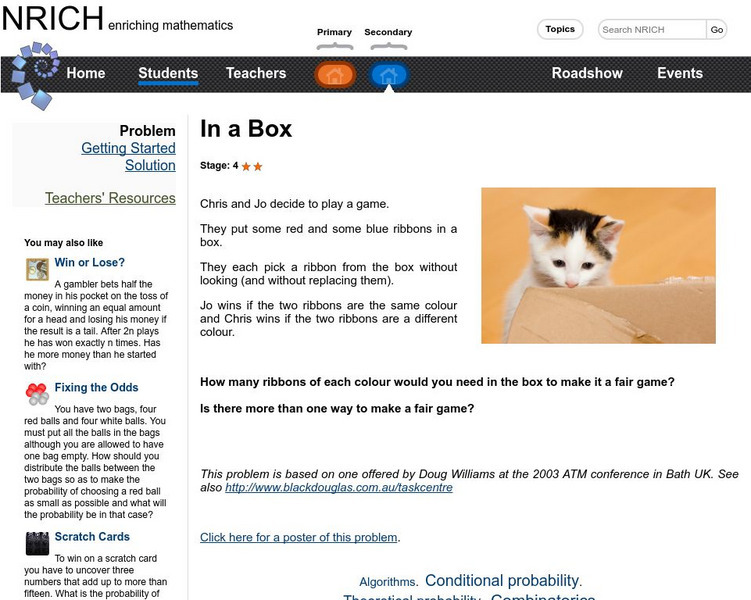
University of Cambridge
University of Cambridge: Nrich: In a Box
This probability problem encourages the learner not only to arrive at a solution, but also to defend it.
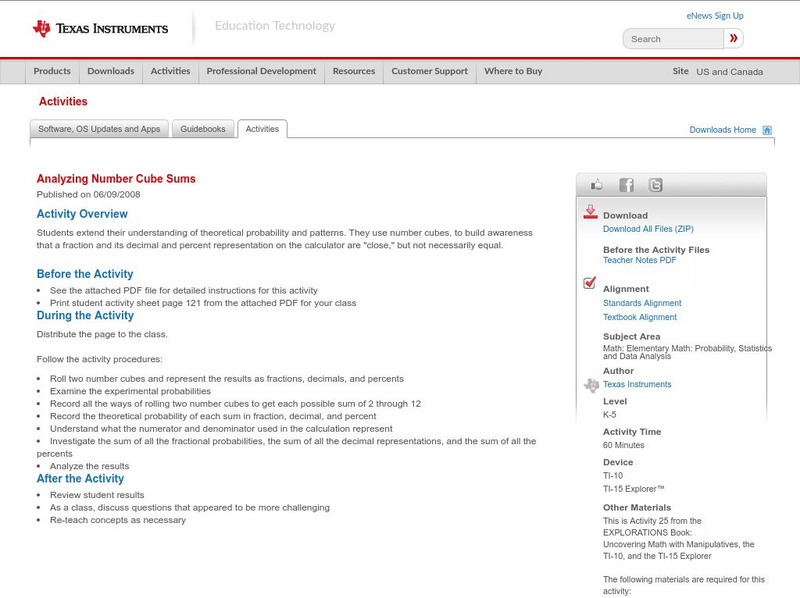
Texas Instruments
Texas Instruments: Analyzing Number Cube Sums
In this activity, students extend their understanding of theoretical probability and patterns. They use number cubes, to build awareness that a fraction and its decimal and percent representation on the calculator are "close," but not...
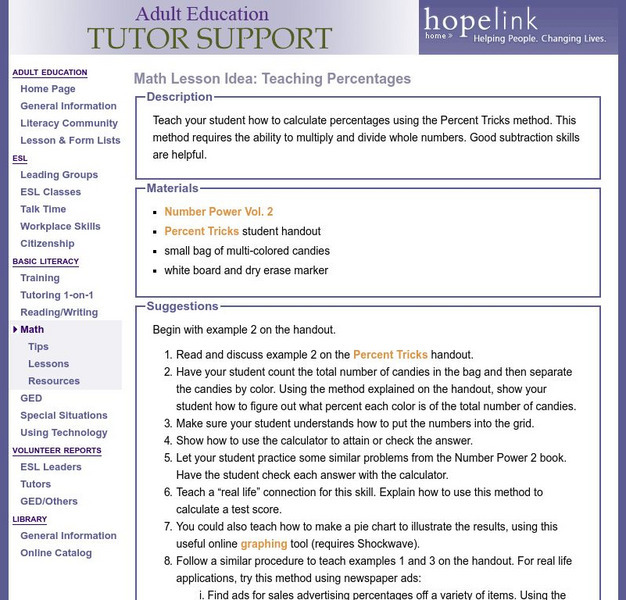
Hopelink
Hopelink: Teaching Percentages
Students can brush up on percentage skills with this lesson and calculate percentages using the "Percent Tricks method." For students to successfully use this method, they must have the ability to multiply and divide whole numbers.