Hi, what do you want to do?





TeachEngineering
Teach Engineering: Bombs Away!
In this hands-on activity students learn create a device to protect a dropped egg and deliver it close to a target. Students learn about engineering as well as potential and kinetic energy and energy transfer
Science Buddies
Science Buddies: Converting Potential Energy to Kinetic Energy
If you'd like to investigate the physics of amusement park rides, then this project is for you. You'll build a roller coaster track for marbles using foam pipe insulation and masking tape, and see how much the marble's potential energy...
Energy4Me
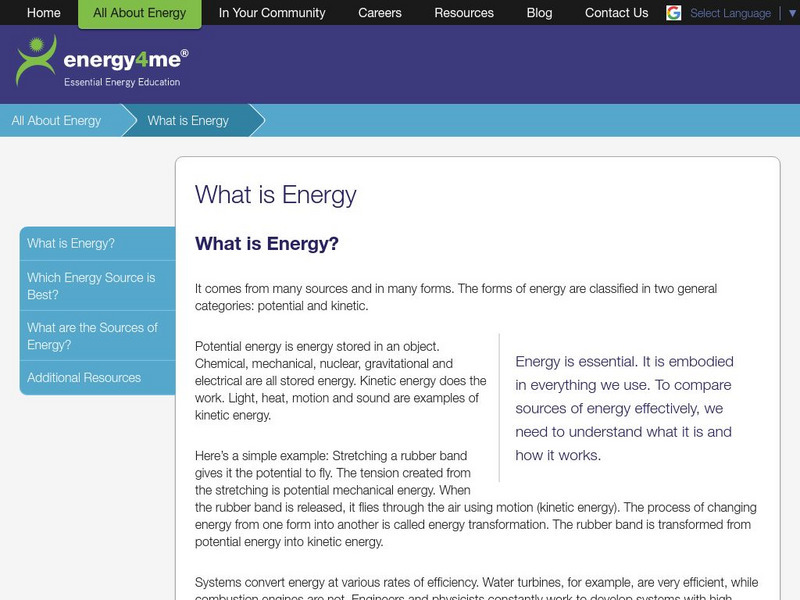
Energy4me: What Is Energy
Learn the difference between potential and kinetic energy, and how this plays a role in the sources we use for our energy needs.

Science Struck
Science Struck: The 13 Types of Energy and Their Applications
Read about all the different kinds of potential and kinetic energy. Includes energy formulas and examples of energy applications.
Concord Consortium
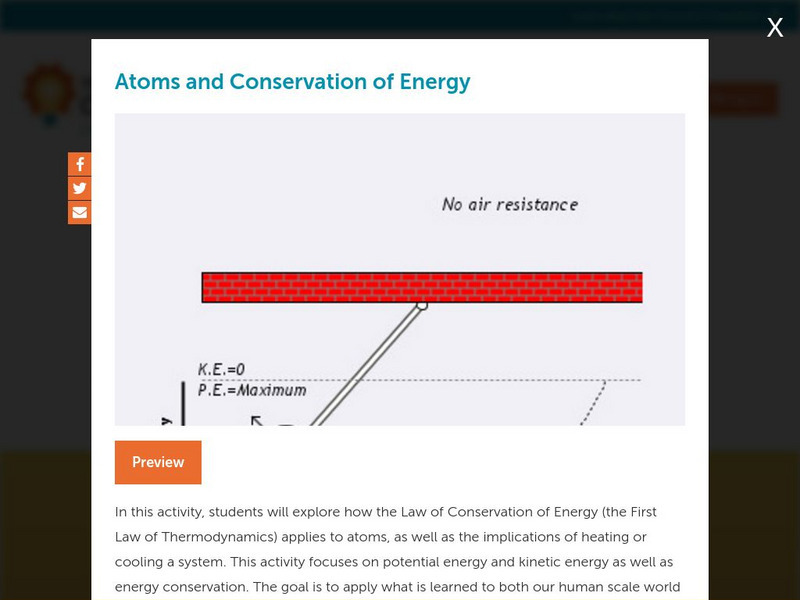
Concord Consortium: Stem Resources: Atoms and Energy
Online activity walks learner through exploration of kinetic and potential energy using animations. Through graphs, a quantitative connection is made between the movement and the energy involved. This information is then related to the...
Texas Education Agency
Texas Gateway: Ap Physics: Gravitational Potential Energy
By the end of this section, you will be able to explain gravitational potential energy in terms of work done against gravity, show that the gravitational potential energy of an object of mass m at height h on Earth is given by PEg = mgh,...
eSchool Today
E School Today: Energy
Explains different kinds of energy, covering kinetic, potential, gravitational, mechanical, sound, thermal, chemical, electrical, and radiant energy. Also looks at storage, transfer, and dissipation of energy. Includes a short...
University of Colorado
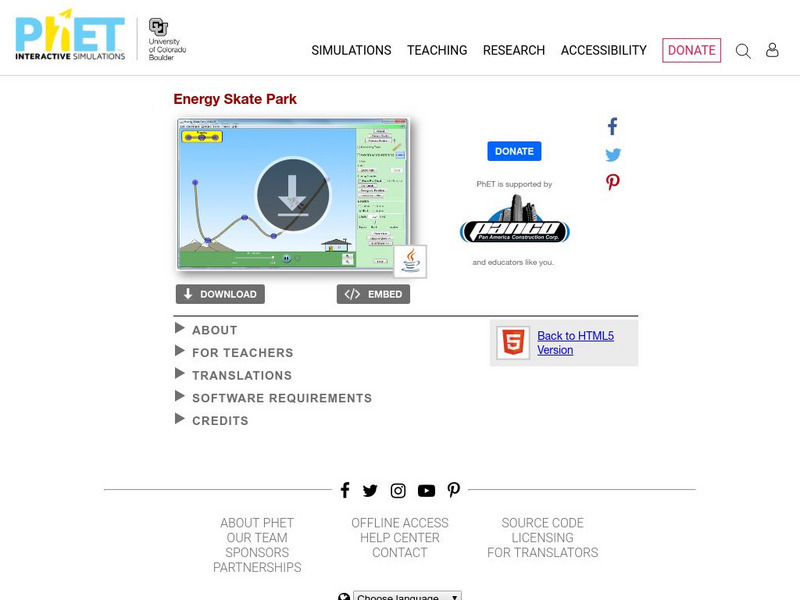
University of Colorado: Ph Et Interactive Simulations: Energy Skate Park
An interactive skate park simulation that teaches about energy, conservation of energy, kinetic energy, potential energy, and friction. This simulation can either be downloaded or played online and includes handouts, lesson plans, and...

University of Colorado
University of Colorado: Ph Et Interactive Simulations: Energy Skate Park: Basics
An interactive skate park simulation that teaches about conservation of energy, kinetic energy, potential energy, thermal energy, and friction. This simulation can either be downloaded or played online and includes handouts, lesson...
University of Colorado
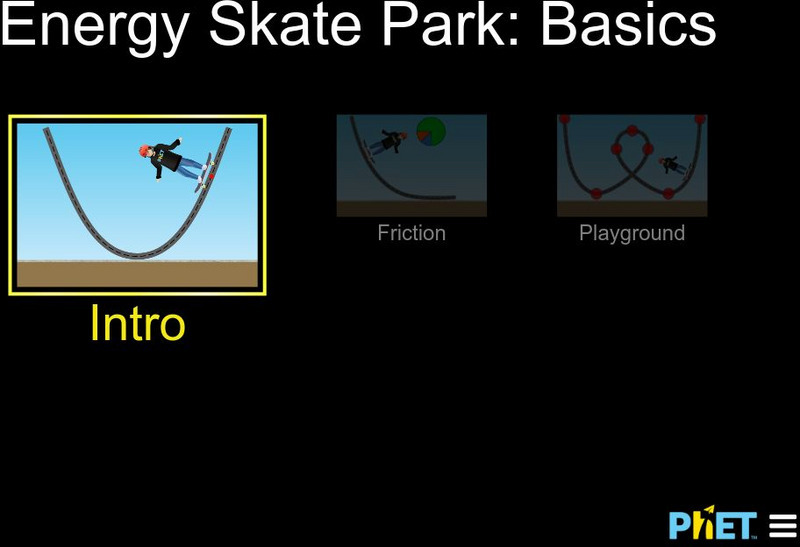
University of Colorado: Ph Et Interactive Simulations: Energy Skate Park
Learn about conservation of energy with a skater dude. Build tracks, ramps, and jumps for the skater and view the kinetic energy, potential energy and friction as he moves.
Physics Classroom
The Physics Classroom: The Work Energy Theorem
This page explores the quantitative relationship between work and mechanical energy in situations in which there are no external forces doing work. It is a basic analysis of situations in which mechanical energy is conserved. Examples...
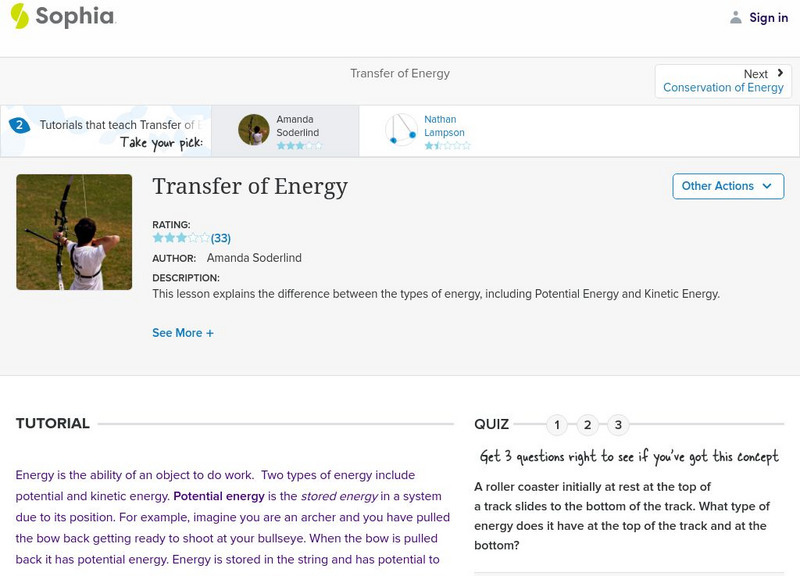
Sophia Learning
Sophia: Transfer of Energy: Lesson 1
This lesson explains the difference between the types of energy, including Potential Energy and Kinetic Energy. It is 1 of 2 in the series titled "Transfer of Energy."
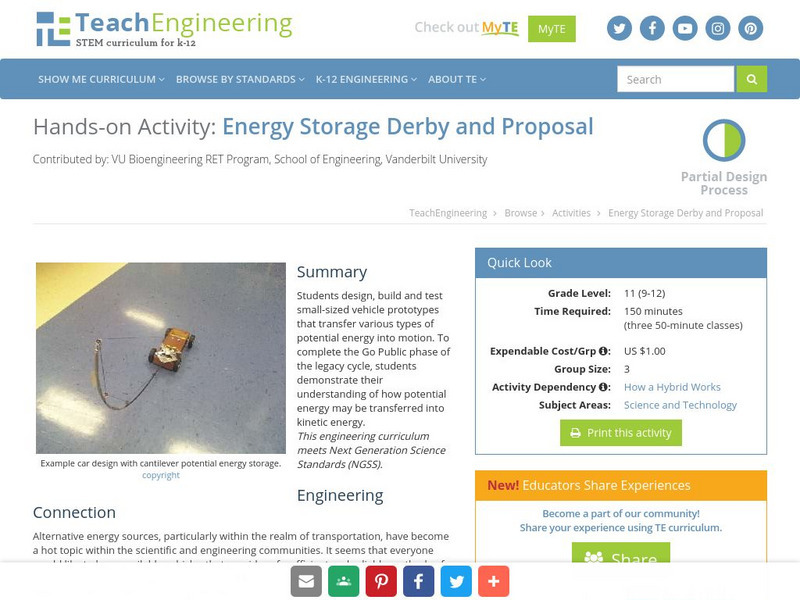
TeachEngineering
Teach Engineering: Energy Storage Derby and Proposal
In Activity 5, as part of the Going Public step, students demonstrate their knowledge of how potential energy may be transferred into kinetic energy. Students design, build and test vehicle prototypes that transfer various types of...
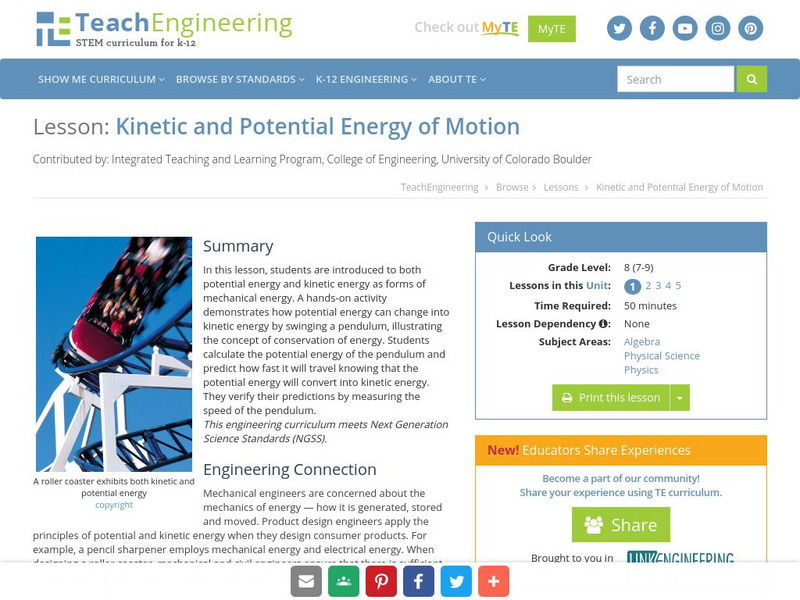
TeachEngineering
Teach Engineering: Kinetic and Potential Energy of Motion
In this lesson, learners are introduced to both potential energy and kinetic energy as forms of mechanical energy. A hands-on activity demonstrates how potential energy can change into kinetic energy by swinging a pendulum, illustrating...

CK-12 Foundation
Ck 12: Plix: Potential Energy Diagrams: Conservation of Energy
[Free Registration/Login Required] Drag the red point up and down to explore the interaction between potential energy and kinetic energy in a barbell.

Ducksters
Ducksters: Physics for Kids: Kinetic Energy
Kids learn about kinetic energy in the science of physics. The energy of motion can be calculated using mass and velocity. The standard unit is the joule. How it is different from potential energy.
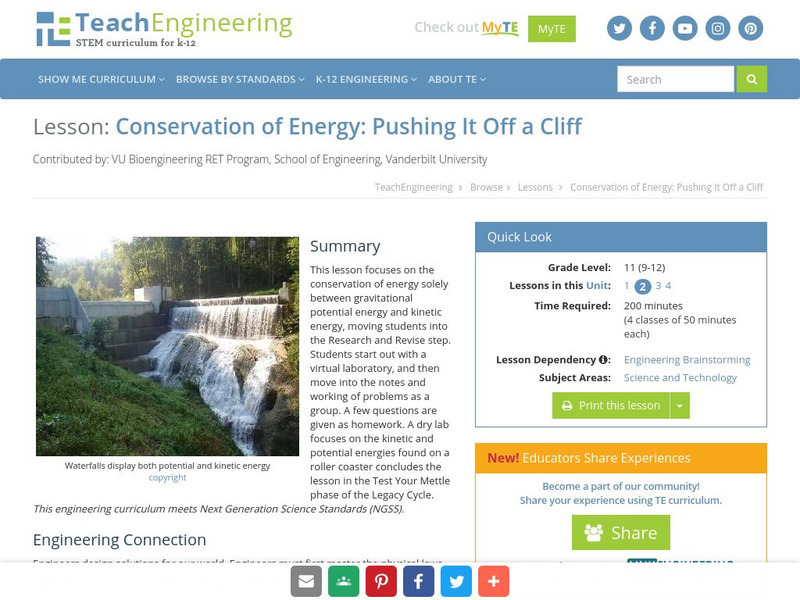
TeachEngineering
Teach Engineering: Pushing It Off a Cliff
Lesson 2 moves into the Research and Revise step and focuses on the conservation of energy solely between gravitational potential energy and kinetic energy. Learners start out with a virtual laboratory, and then move into the notes and...
Khan Academy
Khan Academy: Biology: Enzymes and Energy: Types of Energy
An article that reviews over the different types of energy: kinetic, potential, and chemical.
Concord Consortium
Concord Consortium: What Is Happening When a Spark Occurs?
Students define potential and kinetic energy, explore energy transfer and energy conservation, and connect energy to atomic structure. The following activities guide students to a conclusion: Activity 1. Can my finger start a fire?...
TeachEngineering
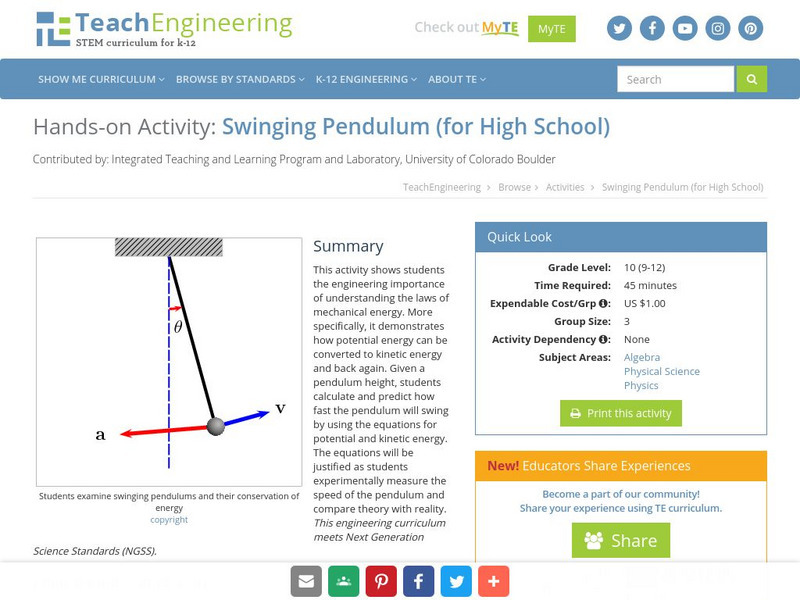
Teach Engineering: Swinging Pendulum
This activity shows students the engineering importance of understanding the laws of mechanical energy. More specifically, it demonstrates how potential energy can be converted to kinetic energy and back again. Given a pendulum height,...

eSchool Today
E School Today: Mechanical Energy
Learn about mechanical energy, and its forms of potential and kinetic.
Science Buddies
Science Buddies: Paper Roller Coasters: Kinetic and Potential Energy
In this lesson, your students will learn about kinetic and potential energy as they build their own roller coasters from simple classroom materials.
Texas Education Agency
Texas Gateway: Kinetic and Potential Energy
Given diagrams, illustrations or relevant data, students will identify examples of kinetic and potential energy and their transformations.
TeachEngineering
Teach Engineering: Energy of Motion
By taking a look at the energy of motion all around us, students learn about the types of energy and their characteristics. They first learn about the two simplest forms of mechanical energy: kinetic and potential energy, as illustrated...