Hi, what do you want to do?






Concord Consortium
Concord Consortium: What Makes Water Special?
Activity 4 investigates How does electron distribution impact our observations? Students have described how properties of molecules change depending on what atoms make up the molecule. In this activity students will use those ideas to...
TeachEngineering
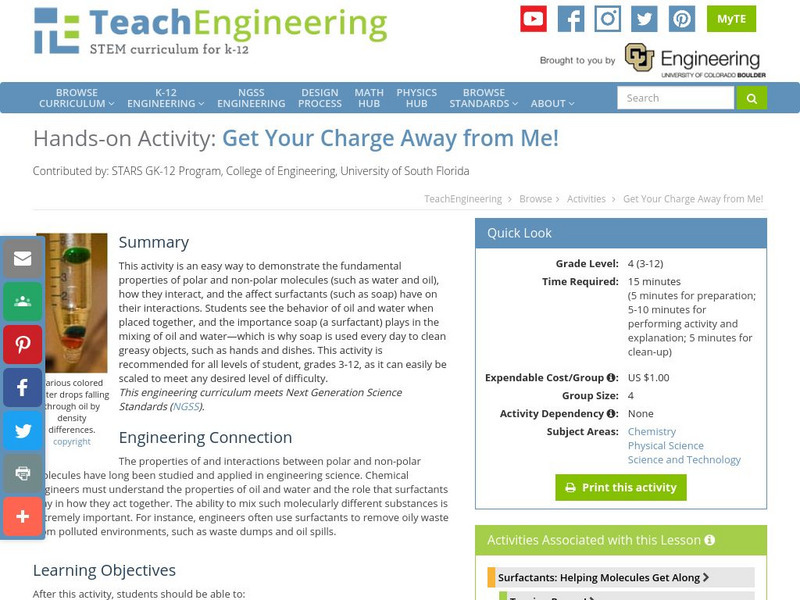
Teach Engineering: Get Your Charge Away From Me!
This activity is an easy way to demonstrate the fundamental properties of polar and non-polar molecules (such as water and oil), how they interact, and the affect surfactants (such as soap) have on their interactions. Students see the...
TeachEngineering
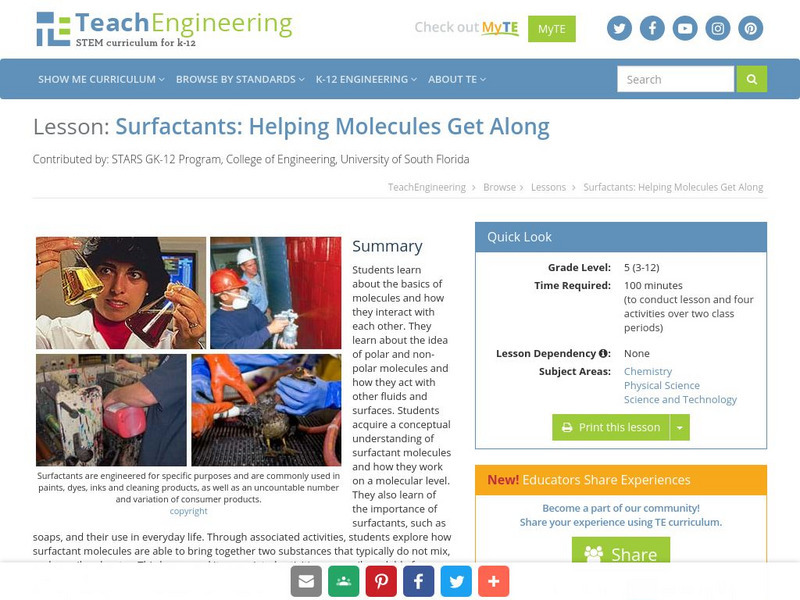
Teach Engineering: Surfactants: Helping Molecules Get Along
Students learn about the basics of molecules and how they interact with each other. They learn about the idea of polar and non-polar molecules and how they act with other fluids and surfaces. Students acquire a conceptual understanding...
TeachEngineering
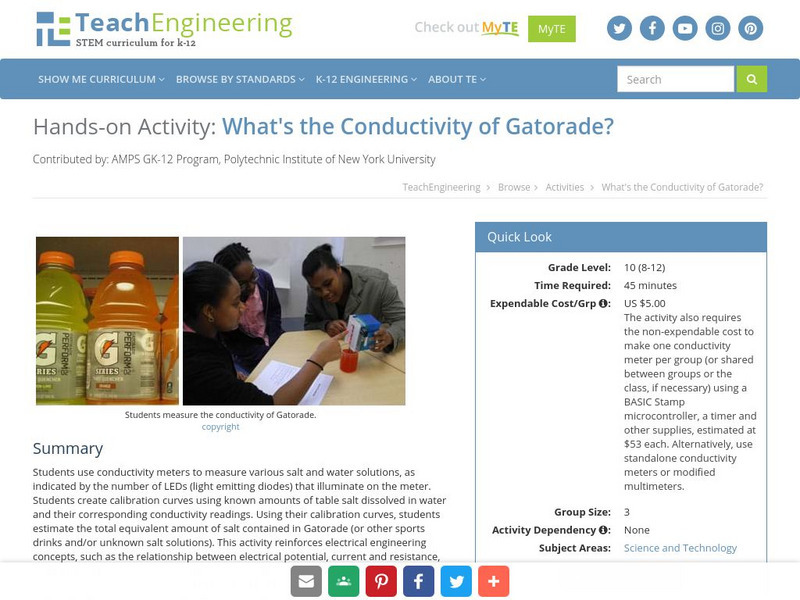
Teach Engineering: What's the Conductivity of Gatorade?
Students use conductivity meters to measure various salt and water solutions, as indicated by the number of LEDs (light emitting diodes) that illuminate on the meter. Students create calibration curves using known amounts of table salt...
Other
Tulane University: Physical Geology: Glaciers and Glaciation
Lots of information here about glaciation, types of glaciers, the formation of glacial ice, changes in glacier size, how glaciers move, glacial erosion, landforms produced by glaciers, glacial deposition and drift, effects of glaciation...
Other
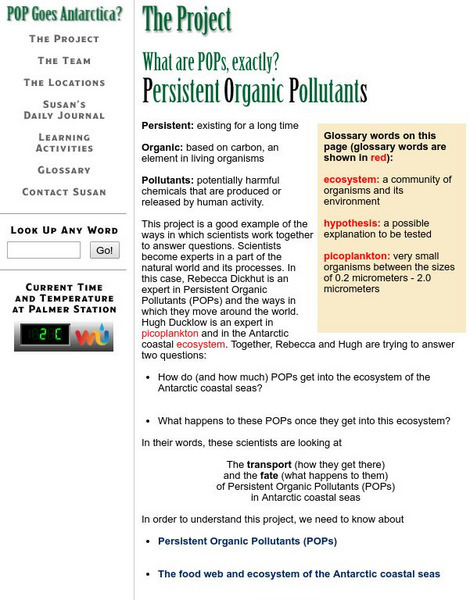
The Dirty Dozen Persistent Organic Pollutants
Use this site to learn about the effects of persistent organic pollutants on the ecology of Antarctic coastal waters. Information is presented for both teacher and student researcher.

American Museum of Natural History
American Museum of Natural History: O Logy: Arctic Story Puzzles
Construct a story about the Inuit or the polar bear from a series of pictures that can be put together in a sequence.
PBS
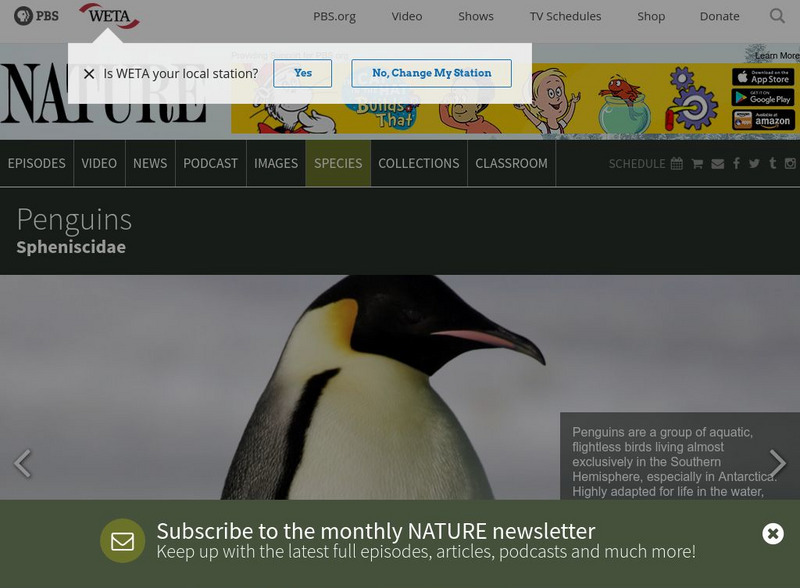
Pbs Nature: Penguins
Did you know that penguins can survive for more than 100 days without food or water? Discover more educational facts about these fascinating birds when you explore this site.
CK-12 Foundation
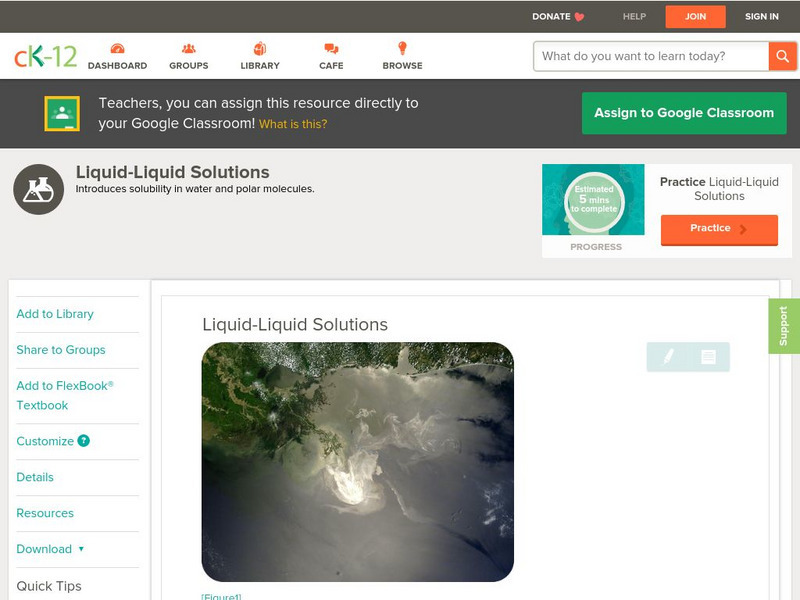
Ck 12: Chemistry: Liquid Liquid Solutions
[Free Registration/Login may be required to access all resource tools.] Covers solubility in water and polar molecules.
Concord Consortium
Concord Consortium: Micelles
Select an oil or water environment for molecules and observe how they are affected by interactions with their environment and each other.
Concord Consortium
The Concord Consortium: What Are Proteins and How Do They Fold Into Biologically Important Shapes?
In this learning module from The Concord Consortium, students will investigate how polar and nonpolar regions in big molecules interact to result in certain shapes and properties for those molecules.

NOAA
Noaa: Southern Region Weather: Global Circulations
"Global Circulations explain how air and storm systems travel over the Earth's surface. The global circulation would be simple (and the weather boring) if the Earth did not rotate, the rotation was not tilted relative to the sun, and had...

Smithsonian Institution
Tween Tribune: Ice Breaking Ship Gets Fired Up
One of the ships the United States has stationed in Antarctica is heading to warmer waters for intense cleaning.
American Chemical Society
Middle School Chemistry: Surface Tension
Explore the chemical properties involved in surface tension.
Frostburg State University
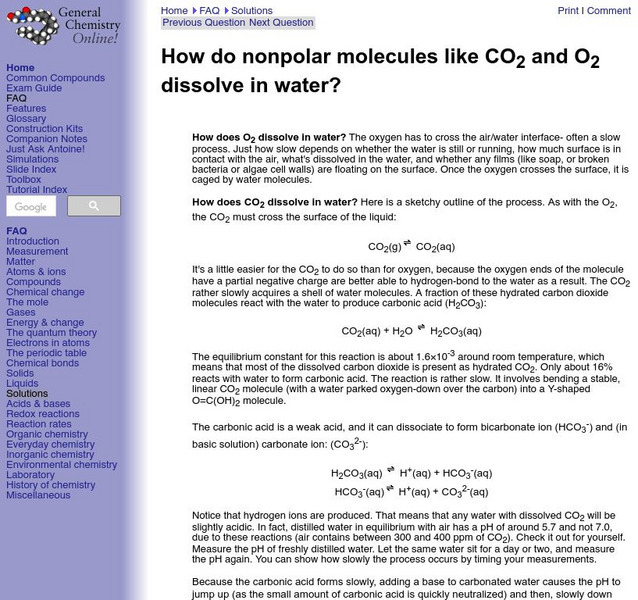
University of Frostburg: How Nonpolar Molecules Dissolve
This site from the University of Frostburg provides an explanation of the process by which nonpolar molecules dissolve in water.
University of Oregon
University of Oregon: Mars' Atmosphere
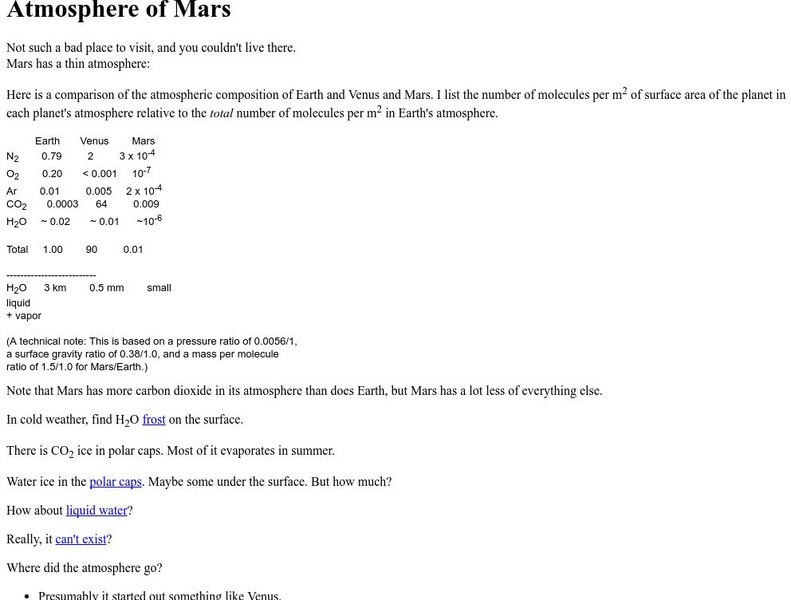
Here is a comparison of the atmospheric composition of Earth, Venus and Mars.
Science Education Resource Center at Carleton College
Serc: Mn Step: Spotting Chromatography
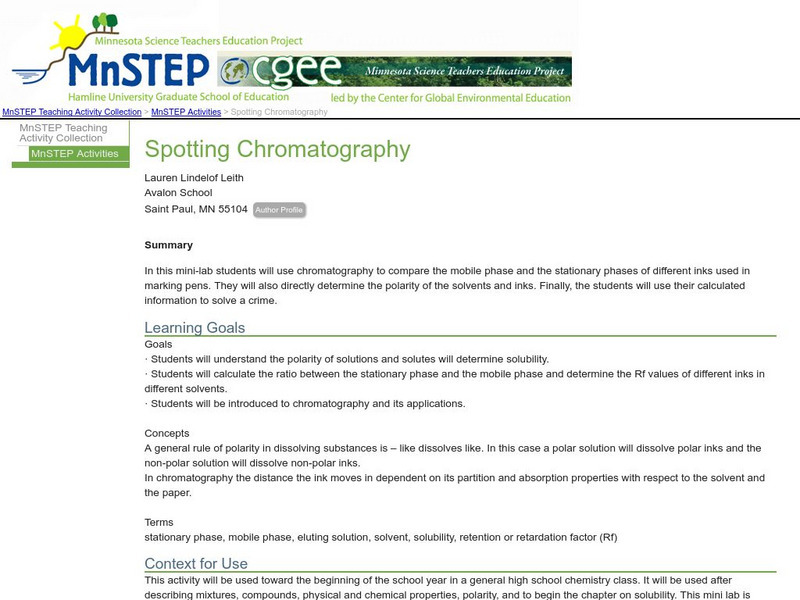
A lab activity that introduces chromatography using markers, plus water and acetone as the solvents. Young scholars will take measurements to compare the mobile and stationary phases of the inks, and find the polarity of the inks and...

Weather Wiz Kids
Weather Wiz Kids: Wind
Wind is air in motion. It is produced by the uneven heating of the earth's surface by the sun. Since the earth's surface is made of various land and water formations, it absorbs the sun's radiation unevenly. Two factors are necessary to...

TeachEngineering
Teach Engineering: Energy
Through nine lessons, students are introduced to a range of energy types--electrical, light, sound and thermal-as well as the renewable energy sources of wind, hydro (water) and solar power. Subjects range from understanding that the...
American Chemical Society
Middle School Chemistry: Lesson Plans: Temperature Changes in Dissolving
Media-rich instructional activity in which students discover that it takes energy to break bonds, and that energy is released when bonds are formed during the process of dissolving. They also determine whether dissolving is either...
Smithsonian Institution
National Museum of Natural History: Walrus
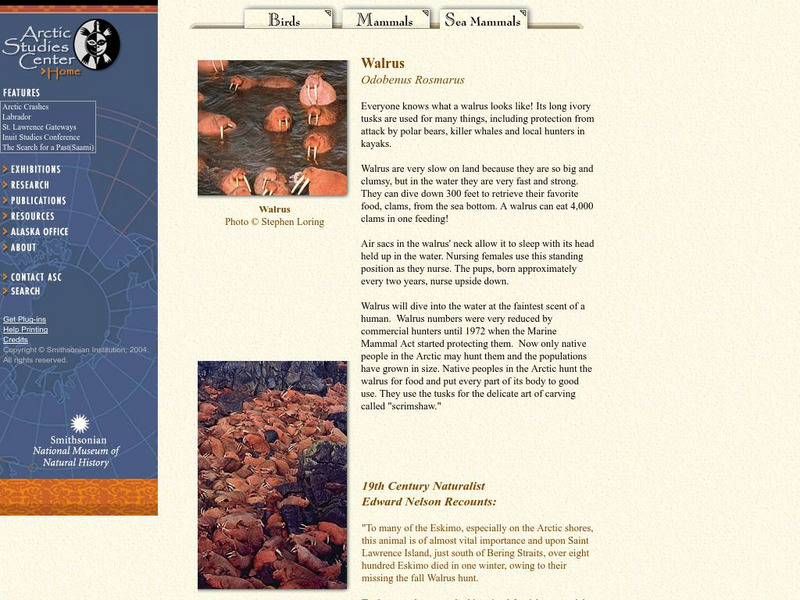
This Smithsonian website has a brief, but thorough, article on the Walrus that also includes pictures and an extensive quote from naturalist Edward Nelson.
Other
Nrdc: Are the Effects of Global Warming Really That Bad?
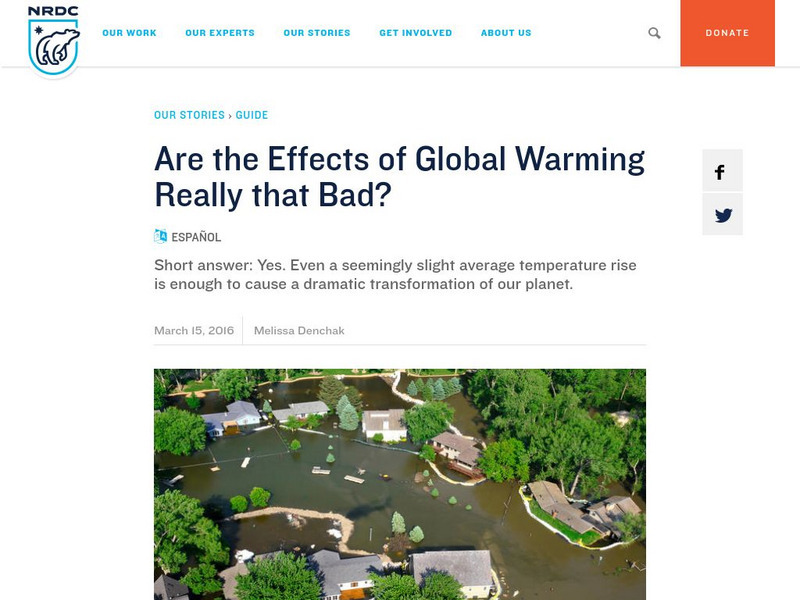
The problems of global warming are examined from the following perspectives: climate pattern changes, health effects, and ecosystem disruption. You will also find a number of NRDC related webpages further amplifying the topic of global...
Other
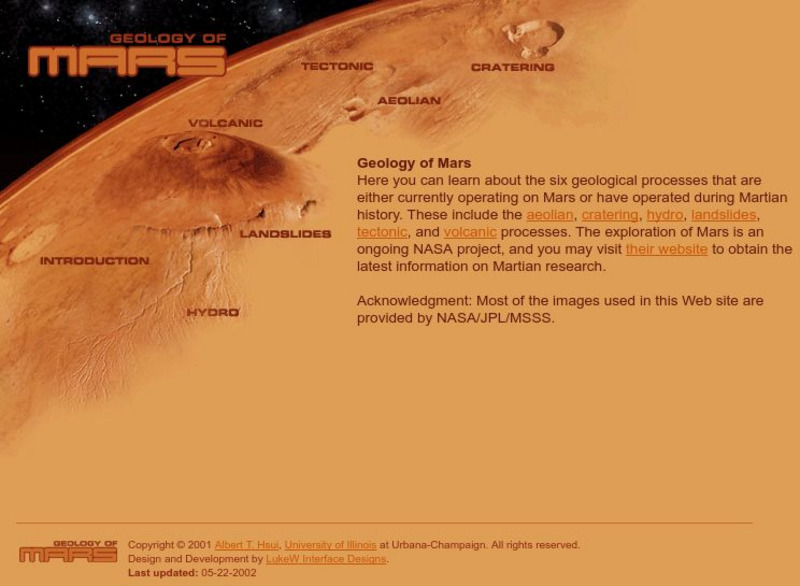
Luke W Interface Designs: Geology of Mars
Learn about six geological processes from Luke W Interface Designs that are happening or have happened on Mars. Ex: aeloian, cratering, landslides, volcanic, and more.
Curated OER
Etc: Maps Etc: Australia and the West Pacific in the Ice Age, 20,000 To10,000 Bc
A map showing Australia and the Western Pacific in the Glacial Age (the Maximum of the Fourth Ice Age, about 50,000 years ago - Wells). While the waters were held up in the polar ice caps, the sea-level was low enough to enable...