Hi, what do you want to do?





TeachEngineering
Teach Engineering: Get Your Charge Away From Me!
This activity is an easy way to demonstrate the fundamental properties of polar and non-polar molecules (such as water and oil), how they interact, and the affect surfactants (such as soap) have on their interactions. Students see the...
TeachEngineering
Teach Engineering: Surfactants: Helping Molecules Get Along
Students learn about the basics of molecules and how they interact with each other. They learn about the idea of polar and non-polar molecules and how they act with other fluids and surfaces. Students acquire a conceptual understanding...

TeachEngineering
Teach Engineering: Energy
Through nine lessons, students are introduced to a range of energy types--electrical, light, sound and thermal-as well as the renewable energy sources of wind, hydro (water) and solar power. Subjects range from understanding that the...
Other
Tulane University: Physical Geology: Glaciers and Glaciation
Lots of information here about glaciation, types of glaciers, the formation of glacial ice, changes in glacier size, how glaciers move, glacial erosion, landforms produced by glaciers, glacial deposition and drift, effects of glaciation...
Other
The Dirty Dozen Persistent Organic Pollutants
Use this site to learn about the effects of persistent organic pollutants on the ecology of Antarctic coastal waters. Information is presented for both teacher and student researcher.

Smithsonian Institution
Tween Tribune: Ice Breaking Ship Gets Fired Up
One of the ships the United States has stationed in Antarctica is heading to warmer waters for intense cleaning.
Other
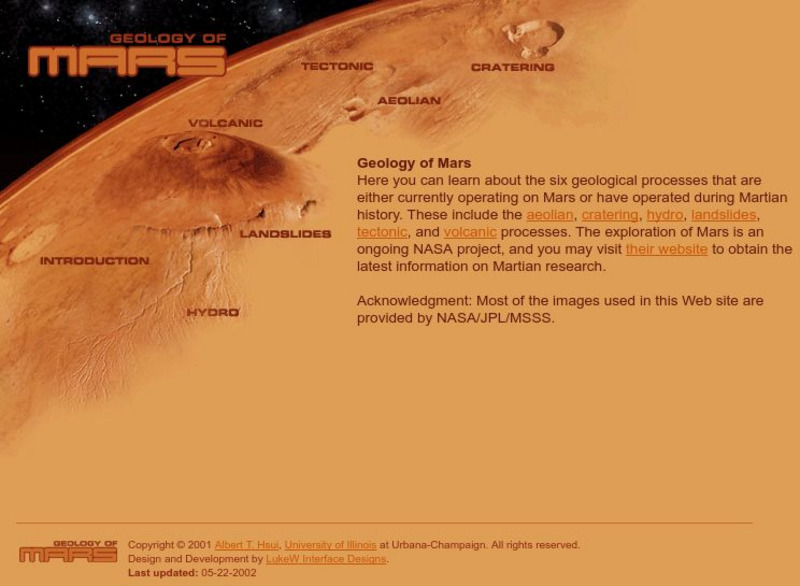
Luke W Interface Designs: Geology of Mars
Learn about six geological processes from Luke W Interface Designs that are happening or have happened on Mars. Ex: aeloian, cratering, landslides, volcanic, and more.

Weather Wiz Kids
Weather Wiz Kids: Wind
Wind is air in motion. It is produced by the uneven heating of the earth's surface by the sun. Since the earth's surface is made of various land and water formations, it absorbs the sun's radiation unevenly. Two factors are necessary to...

Curated OER
Etc: Maps Etc: Australia and the West Pacific in the Ice Age, 20,000 To10,000 Bc
A map showing Australia and the Western Pacific in the Glacial Age (the Maximum of the Fourth Ice Age, about 50,000 years ago - Wells). While the waters were held up in the polar ice caps, the sea-level was low enough to enable...