Hi, what do you want to do?






Crash Course
The Sex Lives of Nonvascular Plants: Alternation of Generations
Plants evolved more than 400 million years ago into two types — vascular and nonvascular. Here's a video that explains the difference between vascular and nonvascular plants and then focuses on the over 24,000 types of nonvascular...

Scholastic
Study Jams! The Nitrogen Cycle
Expose your class to the steps of the nitrogen cycle with this short clip. Colorful computer imagery and animation explain how nitrogen travels from the atmosphere as a gas into plants and soil, where bacteria convert it into nitrates....

SciShow
Wasp Nests and Bee Hives
It turns out that wasps and bees have a lot more in common that the word ouch! Junior entomologists explore the similarities and differences between flying, stinging insects with the 136th installment in a 143-part series of science...

Crash Course
Plant Cells
Why can't plants escape prison? Because their cells were surrounded by walls. Introduce viewers to the evolution of plants with a video that discusses the differences between prokaryotic and eukaryotic cells, plant cells' organelles, and...

Crash Course Kids
Gotta Eat!
Why do we eat? We eat because we need energy, and humans need energy to grow. This is the focus of a video that explains why organisms need food to live.

MinuteEarth
Who Are Flowers Trying to Seduce?
Learn the tricks plants use to attract insects and animals in their quest for pollination. A thorough video lesson describes plant adaptations that meet their reproductive needs. From bees to rodents to bats, the narrator describes how...

Bozeman Science
LS2A - Interdependent Relationships in Ecosystems
Everybody needs somebody... especially in nature! Show your young ecologists the finer points of NGSS standard LS2A, Interdependent Relationships in Ecosystems, using the helpful ideas in the video. The narrator discusses the...

Deep Look
These Termites Turn Your House into a Palace of Poop
Everyone knows that termites are bad news for the wooden parts of a home. How do they do it, and how can we stop them? Go inside a termite (literally) to discover the scores of bacteria and protists that help make wood taste good. The...

American Museum of Natural History
Meet the Ologist: Mark Siddall
Fun fact: poisons in nature can benefit humans if they are used correctly. A video interview of a zoologist introduces the concept of poisons. The remote learning resource defines poison and provides examples in nature as well as how...

Be Smart
Ghosts of Evolution
Since avocados are fruits, is guacamole a smoothie? The video explains how trees that produce fruit with no natural way to spread their seeds are still alive. It goes into detail about avocado trees and ginko biloba trees.

Deep Look
Banana Slugs: Secret of the Slime
Banana slugs eat animal droppings and leaves, all while generating waste that acts as a fertilizer. The video explains the slug's role in the ecosystem. It highlights the benefits of the slime for slugs' movement, food source, and even...
CPALMS
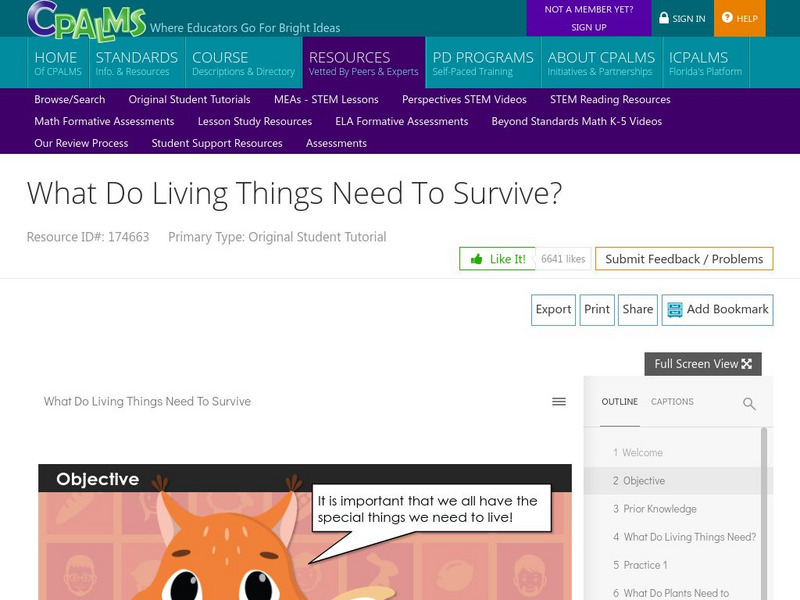
Cpalms: What Do Living Things Need to Survive?
Explore the needs of living things, including plants and animals, as you complete this interactive tutorial.

CPALMS
Cpalms: What Do Living Things Need to Survive?
Explore the needs of living things, including plants and animals, as you complete this interactive tutorial.

PBS
Pbs Learning Media: Habitat and Diet in Racehorse Development
This animated segment from KET's Electronic Field Trip to a Horse Farm demonstrates one of the ways calcium, a naturally occurring mineral derived from limestone, enters a horse's diet to give it an advantage in bone strength. [1:09]
PBS
Pbs Learning Media: Dinosaur Train: Water
In this Dinosaur Train clip, Dr. Scott the paleontologist explains the water cycle, and why living creatures need water to live. This clip helps students understand the negative effects a drought has on plants and animals, and how plants...
PBS
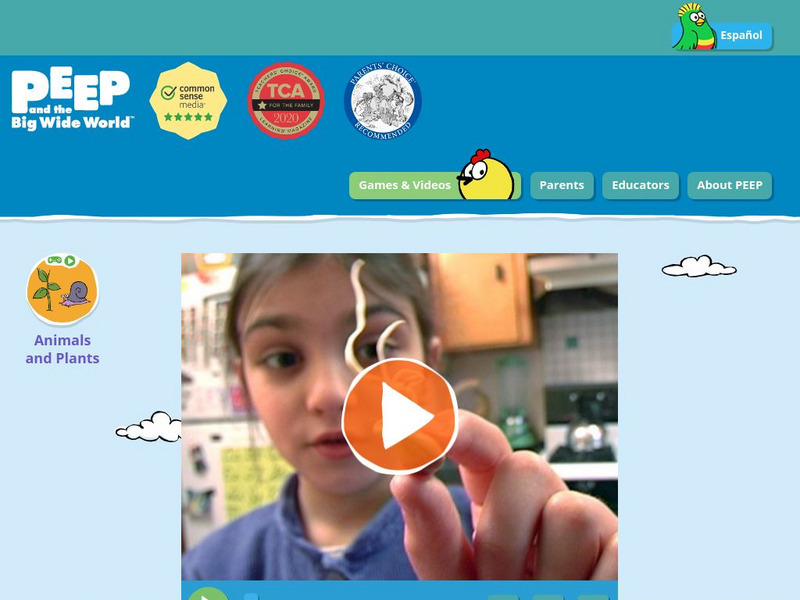
Wgbh: Peep and the Big Wide World: Animals and Plants: Experimenting With Seeds
Children grow plants from seeds and learn what seeds need to grow. [1:26]