Hi, what do you want to do?






Science Buddies
Science Buddies: You Are What You Eat!
Thinking about improving your sports performance? Want to help friends and family make the most of their physical fitness activities? One factor to consider is food. Whether you realize it or not, what you eat does change your body. It...

Science Buddies
Science Buddies: A Day in the Life of Your Heart
Heart rates can be determined by the amount of physical activity your body is engaging in. The more physically active you are, the faster your heart beats. You can measure the rate your heart is beating by taking your pulse. This science...
Science Buddies
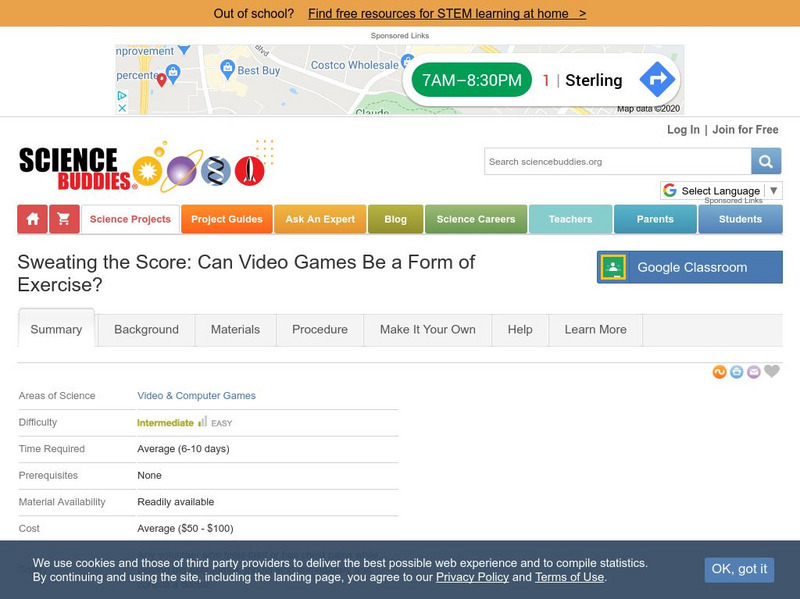
Science Buddies: Sweating the Score: Can Video Games Be a Form of Exercise?
The majority of video games are sedentary, meaning done in one position, but there is an increasing trend toward video games where the players are physically active. Whether or not these type of video games can be considered exercise is...
Science Buddies
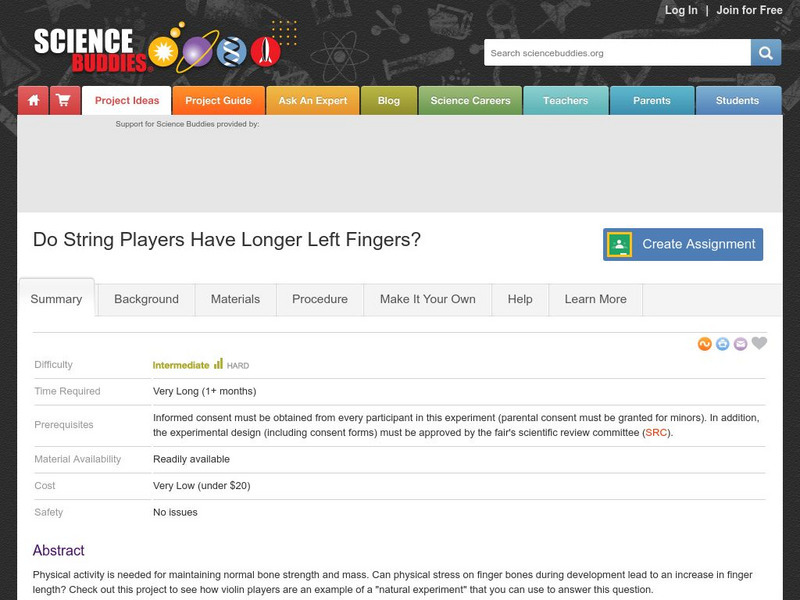
Science Buddies: Do String Players Have Longer Left Fingers?
Physical activity is needed for maintaining normal bone strength and mass. But whether physical stress on finger bones during development leads to an increase in finger length, is something you will discover in this project not by...
Science Buddies
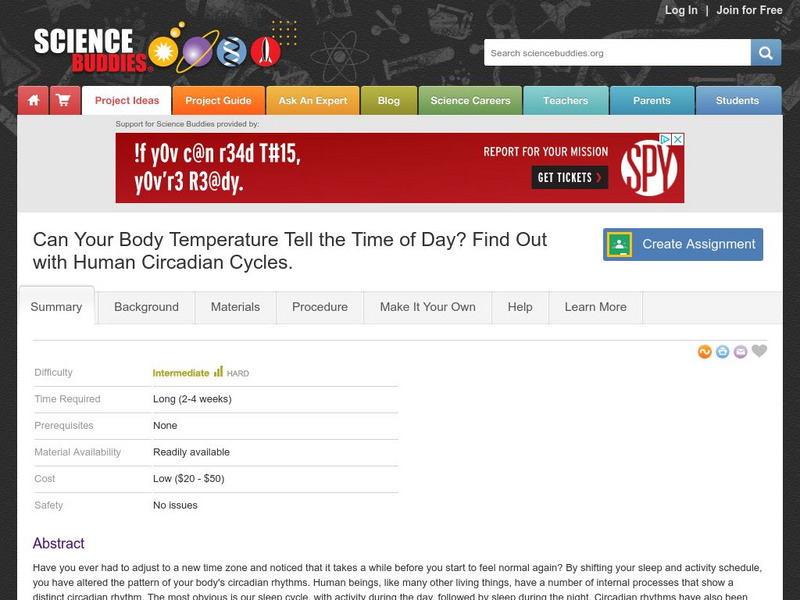
Science Buddies: Can Your Body Temperature Tell the Time of Day?
If you have ever had to adjust to a new time zone, you have noticed that it takes a while before you start to feel normal again. By shifting your sleep and activity schedule, you have altered the pattern of your body's circadian rhythms....
Science Buddies
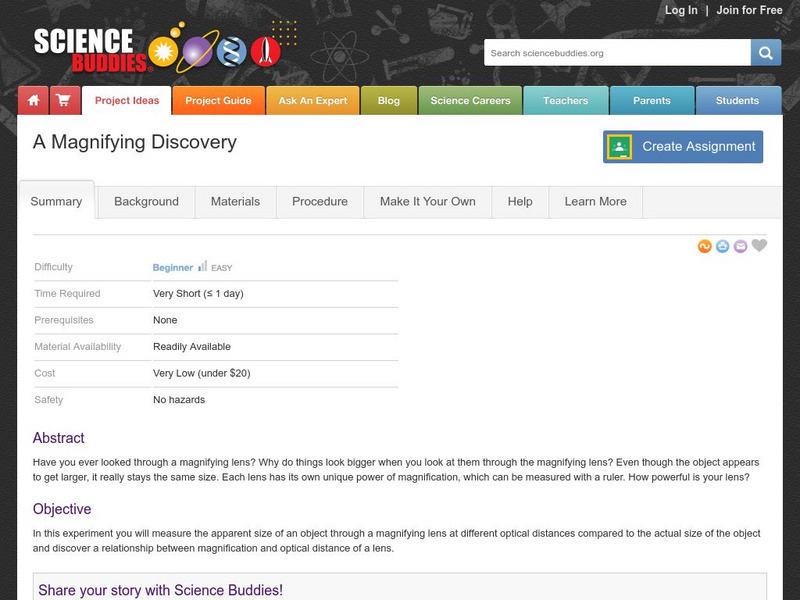
Science Buddies: A Magnifying Discovery
Have you ever looked through a magnifying lens? Why do things look bigger when you look at them through the magnifying lens? Even though the object appears to get larger, it really stays the same size. Each lens has its own unique power...

Pennsylvania State University
Applied Physics: Model Analysis of an Electric Guitar
Great site explores the physics behind an electrical guitar. Outlines process for conducting an experiment on sound vibrations and provides animated GIF movies showing the first five modes of vibration.
Children's Museum
The Children's Museum of Indianapolis: Sports Science and Wellness
This unit of study contains three lessons, each with three experiences that may be taught together or individually. Each lesson plan will connect to science and/or math standards, along with a health standard or sports connection.
Science and Mathematics Initiative for Learning Enhancement (SMILE)
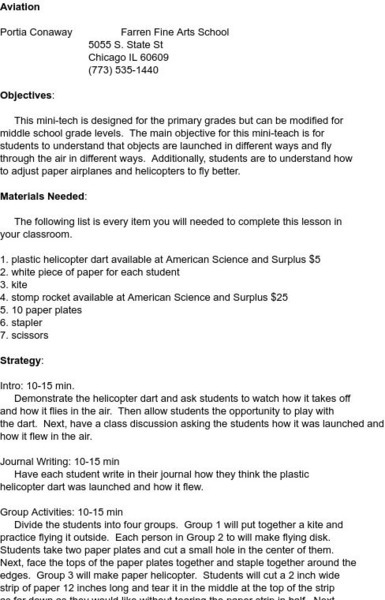
Smile: Lab Activity: Aviation
This site from the Illinois Institute of Technology provides a student lab activity in which the flight of a paper airplane is investigated and studied. Designed for primary grades, but easily adaptable for junior high students.

NASA
Nasa: Oceanography
Join NASA in its study of oceanography and learn about the Earth system, the physical ocean, and life in the ocean. Try out the Giovanni: Earth Data Visualization Tool and access satellite-derived data to enhance the learning experience.

Alabama Learning Exchange
Alex: What's the Matter: A Sinker or Floater?
Students will explore matter that sinks or floats when submerged in water and that matter is categorized as either a sinker or a floater. Students will work actively in small, cooperative learning groups as well as gather in a whole...
Science and Mathematics Initiative for Learning Enhancement (SMILE)
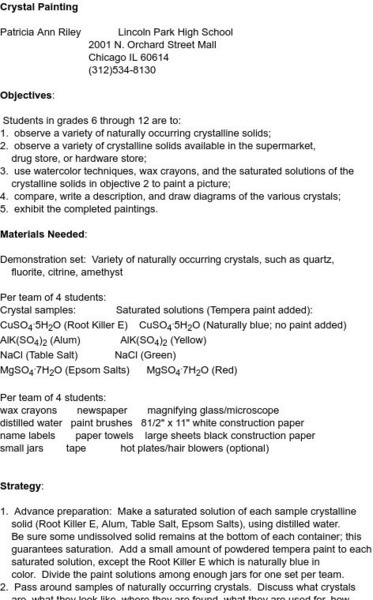
Smile: Crystal Painting
From the Science and Mathematics Initiative for Learning Enhancement (SMILE) program. A lesson plan in which young scholars explore the nature and structure of a variety of naturally occurring crystals, such as quartz, fluorite, citrine,...
Science and Mathematics Initiative for Learning Enhancement (SMILE)
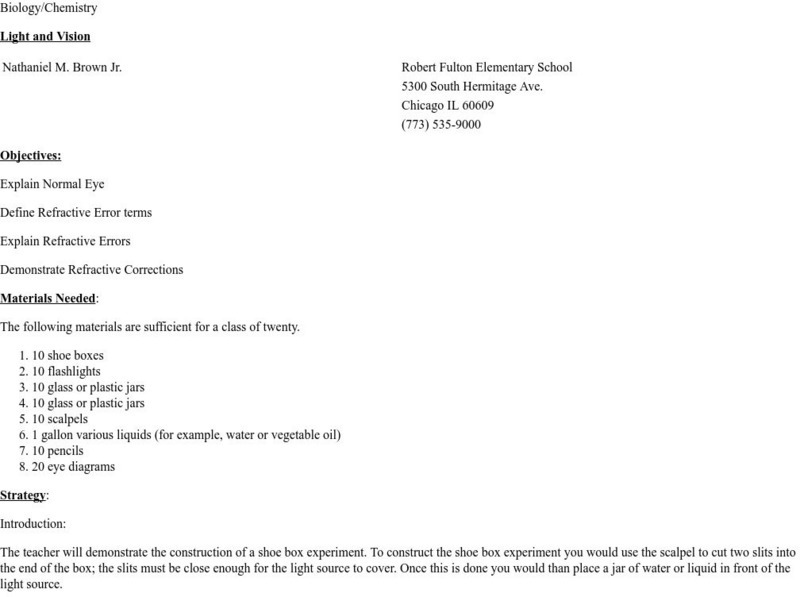
Smile: Light and Vision
Lesson plan should be used for intermediate learners. Students work in pairs or groups to create a shoe box that will bend light.