Hi, what do you want to do?





Other
Parts of Plants
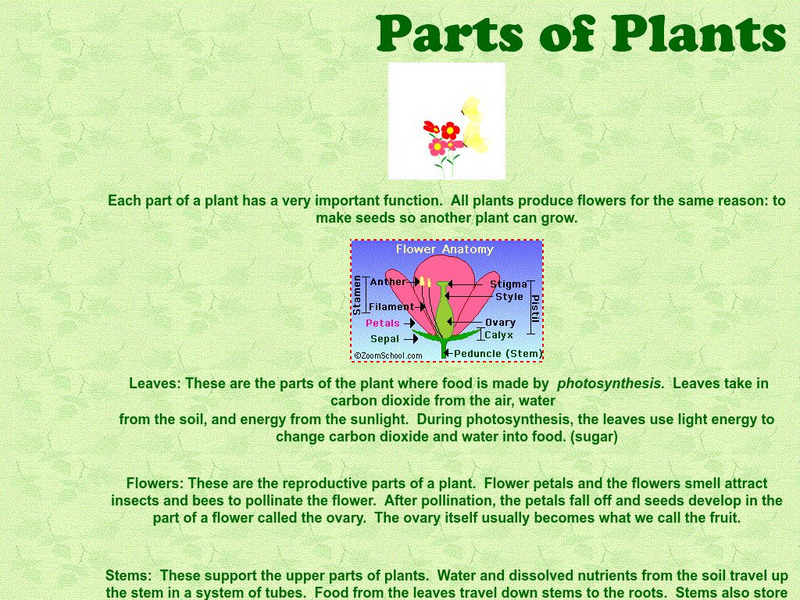
Each part of a plant has a very important function. All plants produce flowers for the same reason: to make seeds so another plant can grow.
University of Illinois
University of Illinois Extension: Plantenstein Is the Suspect!
Detective Le Plant has discovered that one plant can produce many other plants. He needs you to help him find out how this happens. Follow along and learn about the parts of flowers and reproduction. Along the way, you will be quizzed!
Estrella Mountain Community College
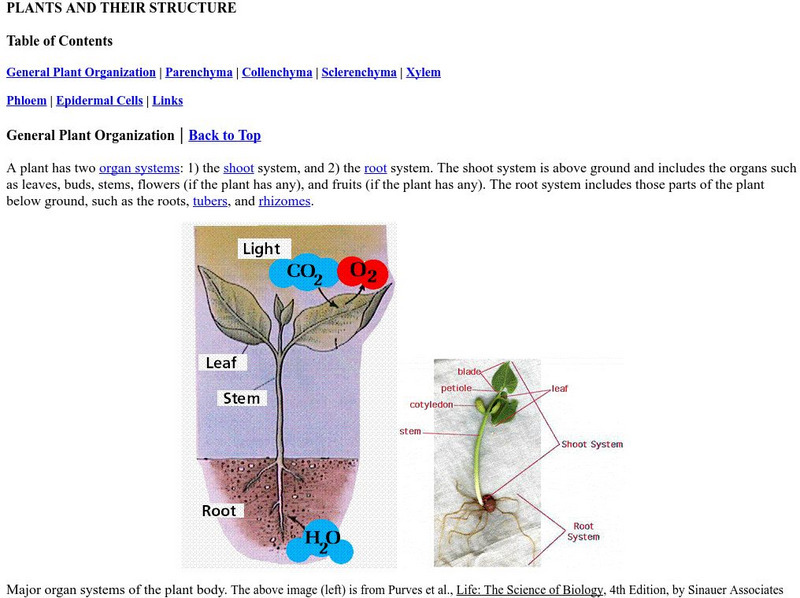
Online Biology Book: Plants and Their Structure
A college-level, online textbook explains plant structure at length using full-color illustrations and labeled diagrams.

University of Illinois
University of Illinois Extension: The Great Plant Escape
Detective Le Plant has found a strange note attached to his door. It says, "A bulb is a bulb, but not always." You and Detective Le Plant are now about to begin to unravel the true meaning of this message. Follow the clues, answer...

Alabama Learning Exchange
Alex: Why Roots, Stems, and Leaves Are Important
This lesson emphasizes the importance of roots, stems, and leaves to plants. Students will explore Internet sites and do a hands-on experiment to learn facts about these parts of plants.
Columbia University
Columbia University: Introduced Species Summary Project
The purpose of this website is to provide information that would help a natural resources manager or concerned citizen to understand the basic biology of a non-native species and whether and how to respond to its arrival. Most of the...

Alabama Learning Exchange
Alex: Exploring Plant Leaves
During this lesson, first-grade young scholars become plant explorers. They explore the Internet and take a nature walk to learn the similarities and differences in plants and leaves.

Middle School Science
Middle School Science: Observing Tree Rings
In the lab experiment site, you will determine the age of a tree, see if you can determine what years had more precipitation than others, and label the cross section of a tree: bark, heartwood, sapwood, and rings.
Smithsonian Institution
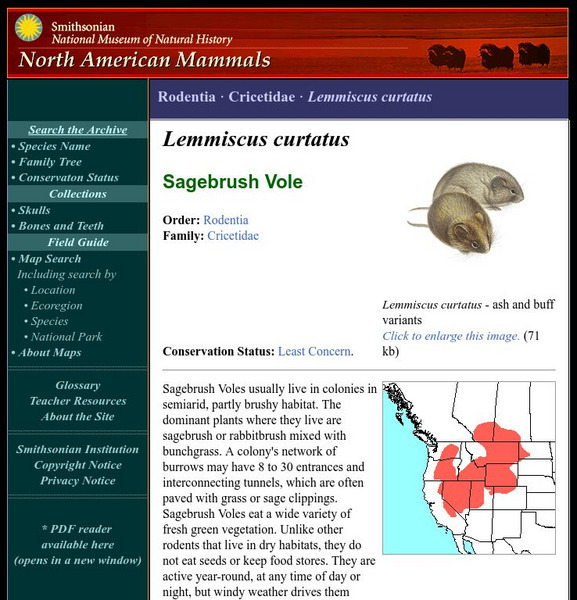
National Museum of Natural History: American Mammals: Sagebrush Vole
Sagebrush Voles usually live in colonies in semiarid, partly brushy habitat. The dominant plants where they live are sagebrush or rabbitbrush mixed with bunchgrass. Learn more about the Lemmiscus curtatus, more commonly known as a...