Hi, what do you want to do?






Curated OER
Nouns and Adjectives
In this nouns and adjectives worksheet, students recognize nouns and adjectives. Students look at six sentences and pick out the adjectives, nouns used as adjectives, and nouns for each sentence.

Curated OER
The Prairie Dog That Met the President
StudentS name and discuss facts of the characters in "The Prairie Dog that Met the President". They create a 4 to 8 beat chant about a character from the opera, play a percussion instrument with an assigned rhythm and identify a melody...

Curated OER
Tsunamis
Students investigate the natural disasters known as tsunamis by researching the Internet. In this nature lesson, students define the word tsunami and discuss how they are created. Students complete an online activity based on...

Curated OER
Galapagos - Discover the Diversity
Pretend you are exploring a newly discovered species of fish in the Galapagos. Your budding marine biologists access FishBase Database's list of marine/brackish fishes and choose one to research. The link through this website does not...

Curated OER
Cathedral in the Sea
Young scholars construct a model giant kelp and kelp forest inhabitants based on field-guide photographs. Students also place animal cutouts in appropriate positions on or near the plant.

Curated OER
$$$eaweed
Students compare and evaluate the world's different seaweeds. In this investigative lesson students study seaweed and the harvesting of it. They then interpret the data collected and graph the seaweed production.

Curated OER
Barnet Atmosphere Adv Word Search Puzzle
For this science and language arts worksheet, students analyze 30 words in a word bank which pertain to the atmosphere and weather. Students find the words in a word search. The meaning of the title is unclear.

E-learning for Kids
E Learning for Kids: Science: Pacific Ocean: What Can We Find on a Beach?
Josephine lives on the Marshall Islands. Follow her to the beach and find out what kinds of plants and animals live there.
Smithsonian Institution
National Museum of Natural History: Ocean Planet
Detailed website that was a companion to a 1995 traveling exhibit of the Smithsonian. Links to lesson plans and other educational materials are at the bottom of the page. Enter the exhibition to explore the world of the ocean.

The Franklin Institute
Missouri Botanical Garden: Ocean Facts
Click on all the links to find out many interesting facts about the ocean. Why is the ocean blue? Why is it salty? Where do most of the animals and plants live? Which ocean is the biggest? The deepest? How much of the Earth is covered by...
Missouri Botanical Garden
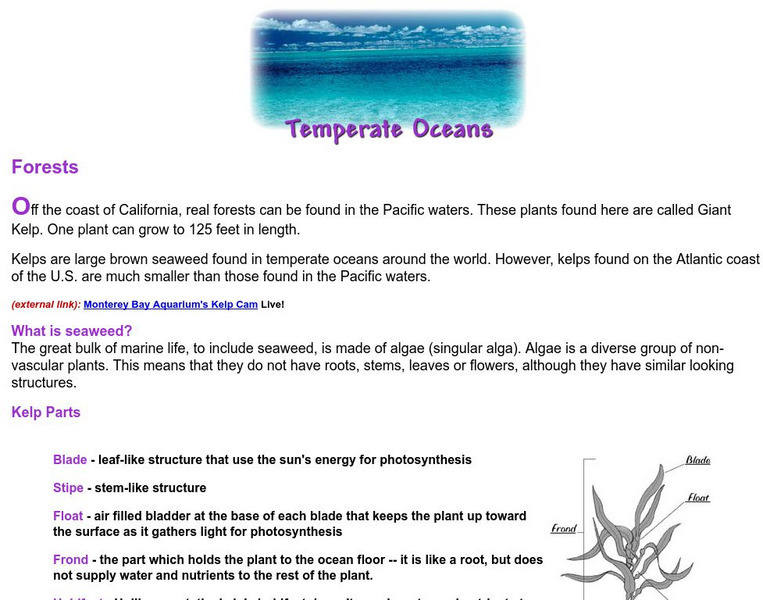
Missouri Botanical Garden: Giant Kelp
Learn about forests under the Pacific Ocean! Giant kelp is a forest under the ocean that is divided into layers based on the kind of animal life found there. Kelp is useful in making adhesives, dairy products, and pharmaceutical...
NOAA
Noaa: Year of the Ocean, Kids and Teachers Corner
Great resources on a variety of ocean and environmental concerns, endangered plants and animals, climate and habitats, frequently asked questions and fact sheets.
Other
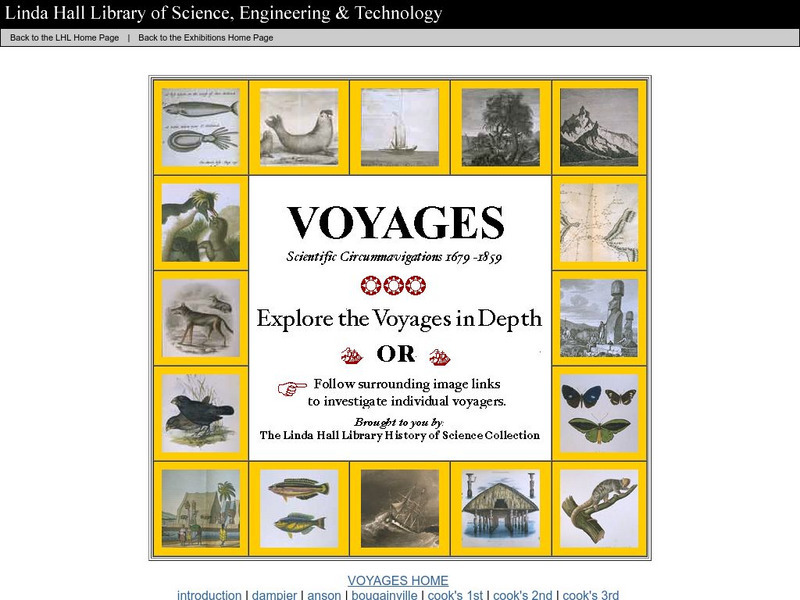
Voyages: Scientific Circumnavigations: Dampier
Read about the unlikely journals and observations of William Dampier, an English pirate who sailed the Pacific, making landfall in the Philippines, East Indies, and Australia. See his maps, descriptions of the Pacific, and observations...
Scholastic
Scholastic: Study Jams! Science: Earth's Oceans
Oceans contain 97% of the water on the Earth and are home to a huge number of living creatures. View an informative slideshow of the ocean and its inhabitants and then test yourself on what you learned.
Missouri Botanical Garden
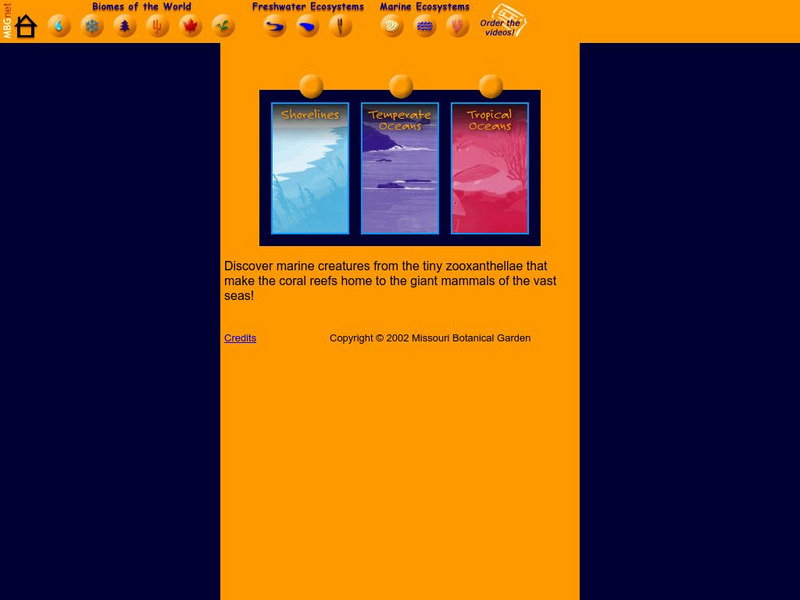
Missouri Botanical Garden: What's It Like Where You Live? (Oceans)
This site contains a wealth of information. You can click on shorelines, temperate oceans and tropical oceans. Each page contains links to even more information.