Hi, what do you want to do?






Grammarly
Grammarly Handbook: Organize Your Thoughts in Patterns
Tips on organizing ideas in an essay.
Grammarly
Grammarly Handbook: Patterns of Organization for Academic Texts
A list of six different ways to organize a text with links to more information for each.

Texas Education Agency
Texas Gateway: Make Inferences in Informational/expository Text
[Accessible by TX Educators. Free Registration/Login Required] In this lesson, you will be taking a look at how authors of informational texts, such as expository texts, organize their writing and the effects that organization can have...
Sophia Learning
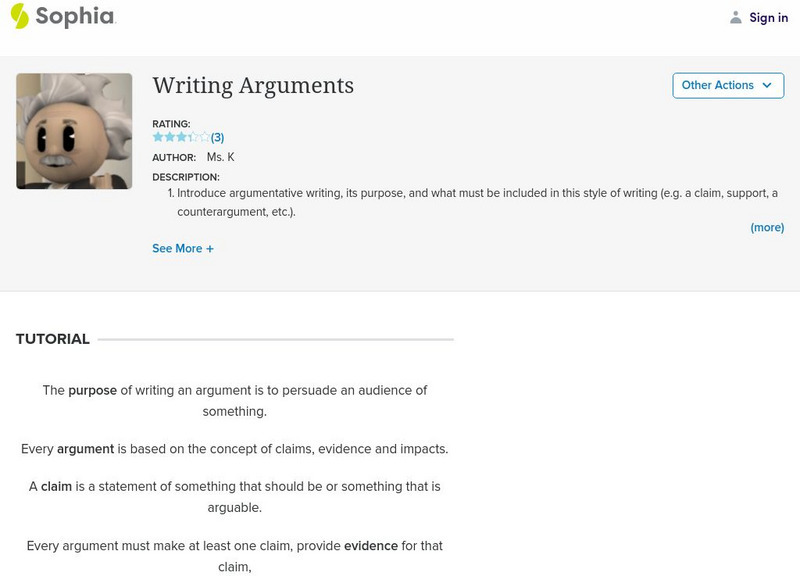
Sophia: Writing Arguments
This tutorial focuses on argumentative and persuasive writing: it lists and defines the components of arguments, provides a flow chart for argumentative writing, defines counterarguments, and lists the 3 elements of persuasion: ethos,...
![Scholastic: Informational Text: Reading Response: Compare Contrast [Pdf] Graphic](https://content.lessonplanet.com/knovation/original/266411-709e2a628c559574de71e4fd23831b4b.jpg?1661510822 "Scholastic: Informational Text: Reading Response: Compare Contrast [Pdf] Graphic")
Scholastic
Scholastic: Informational Text: Reading Response: Compare Contrast [Pdf]
This graphic organizer can be use with students when they read an informational text. Using a Venn diagram to organize content, students will write important similarities and differences after reading an informational text and analyzing...
Louisiana Department of Education
Louisiana Doe: Louisiana Believes: Ela Guidebooks: Organizational Frames for Writing
This strategy helps students prepare and organize thoughts about text, develop a written response in the form of a short or extended response, and use standard English grammar, usage, and conventions in writing.
Other
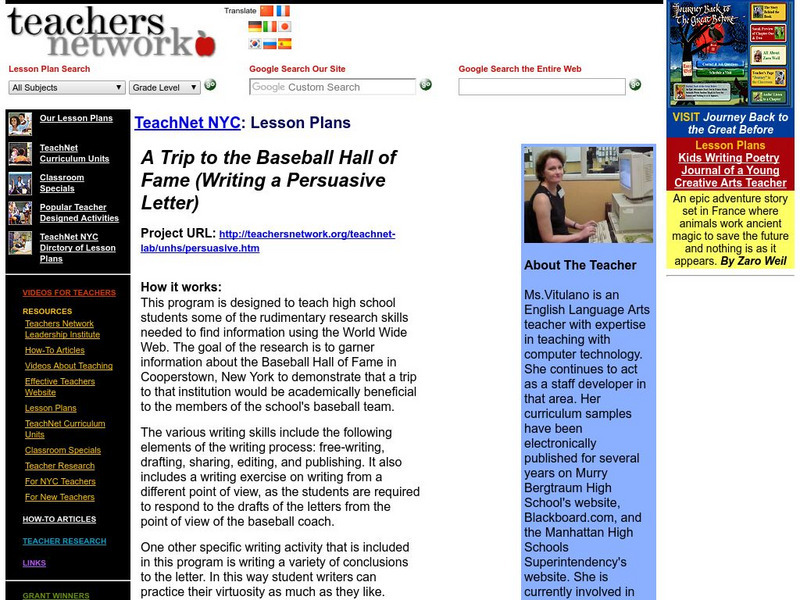
Teachers Network: A Trip to Baseball Hall of Fame (Writing a Persuasive Letter)
This lesson focuses on improving learners' persuasive writing skills. Students reseach baseball and then write a persuasive essay to convince the baseball coach that a trip the Baseball Hall in Fame would be beneficial to the members of...
Houghton Mifflin Harcourt
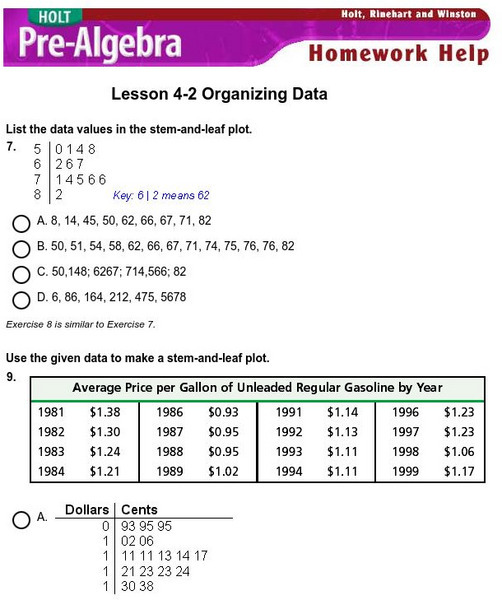
Holt, Rinehart and Winston: Homework Help Independent Practice: Stem and Leaf Plot
Get independent practice organizing data and using stem-and-leaf plots. Each incorrect response gets a text box explanation and another try. Correct responses are confirmed.

Better Lesson
Better Lesson: W.3.1a: Introduce the Topic or Text They Are Writing About
Links to 12 lessons and activities that build student skills in standard W.3.1a: Introduce the topic or text they are writing about, state an opinion, and create an organizational structure that lists reasons.

Education Development Center
Tune in to Learning: Reading Charts and Graphs
Practice graph reading skills with these exercises and companion tutorials.
E Reading Worksheets
E Reading Worksheets: Text Structure: Reading Test 4
In this text structure reading test, students read passages and select the pattern of organization used; they sometimes have to explain their reasons using evidence from the text.
Read Works
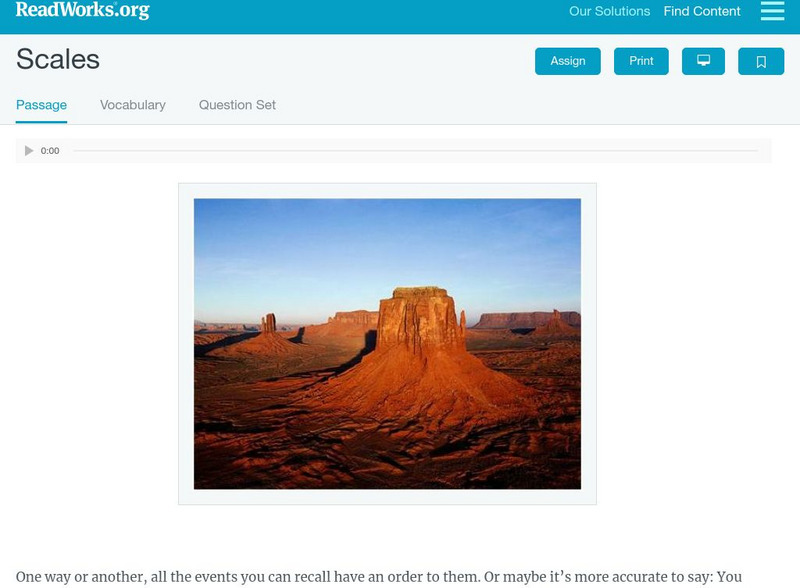
Read Works: Scales
[Free Registration/Login Required] An informational text about how the human brain organized past memories. A question sheet is available to help students build skills in reading comprehension.
Capital Community College Foundation
Guide to Grammar and Writing: Principles of a Composition
Writing a Paper? Here at the Capital Community College is everything you could ever ask for while preparing your essay. This site includes the writing process, structure, thesis statement, transitions, the computer as a writing...
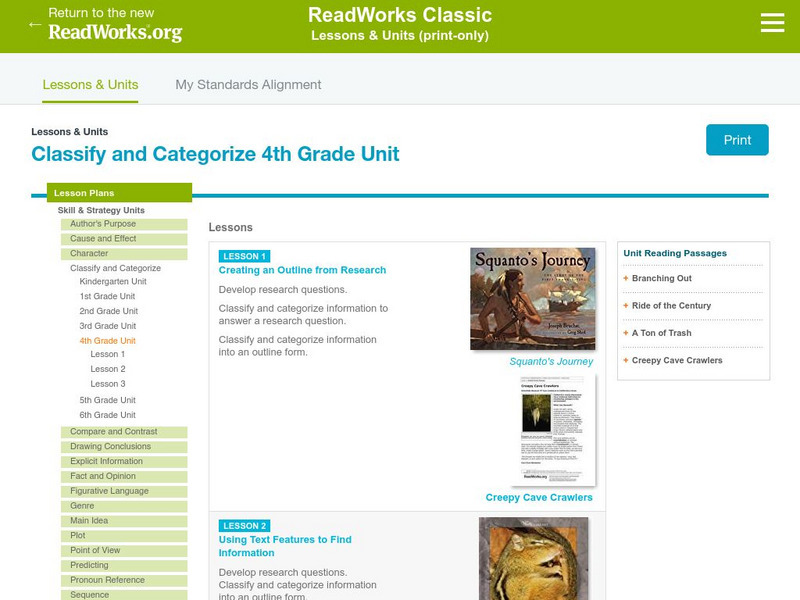
Read Works
Read Works: Classify and Categorize 4th Grade Unit
[Free Registration/Login Required] A three-lesson unit on classifying and categorizing through which students learn how to organize research into an outline, use text features to locate information, and write a research report. Lessons...
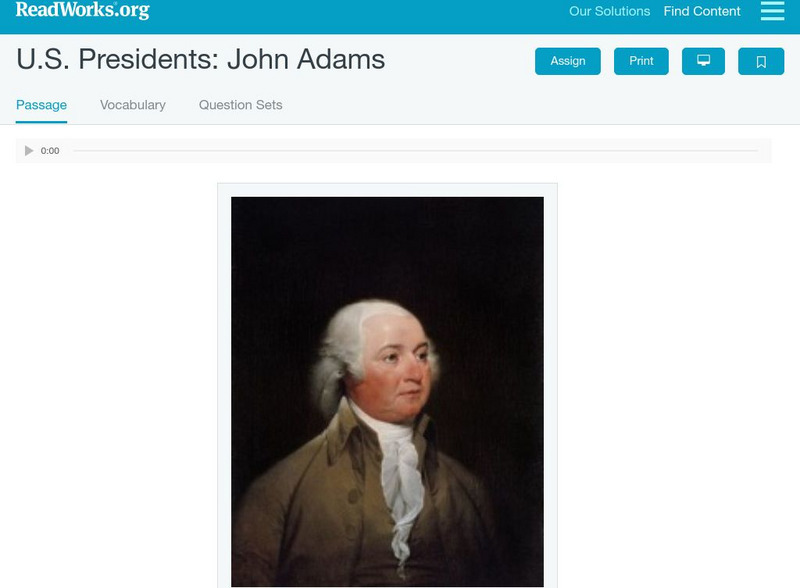
Read Works
Read Works: u.s. Presidents John Adams
[Free Registration/Login Required] An informational text about John Adams, the second president of the United States. A question sheet is available to help students build skills in reading comprehension.
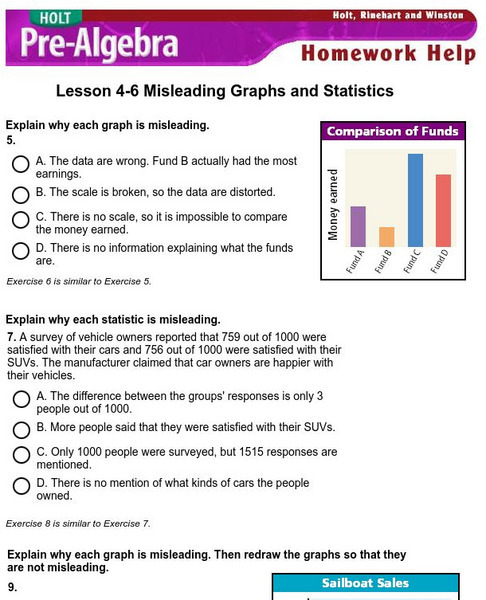
Houghton Mifflin Harcourt
Holt, Rinehart and Winston: Homework Help Independent Practice: Misleading Graphs and Statistics
Get independent practice working with misleading graphs and statistics. Each incorrect response gets a text box explanation and another try. Correct responses are confirmed.
Sophia Learning
Sophia: Revision Techniques: Improving Flow
A ten-slide presentation explaining revision strategies that focus on improving the flow of a written text.
Houghton Mifflin Harcourt
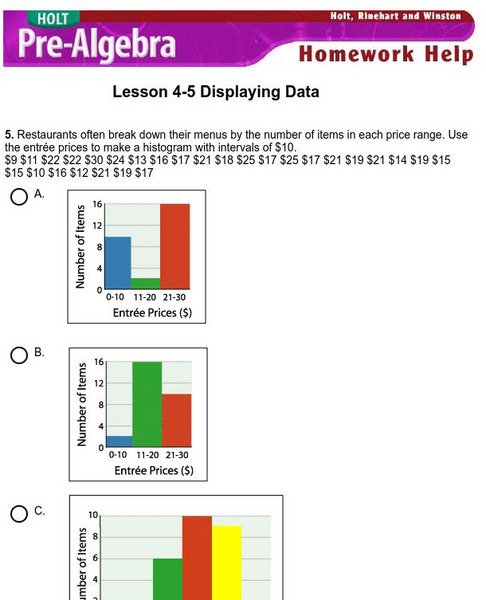
Holt, Rinehart and Winston: Homework Help Independent Practice: Displaying Data
Get independent practice displaying data. Each incorrect response gets a text box explanation and another try. Correct responses are confirmed.
Texas Education Agency
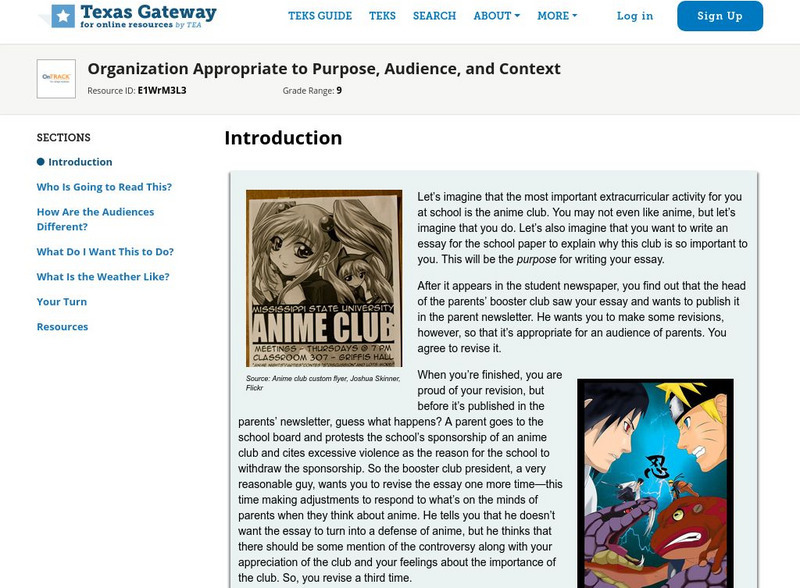
Texas Gateway: Organization Appropriate to Purpose, Audience, and Context
[Accessible by TX Educators. Free Registration/Login Required] This lesson will teach you how to write and organize an essay so that it addresses different purposes, different audiences, and different contexts.
Other
Fdlrs: Thinking Maps: Examples From Brevard Public Schools
See examples of the use of the eight graphic organizers from Thinking Maps. These maps help students organize their learning and identify ways to reflect different kinds of text. The several examples from each grade K-6 show how to use...
Scholastic
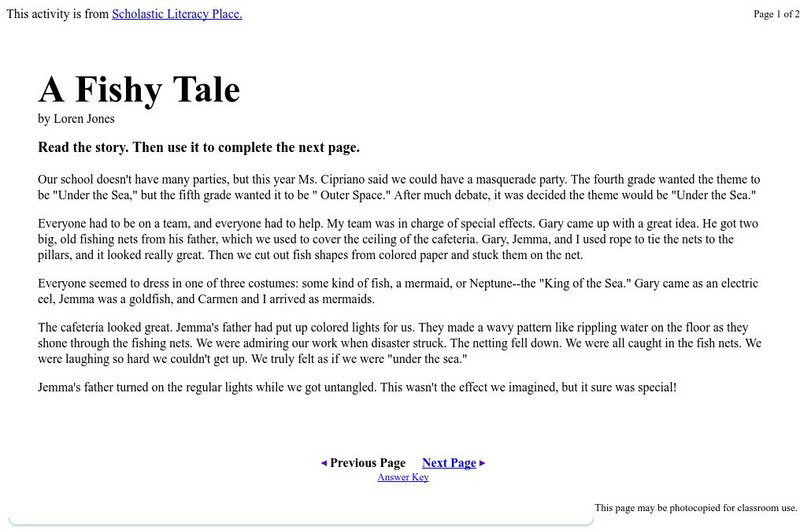
Scholastic: A Fishy Tale
A delightful anecdote sure to spark the thoughts of all students as you teach compare/contrast skills through a text to which they can relate. Site includes printable worksheet and answer key.
ReadWriteThink
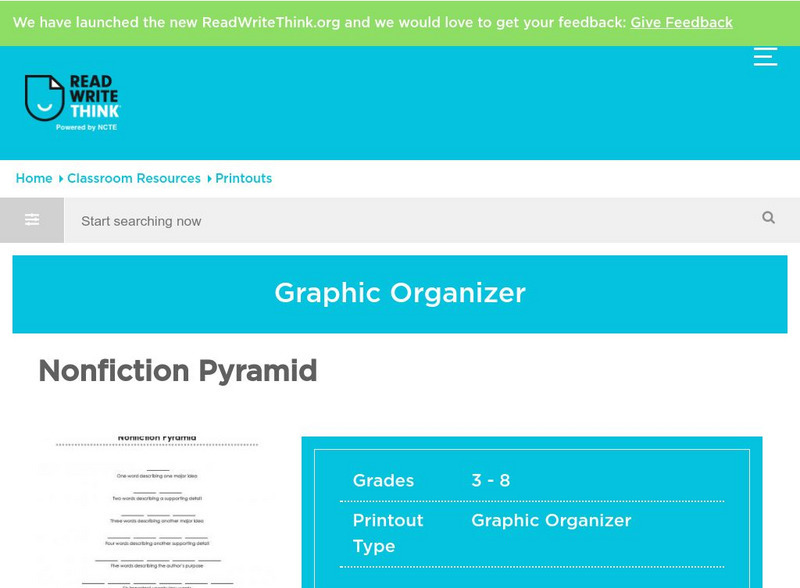
Read Write Think: Nonfiction Pyramid
A printable pyramid for use with nonfiction texts while students identify the main ideas and supporting details within a text. Students also determine author's purpose and key vocabulary words. Directions on how to use this type of...
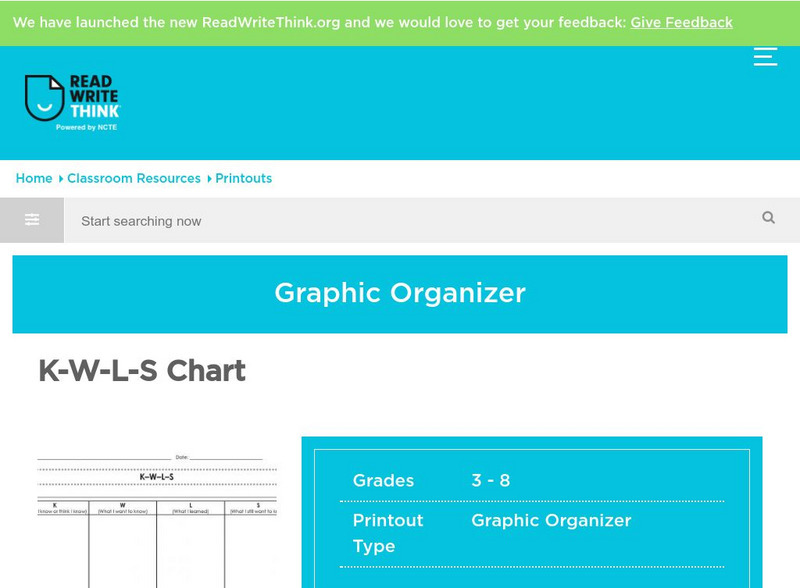
ReadWriteThink
Read Write Think: K W L S Chart
A printable K-W-L-S sheet to help students activate prior knowledge, ask questions, record new learning, and then ask additional questions to extend inquiry beyond the text . Directions on how to use this type of graphic organize as well...

ClassFlow
Class Flow: Paragraphs
[Free Registration/Login Required] Students will write simple, non-chronological reports from known information (e.g., from own experience or from existing text), using notes made to organize and present ideas. Students will learn to...