Hi, what do you want to do?





King's Centre for Visualization in Science
Explaining Climate Change: Lesson 8: Climate Change and the Oceans
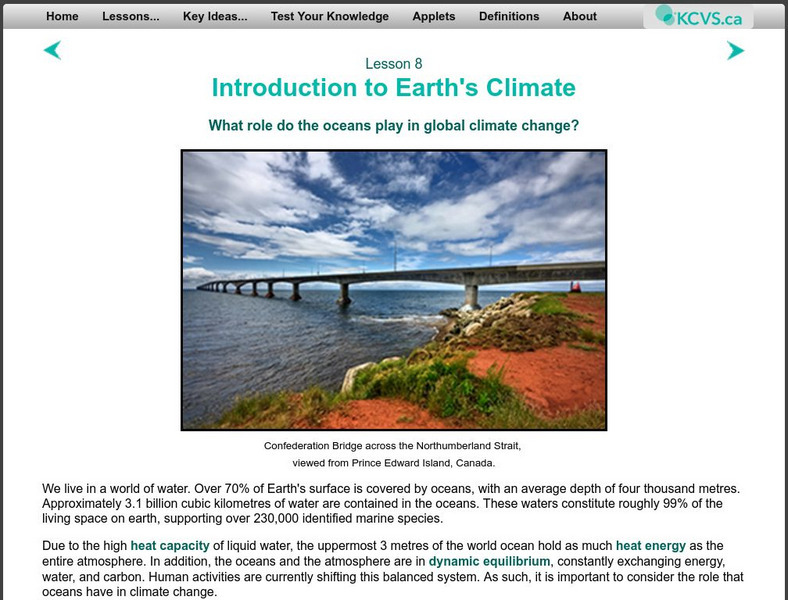
This is the eighth lesson in a series of learning modules on the topic of climate change. It explores the role that oceans play in global climate change. Includes comprehension questions and interactive tools for understanding the...
Museum of Science
Oceans Alive! Physical Features of the Ocean
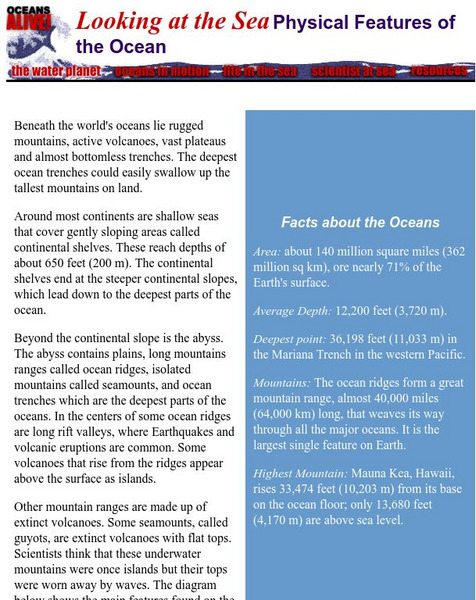
Oceans site explores the physical features that lie deep below the surface of our world's oceans.

CK-12 Foundation
Ck 12: Earth Science: Early Atmosphere and Oceans Study Guide
This comprehensive study guide covers the main terms and concepts needed for an earth science unit on the early atmosphere and oceans. Review questions are included at the bottom of the study guide.
World Wildlife Fund for Nature
Wwf: Our Earth: Ecoregions: Habitats: Oceans
An introduction and overview of the ocean habitat, the largest habitat on Earth. Includes links to information about three animals that live in this habitat.
US Geological Survey
U.s. Geological Survey: The Water Cycle: The Oceans
Through pictures, diagrams, and charts, learn how the ocean serves as a storehouse of water.
Australian Broadcasting Corporation
Australian Broadcasting Corporation: Why Oceans?
This site, which is provided for by the Australian Broadcasting Corporation, gives an article on the importance of the ocean. Everyone on earth depends upon the oceans. Learn why oceans are important and what Australia is doing to help...

National Geographic
National Geographic: The World Ocean
A collection of four lessons where students look at the vital role oceans play in our lives, at the hydrosphere and the impact humans have on it, how humans use the oceans and who is responsible for protecting them, and the rationale...
Gulf of Maine Research Institute
Gulf of Maine Aquarium: Comparing Oceans: Warm Up to the Gulf Stream
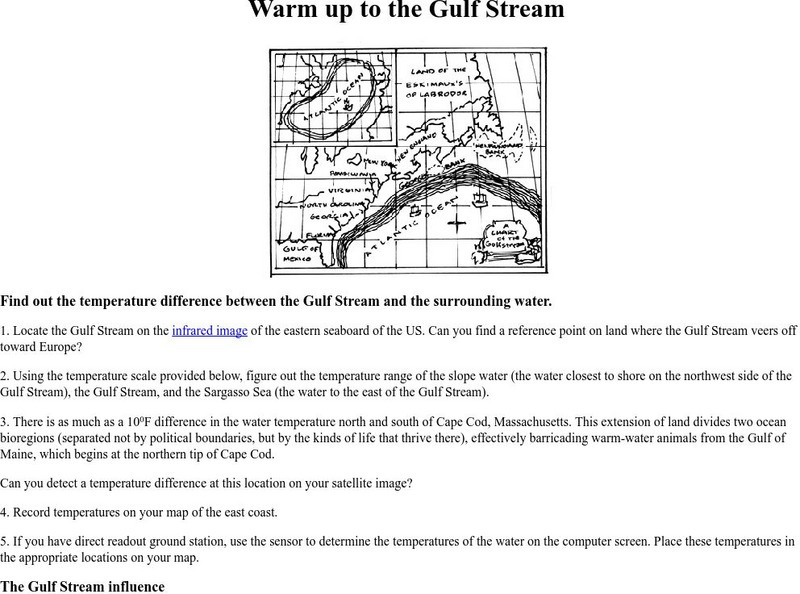
This site features some background information and a satellite image of the Gulf Stream that you can analyze using information also given at the site. There is a link to an activity about the formation of eddies along the Gulf Stream as...
Society for Science and the Public
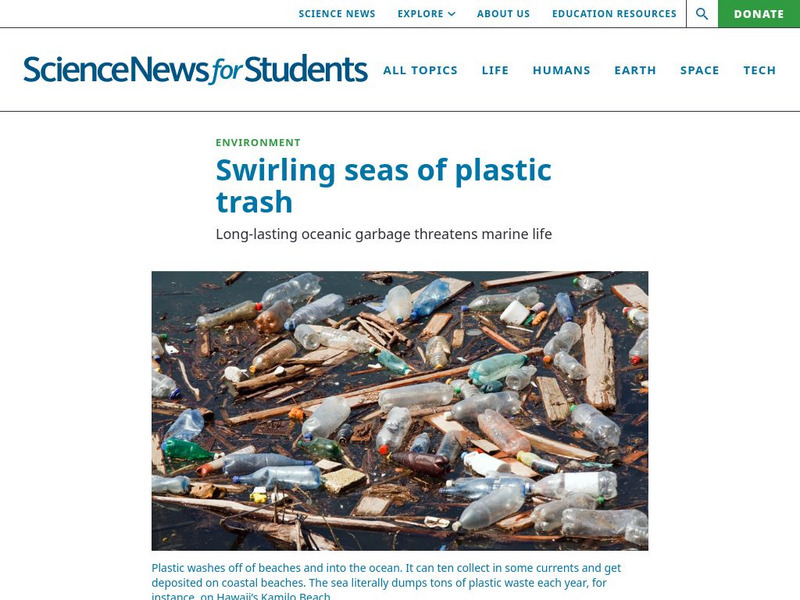
Science News for Students: Swirling Seas of Plastic Trash
Describes the multitude of plastic trash scientists have found on a beach in Hawaii and in the oceans. Explains what a gyre is, and how plastic trash gets trapped in the eye of a gyre. Looks at the serious impact plastic materials have...
Society for Science and the Public
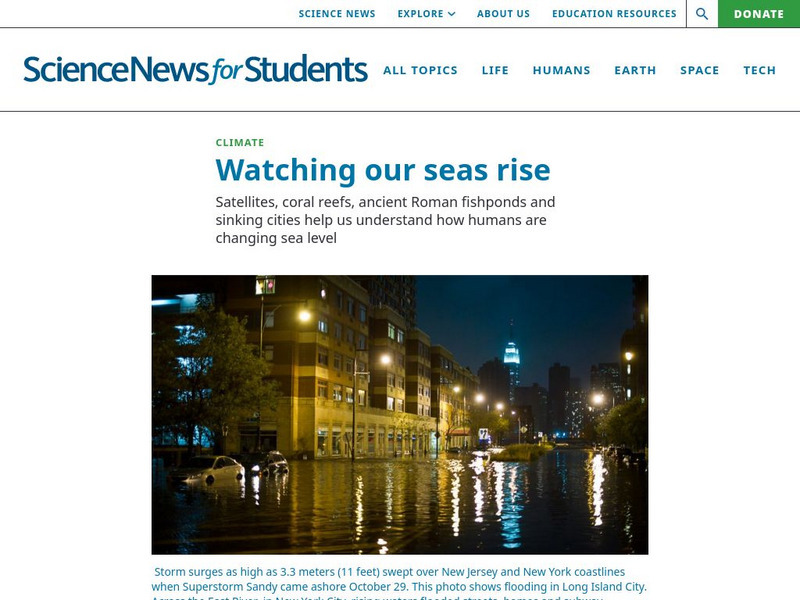
Science News for Students: Watching Our Seas Rise
Ocean levels are increasing around the world. Find out why this type of climate change has scientists concerned.

TED Talks
Ted: Ted Ed: On Exploring the Oceans
Ocean explorer Robert Ballard takes us on a mindbending trip to hidden worlds underwater, where he and other researchers are finding unexpected life, resources, and even new mountains. He makes a case for serious exploration and mapping....
American Institute of Biological Sciences
Action Bioscience: Global Warming & Rising Oceans
Overuse of fossil fuels has exploited the threat of global warming on Earth. This article features the details of the threat and provides additional resources.
Wikimedia
Wikipedia: Zhongnanhai, Beijing, China
Learn about this imperial garden in Beijing, a region surrounded by lakes that are often referred to as the Southern, Central and Northern Seas.
Greek Gods
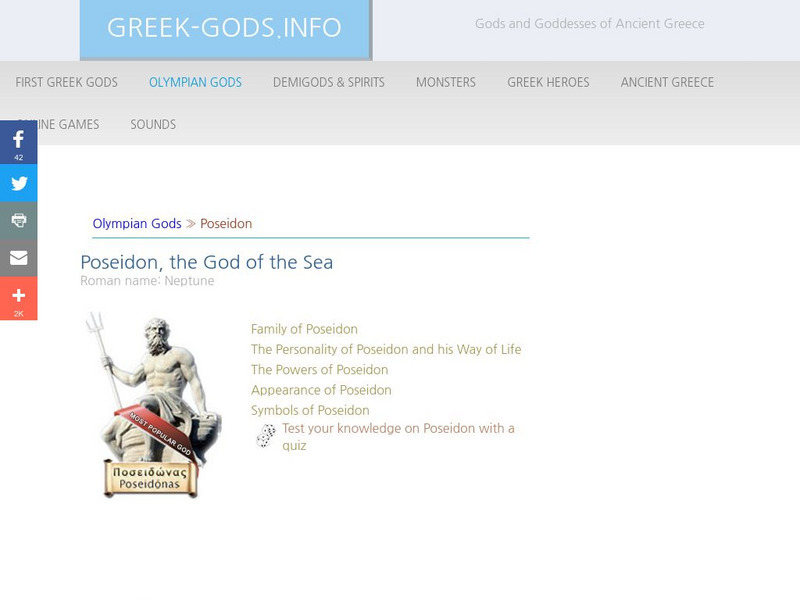
Greek Gods: Olympian Gods: Poseidon
This site focuses on Poseidon, the Greek god of the seas, the horses, and the earthquakes. It provides biographical information, background, English and Greek pronunciations of his name, other titles, pictures, myths, and his places of...

Alabama Learning Exchange
Alex: Researching the Oceans of the Earth
This unit is a result of collaboration between the librarian and the 5th grade Science teacher. The Ocean Unit developed by the librarian is hands-on research in various areas of the library utilizing print, software and Internet access....
Smithsonian Institution
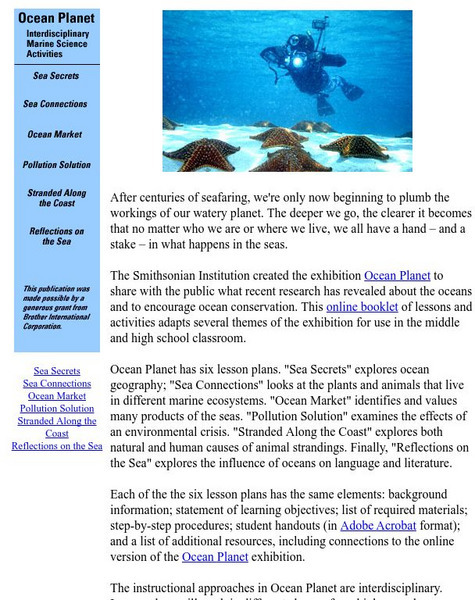
Smithsonian: Ocean Planet: Interdisciplinary Marine Science Activities
Smithsonian Institution presents ?Ocean Planet: Interdisciplinary Marine Science Activities?. Through this series of six interdisciplinary lessons, students will look at such things as the organisms in different marine ecosystems, the...

Science Buddies
Science Buddies: Do Warmer Seas Make Stronger Hurricanes?
We've all heard that hurricanes draw their immense power from warm ocean waters. Of course, many factors contribute to the formation and growth of a hurricane, but can we expect to find that the warmer the water, the stronger the...

Australian Broadcasting Corporation
Australian Broadcasting Corporation: Oceans Alive: Whale Types and Migration
This site provides a description, distribution information, and distinguishing features of the southern right whales, humpback whales, and orcas.
Other
Nesdis: Investigating Oceans: Algae Blooms
Explore how scientists use satellite data to detect and monitor Harmful Algal Blooms (HABs). HABs can be toxic to both humans and marine life. Students will learn how to read and interpret satellite images to better understand HAB events.

Alabama Learning Exchange
Alex: Diverse Life Forms of the Ocean
This lesson allows students to view and draw conclusions on the importance of life in the ocean. It uses student created movies to explore what is going on, as well as identifying the zones and diverse life associated with the oceans....
Science Struck
Science Struck: Understanding the Ocean Ecosystem
Describes the two organisms capable of photosynthesis in an ocean ecosystem, the different ocean zones and the plants and animals that live in them, some facts about the ocean, and the five oceans of the world.
US Navy
Office of Naval Research: Oceans in Motion Currents
Use this site to learn what the Navy has to say about ocean currents and then test your knowledge with their quiz.
Museum of Science
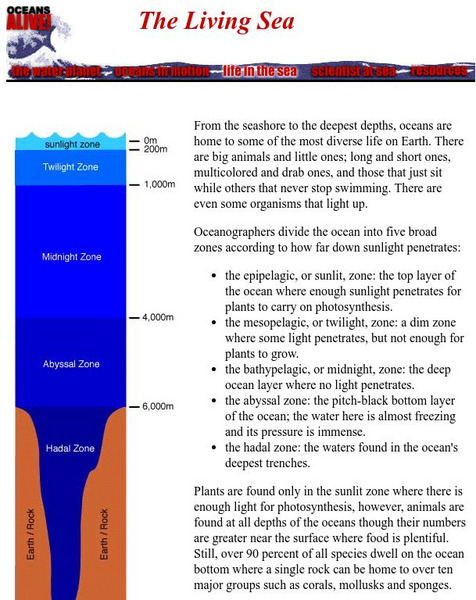
Museum of Science, Boston: Oceans Alive: The Living Sea
Find a scale model of the five principal ocean zones, along with additional information.
Science Buddies
Science Buddies: Primary Productivity and Plankton
The oceans contain both the earth's largest and smallest organisms. Interestingly they share a delicate relationship linked together by what they eat. The largest of the ocean's inhabitants, the Blue Whale, eats very small plankton,...
Other popular searches
- Continents and Oceans
- Continents Oceans
- Oceans and Seas
- Oceans of the World
- 7 Continents and Oceans
- Oceans and Climate
- Lesson Plans on Oceans
- Salty Oceans
- Salinity in the Oceans
- Lessons on Oceans
- Extent of Oceans
- Oceans and Climate Change