Hi, what do you want to do?






Curated OER
Water Quality Survey: Monitoring the Sustainability of Pigeon Creek
High schoolers research the History of Pigeon Creek (or any watershed in your area). In this environmental science lesson, students conduct field tests such as pH and nitrates. They collect data and compare what they collected with other...

Curated OER
Loss of Wetlands: Subsidence
Students observe subsidence and the effect it has on wetlands with a classroom demonstration. They think about the impact of global warming and the sea level and how it affects the marsh.
US Forest Service
United States Forest Services: Pacific Northwest: Invasives
This resource details the non-native plant and animal species that have become invasive to the ecosystem of the Pacific Northwest. Topics include the impact of invasive species and how they become part of a new environment.
Curated OER
National Park Service: Cuyahoga Valley: Nature and Science: Nonnative Species
Describes the impact of invasions of non-native plant and insect species in Cuyahoga Valley National Park in Ohio, including the gypsy moth and the emerald ash borer.

Alabama Learning Exchange
Alex: Invasive Plants
Invasive plants are non-native plants that grow in an environment that has no native diseases, parasites, or predators. This allows them to grow rapidly and be destructive to native plants.
Curated OER
National Park Service: Invasive Plants: Saguaro National Park
Learn about the plants from other regions that now reside in Arizona's Saguaro National Park.
National Geographic Kids
National Geographic Kids: Invasive Plants
Learn about invasive plants and how they impact the ecosystem, including insects.
CK-12 Foundation
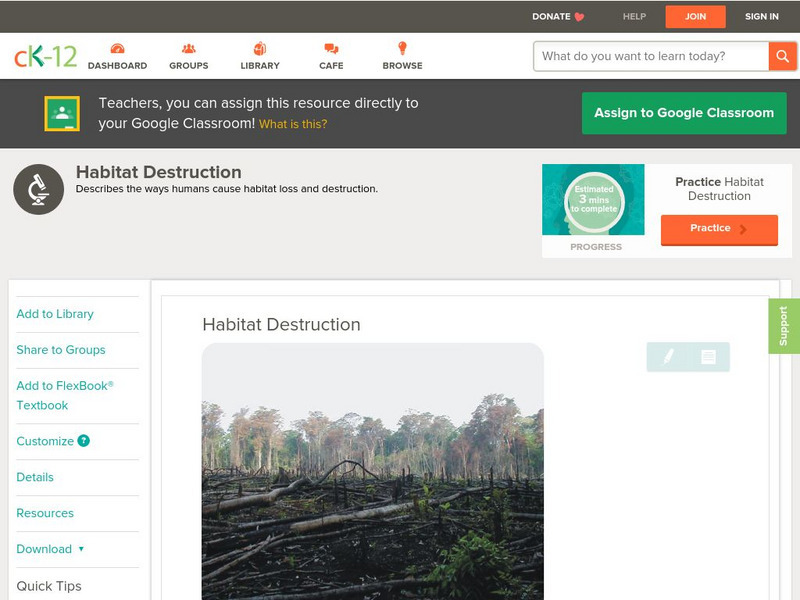
Ck 12: Life Science: Habitat Destruction
[Free Registration/Login may be required to access all resource tools.] From a human point of view, a habitat is where you live, go to school, and go to have fun. Your habitat can be altered, and you can easily adapt. Most people live in...