Hi, what do you want to do?






Curated OER
Revolutionary War
Students discover that one to explore about the past is to read historical novels. They see that in every war there are many viewpoints to consider. Students are introduced to the young adult historical novel My Brother Sam Is Dead. ...

Curated OER
On The Home Front
Students write their responses to five questions about their home town. After watching an excerpt from "The War", they work together in groups to identify the characteristics of the four towns in the movie into a graphic organizer. ...

Curated OER
Extending the Acid/Base Concept
In this acid and base worksheet, students answer 4 questions about the definitions of acids and bases. They illustrate the differences between Arrhenius and Bronsted acids and bases and draw Lewis diagrams for the formation of compounds...


Curated OER
WWI Document Based Essay
Students read various primary source documents on World War I. After reading each document, they answer discussion questions. Using the internet, they identify the causes of World War I as layed out by President Wilson and his reasons...

Curated OER
What is the "Tone"?
In this English instructional activity, students choose a word to fit the tone. Students choose a word from multiple choices that describe the tone of the writer of a short passage.

Curated OER
Activity #17 Co2 From Alka Seltzer
Students observe what occurs when Alka Seltzer tablets are added to water. They explain why water stays in the jar when it is above the surface of the water. Pupils test for the presence of carbon dioxide by conduting the match test.

Curated OER
Acid Base
In this acid and base learning exercise, students review the characteristics of acids and bases, how to calculate pH of a solution, and define a buffered solution. This learning exercise has 16 multiple choice questions and 3 problems to...

Curated OER
FDR Tries to Pack the Supreme Court
Students analyze the Court Reform Bill of 1937. In this Supreme Court lesson, students listen to their instructor present a lecture regarding the details Frankin Roosevelt and his attempt to pack the Supreme Court. Students...

Curated OER
U.S. Entry Into WWI
Middle schoolers identify the reasons why the United States entered World War I. In this world history lesson, students are given a lecture on Woodrow Wilson and analyze documents (specifically, Woodrow Wilson's speeches). Middle...

Curated OER
Candy Dish Selection
Students explore natural selection. They explore the concepts of adaptations, and the way which random factors affect the survival of individuals and populations.

Curated OER
Chapter 2 – The US From 1789 to 1815
In this U.S. history worksheet, students read assigned textbook pages about the country from 1789-1815 and respond to 36 short answer questions.

Curated OER
Rome's Influence
Learners identify ancient Roman influences in the modern world. For this ancient Rome lesson, student research the government, religion, economy, inventions and contributions of Rome.

Curated OER
Emotion
In this psychology learning exercise, students complete 5 short answer questions on neural pathways of emotion. They explain what aspect of emotion is similar across all cultures.

Curated OER
The Power of Words
Learners research the power of words and the necessary teaching of tolerance. In groups, they research a particular word given to them about a group in society. They trace the origin of the word and form a stance on how they view the...
US Department of State
Office of the Historian: The Neutrality Acts, 1930s
You can see by reading the descriptions of these three neutrality acts how determined some in Congress were to isolate the United States and keep it out of World War II.

Siteseen
Siteseen: American Historama: Neutrality Acts
Discover the terms of the Neutrality Acts banning arms and war materials to countries at war. These laws were designed to prevent the United States of America from being entangled in a possible foreign war.
ibiblio
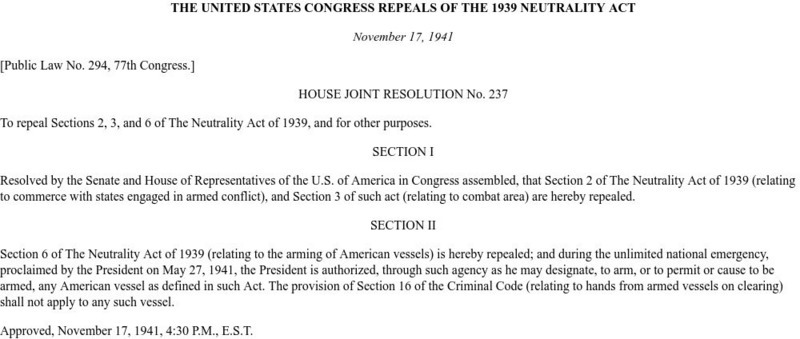
Ibiblio: Words of War: The u.s. Congress Repeals of the 1939 Neutrality Act
Contains the text of a joint resolution to repeal sections of the 1939 Neutrality Act.
ibiblio
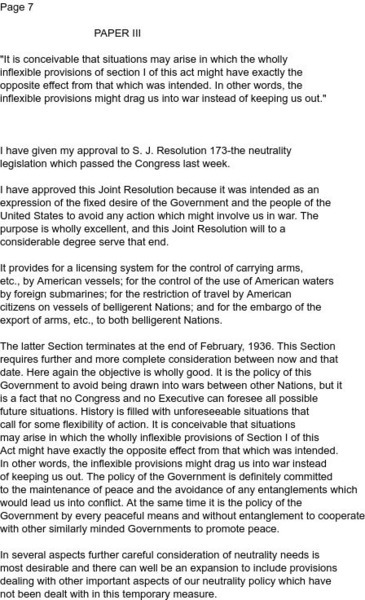
Ibiblio: World War Ii Resources: 1935 Neutrality Act
Text of Franklin Roosevelt's approval of the Neutrality Act of 1935, passed by the Congress in August, 1935. Read why Roosevelt thinks this act is a reasonable reflection of American foreign policy in the mid-1930s.
Simon Fraser University
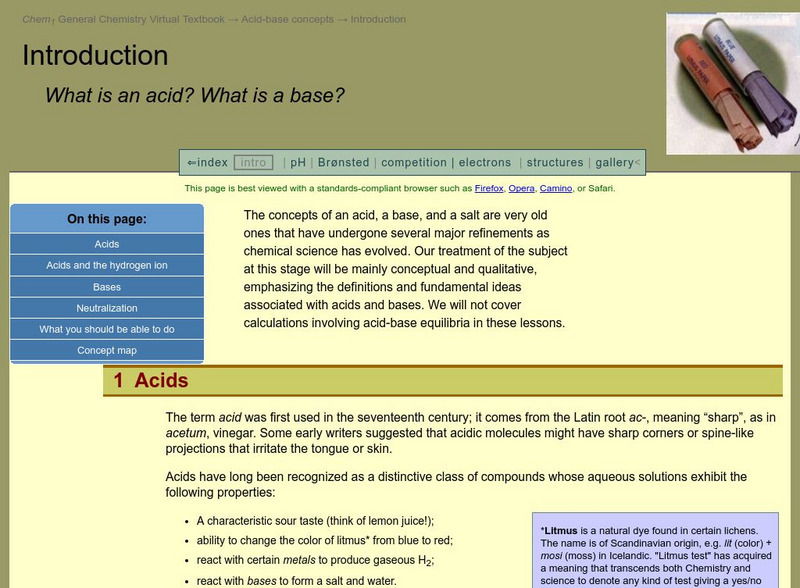
Chem1 Virtual Textbook: Neutralization
Acting as an overview from the General Chemistry Virtual Textbook, this site explores neutralization in relation to acids and bases. Formulas and examples are also provided.
Independence Hall Association
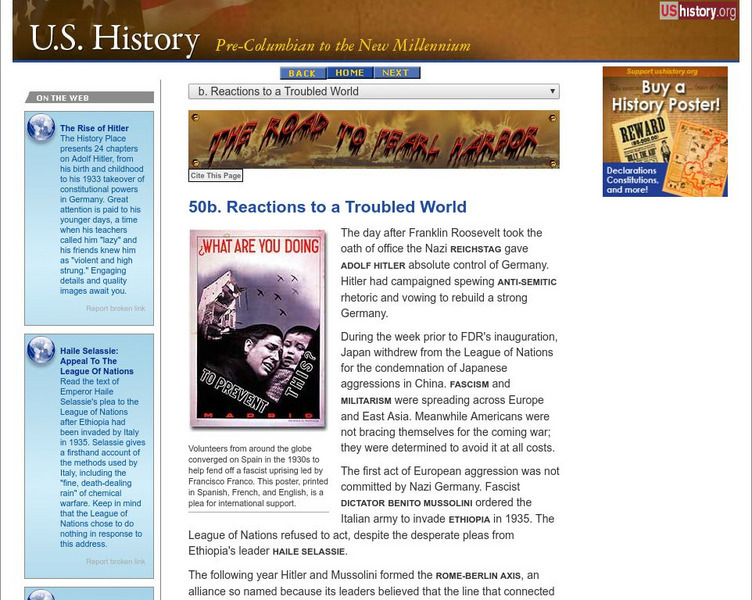
U.s. History: Reactions to a Troubled World
Read about the rising militarism and fascism in Europe and Asia as dictators expanded their territories. See how the United States reacted with its series of three neutrality acts.

Library of Congress
Loc: Today in History: October 23: The Lend Lease Act
Information on the Lend-Lease Act which was signed on October 23, 1941. It discusses the repercussions of the signing of the act.
OpenStax
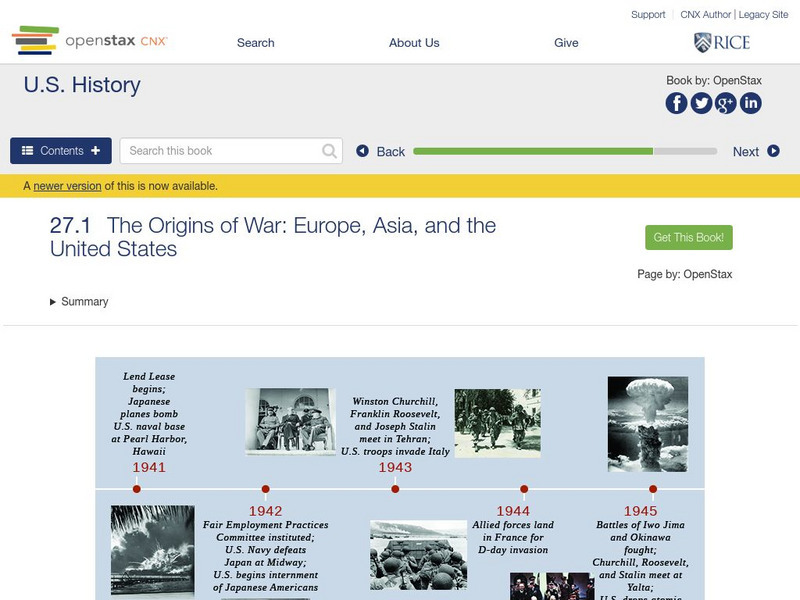
Open Stax: World War Ii 1941 1945: Origins of War: Europe, Asia and United States
Examines the conditions that fostered the rise of Fascism and Nazism, the events during the lead-up to the outbreak of war, and what Roosevelt did to help affected nations yet still keep the United States neutral.
University of Virginia
Miller Center at Uva: u.s. Presidents: Franklin Delano Roosevelt: Foreign Affairs
Scroll through this discussion of Franklin Roosevelt's attention to foreign policy during his several terms in office to "Confronting Germany and Japan" and "Descent into War." Here you will find out about the United States' position of...