Hi, what do you want to do?





American Museum of Natural History
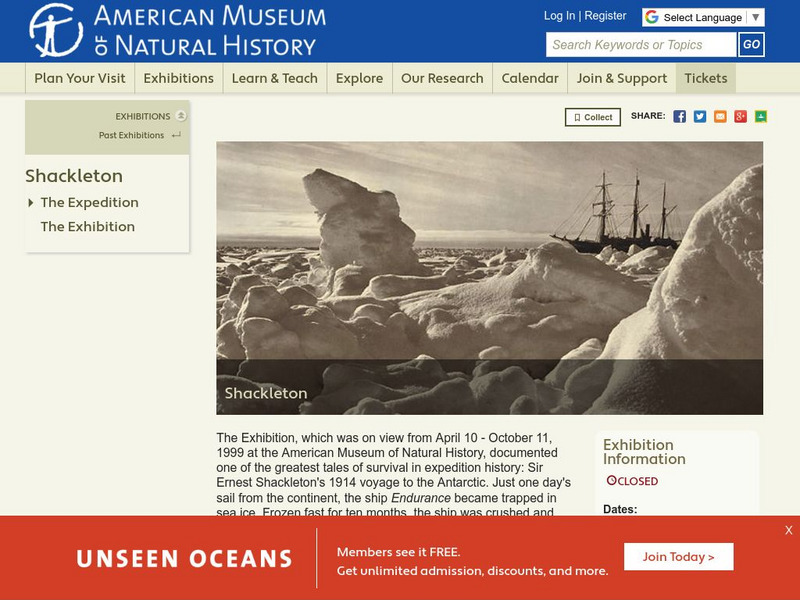
American Museum of Natural History: The Endurance
Learn about Ernest Shackleton's ill-fated voyage to Antarctica aboard the "Endurance" and about the amazing rescue that followed, after the expedition was forced to abandon ship. Uses actual expedition photographs and diary entries to...
American Museum of Natural History
American Museum of Natural History: O Logy: Global Grocery
Did you ever wonder where tapioca pudding comes from? Did you know that cacao beans were once used as money? Learn about the human uses of plants (to make common foods and medicines) at the Global Grocery.
American Museum of Natural History
American Museum of Natural History: Conservation Biologist Eleanor Sterling
Interview with conservationist Eleanor Sterling provides insights into her research interests, her career preparation, and advice for kids interested in doing field investigations in biology.
American Museum of Natural History
American Museum of Natural History: O Logy: Marine Biology
Learn about marine biology, life in the ocean. It defines marine biology and provides links to games, stories, videos, and hands-on activities on the topic.
American Museum of Natural History
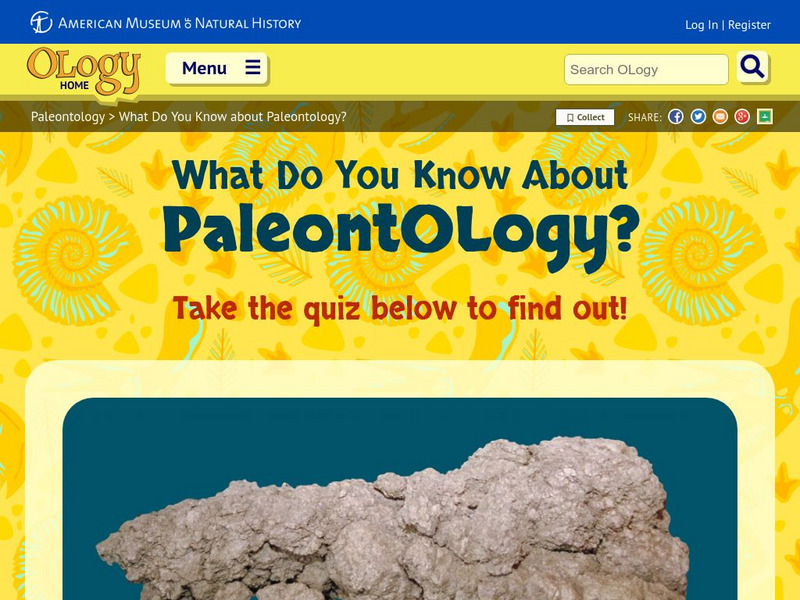
American Museum of Natural History: Ology Quiz: What Do You Know? Paleontology
Test your knowledge of paleontology by taking a quick quiz.
American Museum of Natural History
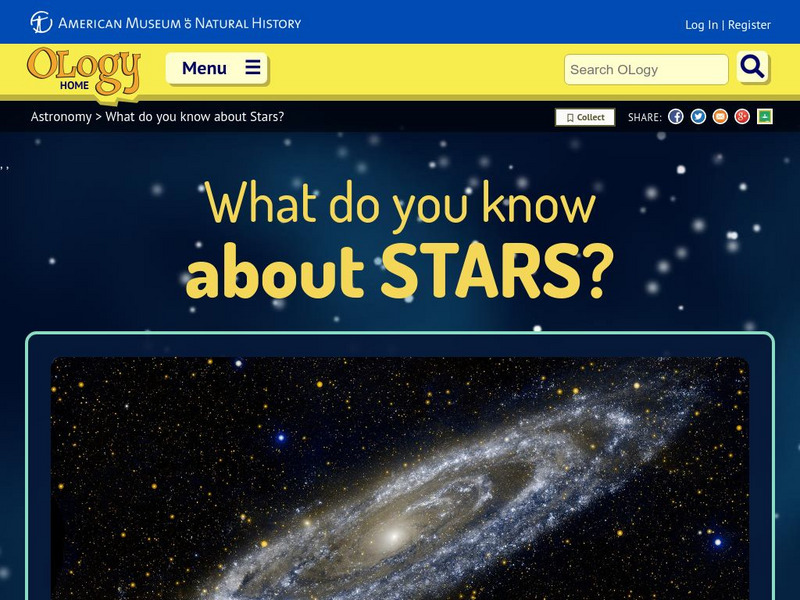
American Museum of Natural History: Ology: What Do You Know About Stars?
Test your knowledge with this ten-question quiz on stars. Focusing on stars in the Milky Way galaxy, questions range from the life cycle of a star to the number of stars in our galaxy.
American Museum of Natural History
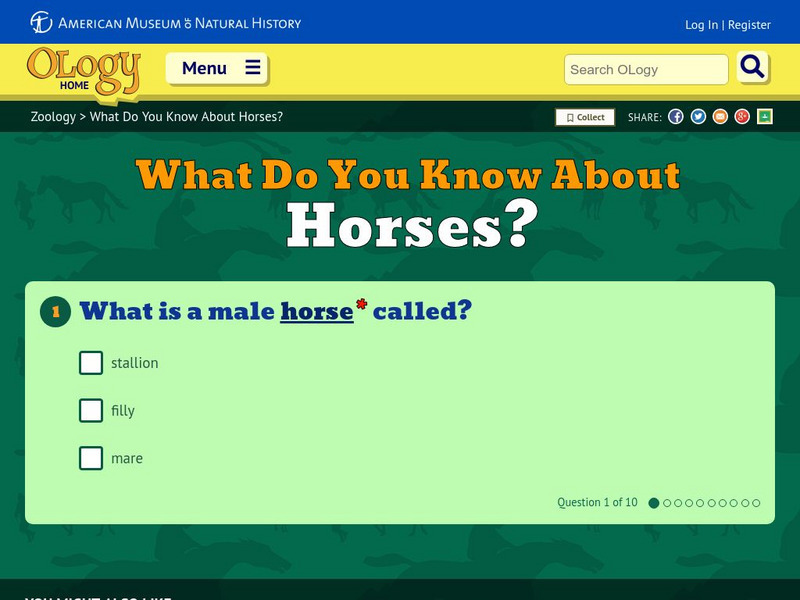
American Museum of Natural History: O Logy: What Do You Know? Horses
A quick way to learn horse vocabulary. Students take an interactive quiz, check their answers, and then read why each answer is correct or incorrect.

American Museum of Natural History
American Museum of Natural History: Resources for Learning: Frames of Reference
Use this interactive physics simulation to determine how perception of motion changes with the frame of reference. The simulation introduces the principles of motion with respect to frame of reference.
American Museum of Natural History
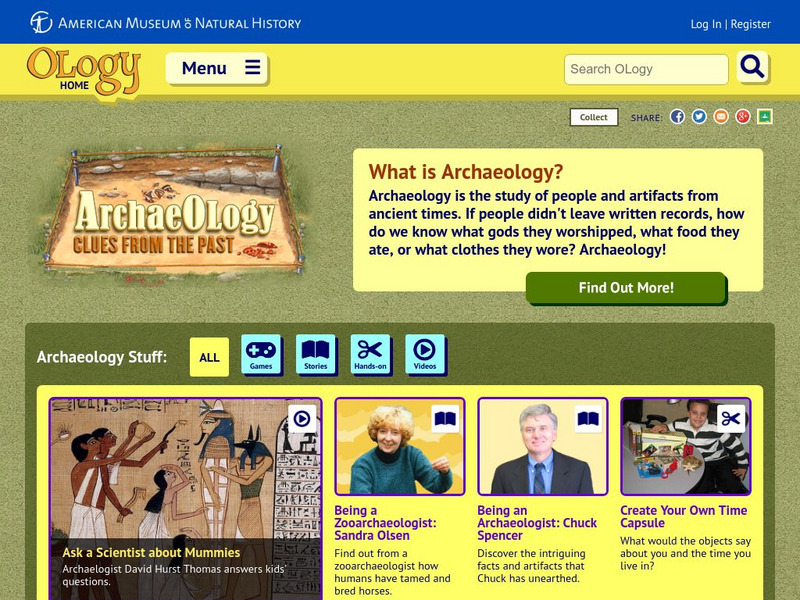
American Museum of Natural History: O Logy: Archaeology: Clues From the Past
This resource is a place for learning all about archaeology - archaeological fieldwork, field journals, tools of the trade, and interesting archaeological sites and discoveries. Explore, ask questions, find information, and meet...
American Museum of Natural History
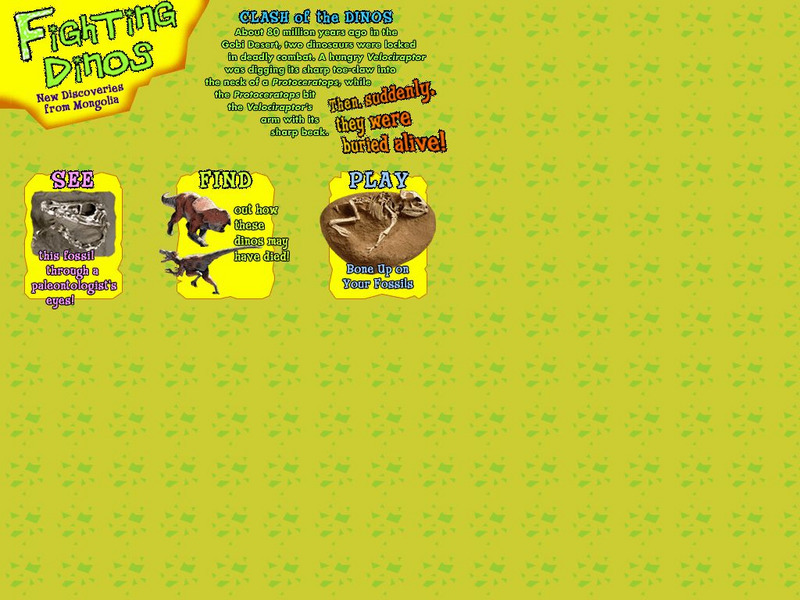
American Museum of Natural History: O Logy: Fighting Dinos: New Discoveries
A virtual investigation surmising how two fighting dinosaurs died in the Gobi Desert.
American Museum of Natural History
American Museum of Natural History: O Logy: Meet the Astronomer: Neil Tyson
Interview with astronomer Neil de Grasse Tyson provides insights into his research interests, his career preparation, and a range of astronomy-related topics.
Smithsonian Institution
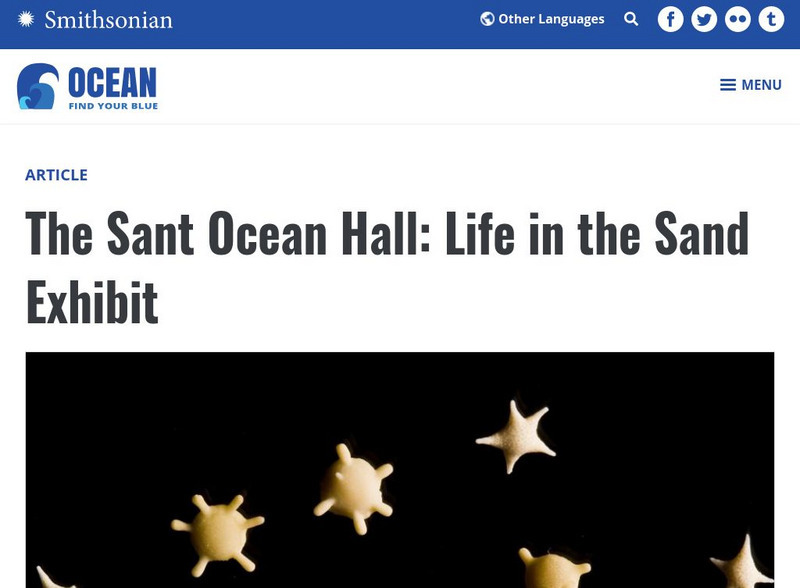
National Museum of Natural History: Ocean Portal: Life in the Sand
This article is the companion to the exhibit on Oceans at the Smithsonian. There is good information about sand, microscopic life in the sand, and problems that people cause on our beaches.
American Museum of Natural History
American Museum of Natural History: Ology: Astronomy: Are You Cut Out for Mars?
Do you have what it takes to go on a space mission to the Red Planet? Think you can handle it? Take this quiz to find out!
Smithsonian Institution
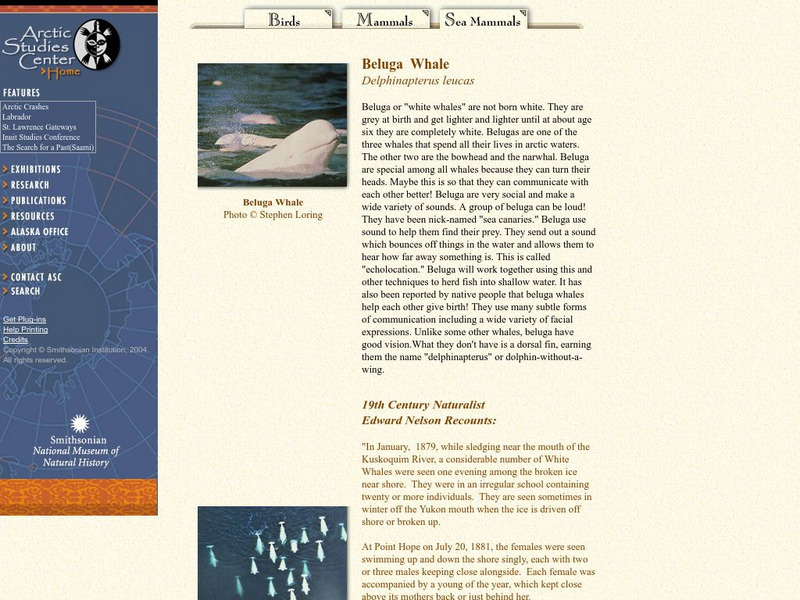
National Museum of Natural History: Beluga Whale
This site provides a general overview of the Beluga Whale, complete with the personal observations of 19th Century Naturalist, Edward Nelson.
Smithsonian Institution
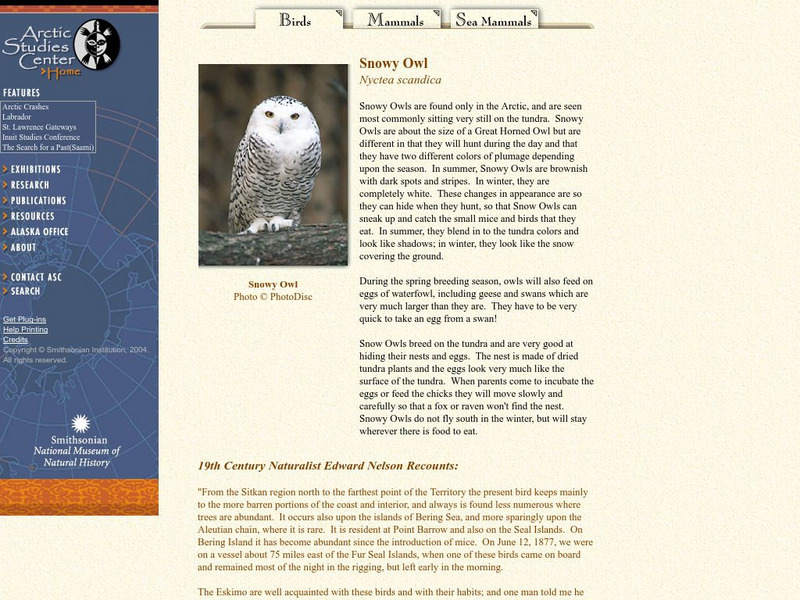
National Museum of Natural History: Snowy Owl
This Smithsonian website has a brief, but thorough, article on the Snowy Owl that also includes a picture and an extensive quote from the 19th Century naturalist Edward Nelson.

Smithsonian Institution
National Museum of Natural History: Tufted Puffin
This Smithsonian website has a brief, but thorough, article on the Tufted Puffin. It also includes pictures and an extensive quote from 19th Century naturalist Edward Nelson.
Smithsonian Institution
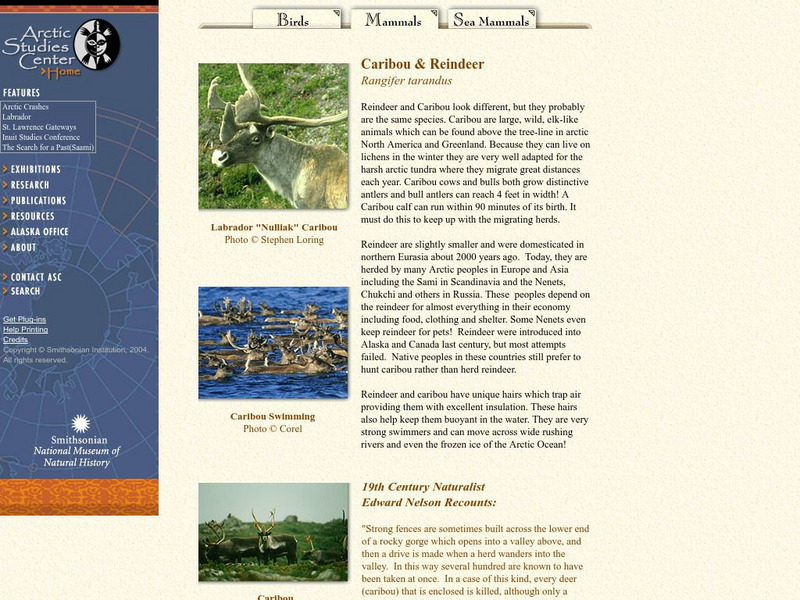
National Museum of Natural History: Arctic Studies Center:caribou & Reindeer
This site takes a look at the caribou and reindeer found in arctic regions around the world. Content includes the personal observations of the 19th Century Naturalist, Edward Nelson.
Smithsonian Institution
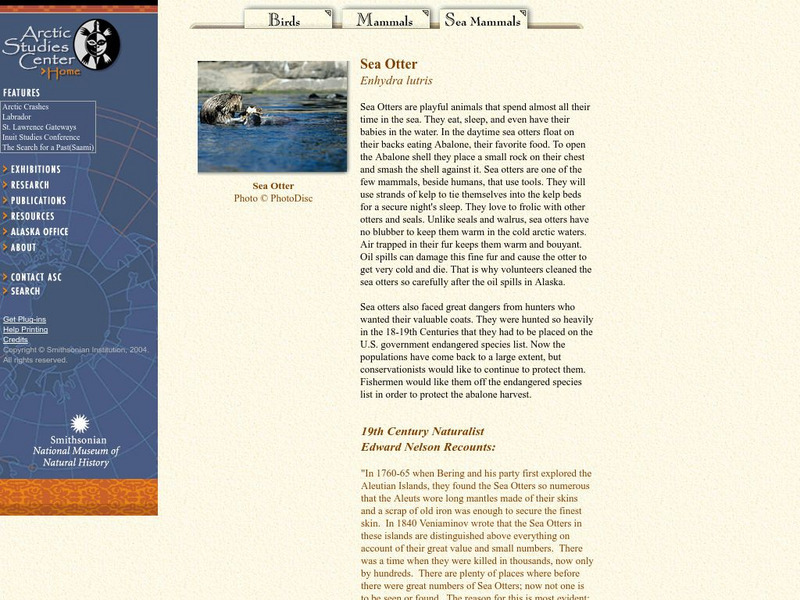
National Museum of Natural History: Arctic Studies Center Mammals Sea Otter
This Smithsonian website has a brief, but thorough, article on the Sea Otters that also includes a picture and an extensive quote from naturalist Edward Nelson.
Smithsonian Institution
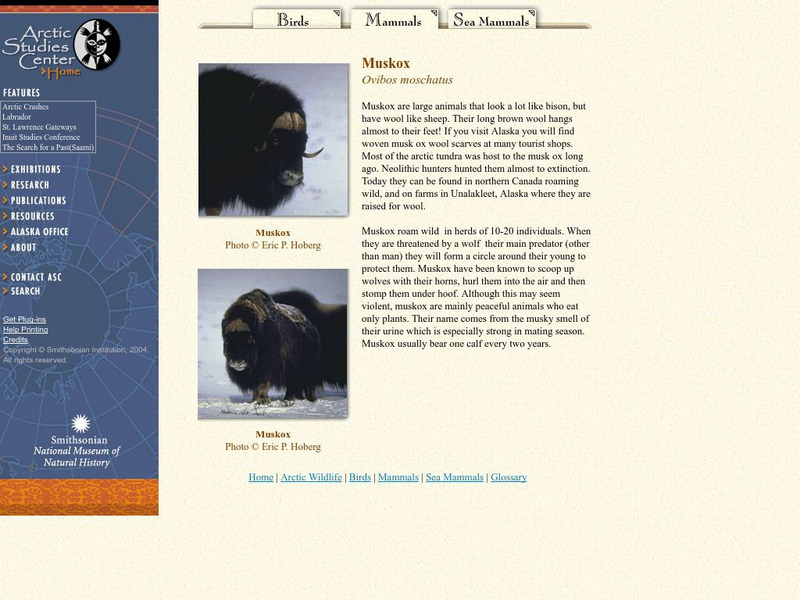
National Museum of Natural History: Muskox
This site takes a very brief look at the muskox as an arctic creature. Several photographs are also provided.

American Museum of Natural History
American Museum of Natural History: O Logy: Stuff to Do: Web of Life Game
Fun, interactive game that helps students identify interrelationships in an ecosystem. For six or more players.
American Museum of Natural History
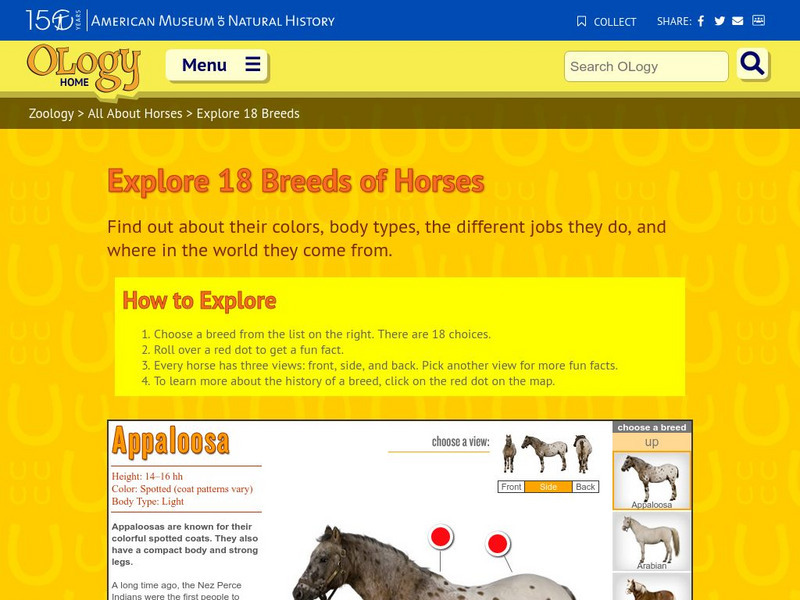
American Museum of Natural History: O Logy: Beautiful Breeds: Thoroughbred
Detailed description of the thoroughbred, a racing horse originally from England.
American Museum of Natural History
American Museum of Natural History: O Logy: Stuff to Do: Space Travel Guide
What makes science fiction so exciting? Read some examples of the genre and then create your own science fiction story about space travel. Use the supplied "travel guide" to generate ideas and structure your plot.
American Museum of Natural History
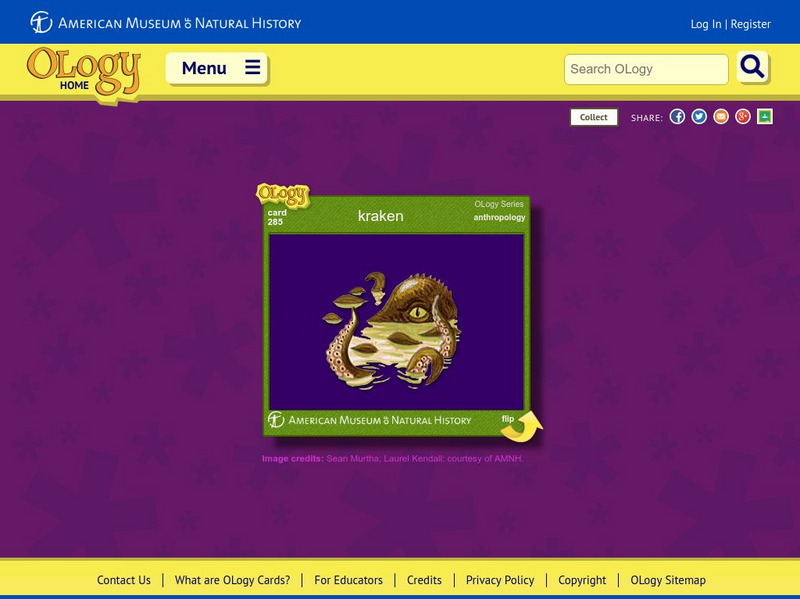
American Museum of Natural History: O Logy: Kraken
The sea monster, Kraken, might have been a giant squid. Find out how Kraken fit into Norse mythology. Flashcard format.
American Museum of Natural History
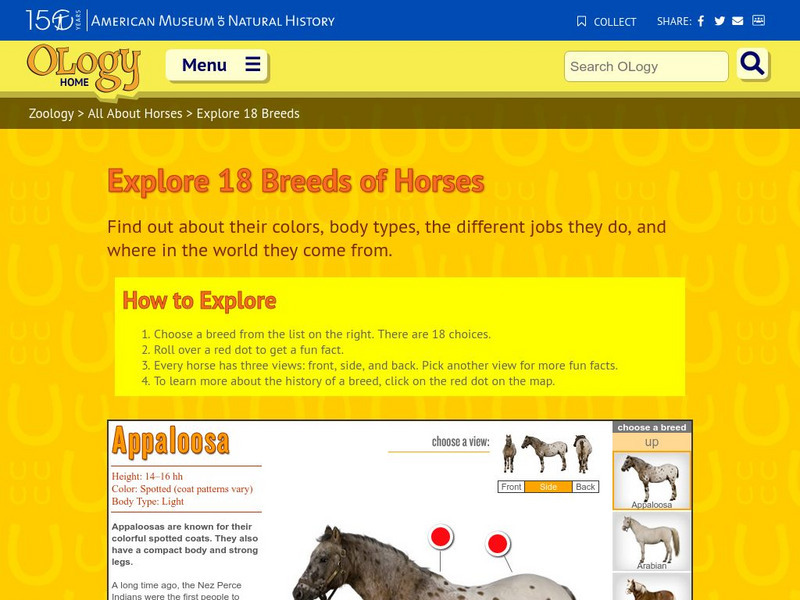
American Museum of Natural History: O Logy: Beautiful Breeds: Quarter Horse
Detailed illustrations and description of the quarter horse, known for its speed over short distances. Choose quarter horse from the list on the right.