Smithsonian Institution
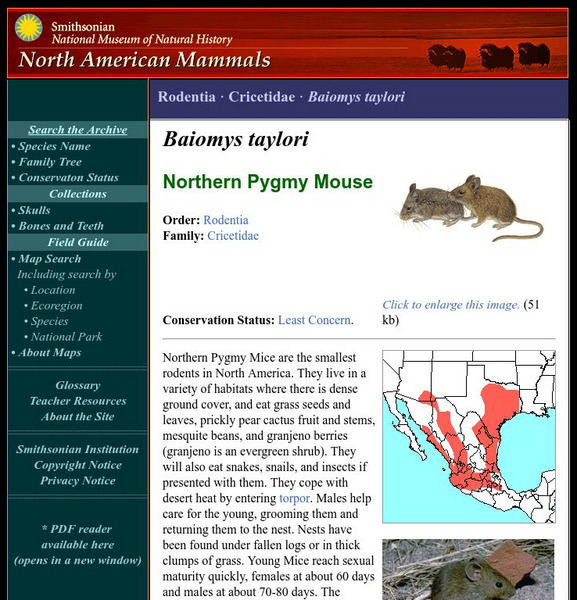
National Museum of Natural History: American Mammals: Northern Pygmy Mouse
Northern Pygmy Mice are the smallest rodents in North America. They live in a variety of habitats where there is dense ground cover and eat grass seeds and leaves, prickly pear cactus fruit and stems, mesquite beans, and granjeno berries...
Smithsonian Institution
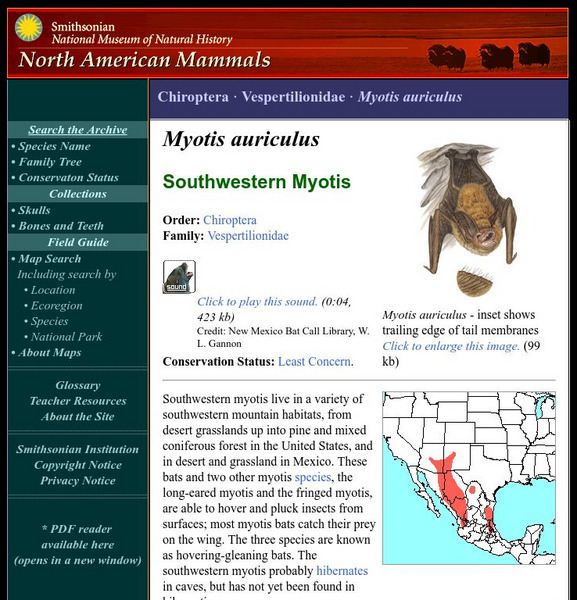
National Museum of Natural History: American Mammals: Southwestern Myotis
Southwestern myotis live in a variety of southwestern mountain habitats, from desert grasslands up into pine and mixed coniferous forest in the United States, and in desert and grassland in Mexico. These bats and two other myotis...
Smithsonian Institution
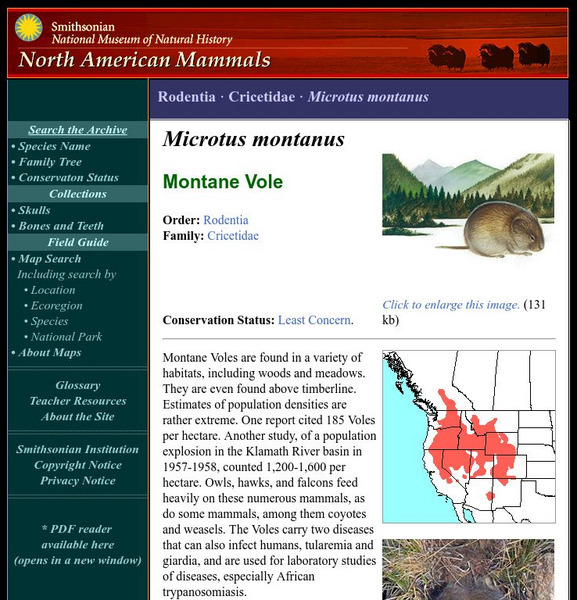
National Museum of Natural History: American Mammals: Montane Vole
Montane Voles are found in a variety of habitats, including woods and meadows. They are even found above timberline. Learn more about the Microtus montanus, more commonly known as a Montane Vole, in this easy-to-read species overview by...
Smithsonian Institution
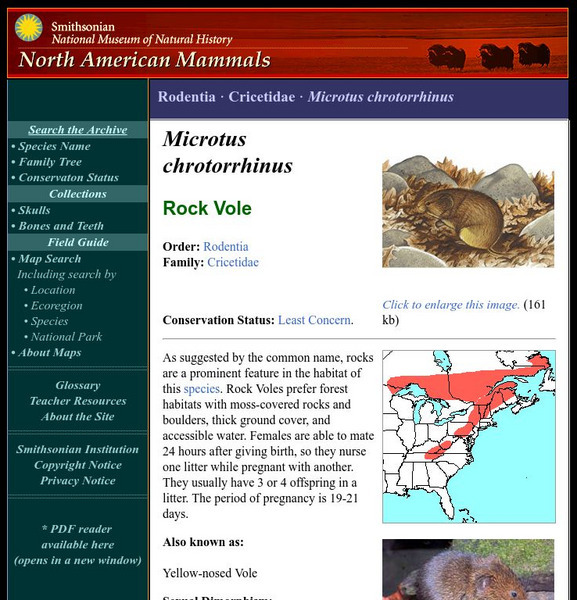
National Museum of Natural History: American Mammals: Rock Vole
As suggested by the common name, rocks are a prominent feature in the habitat of this species. Rock Voles prefer forest habitats with moss-covered rocks and boulders, thick ground cover, and accessible water. Learn more about the...
Smithsonian Institution
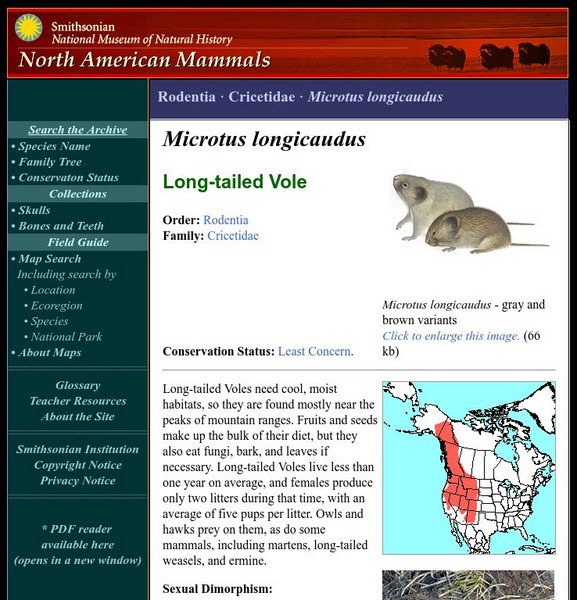
National Museum of Natural History: American Mammals: Long Tailed Vole
Long-tailed Voles need cool, moist habitats, so they are found mostly near the peaks of mountain ranges. Fruits and seeds make up the bulk of their diet, but they also eat fungi, bark, and leaves if necessary. Learn more about the...
Smithsonian Institution
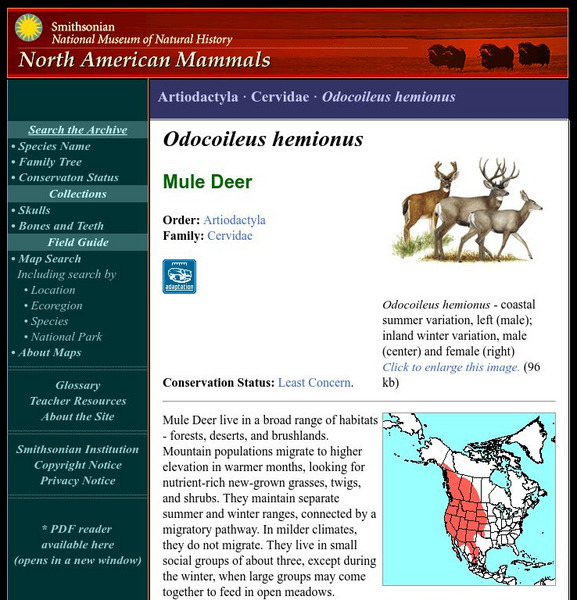
National Museum of Natural History: American Mammals: Mule Deer
Mule Deer live in a broad range of habitats - forests, deserts, and brushlands. Mountain populations migrate to higher elevation in warmer months, looking for nutrient-rich new-grown grasses, twigs, and shrubs. Learn more about the...
Smithsonian Institution
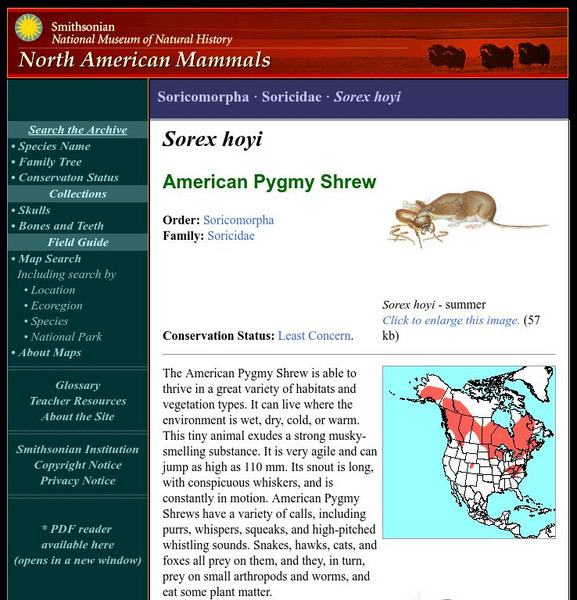
National Museum of Natural History: American Mammals: American Pygmy Shrew
The American Pygmy Shrew is able to thrive in a great variety of habitats and vegetation types. It can live where the environment is wet, dry, cold, or warm. Learn more about the Sorex hoyi, more commonly known as a Pygmy Shrew, in this...
Smithsonian Institution
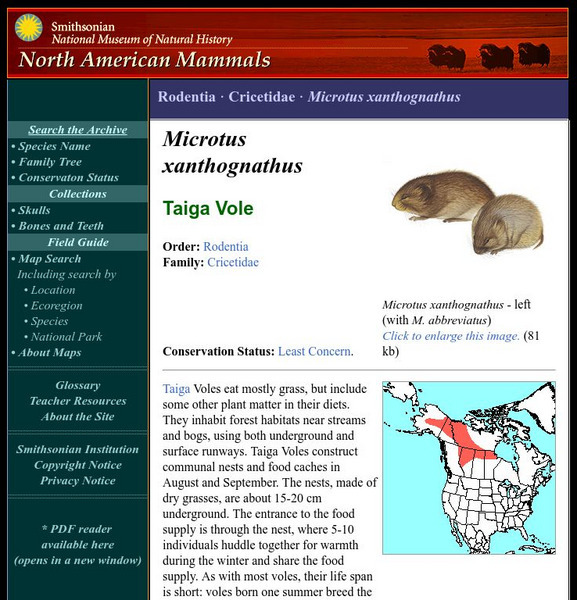
National Museum of Natural History: American Mammals: Taiga Vole
Taiga Voles eat mostly grass, but include some other plant matter in their diets. They inhabit forest habitats near streams and bogs, using both underground and surface runways. Learn more about the Microtus xanthognathus, more commonly...
Smithsonian Institution
National Museum of Natural History: American Mammals: Ringtail
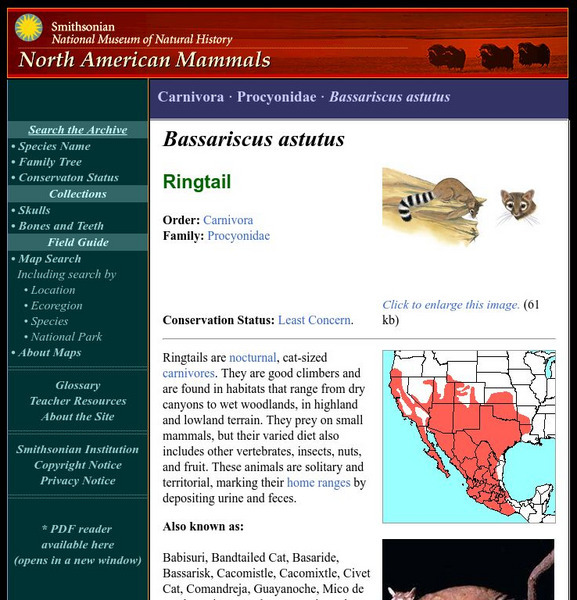
Ringtails are nocturnal, cat-sized carnivores. They are good climbers and are found in habitats that range from dry canyons to wet woodlands, in highland and lowland terrain. Learn more about the Bassariscus astutus, more commonly known...
Smithsonian Institution
National Museum of Natural History: American Mammals: Western Pipistrelle
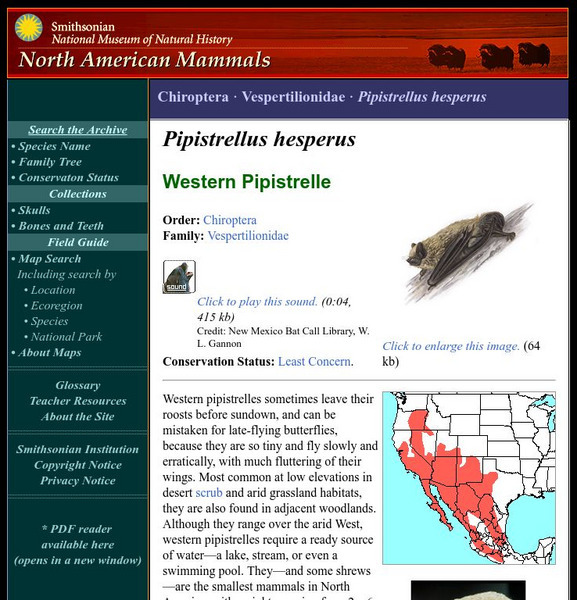
Western pipistrelles sometimes leave their roosts before sundown and can be mistaken for late-flying butterflies, because they are so tiny and fly slowly and erratically, with much fluttering of their wings. Most common at low elevations...
Smithsonian Institution
National Museum of Natural History: American Mammals: Marsh Shrew
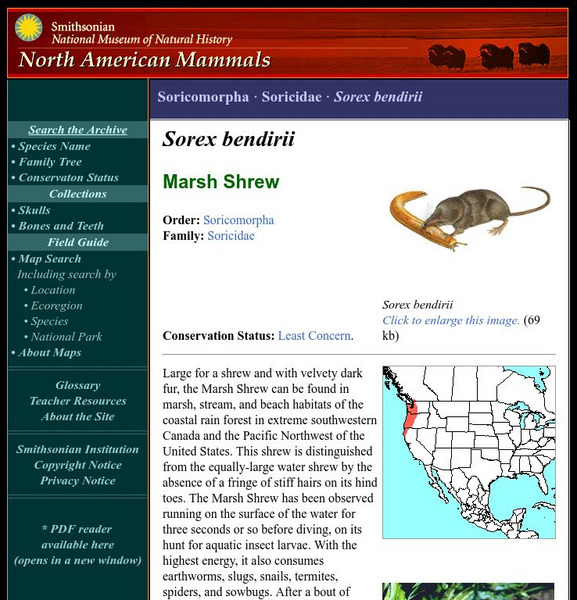
Large for a shrew and with velvety dark fur, the Marsh Shrew can be found in marsh, stream, and beach habitats of the coastal rain forest in extreme southwestern Canada and the Pacific Northwest of the United States. This shrew is...
Smithsonian Institution
National Museum of Natural History: American Mammals: Montane Shrew
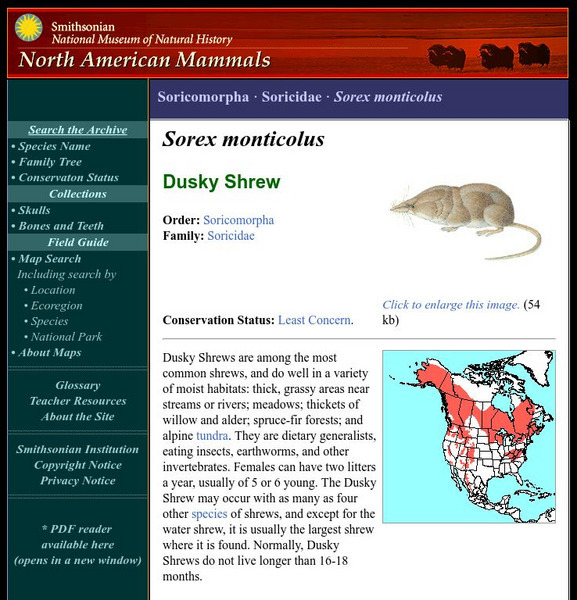
Montane Shrews are among the most common shrews, and do well in a variety of moist habitats: thick, grassy areas near streams or rivers; meadows; thickets of willow and alder; spruce-fir forests; and alpine tundra. They are dietary...
Smithsonian Institution
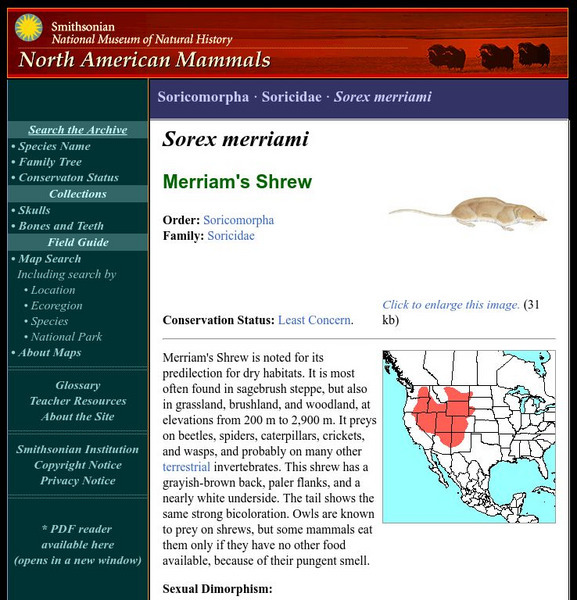
National Museum of Natural History: American Mammals: Merriam's Shrew
Merriam's Shrew is noted for its predilection for dry habitats. It is most often found in sagebrush steppe, but also in grassland, brushland, and woodland, at elevations from 200 m to 2,900 m. Learn more about the Sorex merriami, more...
Smithsonian Institution
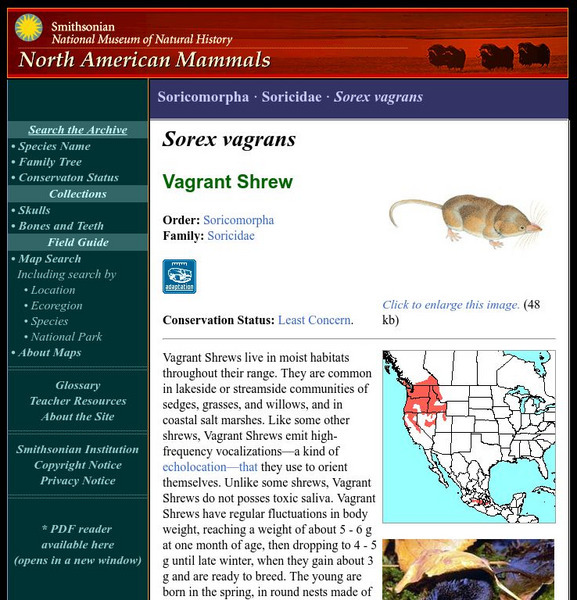
National Museum of Natural History: American Mammals: Vagrant Shrew
Vagrant Shrews live in moist habitats throughout their range. They are common in lakeside or streamside communities of sedges, grasses, and willows, and in coastal salt marshes. Learn more about the Sorex vagrans, more commonly known as...
Smithsonian Institution
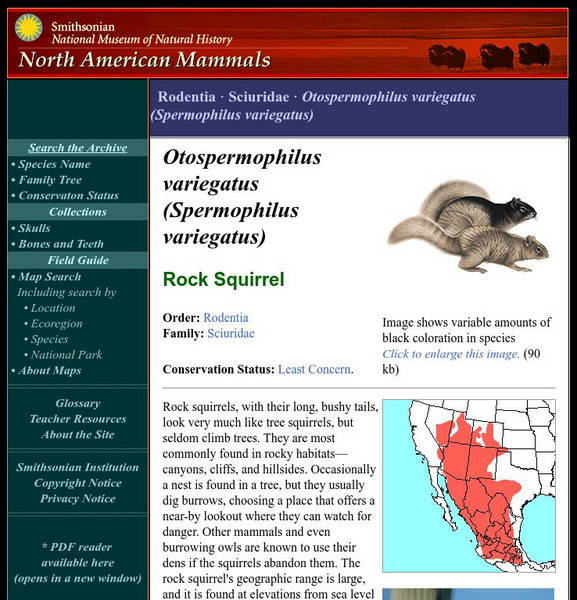
National Museum of Natural History: American Mammals: Rock Squirrel
Rock squirrels, with their long, bushy tails, look very much like tree squirrels, but seldom climb trees. They are most commonly found in rocky habitats: canyons, cliffs, and hillsides. Learn more about the Spermophilus variegatus, more...
Smithsonian Institution
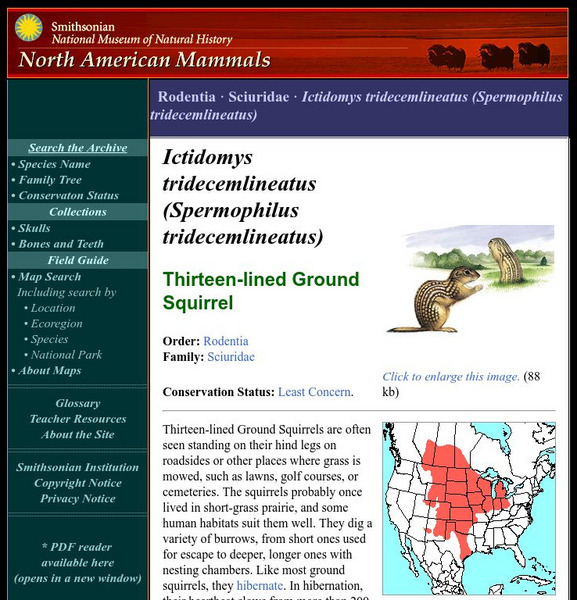
National Museum of Natural History: American Mammals: Thirteen Lined Ground Squirrel
Thirteen-lined Ground Squirrels are often seen standing on their hind legs on roadsides or other places where grass is mowed, such as lawns, golf courses, or cemeteries. The squirrels probably once lived in short-grass prairie, and some...
Smithsonian Institution
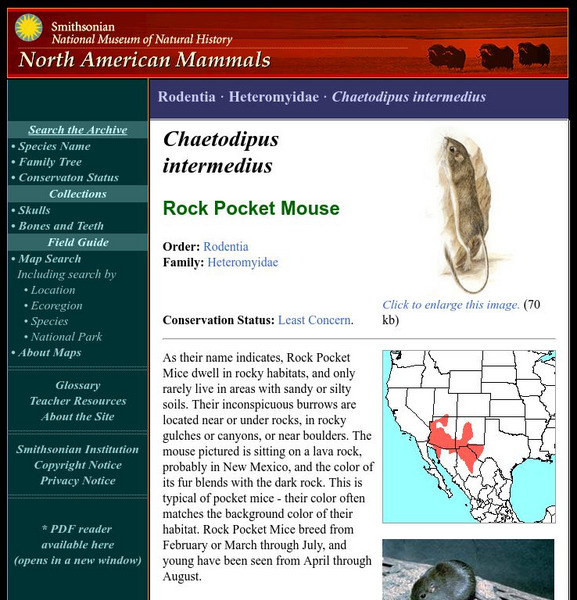
National Museum of Natural History: American Mammals: Rock Pocket Mouse
As their name indicates, Rock Pocket Mice dwell in rocky habitats, and only rarely live in areas with sandy or silty soils. Their inconspicuous burrows are located near or under rocks, in rocky gulches or canyons, or near boulders. Learn...
Smithsonian Institution
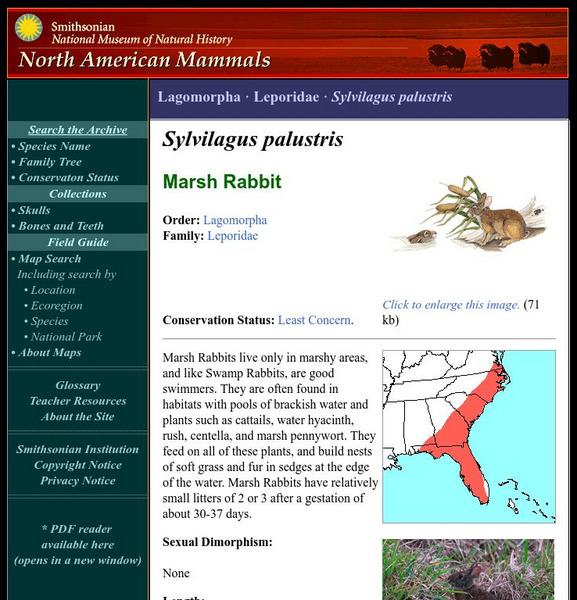
National Museum of Natural History: American Mammals: Marsh Rabbit
Marsh Rabbits live only in marshy areas, and like Swamp Rabbits, are good swimmers. They are often found in habitats with pools of brackish water and plants such as cattails, water hyacinth, rush, centella, and marsh pennywort. Learn...
Smithsonian Institution
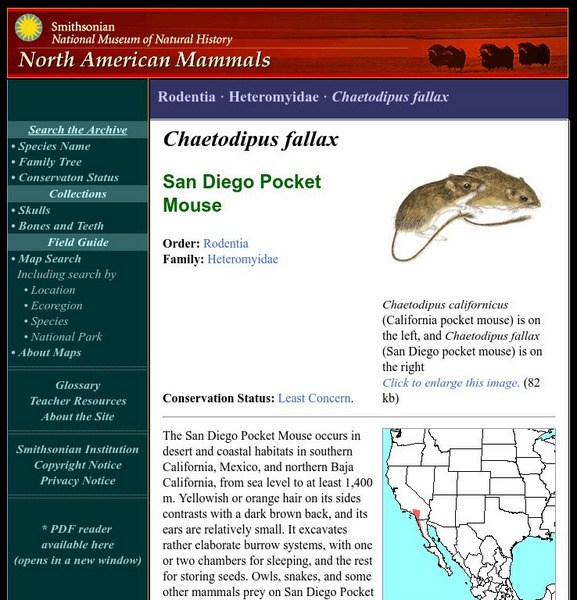
National Museum of Natural History: American Mammals: San Diego Pocket Mouse
The San Diego Pocket Mouse occurs in desert and coastal habitats in southern California, Mexico, and northern Baja California, from sea level to at least 1,400 m. Yellowish or orange hair on its sides contrasts with a dark brown back,...
Smithsonian Institution
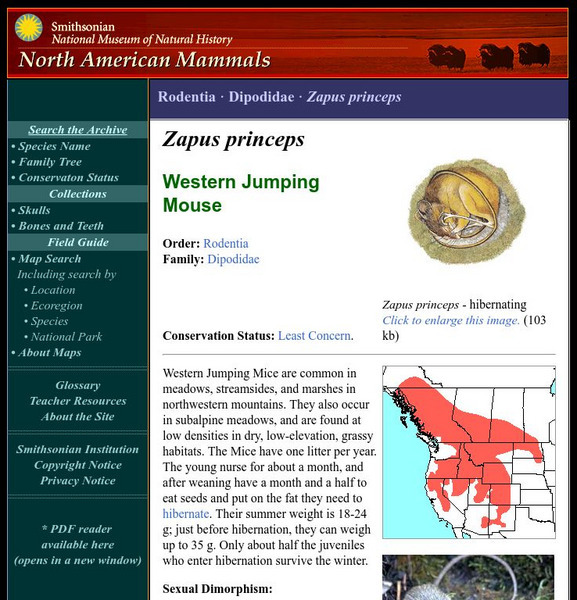
National Museum of Natural History: American Mammals: Western Jumping Mouse
Western Jumping Mice are common in meadows, streamsides, and marshes in northwestern mountains. They also occur in subalpine meadows, and are found at low densities in dry, low-elevation, grassy habitats. Learn more about the Zapus...
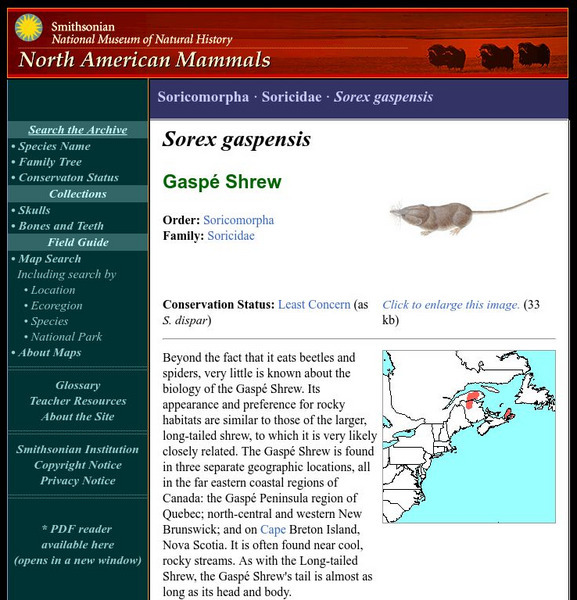
Smithsonian Institution
National Museum of Natural History: American Mammals: Gaspae' Shrew
Beyond the fact that it eats beetles and spiders, very little is known about the biology of the Gaspe Shrew. Its appearance and preference for rocky habitats are similar to those of the larger, long-tailed shrew, to which it is very...

Smithsonian Institution
National Museum of Natural History: American Mammals: Great Basin Pocket Mouse
The Great Basin Pocket Mouse is the largest member of the genus. It inhabits arid and semi-arid habitats in nearly the entire Great Basin region of western North America, particularly where sagebrush dominates the vegetation. Learn more...
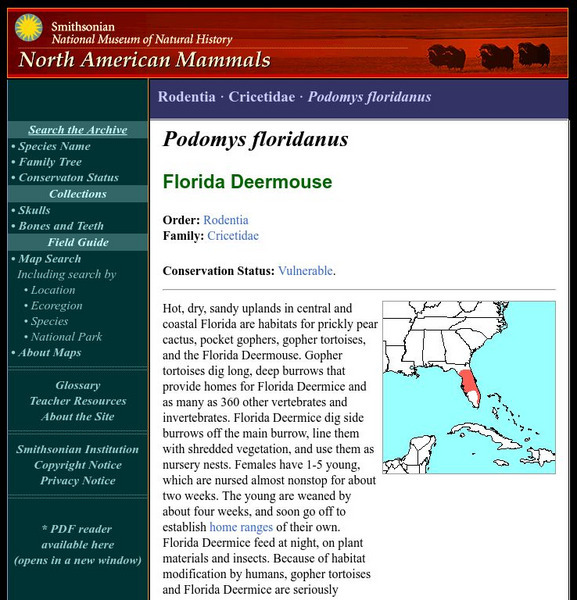
Smithsonian Institution
National Museum of Natural History: American Mammals: Florida Mouse
Hot, dry, sandy uplands in central and coastal Florida are habitats for prickly pear cactus, pocket gophers, gopher tortoises, and the Florida Mouse. Gopher tortoises dig long, deep burrows that provide homes for Florida Mice and as many...
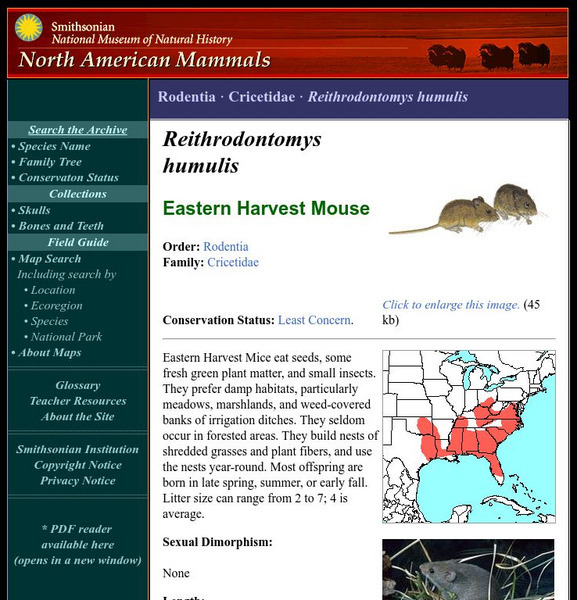
Smithsonian Institution
National Museum of Natural History: American Mammals: Eastern Harvest Mouse
Eastern Harvest Mice eat seeds, some fresh green plant matter, and small insects. They prefer damp habitats, particularly meadows, marshlands, and weed-covered banks of irrigation ditches. Learn more about the Reithrodontomys humulis,...
Other popular searches
- Natural Habitats Animals
- Manmade or Natural Habitats
- Natural Habitats of Nyc
- Man Made or Natural Habitats