Hi, what do you want to do?






Physics Classroom
The Physics Classroom: The Apple, the Moon, and the Inverse Square Law
Describes the logic behind the development of Newton's law of universal gravitation. Beginning with Johannes Kepler and his three laws of planetary motion, content walks the reader through Newton's thought process and development of this...
White House Historical Association
White House Historical Association: John F. Kennedy and the Space Race
A look at John F. Kennedy's goal for the United States, which was to send the first man to the Moon and to bring him safely back to Earth. Informational text and lesson plan for young scholars in grades 9-12.
PBS
Pbs Learning Media: The Moon in the Sky
Students observe representational images and use as evidence to describe how the Moon is visible in the day and night sky. The digital slideshow is used to provide students with the opportunity to observe and describe how the Moon can be...
NASA
Nasa: Earth's Moon: Overview: Our Natural Satellite
Prepared by NASA, this site provides a detailed look at the Earth's moon. The menu tabs are divided into overview, photo gallery, and facts and figures.
NASA
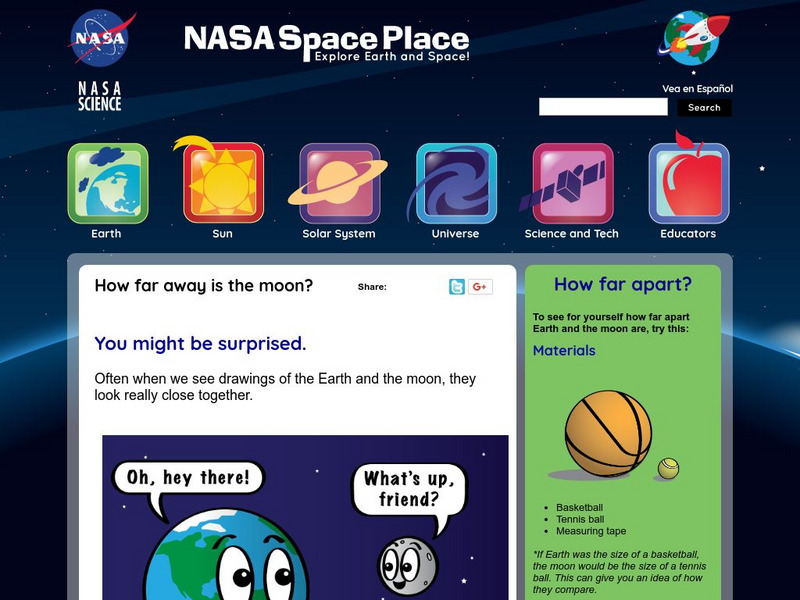
Nasa: Space Place: How Far Away Is the Moon
Often when we see drawings of the Earth and the moon, they look really close together. Check out this cartoon series that helps illustrate the reality of this concept.
Science Museum, London
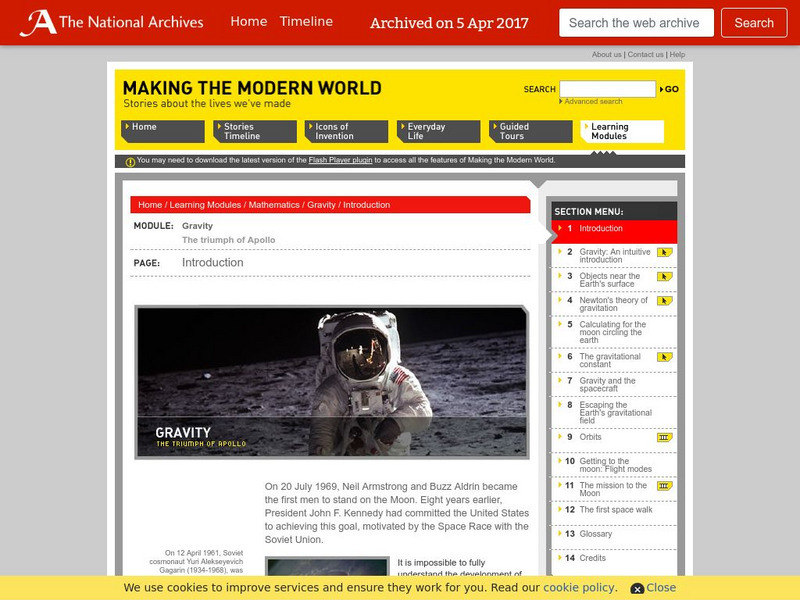
Making the Modern World: Gravity
The learning module helps students gain a deeper understanding of gravity. Some topics explored are orbits, the mission to the Moon, and the first space walk. Activities and videos are included.
Physics Classroom
The Physics Classroom: Circular and Satellite Motion: The Inverse Square Law
Through illustrated examples and interactive practice, students explore Newton's ability to relate the cause for heavenly motion (the orbit of the moon about the earth) to the cause for Earthly motion (the falling of an apple to the...
TeachEngineering
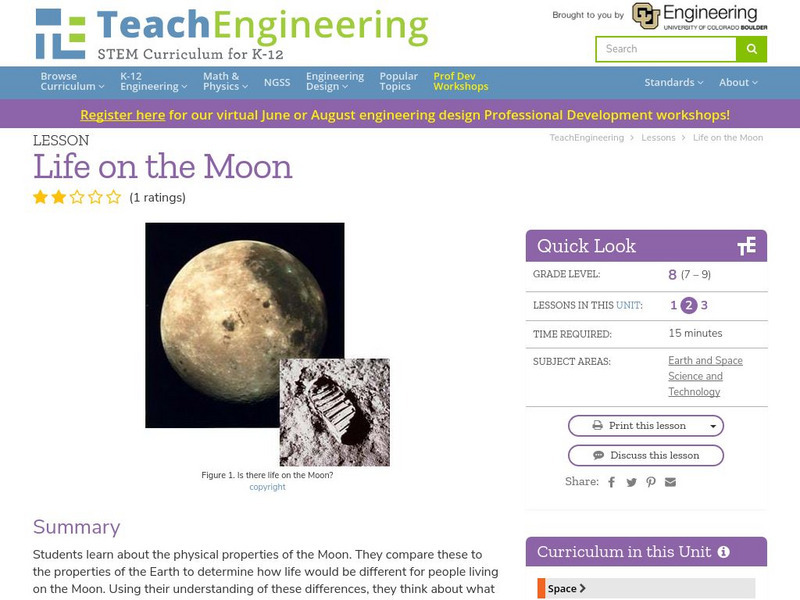
Teach Engineering: Life on the Moon
Students learn about the physical properties of the Moon. They compare these to the properties of the Earth to determine how life would be different for people living on the Moon. Using their understanding of these differences, they...
NASA
Nasa: Earth, Moon and Mars Balloons
In this lesson, students will construct a scale model of the Earth-Moon-Mars system.
Curated OER
Web Gallery of Art: Hina Te Fatou (The Moon and the Earth)
An image of "Hina te Fatou (The Moon and the Earth)", created by Paul Gauguin in 1893 (Oil on canvas, 112 x 61 cm).
CK-12 Foundation
Ck 12: Physics Simulation: Phases of the Moon
[Free Registration/Login Required] Learn how the steady motion of the Moon around the Earth, and the phases created by the relative position of the Earth, Sun, and Moon, allow us to tell time by simply looking at the shape and...

E-learning for Kids
E Learning for Kids: Antarctica Penguins: How Does the Moon Influence the Tide?
This lesson explains how the moon affects tides on Earth and about the different types of tides.
University of Colorado
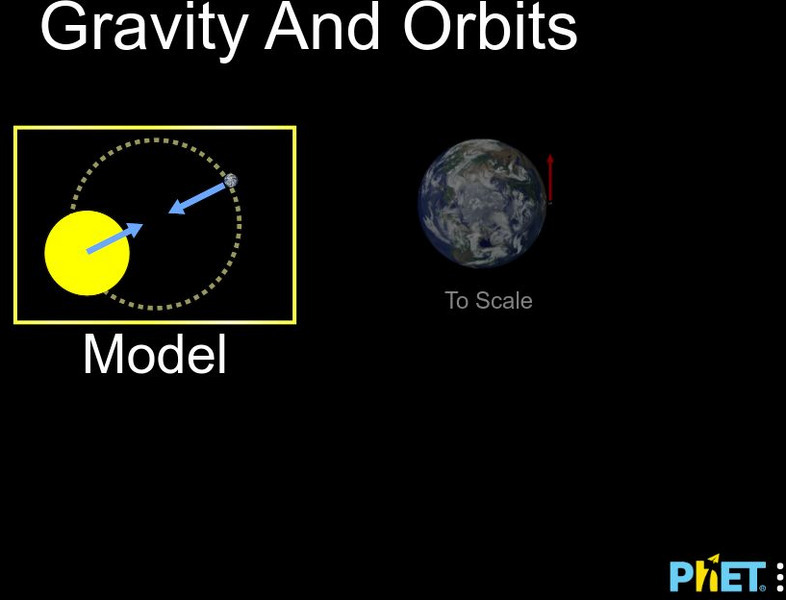
University of Colorado: Ph Et Interactive Simulations: Gravity and Orbits
Move the sun, earth, moon, and space station to see how it affects their gravitational forces and orbital paths. Visualize the sizes and distances between different heavenly bodies, and turn off gravity to see what would happen without it.

NASA
Nasa: Space Place: Dr. Marc Answers Questions About Earth & Moon
Discover facts about the Earth and the Moon with NASA scientist, Dr. Marc Rayman.
PBS
Pbs Learning Media: Earth and Moon
Students are asked to compare and contrast the earth and the moon.
CK-12 Foundation
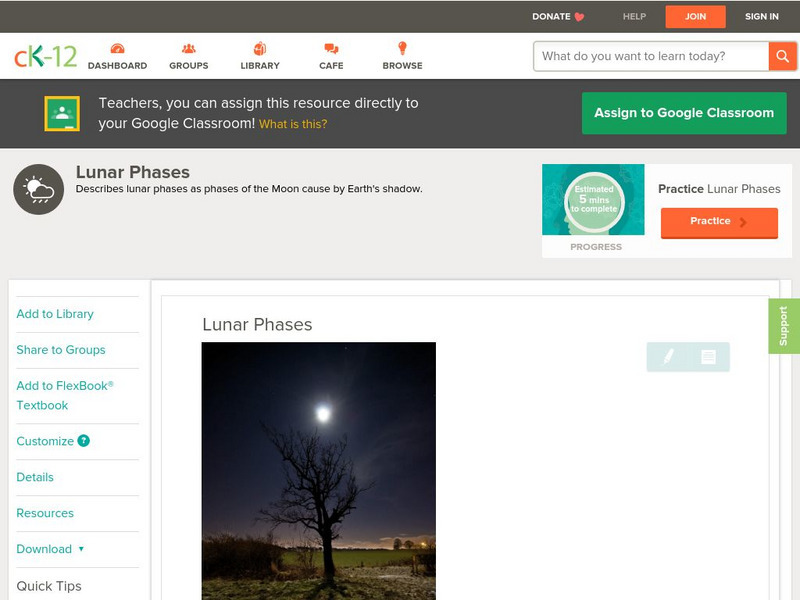
Ck 12: Earth Science: Lunar Phases
[Free Registration/Login may be required to access all resource tools.] Describes the phases of the moon and what causes them.
Other
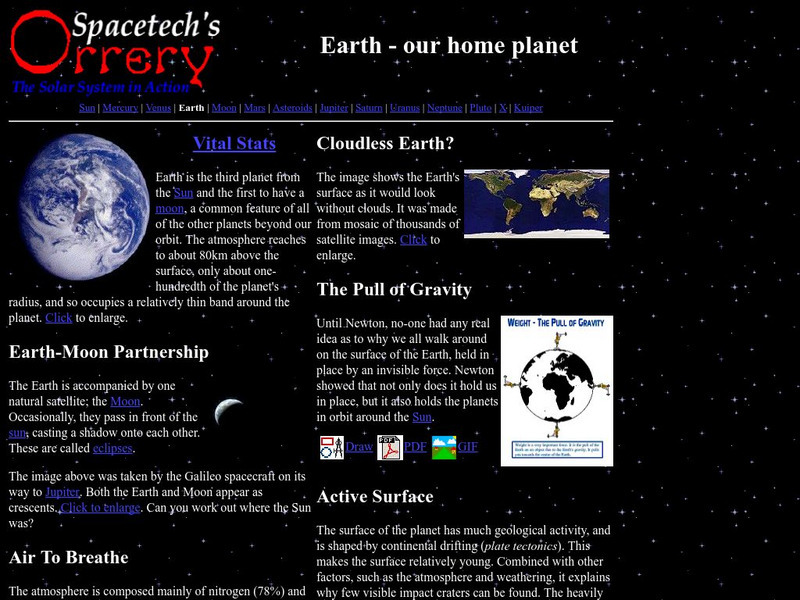
Spacetech's Orrery: Earth Our Home Planet
This site provides a very interesting overview of our home planet, Earth. Content includes a focus on the atmosphere, the pull of gravity, and the active surface.

BBC
Bbc Schools: Ks2 Bitesize: Science: Physical Processes: Earth, Sun, and Moon
Help Sarah Jane and her team put the solar system's planets back in order. Following the activity, read more about the sun, the Earth, and its moon, and then take a quick quiz to check for understanding.
Other
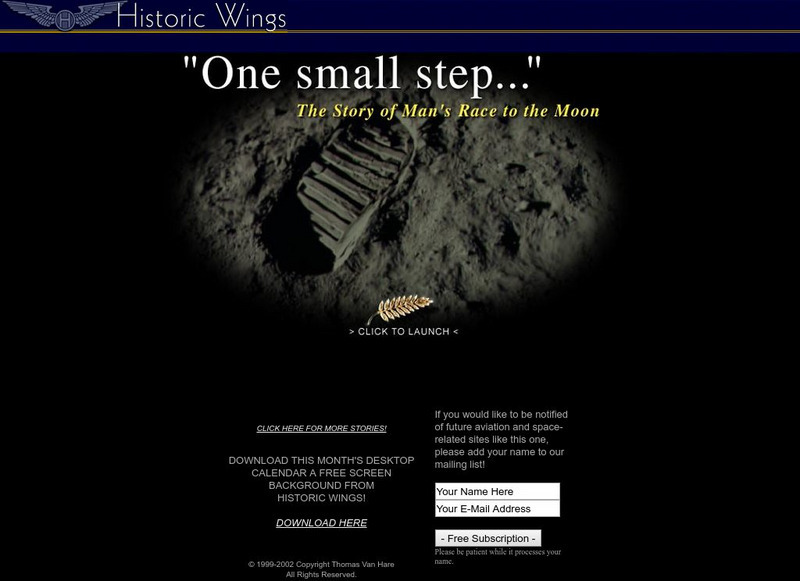
Historic Wings: "One Small Step" Race to the Moon
"One Small Step, The Race To The Moon" is a clear presentation of the story of the Moon landing program that the United States conducted during the 1960's and early 1970's. After launching the presentation click on the phases of the Moon...
NASA
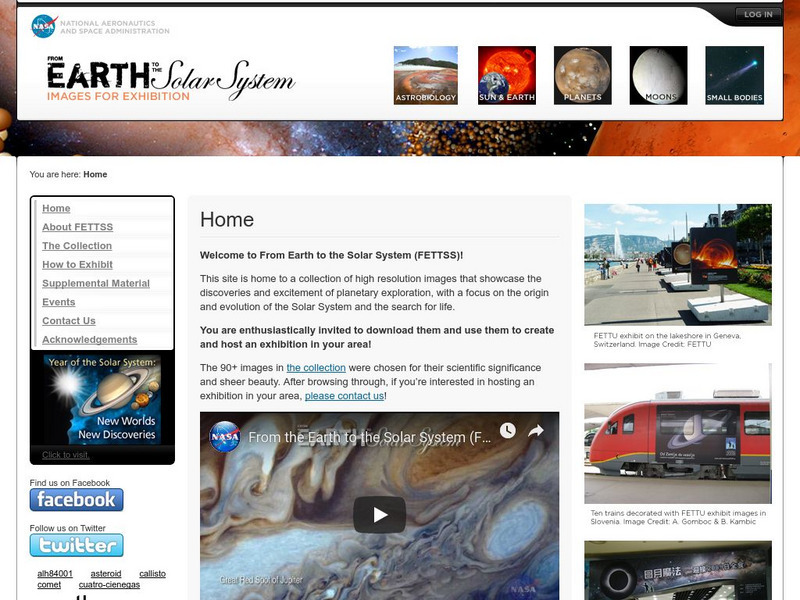
Nasa: Welcome to From Earth to the Solar System (Fettss)
A collection of high-resolution images of space. Images "showcase the discoveries and excitement of planetary exploration, with a focus on the origin and evolution of the Solar System and the search for life".
NASA
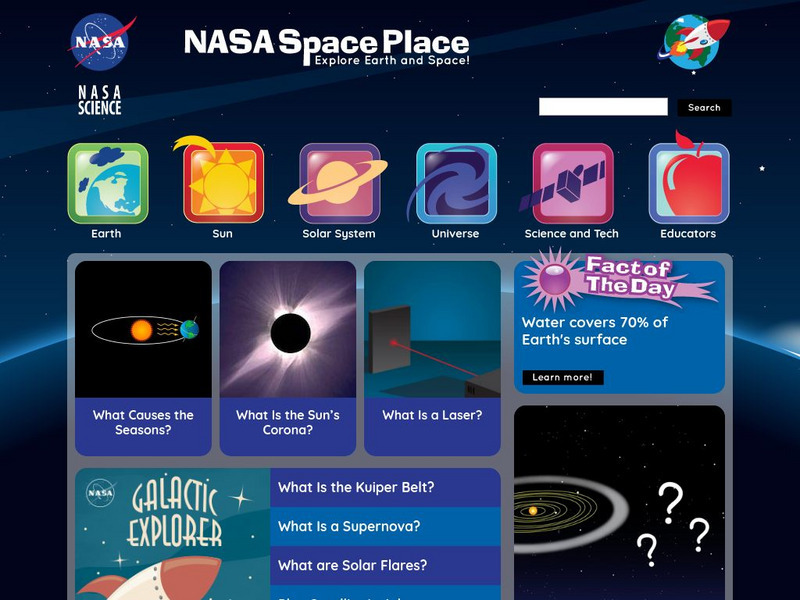
Nasa: The Space Place
Do you know what a solar eclipse is? Or how about a galaxy? Space Place has the answers to all your questions about space! Site includes information to explore about planets, satellites, moons, and much more. Also on the website are...
Fourmilab Switzerland
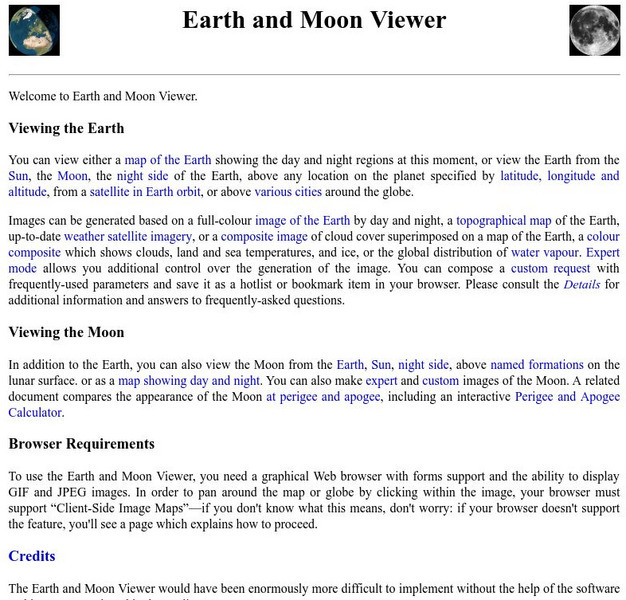
Earth and Moon Viewer
View a map of the Earth showing the day and night regions at this moment, or from the sun, the noon, the night side, and other points of view in this simulation. Illustrated.

BBC
Bb Ci Space: Earth
The BBC provides a general overview of the planet Earth. Content includes statistical information, a focus on the four seasons, moon information, and more.

Other
Astro Methods: Earth's Nutation Visualized
Nutation is a small cyclical motion superimposed upon the steady 26,000-year precession of the Earth's axis of rotation. It is mainly caused by the gravitational effect of the 18.6-year rotation period of the Moon's orbit. The main...