Hi, what do you want to do?






Council for Economic Education
Econ Ed Link: Money Doesn't Grow on Trees
This lesson plan helps students distinguish between earned and unearned income by identifying methods for getting money.
Goodwill
Gcf Global: Assessing How You Manage Money
This lesson examines how to manage your money safely.

Council for Economic Education
Econ Ed Link: No Funny Money, Honey I Want the Real Thing!
Do you know what funny money is? It's NOT the real thing! Find out how our government tries to make our money hard to copy in this lesson about real and fake money.
Better Lesson
Better Lesson: Counting Up the Cost!
Fourth graders love to shop! In this exciting instructional activity, 4th graders will discover how to count money using some real world activities. This instructional activity includes a detailed lesson plan, printable worksheets, and a...

Scholastic
Scholastic: Adventures in Math: Lesson 2: Money Planning
What can we do with money? Deciding on the best use of our money requires planning. Students will identify ways that money can be used: spending, saving, and giving.
Practical Money Skills
Visa: Practical Money Skills: Lesson Plans for Grades 7 8
Fourteen financial literacy lesson plans for middle school students cover topics such as budgeting, living on your own, the influence of advertising, and saving and investing.
Science and Mathematics Initiative for Learning Enhancement (SMILE)
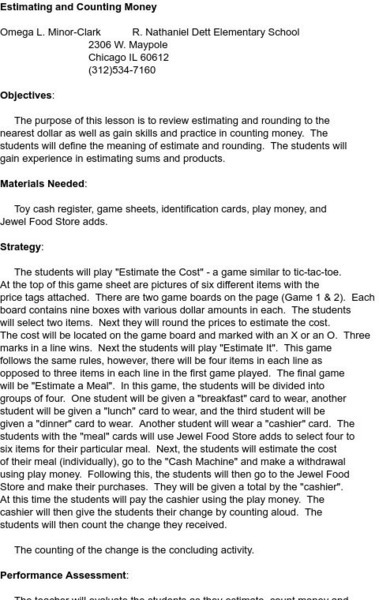
Smile: Estimating and Counting Money
The purpose of this lesson from the Illinois Institute of Technology is to review estimating and rounding to the nearest dollar as well as gain skills and practice in counting money. The young scholars will define the meaning of estimate...
Other
Ucce: Money Talks
This resource provides activities such as: savings video, youth money newletters, financial literacy games, related links, and a teacher section.
Online Learning Haven
Fun Social Studies: How Money Began
A brief history of the barter system and how coins and currency came into use. Includes links to related topics on the use of money.
Council for Economic Education
Econ Ed Link: Money or Barter?
Economics website with interactive lesson teaching students the characteristics of money and barter. Students will be asked to categorize statements as money, barter, or both.

Scholastic
Scholastic: Adventures in Math: Lesson 4: How to Use Your Money
In this lesson, students will identify why having a budget and keeping records of their spending and saving habits helps them make better financial choices.
NumberNut
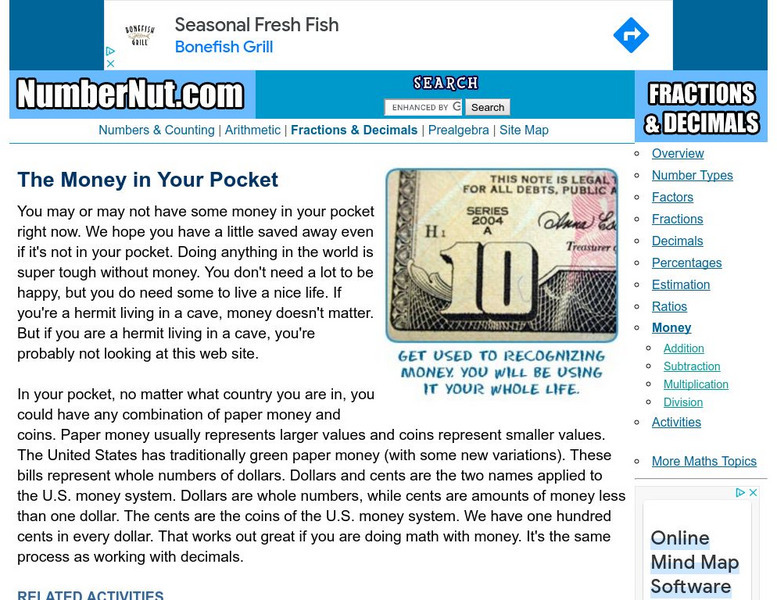
Number Nut: The Money in Your Pocket
What do you know about the money in your pocket? Get a basic understanding of the United States monetary system and how it works in this lesson. Access links to four interactive games to practice your money and number sense skills. All...
A to Z Teacher Stuff
A to Z Teacher Stuff: Teaching Money
This lesson plan site from A to Z Teacher Stuff focuses on pupils identifying coin, money values, writing amounts of money, and counting money to a specific dollar amount with at least 80% accuracy.
iCivics
I Civics: Executive Roles: Money Doesn't Grow on Trees?
Students learn the role of the executive branch in creating and carrying out laws and how the executive and legislative branches work together to create a new coin.

Alabama Learning Exchange
Alex: Printing Your Own Money
Lesson outlining a class fundraiser where young scholars design and create their own print to use to make greeting cards.
TED Talks
Ted: Ted Ed: Doug Levinson: What Gives a Dollar Bill Its Value?
The value of money is determined by how much (or how little) of it is in circulation. But who makes that decision, and how does their choice affect the economy at large? Doug Levinson takes a trip into the United States Federal Reserve,...
PBS
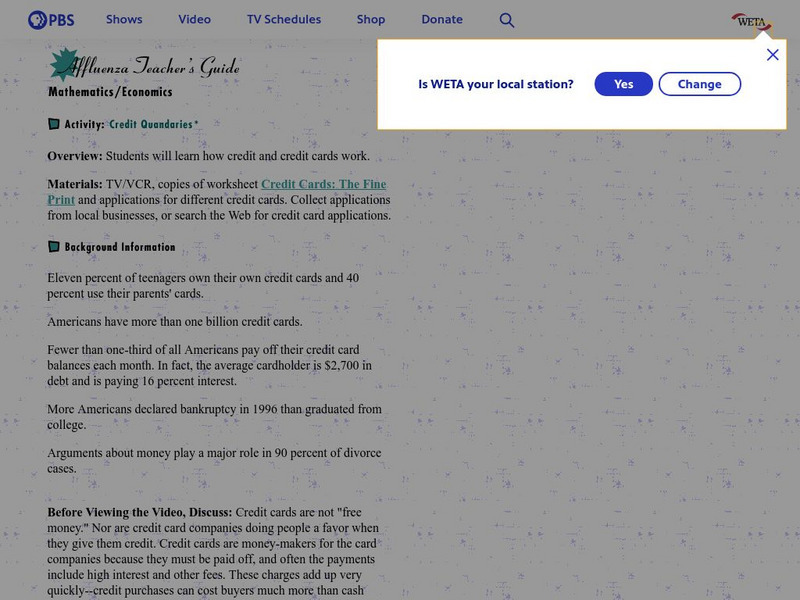
Pbs Lesson Plan (Affluenza): Credit Quandaries
"Credit cards are not free money." Just how do credit cards work? This site provides a lesson in which students investigate the lure of credit card companies, the pitfalls of credit debt, and the impact of credit debt on our society....
Council for Economic Education
Econ Ed Link: Clean Land Thanks to Us! (Student Page)
How does the government raise money to fund government agencies like the EPA? Through taxes. This lesson looks at the different taxes that are paid by US citizens and how the money is used for things such as cleaning up the environment.
Learning to Give
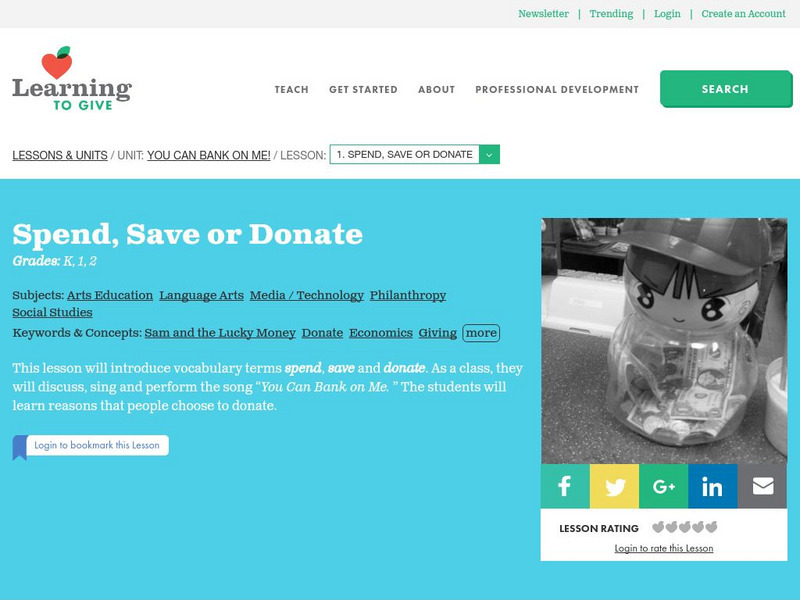
Learning to Give: Spend, Save or Donate
This lesson will introduce vocabulary terms spend, save and donate. As a class, they will discuss, sing and perform the song "You Can Bank on Me. " The students will learn reasons that people choose to donate.

US Department of Education
Helping Your Child Learn Math: Math in the Home
An excellent compilation of activities that engage parents and children in math explorations at home. Detailed lessons covering a wide range of math topics such as fractions, measurements, money, data collection, and math in newspapers....
Council for Economic Education
Econ Ed Link: Making Cents Out of Centimes: The Euro
Use this intermediate instructional activity to teach your students about the European currency, the Euro. Interactive links take the learner to France where they learn about French money and French culture.
Council for Economic Education
Econ Ed Link: Lewis and Clark Barter With Native Americans
For this lesson you will define the term barter and give examples of bartering in several different areas. Find out how this system took shape and was useful to Lewis and Clark. This site is extremely informative and contains extension...
Council for Economic Education
Econ Ed Link: You Can Bank on This! (Part 1)
This is the first of four lessons on banking for elementary students. This lesson provides the students with information on banking; it also allows them to try out some procedures for thinking about money and banking. There is a link to...
Cynthia J. O'Hora
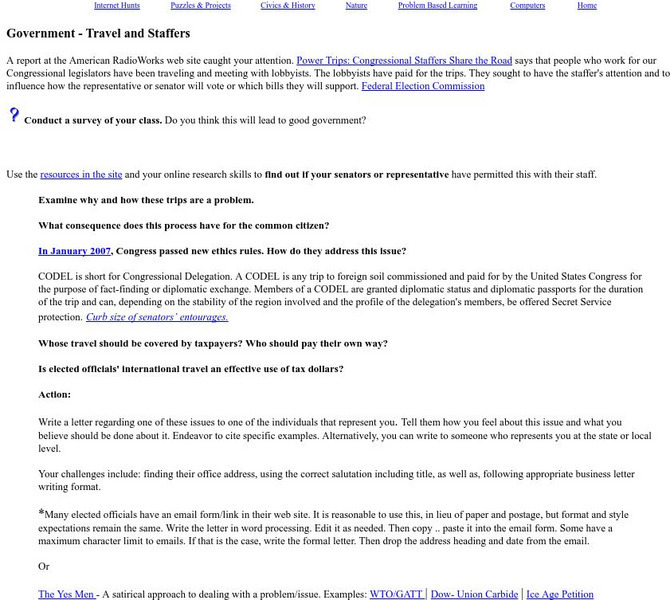
Mrs. O's House: Government Travel and Staffers
Who should pay for politicians traveling before it violates ethical codes of abuse of power? Legislators and their staff were offered and accepted millions of dollars worth of free trips. This lesson explores the ethics of our...
Other popular searches
- Money Lessons Giving Change
- Counting Money Lessons
- Canadian Money Lessons
- Second Grade Money Lessons
- 2nd Grade Money Lessons
- Australian Money Lessons
- Shopping Money Lessons
- Math Money Lessons
- Money Lessons Elementary
- Fun Money Lessons
- Counting Money Math Lessons
- Adding Money Amounts Lessons