Hi, what do you want to do?





Science Buddies
Science Buddies: Find Center of Milky Way Galaxy Using Globular Star Clusters
The Milky Way is the edgewise view of our home galaxy, a disk made up of billions of stars. The Sun resides on one of the spiral arms of the disk, 30,000 light-years from the thick hub of the galaxy. The actual center, with a black hole...
National Earth Science Teachers Association
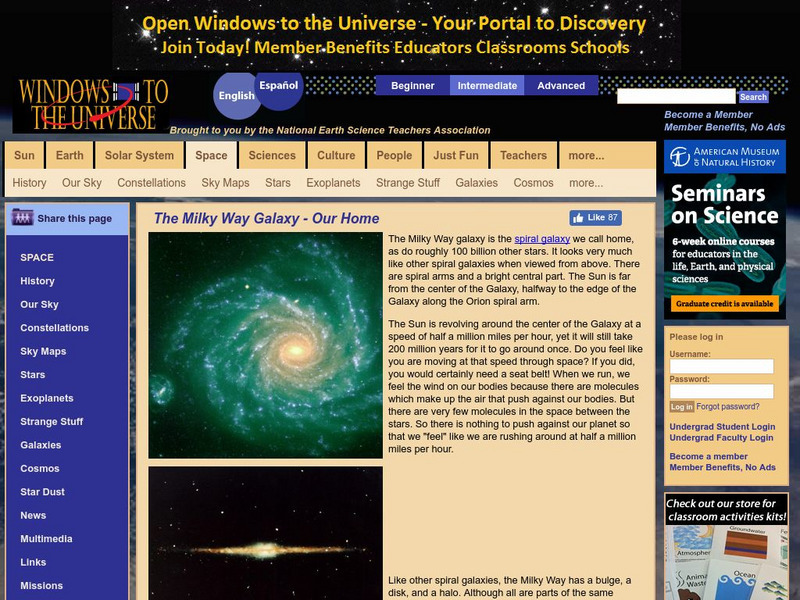
Windows to the Universe the Milky Way Galaxy
Learn what Milky Way galaxy is made of and what it looks like, as well as how it relates to other known galaxies. Read "Questions and answers about the Milky Way" for further information.
Science Buddies
Science Buddies: The Milky Way and Beyond: Globular Clusters
Globular clusters, compact groups of about a million stars that move around together in galaxies, are among the oldest objects found in the universe. Since they are found most galaxies and since they've been around for so long, globular...

Australian Broadcasting Corporation
Australian Broadcasting Corporation: News in Science: Milky Way Is Many Tentacled Beast
From ABC News in Science, Larry O'Hanlon's article discusses research connected to the size of the Milky Way Galaxy. The article suggests that the galaxy, instead of being a neat spiral, stretches out through a series of arms.
California Institute of Technology
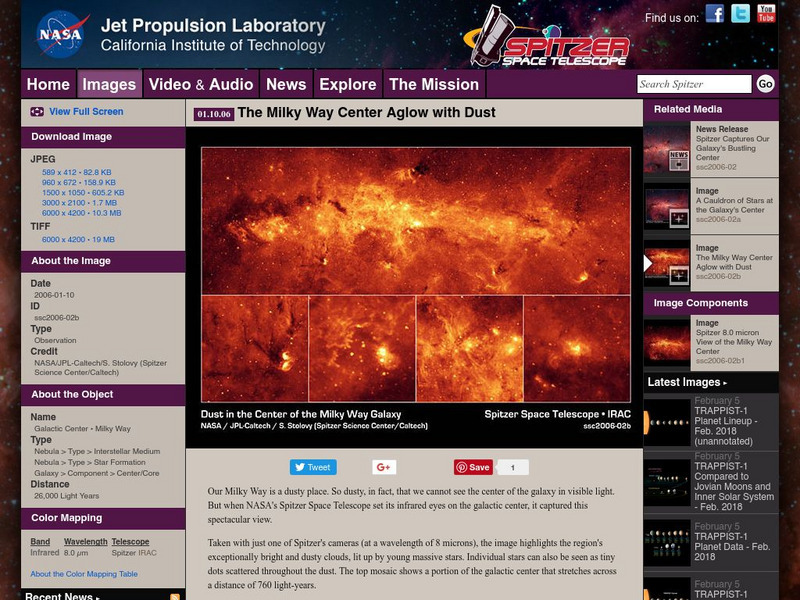
Spitzer Science Center: Milky Way Aglow With Dust
This space telescope image titled "The Milky Way Center Aglow with Dust" features five separate images of the galaxy's center through infrared eyes. In addition, a detailed textual overview explains various specifics of the picture.
CPALMS
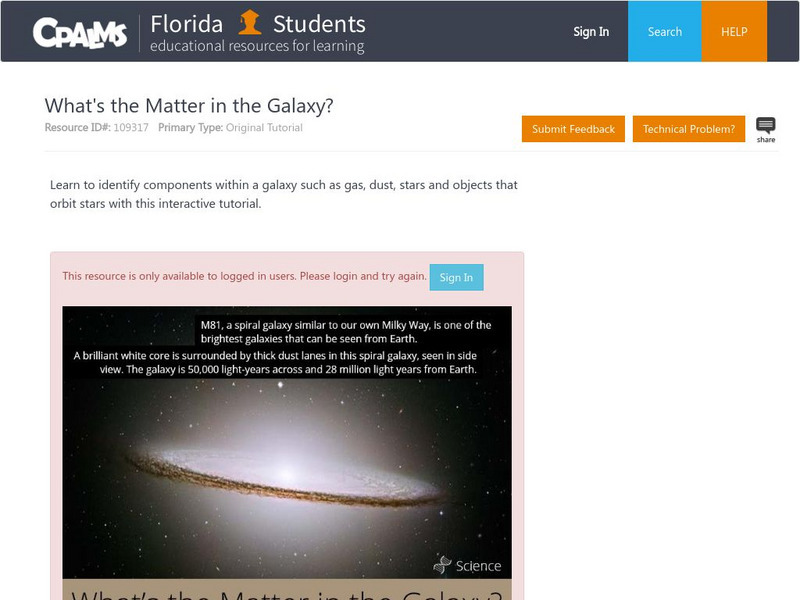
Florida State University Cpalms: Florida Students: What's the Matter in the Galaxy?
A tutorial that looks at the components within a galaxy such as gas, dust, stars and objects that orbit stars. A PDF file of the tutorial is available.

TED Talks
Ted: Ted Ed: Could Human Civilization Spread Across the Whole Galaxy?
Could human civilization eventually spread across the whole Milky Way galaxy? Could we move beyond our small, blue planet to establish colonies in the multitude of star systems out there? These questions are pretty daunting, but their...
TeachEngineering
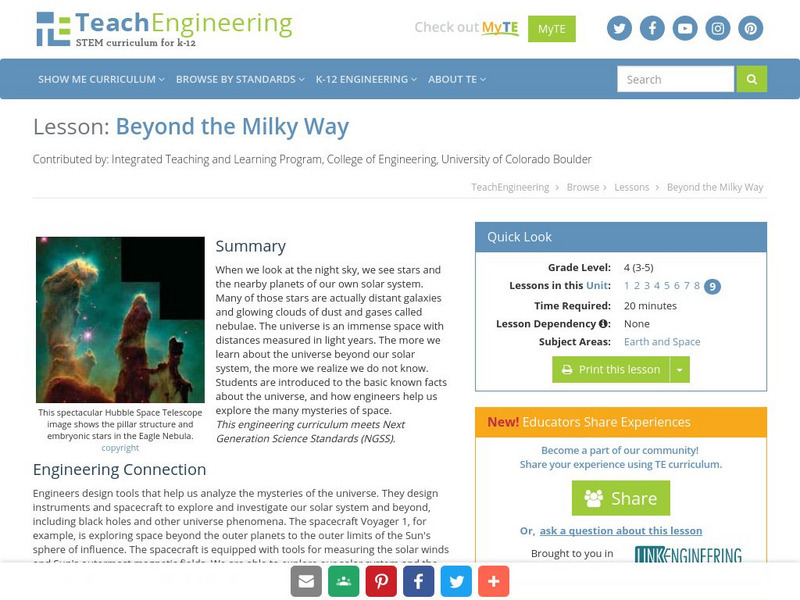
Teach Engineering: Beyond the Milky Way
When we look at the night sky, we see stars and the nearby planets of our own solar system. Many of those stars are actually distant galaxies and glowing clouds of dust and gases called nebulae. The universe is an immense space with...

PBS
Pbs Learning Media: Spin a Spiral Galaxy
This interactive activity from NOVA Online lets you spin a spiral galaxy, including our own Milky Way. It demonstrates that what you can learn from visible light observations of a galaxy is largely determined by the angle from which you...
Australian Broadcasting Corporation
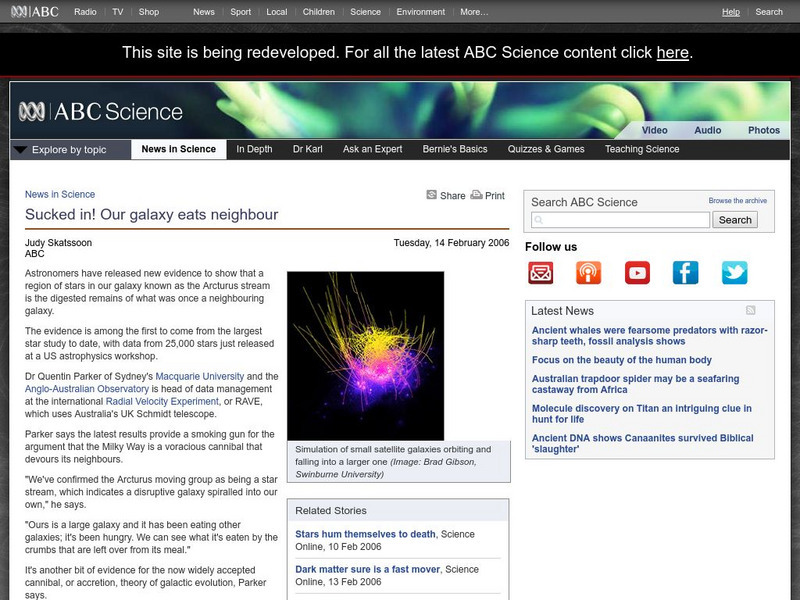
Australian Broadcasting Corporation: News in Science: Sucked In! Our Galaxy Eats Neighbour
From ABC News in Science, Judy Skatssoon's article discusses evidence and research surrounding the remains of the Arcturus stream of stars, remains that suggest the possibility of the Milky Way as a carnivore galaxy.
Other
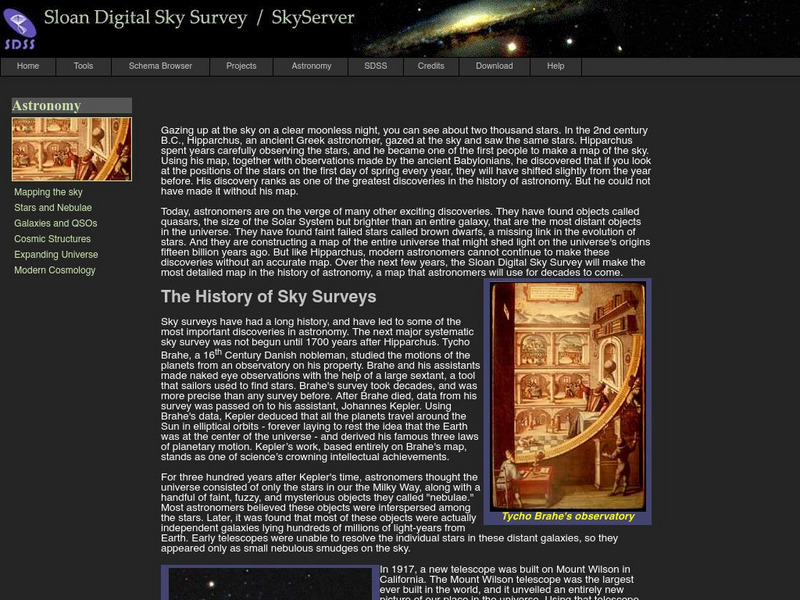
Sky Server: About Astronomy
This site from SkyServer provides the history of astronomy as well as links to mapping the sky, galaxies, cosmic structures and much more. Several pictures are given, and the article is medium in length.

NASA
Nasa: Jet Propulsion Laboratory: Planet Quest: Exoplanet Exploration
Constellation of articles, images, diagrams, posters, videos, and more on the subject of the search for planets, particularly Earth-like planets, outside our solar system.