Hi, what do you want to do?






Curated OER
Migration and the Spirits of Life
Students study the Mexican traditions for the Day of the Dead. In this Mexican traditions lesson, students study monarch butterflies and learn about the role that the mariposa plays in the Day of the Dead. Students learn about migration,...

Curated OER
Aztec Floating Gardens
Aztecs created amazing hydroponic gardens called Chinampas, to grow their crops. Learners in grades k-7 engage in four mini-experiments to understand just how amazing floating gardens are. Tip: A perfect way to bring science into your...

Curated OER
GET THE POINT!
The student will measure the width of the horns on drawings of longhorn cattle and then convert the measurements from inches to centimeters and from inches to feet.1. Review with pupils the steps required to measure an item and to...

Smithsonian Institution
National Museum of Natural History: American Mammals: Mexican Long Nosed Bat
The Mexican long-nosed bat feeds mainly on the nectar and pollen of agaves, and is found in Texas in June and July when the plants are in bloom there. Then it migrates southward into Mexico, where it lives in pine-oak forests and...
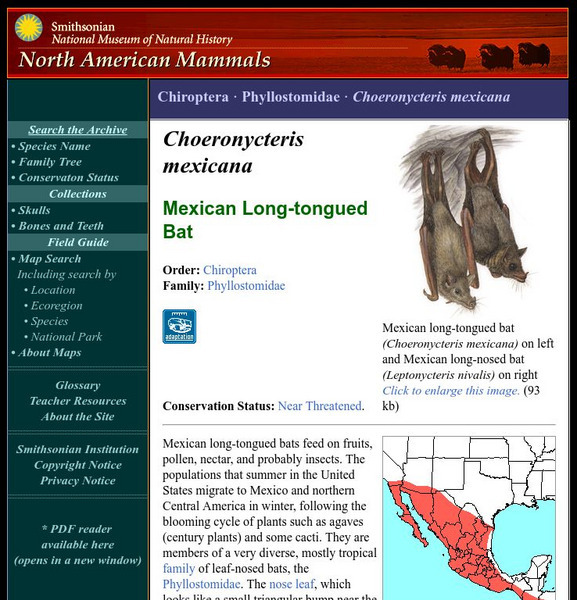
Smithsonian Institution
National Museum of Natural History: American Mammals: Mexican Long Tongued Bat
Mexican long-tongued bats feed on fruits, pollen, nectar, and probably insects. The populations that summer in the United States migrate to Mexico and northern Central America in winter, following the blooming cycle of plants such as...