Hi, what do you want to do?





TeachEngineering
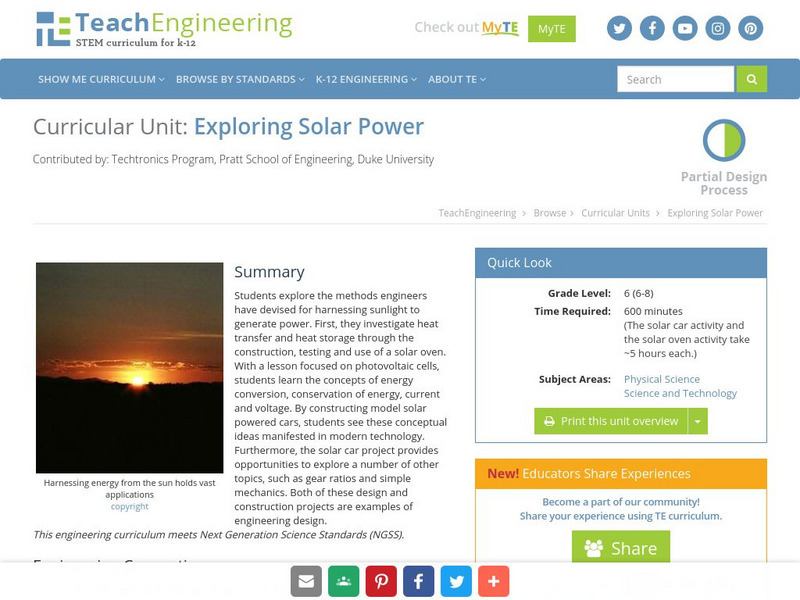
Teach Engineering: Exploring Solar Power
This unit provides students the opportunity to explore methods engineers have devised for harnessing sunlight to generate power. Students will initially explore heat transfer and heat storage through the construction, testing, and...
TeachEngineering
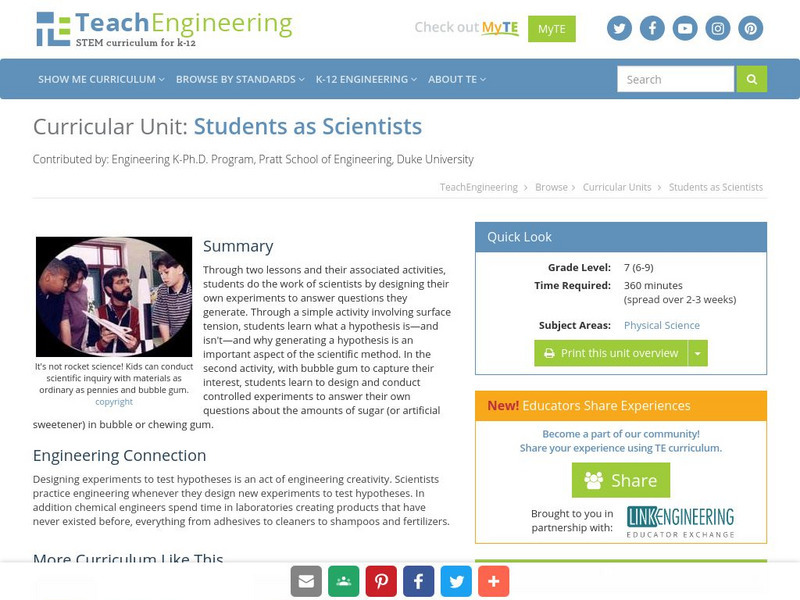
Teach Engineering: Students as Scientists
This curricular unit contains two lessons that let students actually do the work of scientists as they design their own experiments to answer questions they generate. In the first lesson and its associated activity, students conduct a...

North Central Regional Educational Laboratory
Ncrel: Developing a School or District Technology Plan
This site from the North Central Regional Educational Laboratory provides information on how to create a technology plan that is part of an overall school improvement plan. Discusses guidelines, planning committees, budgets, and agenda...
Other
Jiskha Homework Help: Math Calculus
Jiskha.com offers help with your calculus homework. Use the find button to locate the subject you are interested in. This will take you to the correct link.
Reading Rockets
Reading Rockets: Simple Things Principals Can Do to Help All Children Read Well
Explore a list of simple things that principals can do to help all children learn to read. Come and learn more about the collaboration process with school administrators, teachers and staff.
TeachEngineering
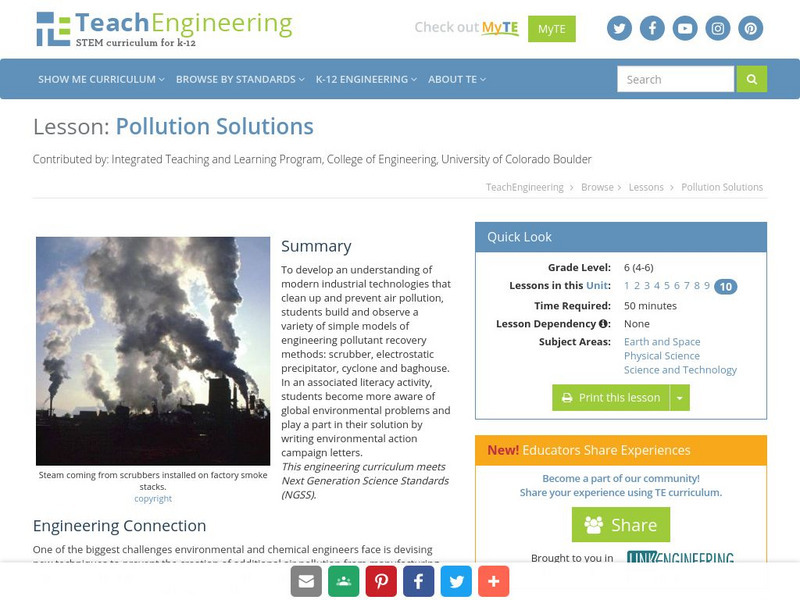
Teach Engineering: Pollution Solutions
To develop an understanding of modern industrial technologies that clean up and prevent air pollution, students build and observe a variety of simple models of engineering pollutant recovery methods: scrubber, electrostatic precipitator,...
TeachEngineering
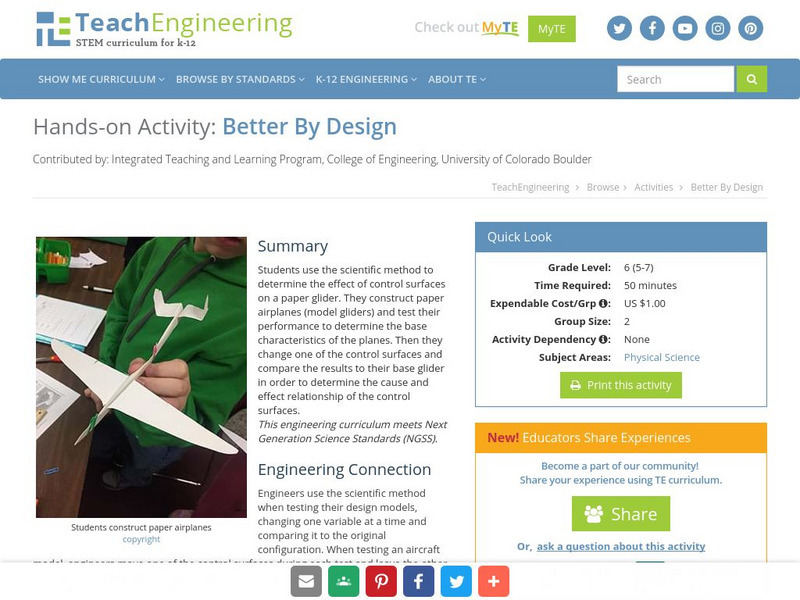
Teach Engineering: Better by Design
The purpose of this activity is to use a scientific method to determine the effect of control surfaces on a paper glider. The students will construct a paper airplane/glider and test its performance to determine the base characteristics...
TeachEngineering
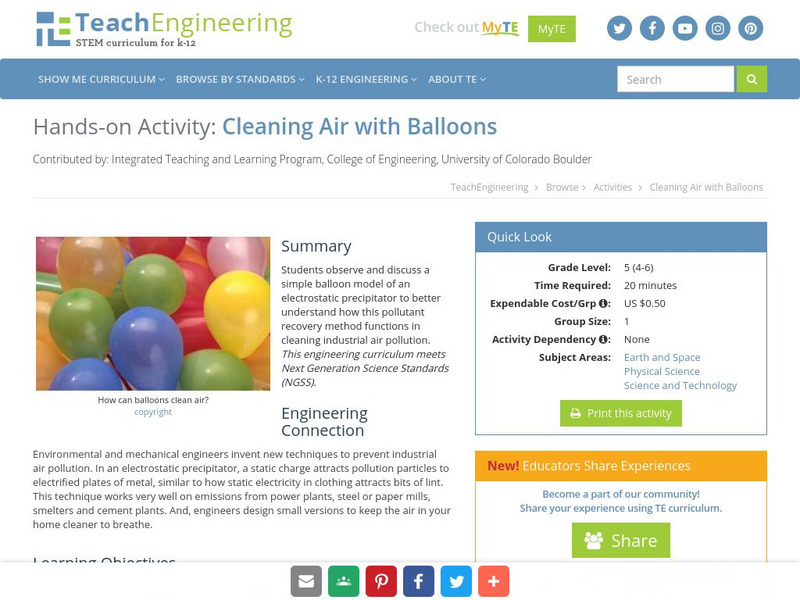
Teach Engineering: Cleaning Air With Balloons
Students observe and discuss a simple balloon model of an electrostatic precipitator to better understand how this pollutant recovery method functions in cleaning industrial air pollution.

TeachEngineering
Teach Engineering: A Merry Go Round for Dirty Air
Students observe and discuss a cup and pencil model of a cyclone to better understand how this pollutant recovery method functions in cleaning industrial air pollution.
TeachEngineering
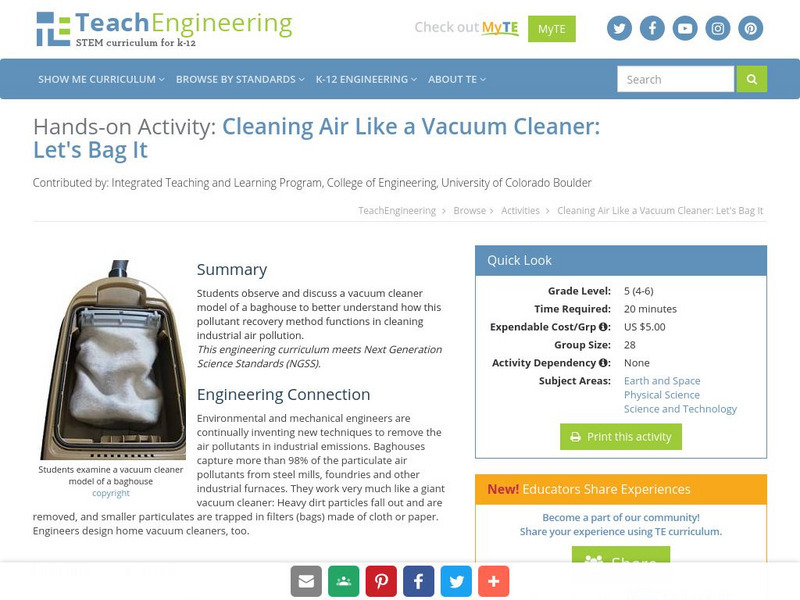
Teach Engineering: Let's Bag It
Students observe and discuss a vacuum cleaner model of a baghouse to better understand how this pollutant recovery method functions in cleaning industrial air pollution.
TeachEngineering
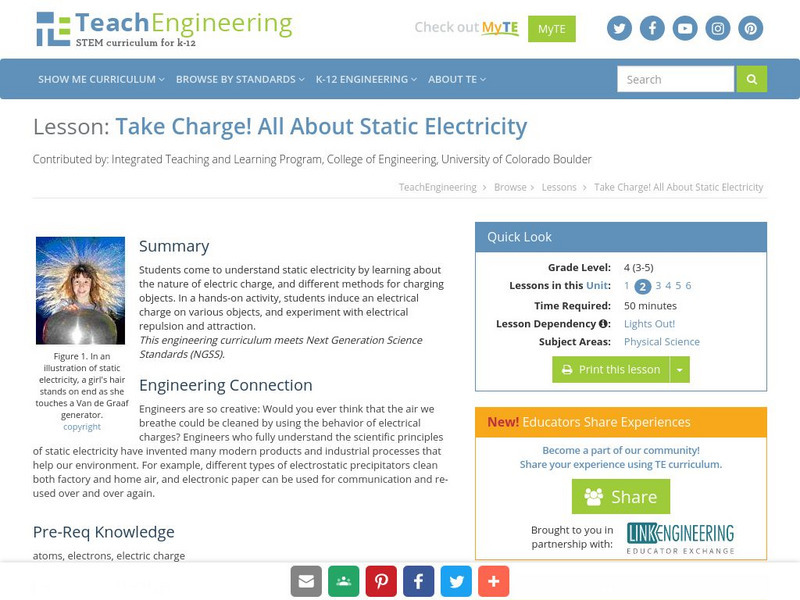
Teach Engineering: Take Charge!
Students come to understand static electricity by learning about the nature of electric charge, and different methods for charging objects. In a hands-on activity, students induce an electrical charge on various objects, and experiment...
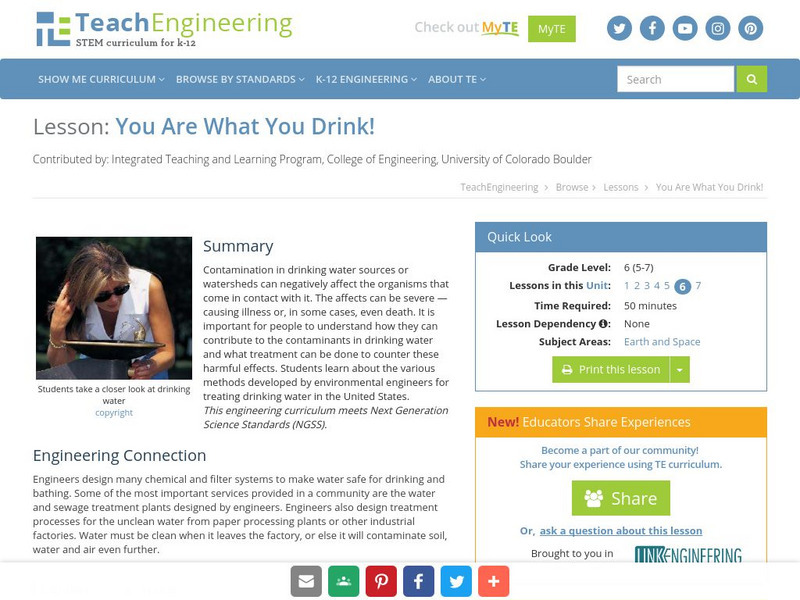
TeachEngineering
Teach Engineering: You Are What You Drink!
Contamination in drinking water sources or watersheds can negatively affect the organisms that come in contact with it. The affects can be severe - causing illness or, in some cases, even death. It is important for people to understand...
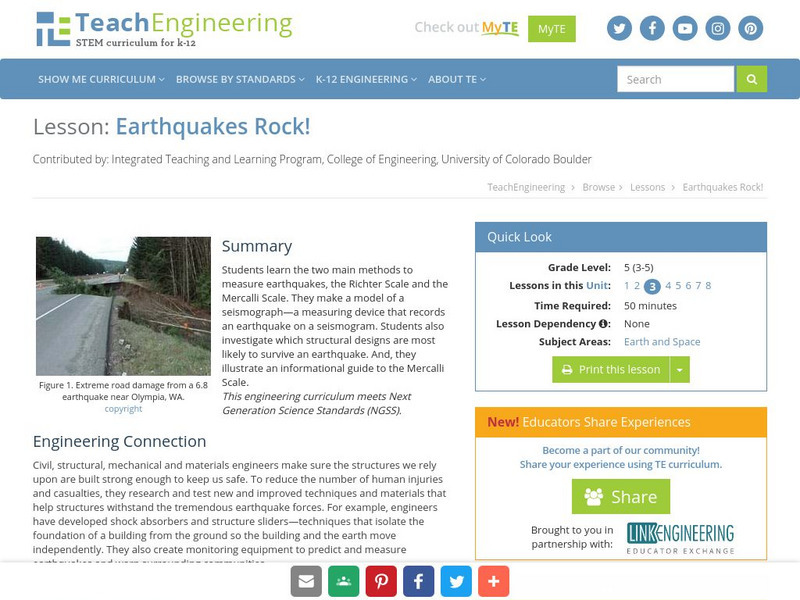
TeachEngineering
Teach Engineering: Earthquakes Rock!
Students learn the two main methods to measure earthquakes, the Richter Scale and the Mercalli Scale. They make a model of a seismograph - a measuring device that records an earthquake on a seismogram. Students also investigate which...
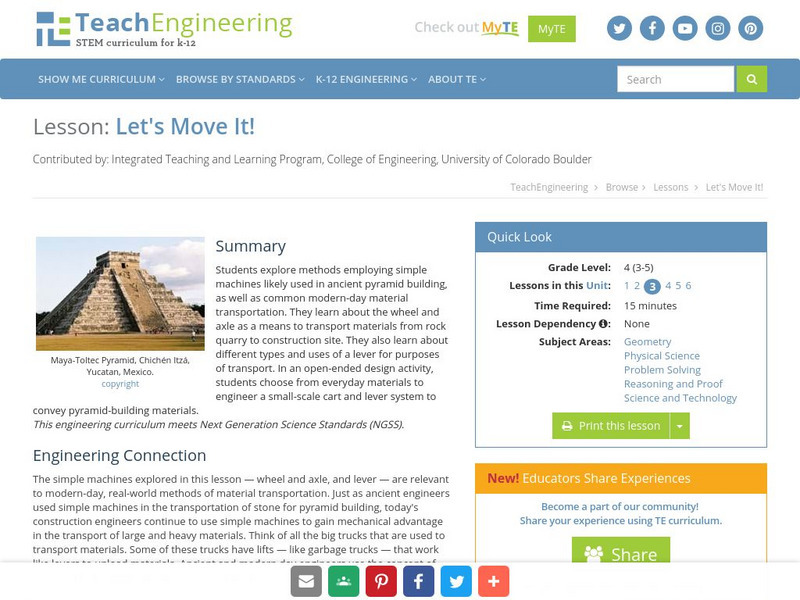
TeachEngineering
Teach Engineering: Let's Move It!
Students explore methods employing simple machines likely used in ancient pyramid building, as well as common modern-day material transportation. They learn about the wheel and axle as a means to transport materials from rock quarry to...
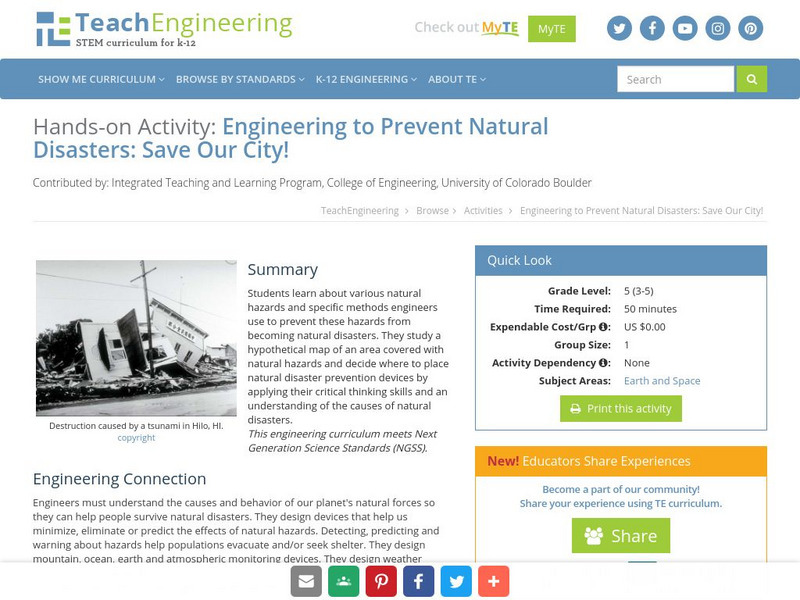
TeachEngineering
Teach Engineering: Save Our City!
Students learn about various natural hazards and specific methods engineers use to prevent these hazards from becoming natural disasters. They study a hypothetical map of an area covered with natural hazards and decide where to place...
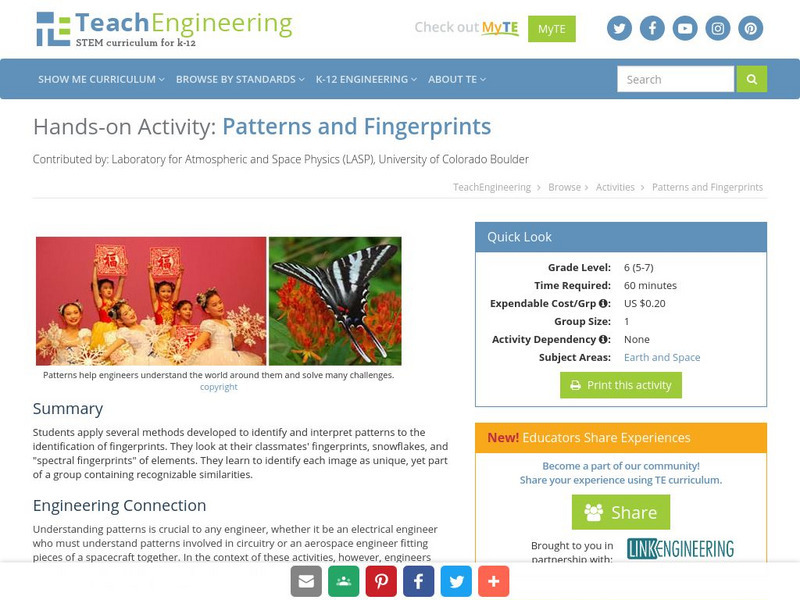
TeachEngineering
Teach Engineering: Patterns and Fingerprints
Students apply several methods developed to identify and interpret patterns to the identification of fingerprints. They look at their classmates' fingerprints, snowflakes, and "spectral fingerprints" of elements. They learn to identify...
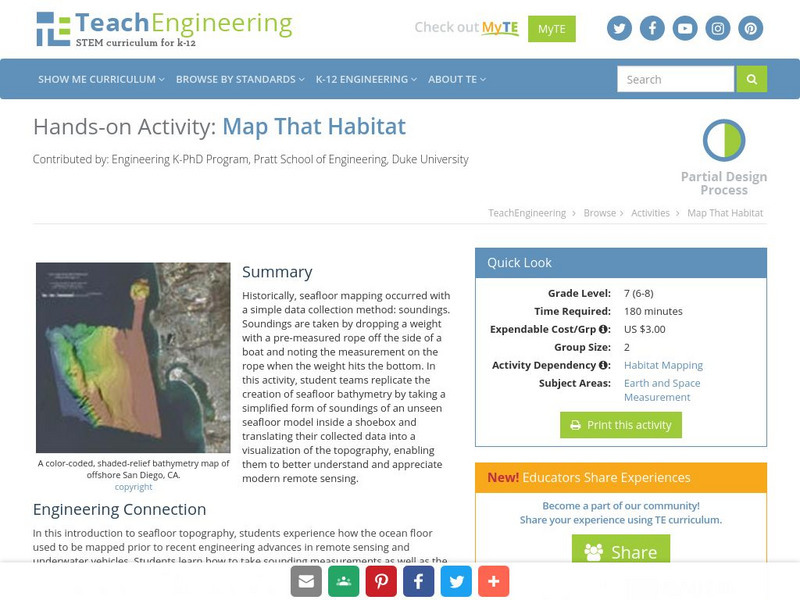
TeachEngineering
Teach Engineering: Map That Habitat
Historically, sea floor mapping occurred with a more simple data collection method: soundings. Soundings are taken by dropping a weight with a pre-measured rope off the side of the boat and noting the measurement on the rope when the...

TeachEngineering
Teach Engineering: How to Make Yeast Cells Thrive
Students set up and run the experiments they designed in the lesson Population Growth in Yeasts, using simple yeast-molasses cultures in test tubes. Population growth is indicated by the amount of respiration occurring in the cultures,...
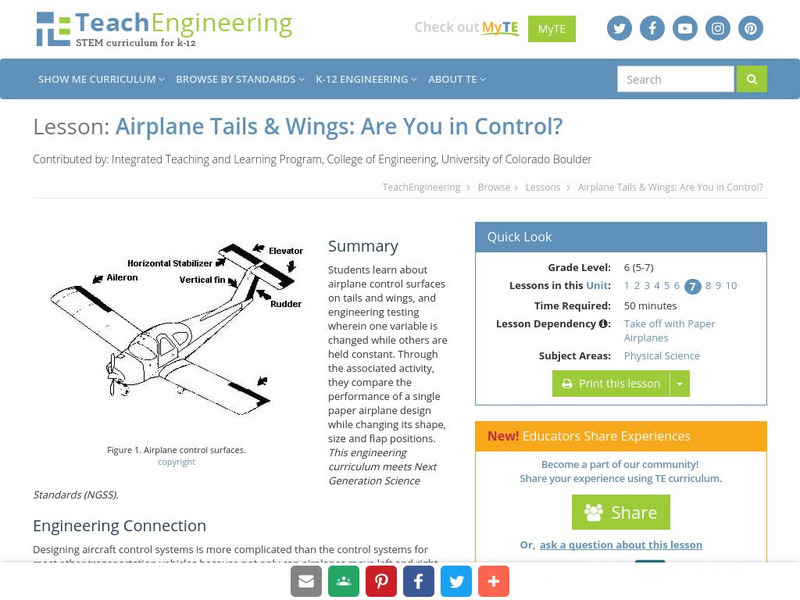
TeachEngineering
Teach Engineering: Are You in Control?
This lesson teaches the engineering method for testing wherein one variable is changed while the others are held constant. Students compare the performance of a single paper airplane design while changing the shape, size and position of...
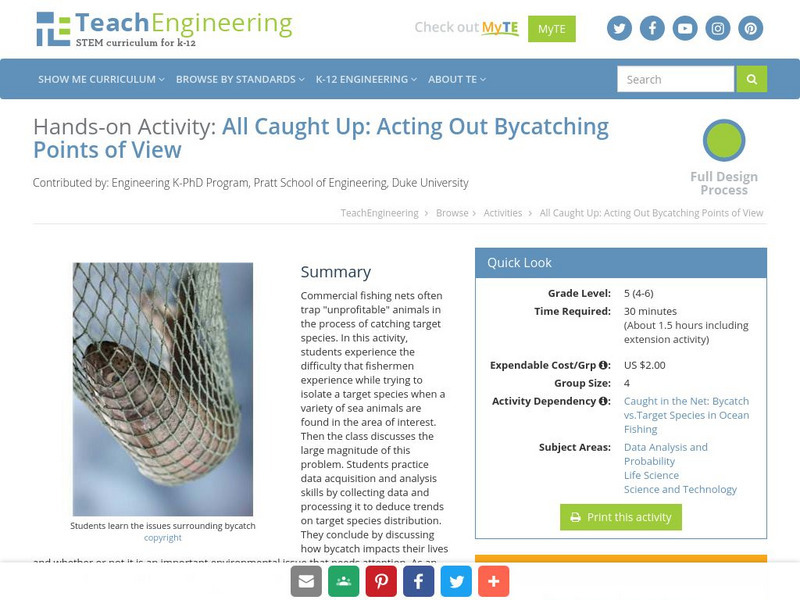
TeachEngineering
Teach Engineering: All Caught Up
Commercial fishing nets often trap unprofitable animals in the process of catching their target species. In the following activity, students will experience the difficulty that fishermen experience while trying to isolate a target...
TeachEngineering
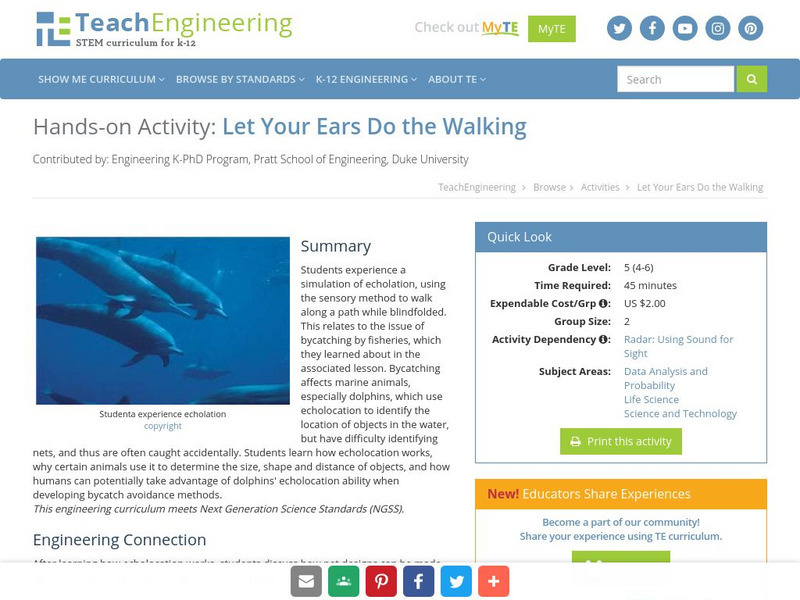
Teach Engineering: Let Your Ears Do the Walking
In the previous lesson, students learned about the issue of bycatching by fisheries and how it affects marine habitats. Dolphins are one of the main species affected by bycatching. Dolphins use echolocation to identify the location of...
TeachEngineering
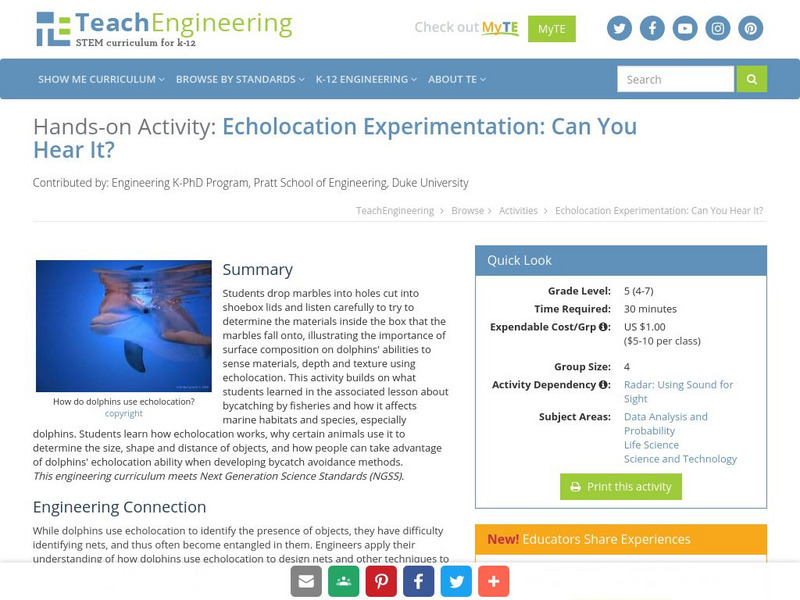
Teach Engineering: Can You Hear It?
In the previous lesson, students learned about the issue of bycatching by fisheries and how it affects marine habitats. Dolphins are one of the main species affected by bycatching. While dolphins can use echolocation to identify the...
Interactive Mathematics
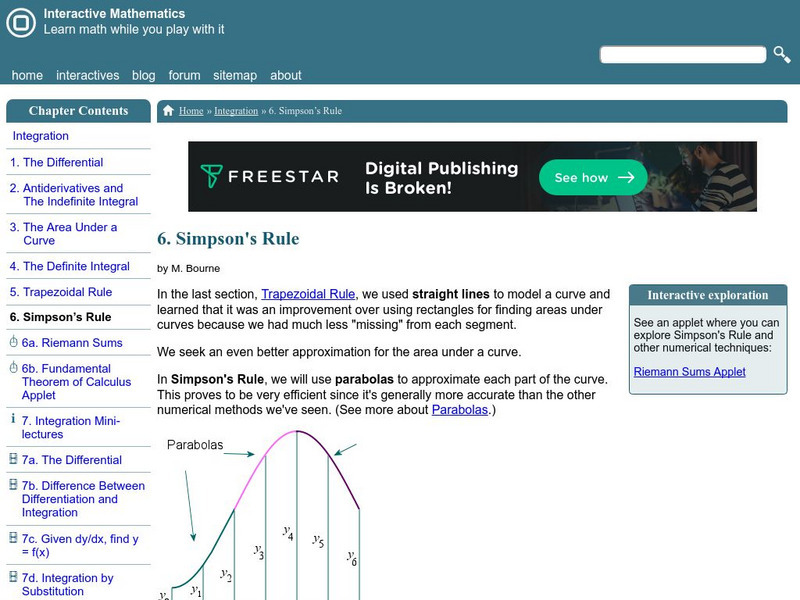
Interactive Mathematics: Simpson's Rule
Using parabolas to determine the area under a curve proves to be better estimate then other methods. This demonstration of Simpson's Rule allows the student to see just how accurate this approximation can be.

Other
Dreamms for Kids: Assistive Technology Solutions
Site is dedicated to facilitating technology access to children with special needs. Check out the "Links," link for a wide variety of information from other sites.