Hi, what do you want to do?





CPALMS
Cpalms: Measure Up! Measuring to Make a Line Plot
[Free Registration/Login Required] In this lesson, students will generate measurement data by measuring lengths using rulers marked with halves and fourths of an inch and show the data by making a line plot. This lesson includes an...

US Department of Education
Helping Your Child Learn Math: Math in the Home
An excellent compilation of activities that engage parents and children in math explorations at home. Detailed lessons covering a wide range of math topics such as fractions, measurements, money, data collection, and math in newspapers....

Alabama Learning Exchange
Alex: Teaching Measurement: Literature and Manipulatives
The tradebook, Who Sank the Boat? by Pamela Allen, is an excellent tool in teaching measurement. Learners will engage in activities involving different types of measurement. In the story, five animal friends decide to take a boat ride....

US Department of Education
Helping Your Child Learn Math: Math on the Go
Parents and children explore math in the world around them in this collection of math activities. Simple, engaging, and fun, these lessons offer learners the opportunity to discover math even when they're "on the go." An excellent...
OpenStax
Open Stax: Catherine Schmidt Jones: Fractions, Multiples, Beats, and Measures
Engage your students in a lesson that uses music to identify multiples and fractions. Your students will enjoy participating in this activity as they learn and explore music and math.
TeachEngineering
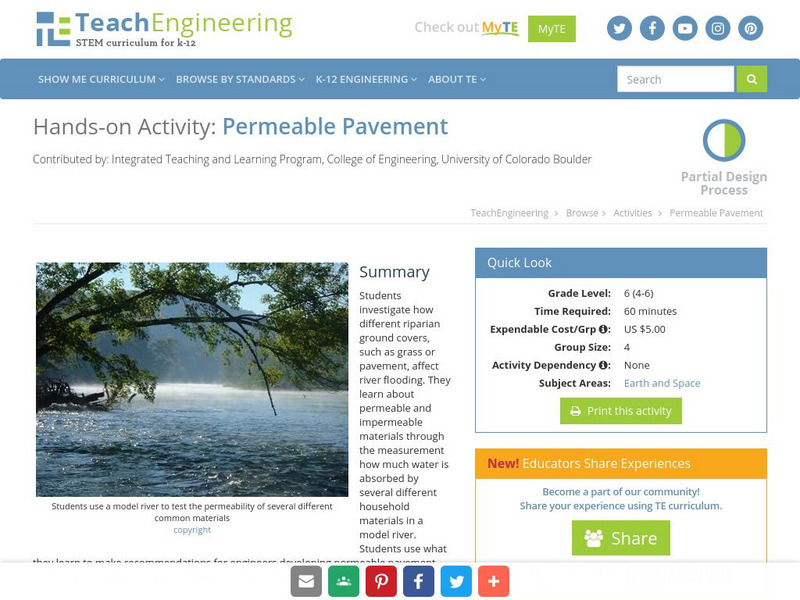
Teach Engineering: Permeable Pavement
In this activity, students investigate how different riparian ground covers, such as grass and pavement, affect river flooding. They learn about permeable and impermeable materials through the measurement how much water is absorbed by...

TeachEngineering
Teach Engineering: Wild Wind
Students will learn the difference between global, prevailing and local winds. In this activity, students will make a wind vane out of paper, a straw and a soda bottle and use it to measure wind direction over time. Finally, they will...
TeachEngineering
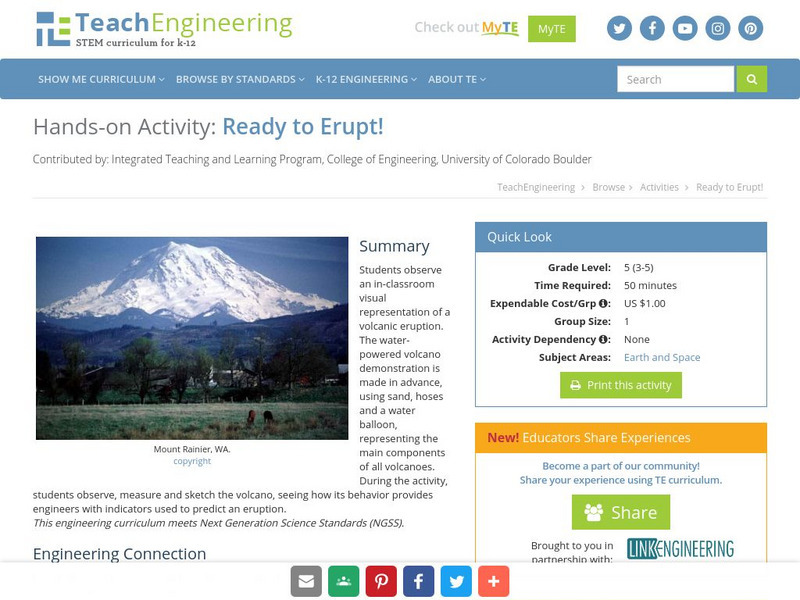
Teach Engineering: Ready to Erupt!
Students observe an in-classroom visual representation of a volcanic eruption. The water-powered volcano demonstration is made in advance, using sand, hoses and a waterballoon, representing the main components of all volcanoes. During...
TeachEngineering
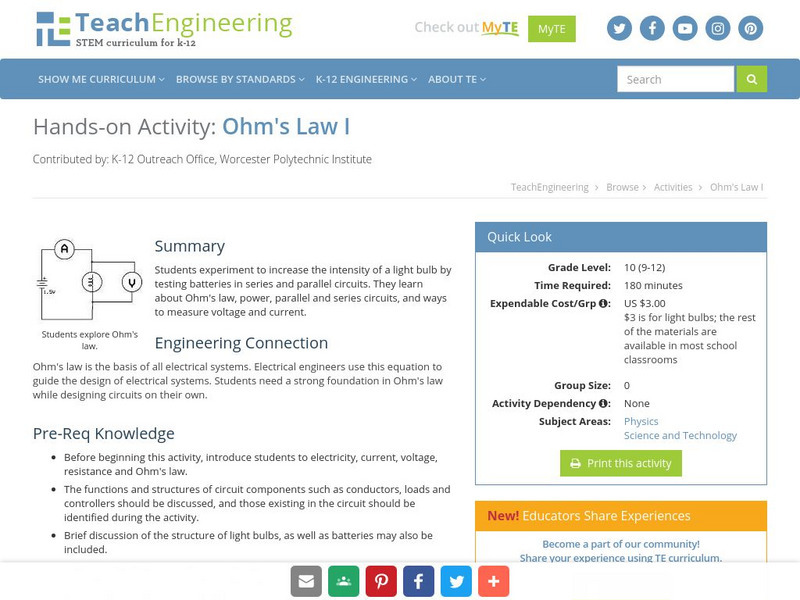
Teach Engineering: Ohm's Law I
Students will work to increase the intensity of a light bulb by testing batteries in series and parallel circuits. It analyzes Ohm's Law, power, parallel and series circuits, and ways to measure voltage and current.

Alabama Learning Exchange
Alex: Pumpkins
During this instructional activity learners will be involved in hands-on discovery activities using pumpkins and pumpkin seeds. They will compare the size and weight of their pumpkins. They will also have an opportunity to taste pumpkin...
TeachEngineering
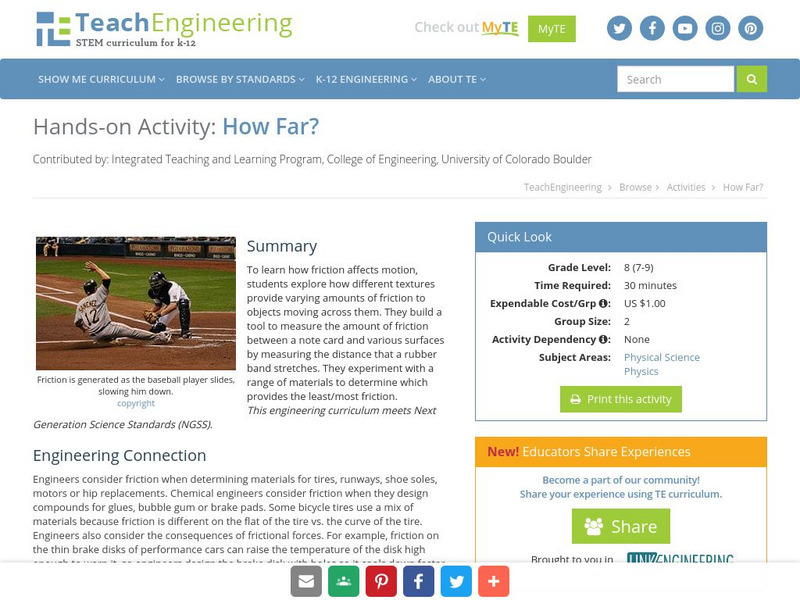
Teach Engineering: How Far?
To learn how friction affects motion, students explore how different textures provide varying amounts of friction to objects moving across them. They build a tool to measure the amount of friction between a note card and various surfaces...
TeachEngineering
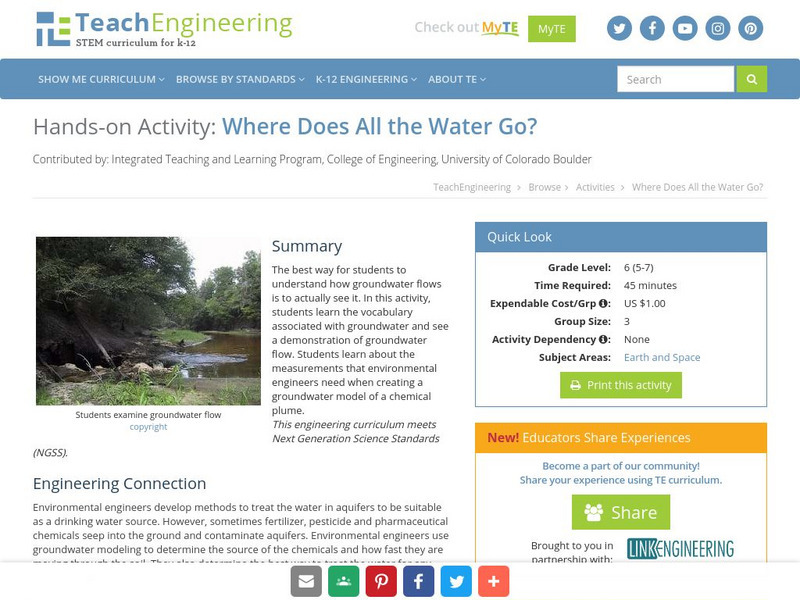
Teach Engineering: Where Does All the Water Go?
The best way for students to understand how groundwater flows is to actually see it. In this activity, students will learn the vocabulary associated with groundwater and see a demonstration of groundwater flow. Students will learn about...
TeachEngineering
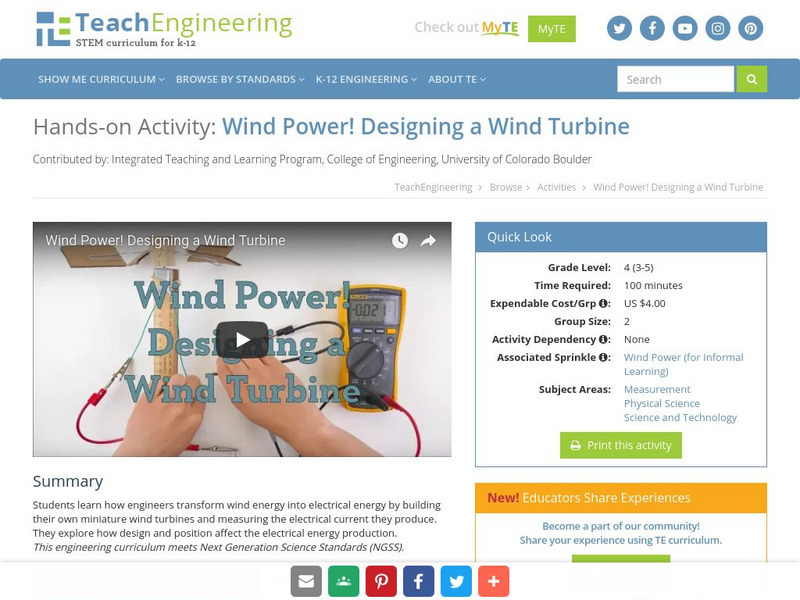
Teach Engineering: Wind Power!
Students learn how engineers transform wind energy into electrical energy by building their own miniature wind turbines and measuring the electrical current it produces. They explore how design and position affect the electrical energy...
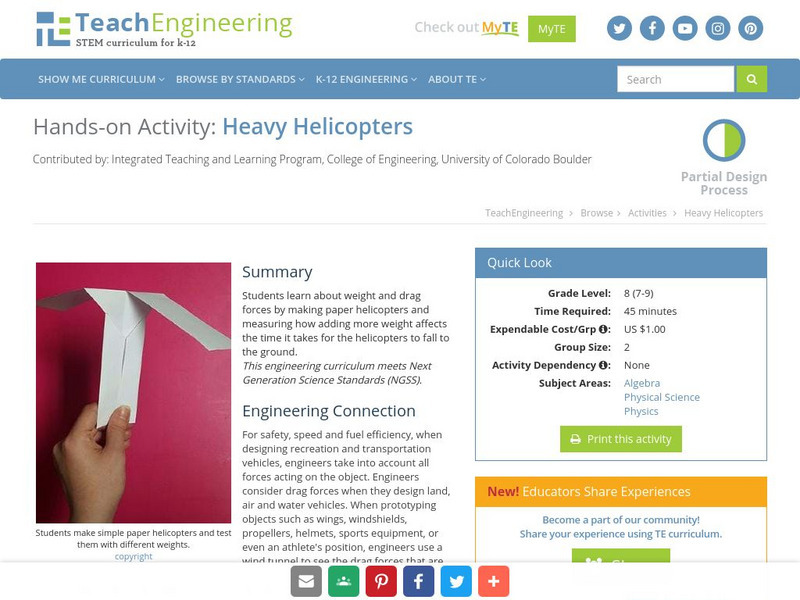
TeachEngineering
Teach Engineering: Heavy Helicopters
Students learn about weight and drag forces by making paper helicopters and measuring how adding more weight affects the time it takes for the helicopters to fall to the ground.
TeachEngineering
Teach Engineering: Wheeling It In!
In an open-ended design activity, students use everyday materials (milk cartons, water bottles, pencils, straws, candy) to build a small-scale transportation device. They incorporate the use of a wheel and axle, and lever into their...

Math Open Reference
Math Open Reference: Arc
Learn about arcs with this handy reference guide. Provides a detailed definition, examples, and an interactive activity that enhances further explanation. Includes links to related topics.

PBS
Pbs Teachers: Seismometer
Build an instrument for measuring movement to learn about how scientists measure the Earth's movement with a seismometer.
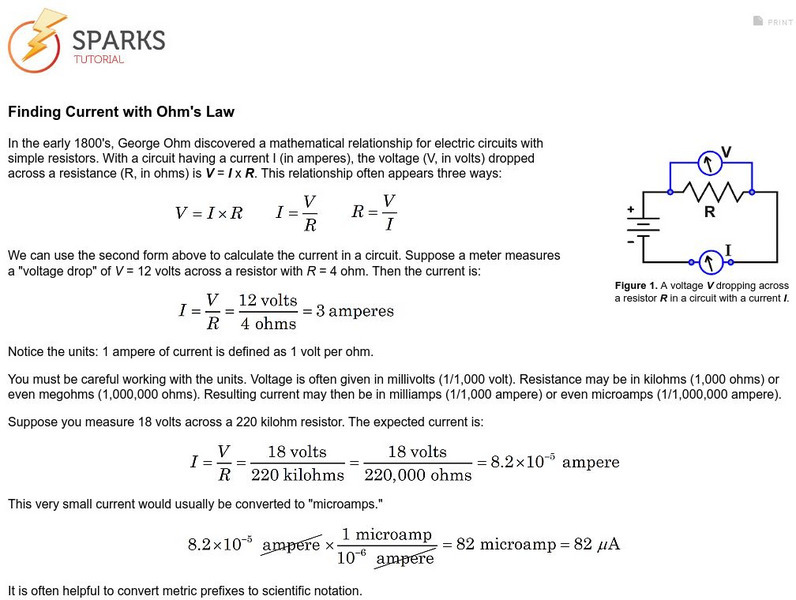
Concord Consortium
Concord Consortium: Finding Current With Ohm's Law
Learn how to measure the electrical current using Ohm's Law.
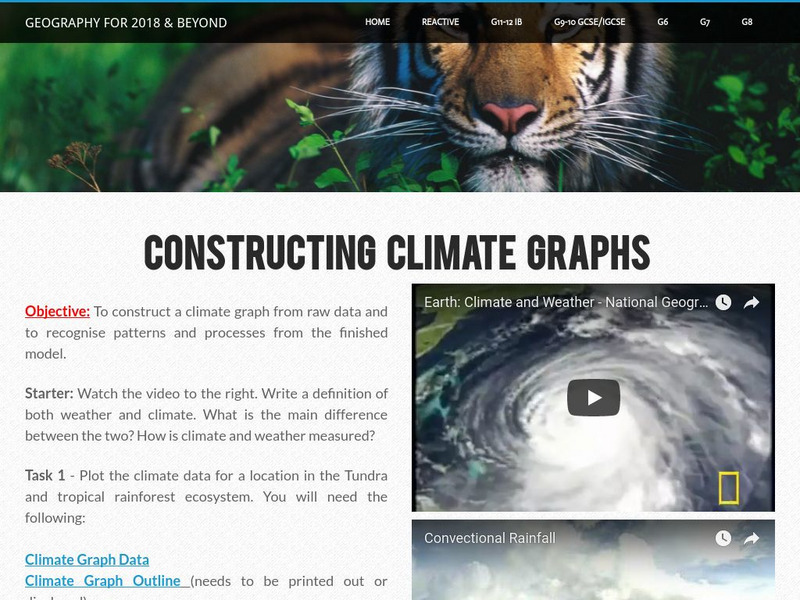
Geographypods
Geographypods: Weather and Climate Graphing It!
Explores the difference between weather and climate and how they are measured. Students will complete activities and construct a climate graph from raw data. They will also learn about the physical structure of the rainforest, its...
OER Commons
Oer Commons: Classifying Triangles
In this lesson, students learn to classify triangles by the size of the angles and the measures of the sides. Students will use interactives to explore equilateral, isosceles, scalene, acute, obtuse, and right triangles. Included are...