Hi, what do you want to do?






University of Colorado
University of Colorado: Physics 2000: Electromagnetic Waves
Using a student-teacher dialogue format, this page discusses the nature of light as an electromagnetic wave and the electromagnetic spectrum.
PBS
Pbs Learning Media: The Electromagnetic Spectrum: Frontline
This video segment adapted from FRONTLINE introduces the electromagnetic spectrum and explains how the various types of electromagnetic waves are distinguished by the amount of energy each wave carries.
NASA
Nasa: Imagers: The Electromagnetic Spectrum
NASA site provides information on waves, electromagnetic waves and their wavelengths.
Florida State University
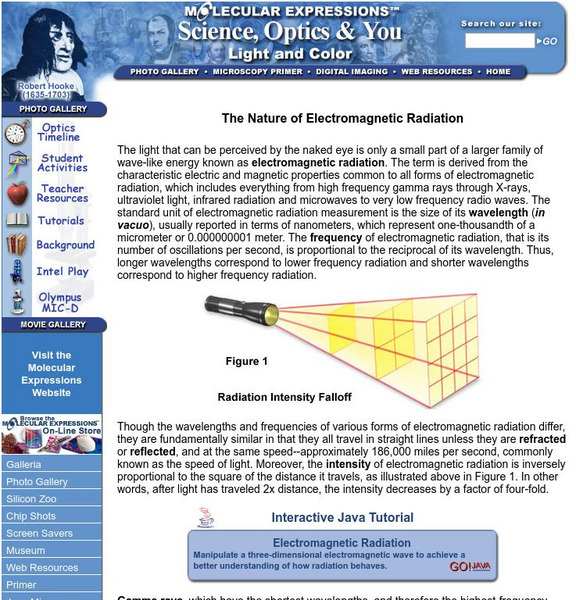
Florida State University: Nature of Electromagnetic Radiation
This site from The Florida State University provides an informational page on electromagnetic radiation discusses the characteristics and properties of its many forms including X-rays, gamma rays, ultraviolet radiation, infrared...

NASA
Nasa: Imagine the Universe: "Nasa Detects One of Closest"
Site provides the article, "NASA Detects One Of Closest And Brightest Gamma Ray Bursts." Provides links to learn more about gamma rays and black holes as well as other resources.
NASA
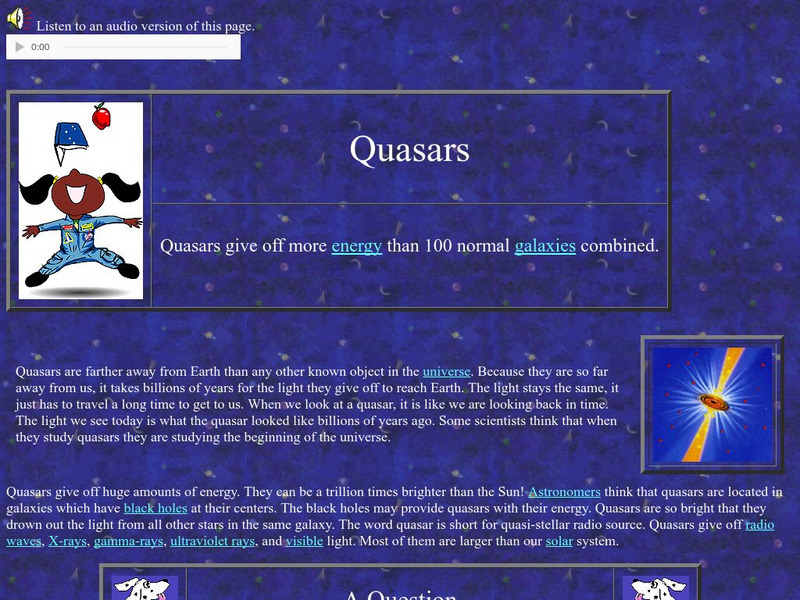
Nasa Star Child: Quasars (Level 1)
Learn why quasars are the brightest things in the universe. Vocabulary words linked to a glossary of terms and a printable version are available.

NASA
Nasa Star Child: Comets (Level 1)
Younger students learn why comets race through the sky as well as related vocabulary words and meanings.
NASA
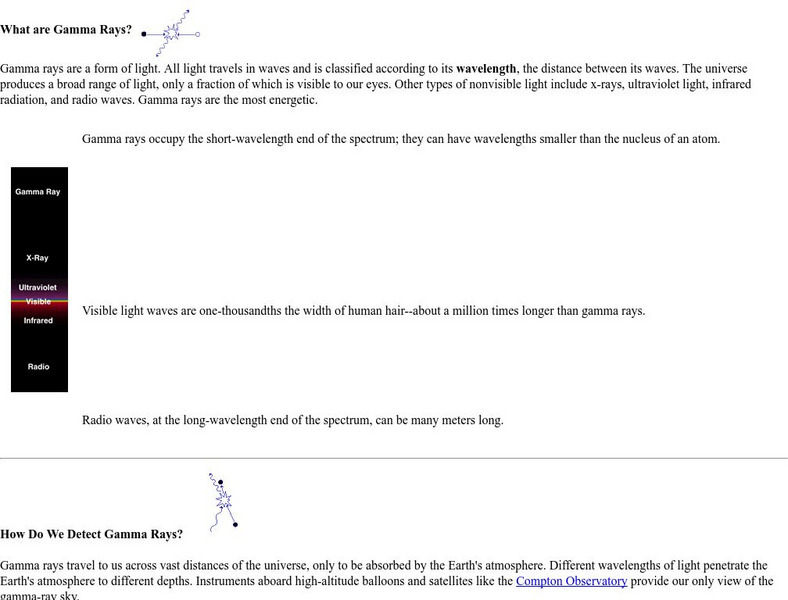
Viewing the Violent Universe: What Are Gamma Rays?
The universe produces a broad range of light, only a fraction of which is visible to our eyes. Gamma rays are nonvisible light, which also includes x-rays, ultraviolet light, infrared radiation, and radio waves.