TeachEngineering
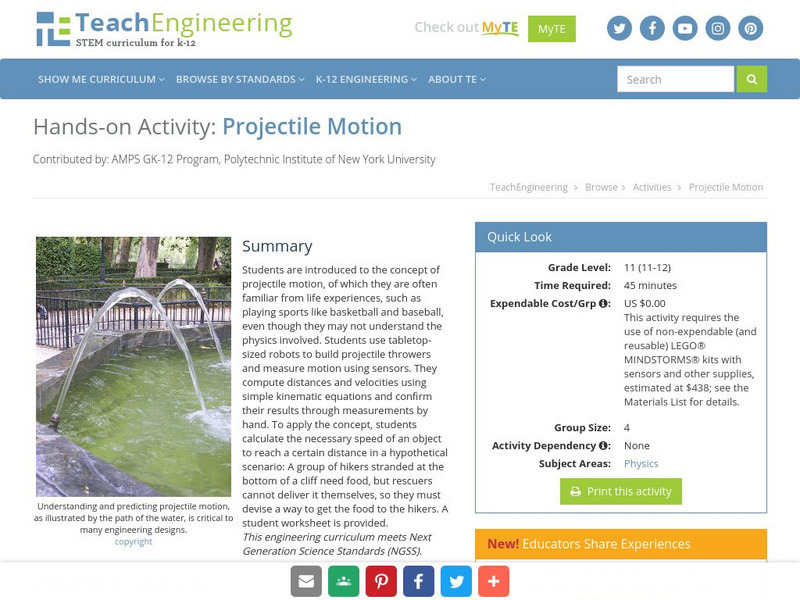
Teach Engineering: Projectile Motion
Students are introduced to the concept of projectile motion, of which they are often familiar from life experiences,such as playing sports such as basketball or baseball, even though they may not understand the physics involved. Students...
TeachEngineering
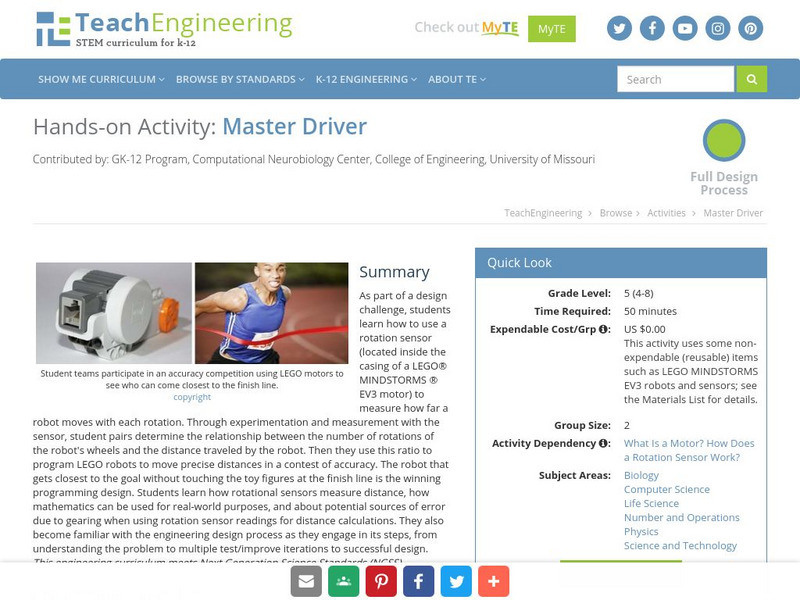
Teach Engineering: Master Driver
Students learn how rotational sensors measure distance, how mathematics can be used for real-world purposes, and about potential sources of error due to gearing when using rotation sensor readings for distance calculations.
TeachEngineering
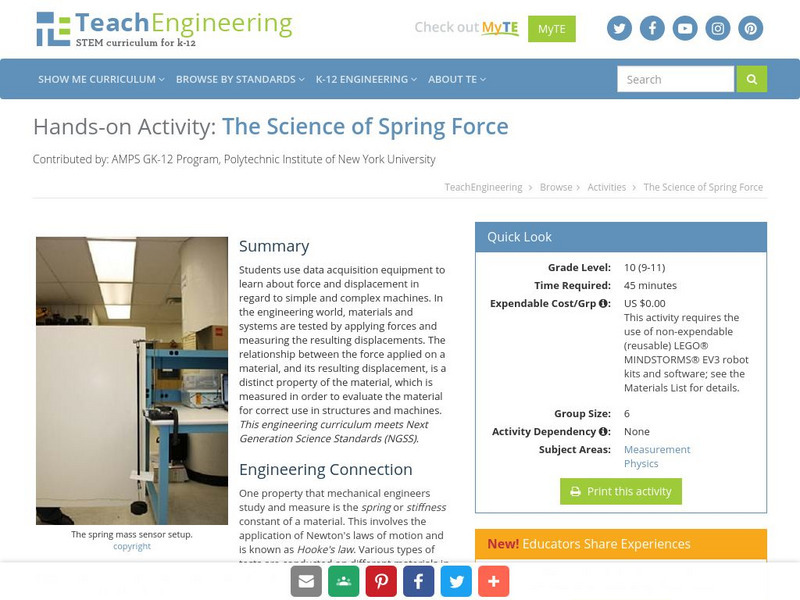
Teach Engineering: The Science of Spring Force
Students use data acquisition equipment to learn about force and displacement in regard to simple and complex machines. In the engineering world, materials and systems are tested by applying forces and measuring the resulting...
TeachEngineering
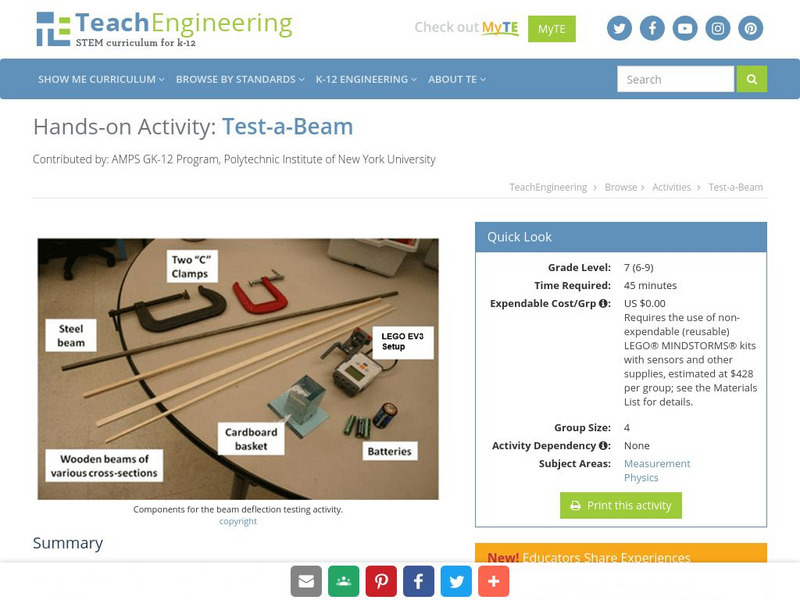
Teach Engineering: Test a Beam
Students measure different types of small-sized beams and calculate their respective moments of inertia. They compare their calculations to how much the beams bend when loads are placed on them, gaining insight into the ideal geometry...
TeachEngineering
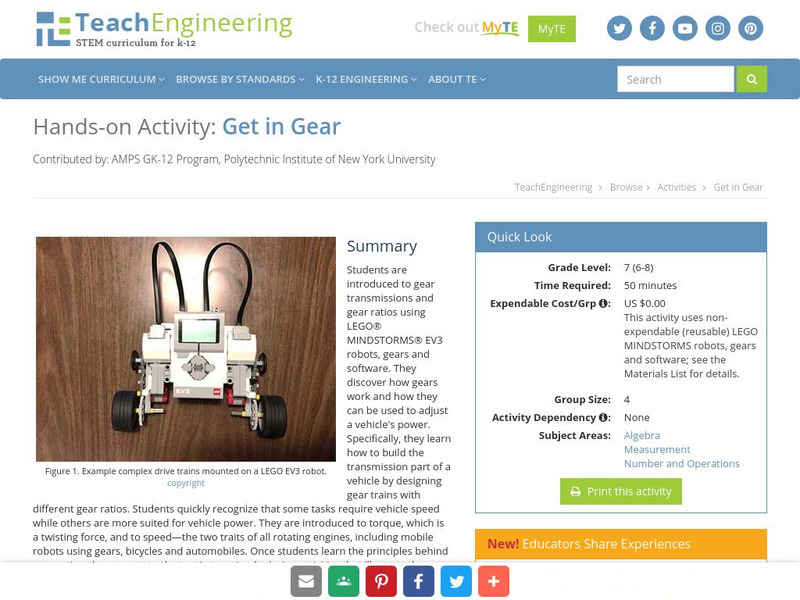
Teach Engineering: Get in Gear
Students discover how gears work and how they can be used to adjust a vehicle's power. Specifically, they learn how to build the transmission part of a vehicle by designing gear trains with different gear ratios.

TeachEngineering
Teach Engineering: Measuring Distance With Sound Waves
Students learn about sound waves and use them to measure distances between objects. They explore how engineers incorporate ultrasound waves into medical sonogram devices and ocean sonar equipment. Students learn about properties, sources...

TeachEngineering
Teach Engineering: The Claw
Students learn about gear ratios and power by operating toy mechanical cranes of differing gear ratios. They attempt to pick up objects with various masses to witness how much power must be applied to the system to oppose the force of...