TeachEngineering
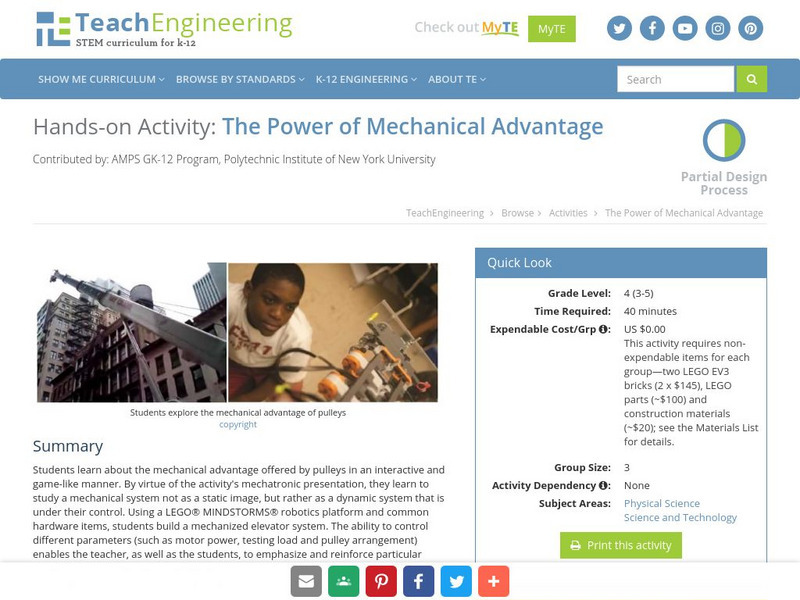
Teach Engineering: The Power of Mechanical Advantage
Students learn about the mechanical advantage offered by pulleys in an interactive and game-like manner. By virtue of the activity's mechatronic presentation, they learn to study a mechanical system not as a static image, but rather as a...
TeachEngineering
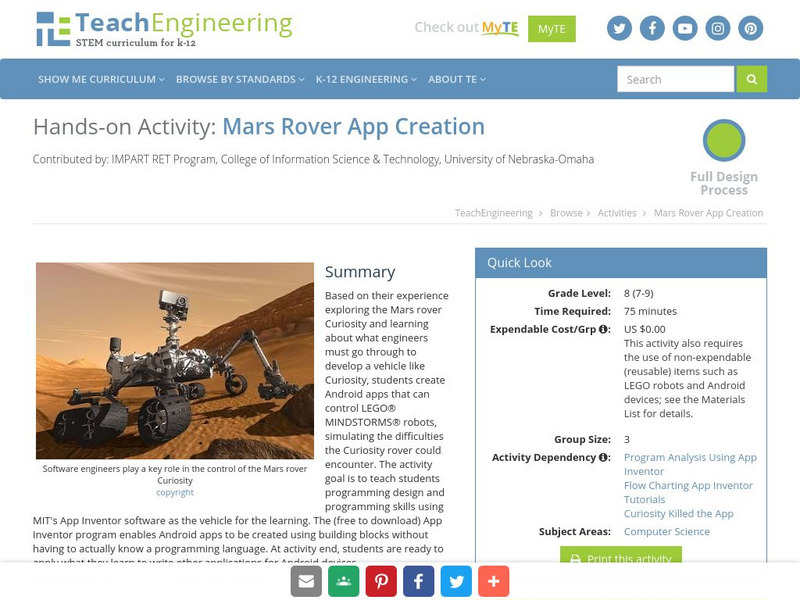
Teach Engineering: Mars Rover App Creation
Based on their experience exploring the Mars rover Curiosity and learning about what engineers must go through to develop a vehicle like Curiosity, students create Android apps that can control LEGO MINDSTORMS NXT robots, simulating the...
TeachEngineering
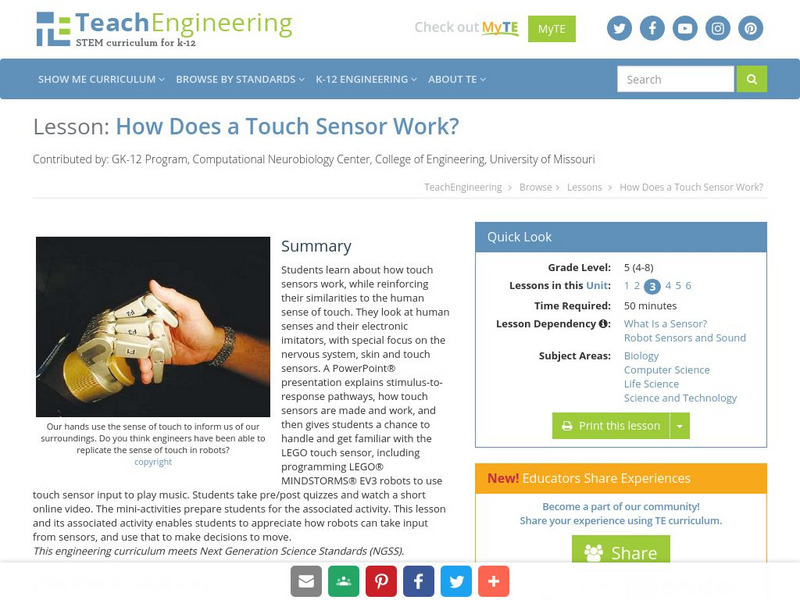
Teach Engineering: How Does a Touch Sensor Work?
Students look at human senses and their electronic imitators, with special focus on the skin and touch sensors. They have a chance to handle and get familiar with the LEGO touch sensor, including programming LEGO MINDSTORMS NXT robots to...
TeachEngineering
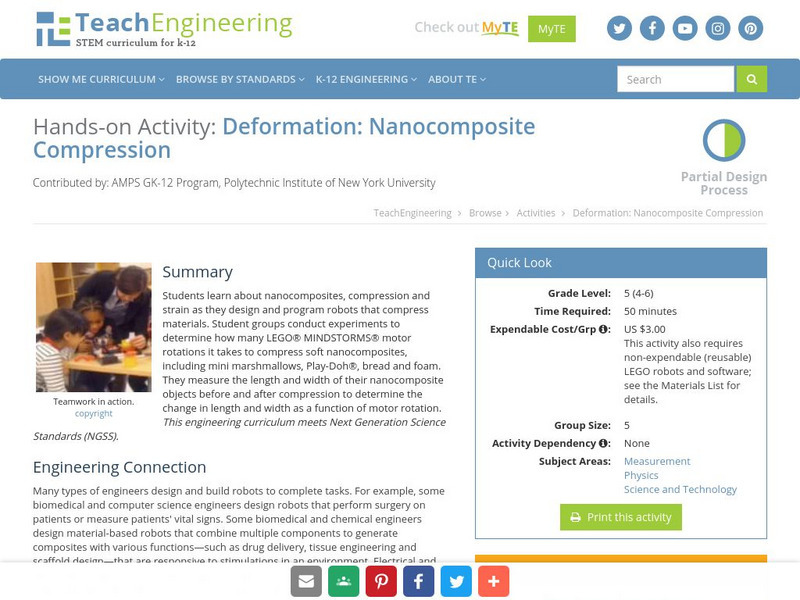
Teach Engineering: Deformation: Nanocomposite Compression
Students learn about nanocomposites, compression and strain as they design and program robots that compress materials. Student groups conduct experiments to determine how many LEGO MINDSTORMS NXT motor rotations it takes to compress soft...
TeachEngineering
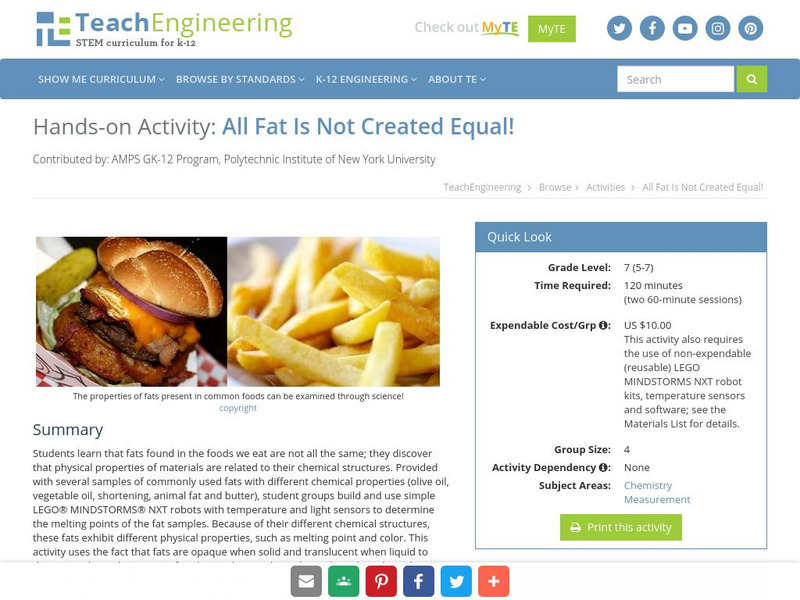
Teach Engineering: All Fat Is Not Created Equally!
Students learn that fats found in the foods we eat are not all the same; they discover that physical properties of materials are related to their chemical structures. Provided with several samples of commonly used fats with different...

TeachEngineering
Teach Engineering: Wide World of Gears
In an interactive and game-like manner, students learn about the mechanical advantage that is offered by gears. By virtue of the activity's mechatronics presentation, students learn to study a mechanical system as a dynamic system under...
TeachEngineering
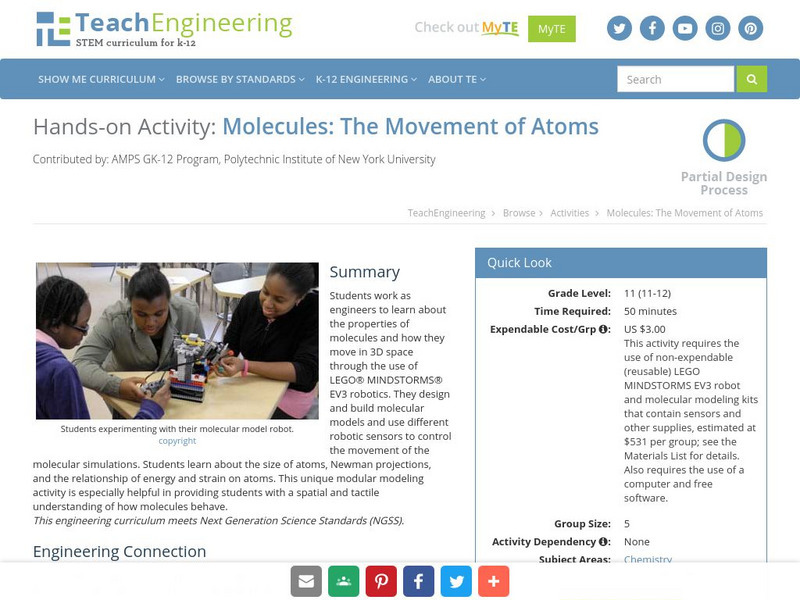
Teach Engineering: Molecules: The Movement of Atoms
Students work as engineers to learn about the properties of molecules and how they move in 3D space through the use of LEGO MINDSTORMS NXT robotics. They design and build molecular models and use different robotic sensors to control the...
TeachEngineering
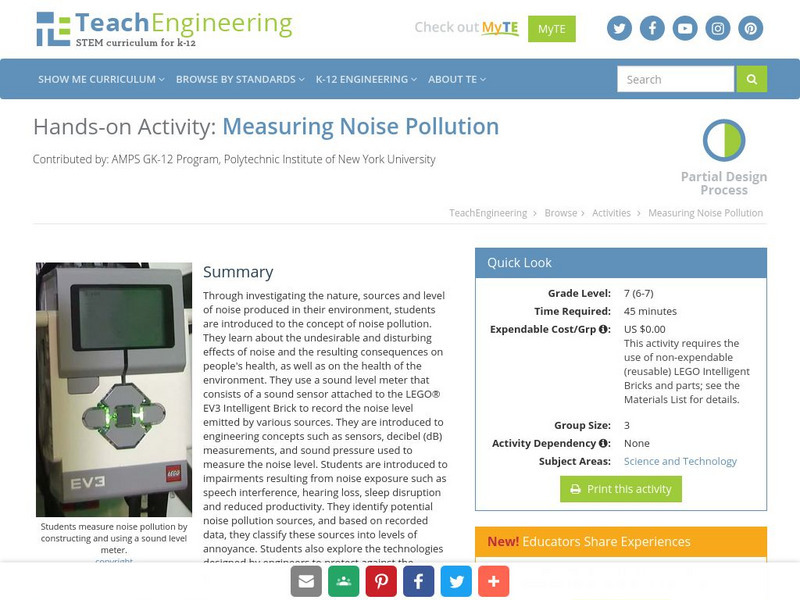
Teach Engineering: Measuring Noise Pollution
Through investigating the nature, sources and level of noise produced in their environment, students are introduced to the concept of noise pollution. They learn about the undesirable and disturbing effects of noise and the resulting...
TeachEngineering
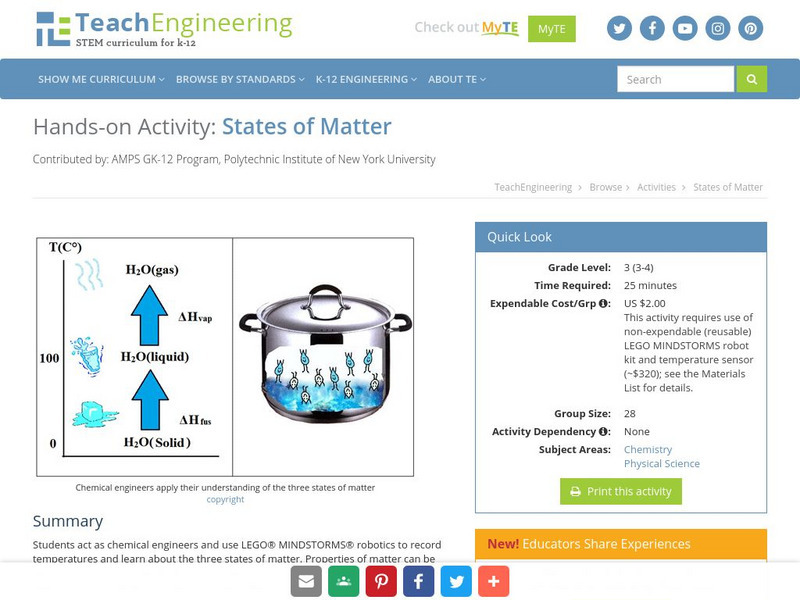
Teach Engineering: States of Matter
Students act as chemical engineers and use LEGO MINDSTORMS NXT robotics to record temperatures and learn about the three states of matter. Properties of matter can be measured in various ways, including volume, mass, density and...
TeachEngineering
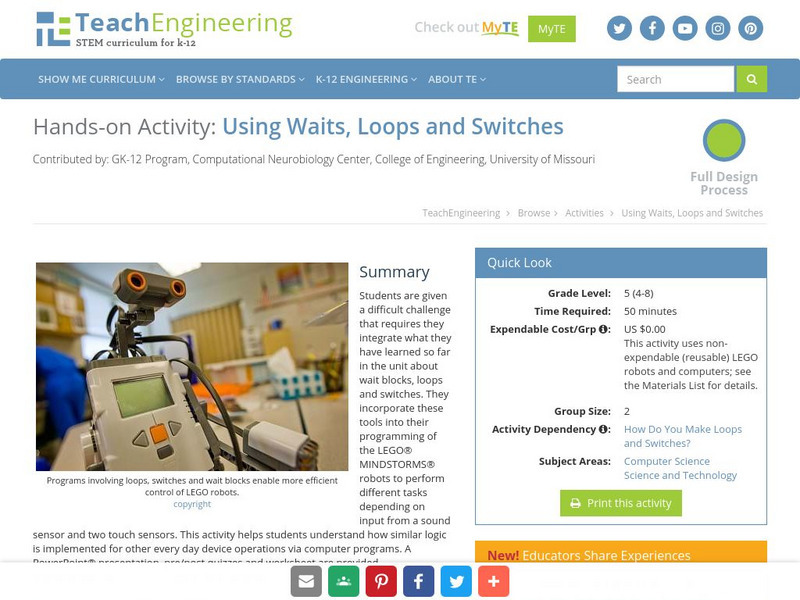
Teach Engineering: Using Waits, Loops and Switches
Students incorporate their knowledge of wait blocks, loops, and switches into their programming of the LEGO MINDSTORMS NXT robots to perform different tasks depending on input from a sound sensor and two touch sensors. This activity...
TeachEngineering
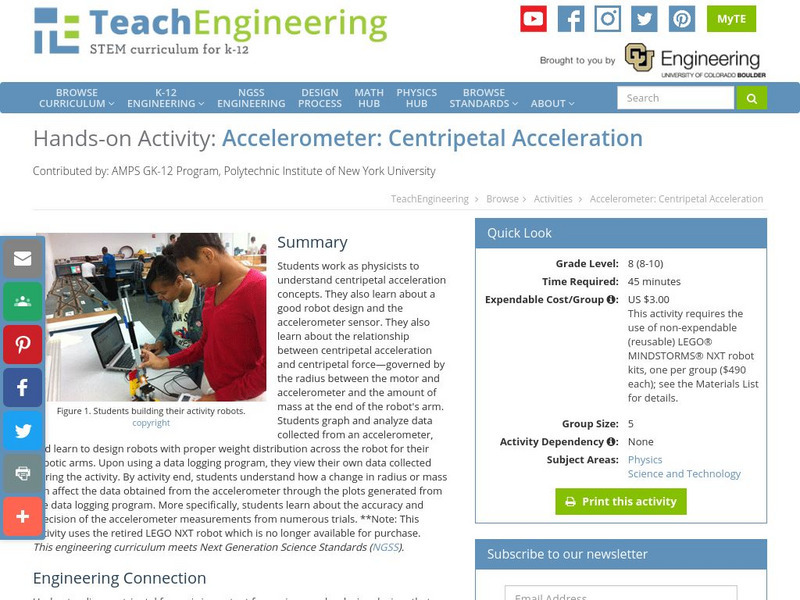
Teach Engineering: Accelerometer: Centripetal Acceleration
Students work as physicists to understand centripetal acceleration concepts. They also learn about a good robot design and the accelerometer sensor. They also learn about the relationship between centripetal acceleration and centripetal...

TeachEngineering
Teach Engineering: Means, Modes, and Medians
Students experience data collection, analysis and inquiry in this LEGO MINDSTORMS NXT -based activity. They measure the position of an oscillating platform using a ultrasonic sensor and perform statistical analysis to determine the mean,...
TeachEngineering
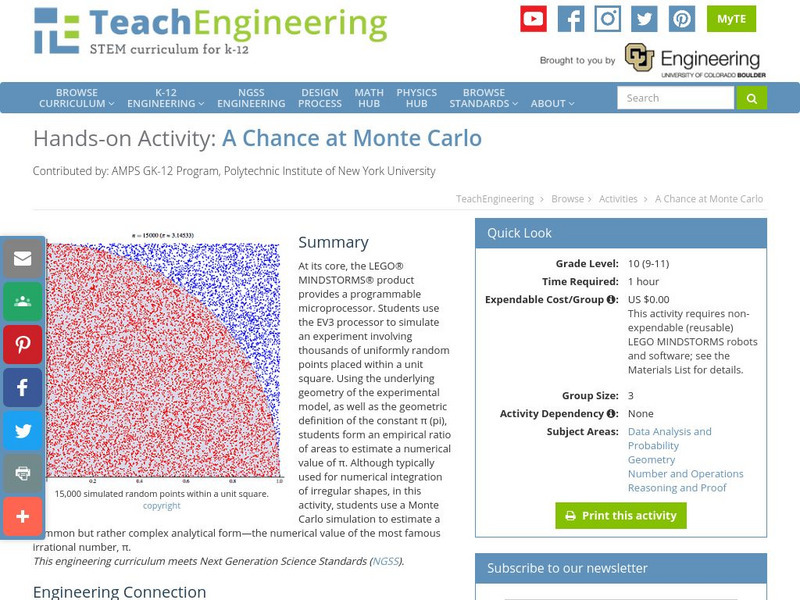
Teach Engineering: A Chance at Monte Carlo
At its core, the LEGO MINDSTORMS product provides a programmable microprocessor. Students use the EV3 processor to simulate an experiment involving thousands of uniformly random points placed within a unit square. Using the underlying...
TeachEngineering
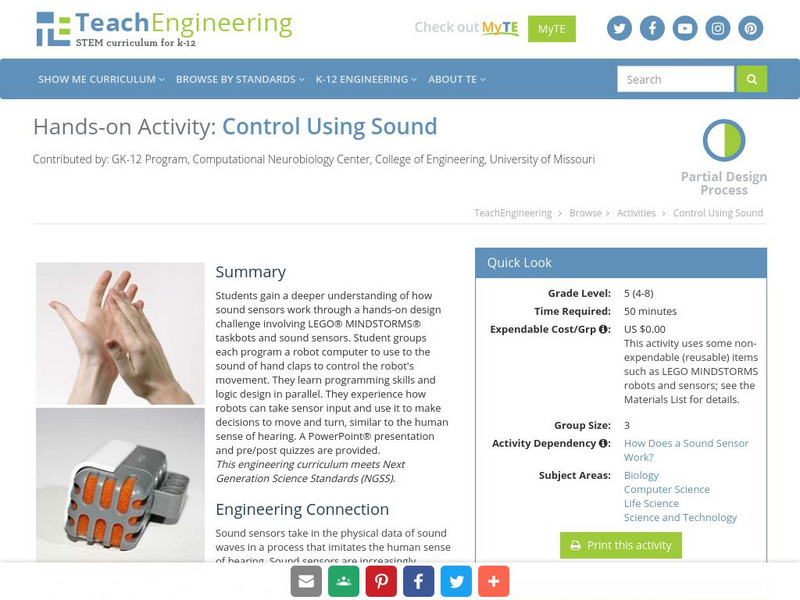
Teach Engineering: Control Using Sound
Students gain a deeper understanding of how sound sensors work through a hands-on design challenge involving LEGO MINDSTORMS NXT taskbots and sound sensors.
TeachEngineering
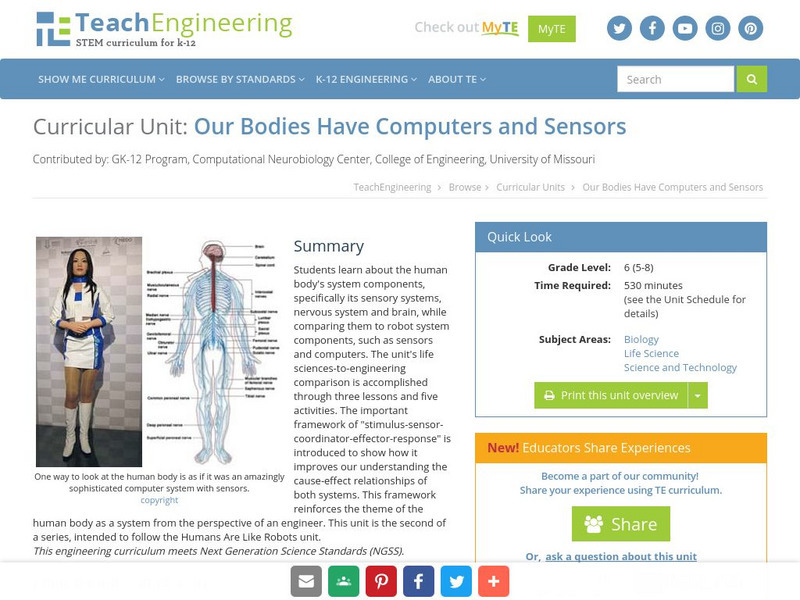
Teach Engineering: Our Bodies Have Computers and Sensors
Students learn about the human body's system components, specifically its sensory systems, nervous system and brain, while comparing them to robot system components, such as sensors and computers. The unit's life sciences-to-engineering...
TeachEngineering
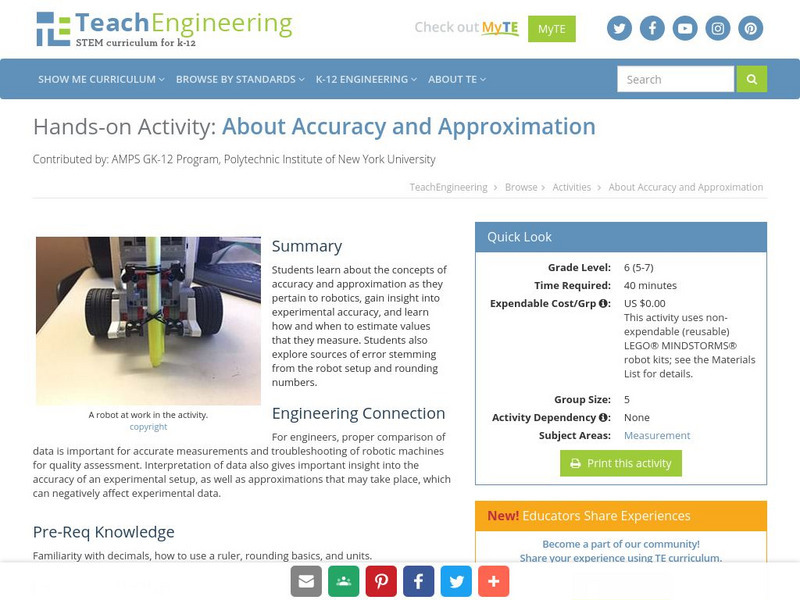
Teach Engineering: About Accuracy and Approximation
Students learn about the concepts of accuracy and approximation as they pertain to robotics, gain insight into experimental accuracy, and learn how and when to estimate values that they measure. Students also explore sources of error...
TeachEngineering
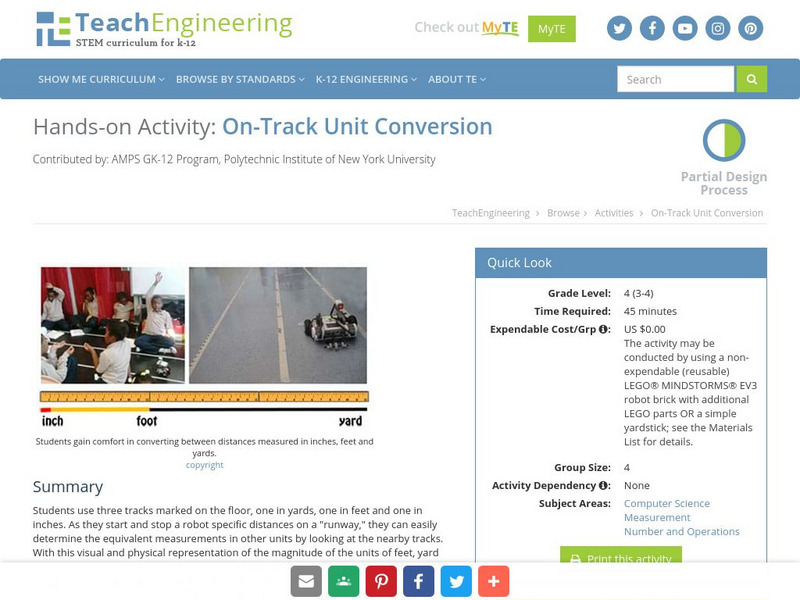
Teach Engineering: On Track Unit Conversion
Students use three tracks marked on the floor, one in yards, one in feet and one in inches. As they start and stop a robot specific distances on a "runway," they can easily determine the equivalent measurements in other units by looking...
TeachEngineering
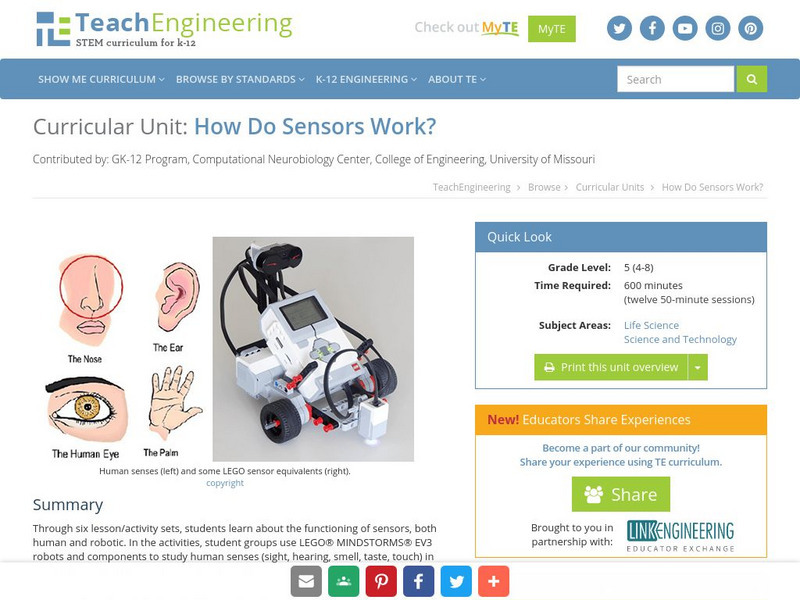
Teach Engineering: How Do Sensors Work?
Through six lesson/activity sets, students learn about the functioning of sensors, both human and robotic
TeachEngineering
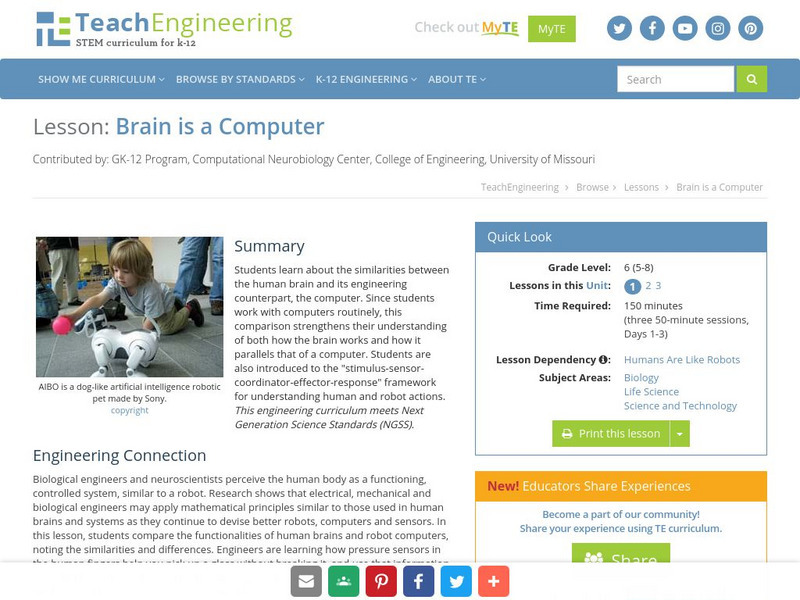
Teach Engineering: Brain Is a Computer
Young scholars learn about the similarities between the human brain and its engineering counterpart, the computer. Since students work with computers routinely, this comparison strengthens their understanding of both how the brain works...
TeachEngineering
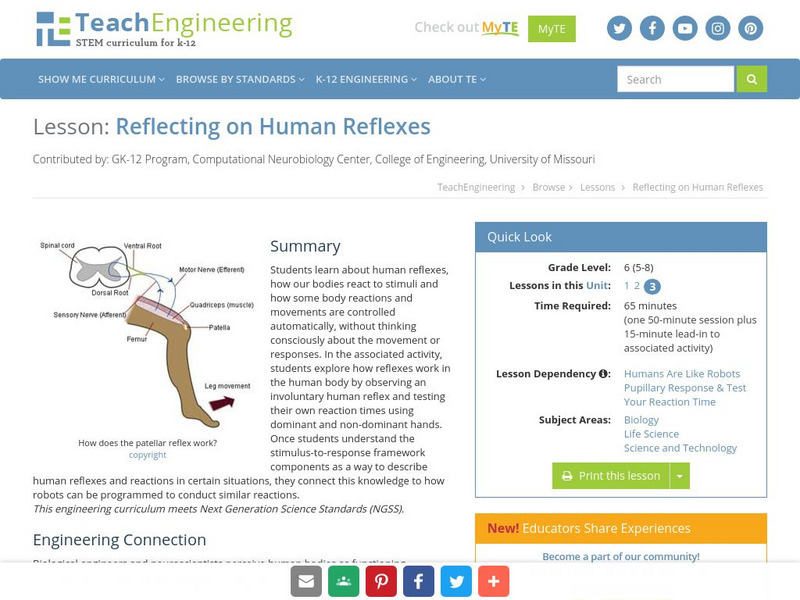
Teach Engineering: Reflecting on Human Reflexes
Students learn about human reflexes, how our bodies react to stimuli and how some body reactions and movements are controlled automatically, without thinking consciously about the movement or responses. In the associated activity,...
TeachEngineering
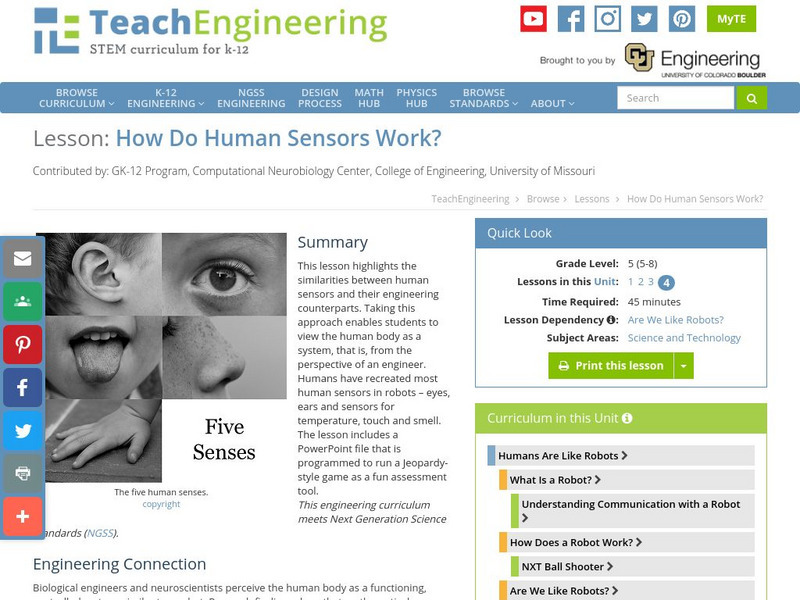
Teach Engineering: How Do Human Sensors Work?
This lesson highlights the similarities between human sensors and their engineering counterparts. Taking this approach enables students to view the human body as a system, that is, from the perspective of an engineer. Humans have...
TeachEngineering
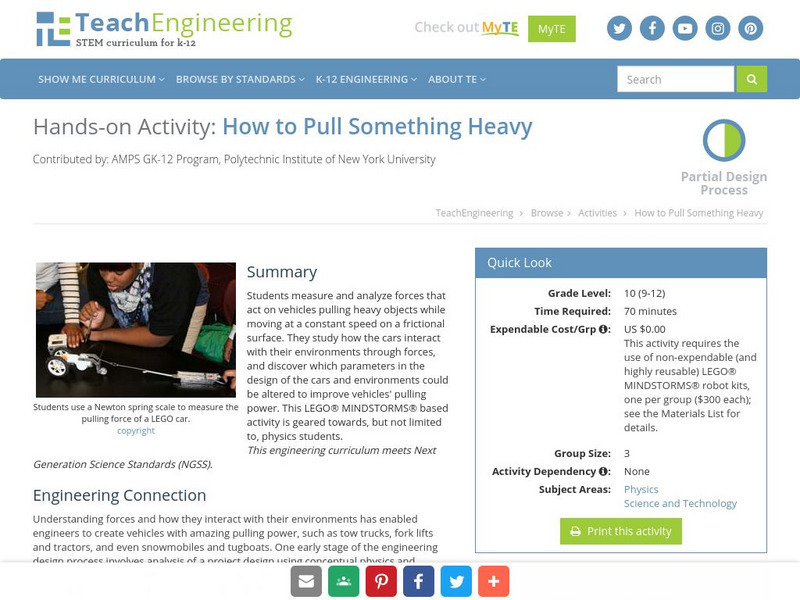
Teach Engineering: How to Pull Something Heavy
Students measure and analyze forces that act on vehicles pulling heavy objects while moving at a constant speed on a frictional surface. They study how the cars interact with their environments through forces, and discover which...
TeachEngineering
Teach Engineering: Measuring G
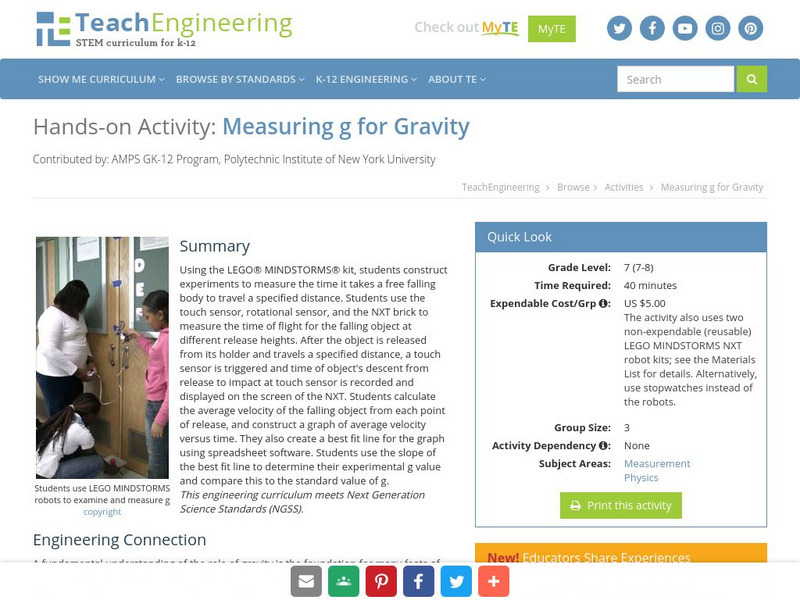
Using the LEGO MINDSTORMS NXT kit, students construct experiments to measure the time it takes a free falling body to travel a specified distance. Students use the touch sensor, rotational sensor, and the NXT brick to measure the time of...
TeachEngineering
Teach Engineering: Measuring Pressure
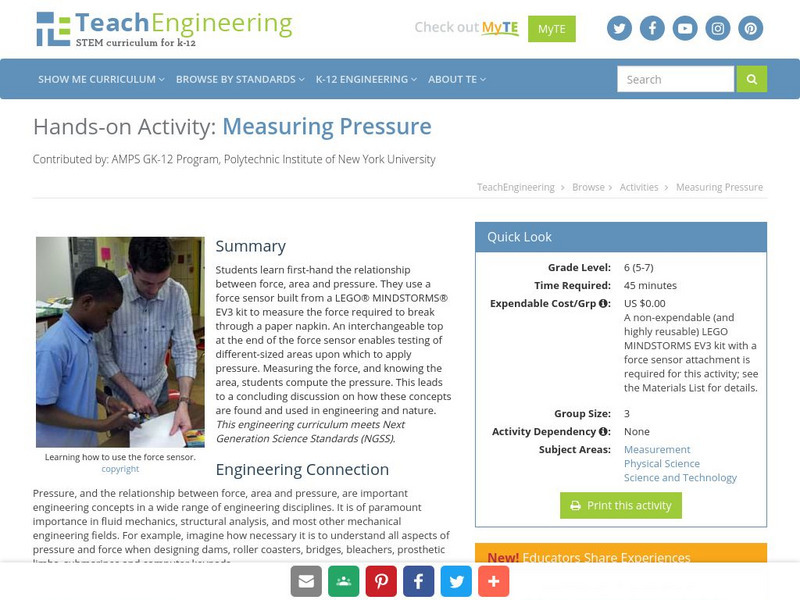
Students learn first-hand the relationship between force, area and pressure. They use a force sensor built from a LEGO MINDSTORMS NXT kit to measure the force required to break through a paper napkin. An interchangeable top at the end of...