TeachEngineering
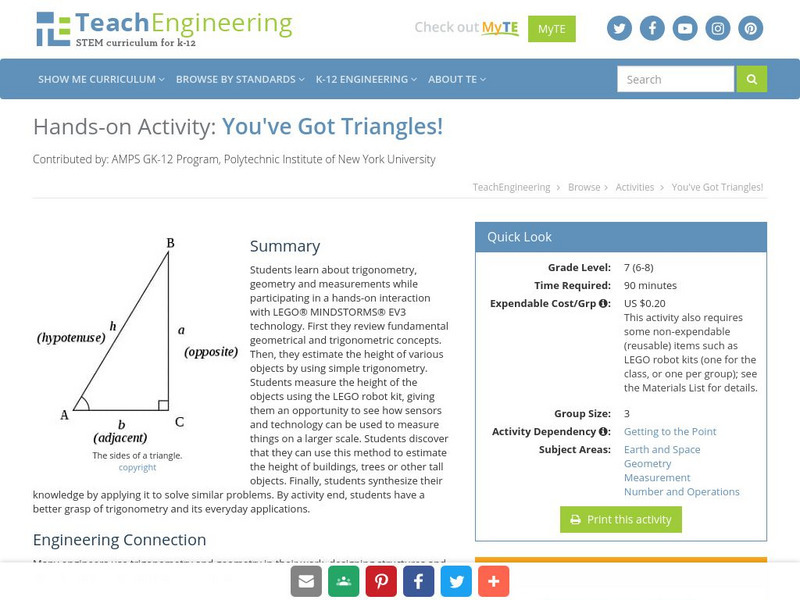
Teach Engineering: You've Got Triangles!
Students learn about trigonometry, geometry and measurements while participating in a hands-on interaction with LEGO MINDSTORMS NXT technology. First they review fundamental geometrical and trigonometric concepts. Then, they estimate the...
TeachEngineering
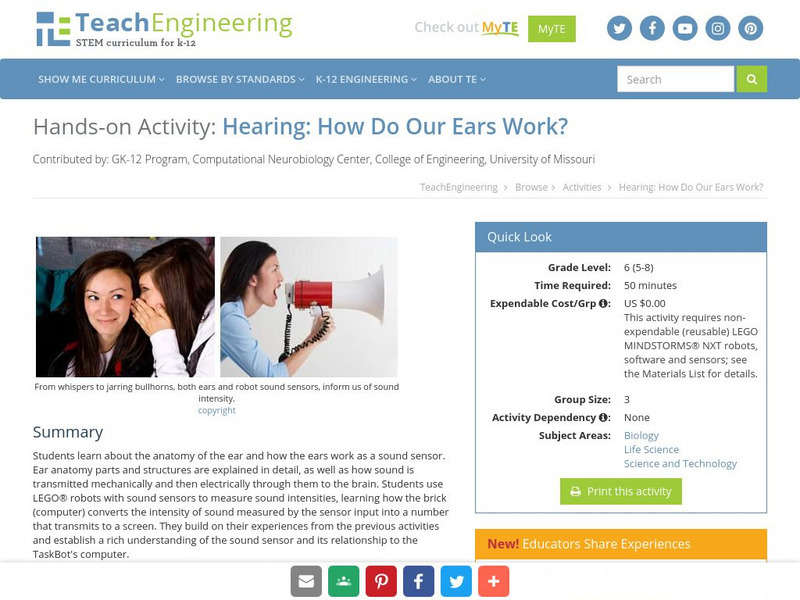
Teach Engineering: Hearing: How Do Our Ears Work?
Students learn about the anatomy of the ear and how the ears work as a sound sensor. Ear anatomy parts and structures are explained in detail, as well as how sound is transmitted mechanically and then electrically through them to the...
TeachEngineering
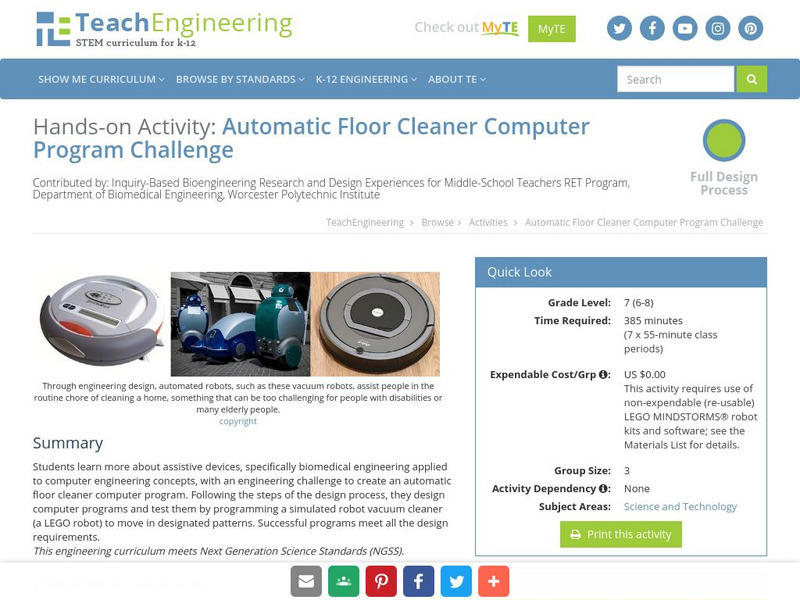
Teach Engineering: Automatic Floor Cleaner Computer Program Challenge
Students learn more about assistive devices, specifically biomedical engineering applied to computer engineering concepts, with an engineering challenge to create an automatic floor cleaner computer program. Following the steps of the...
TeachEngineering
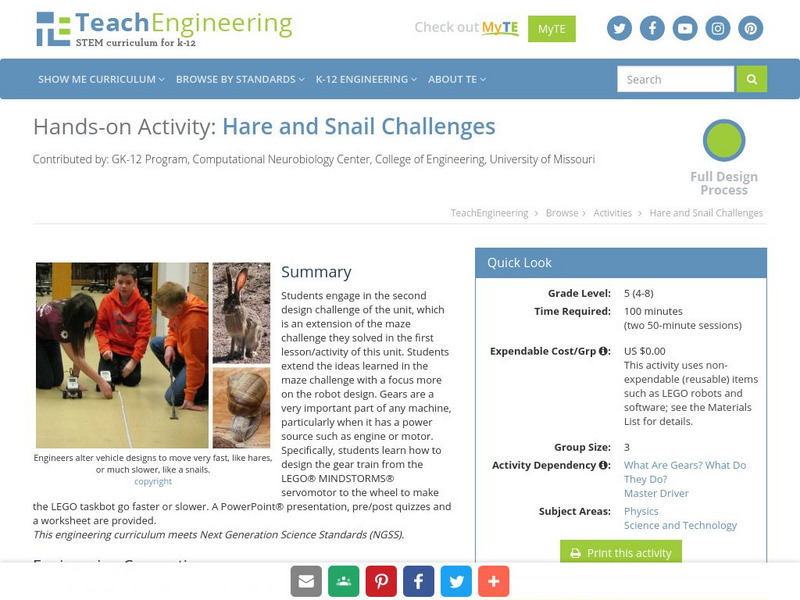
Teach Engineering: Hare and Snail Challenges
Students extend the ideas learned in the maze challenge in this unit with a focus more on the robot design. They learn how to design the gear train from the LEGO MINDSTORMS NXT servomotor to the wheel to make the LEGO taskbot go faster...
TeachEngineering
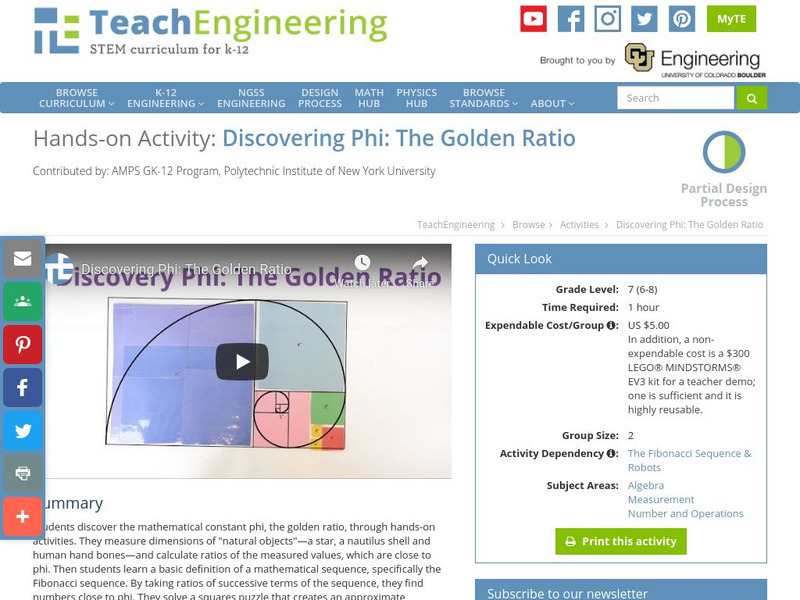
Teach Engineering: Discovering Phi: The Golden Ratio
Students discover the mathematical constant phi, the golden ratio, through hands-on activities. They measure dimensions of "natural objects"--a star, a nautilus shell and human hand bones--and calculate ratios of the measured values,...
TeachEngineering
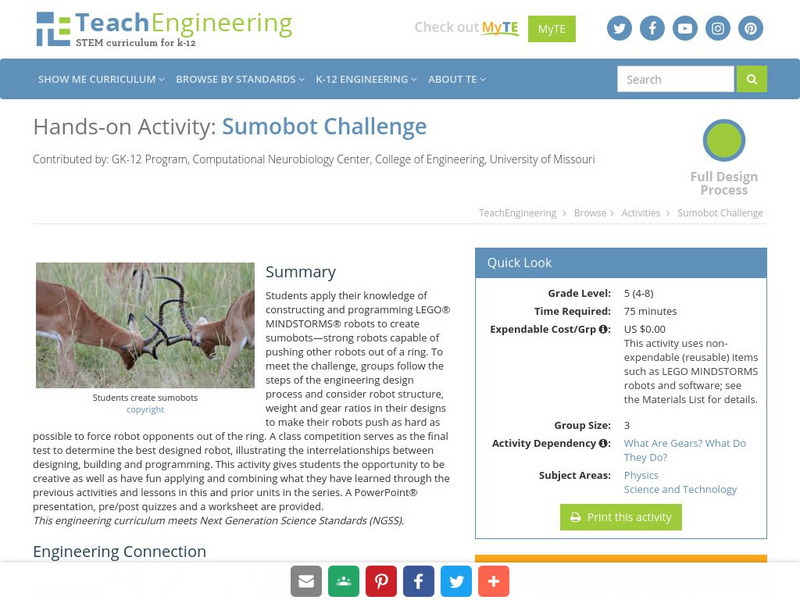
Teach Engineering: Sumobot Challenge
Students apply their knowledge of constructing and programming LEGO MINDSTORMS NXT robots to create sumobots- strong robots capable of pushing other robots out of a ring.
TeachEngineering
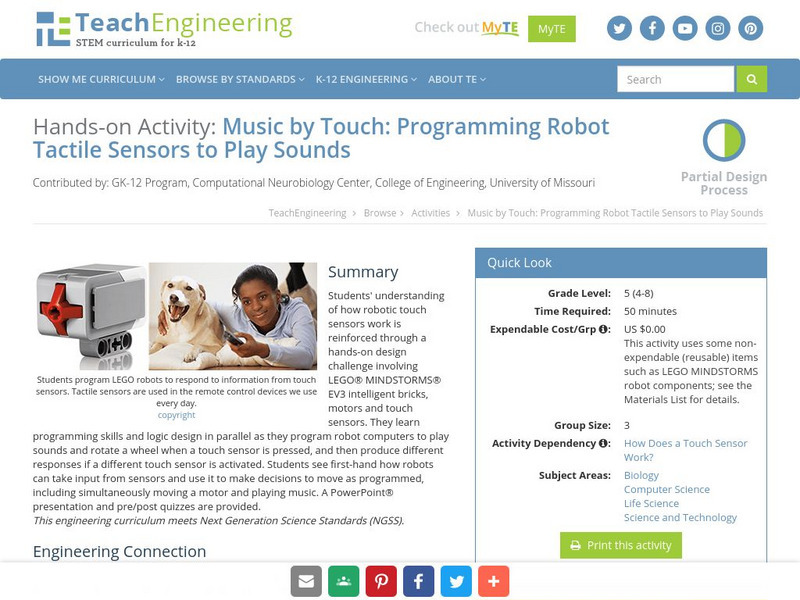
Teach Engineering: Music by Touch
Through a hands-on design challenge involving LEGO MINDSTORMS NXT robots, students learn programming skills and logic design as they program robot computers to play sounds and rotate a wheel when a touch sensor is pressed, and then...
TeachEngineering
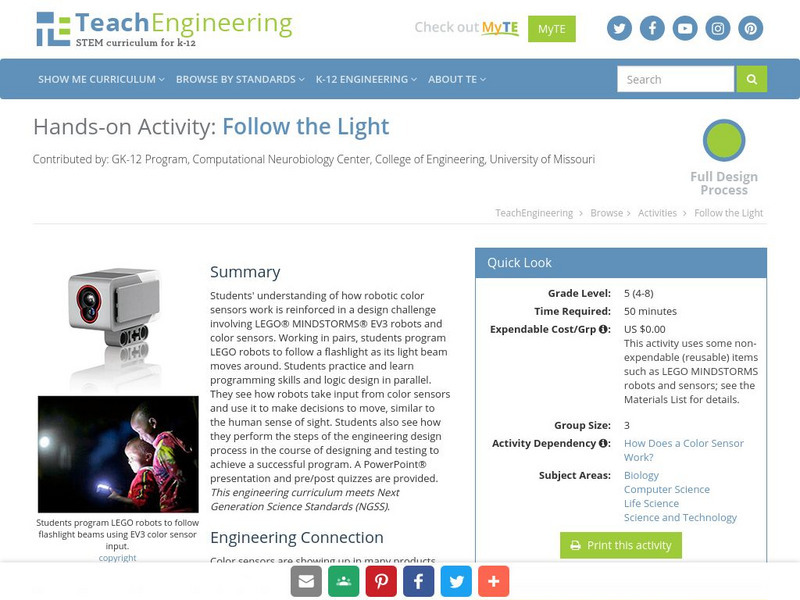
Teach Engineering: Follow the Light
A lesson involving LEGO MINDSTORMS NXT robots and light sensors, student pairs program the robots to follow a flashlight as its light beam moves around.
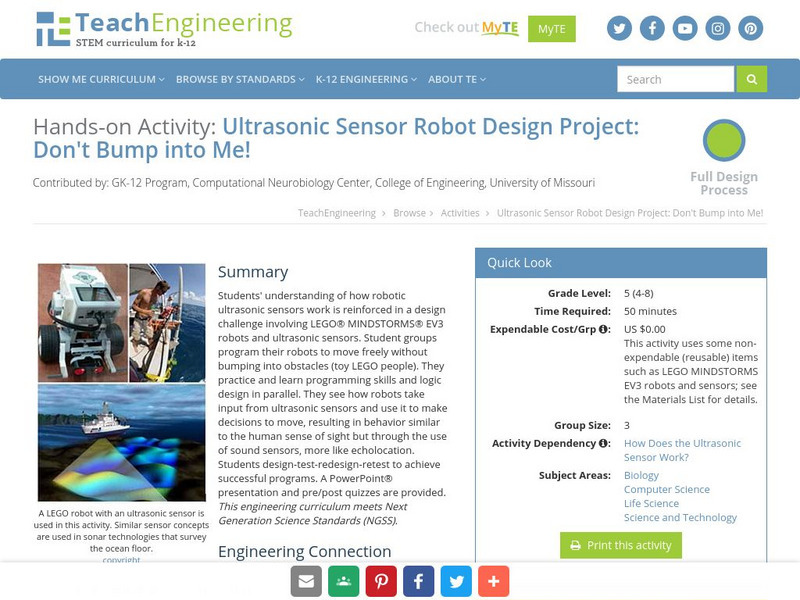
TeachEngineering
Teach Engineering: Don't Bump Into Me!
Students' understanding of how robotic ultrasonic sensors work is reinforced in a design challenge involving LEGO MINDSTORMS NXT robots and ultrasonic sensors.
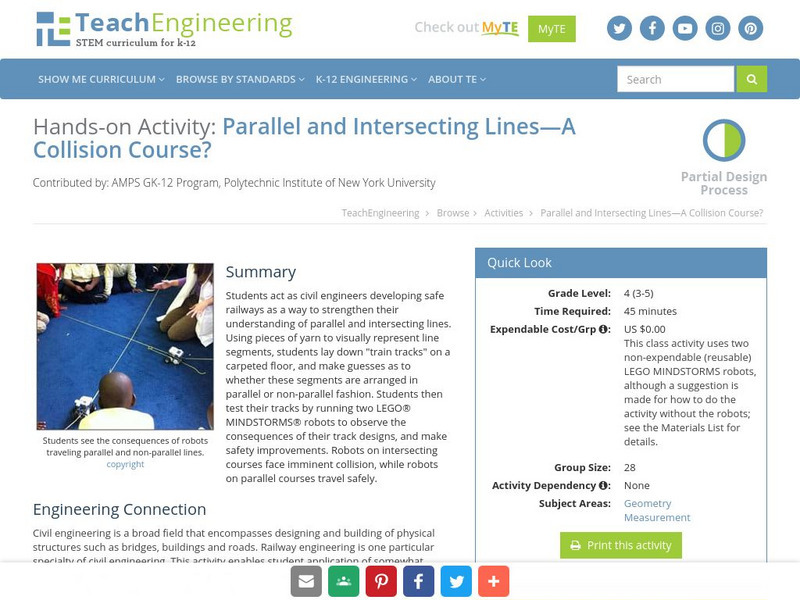
TeachEngineering
Teach Engineering: Parallel and Intersecting Lines: A Collision Course?
Students act as civil engineers developing safe railways as a way to strengthen their understanding of parallel and intersecting lines. Using pieces of yarn to visually represent line segments, students lay down "train tracks" on a...
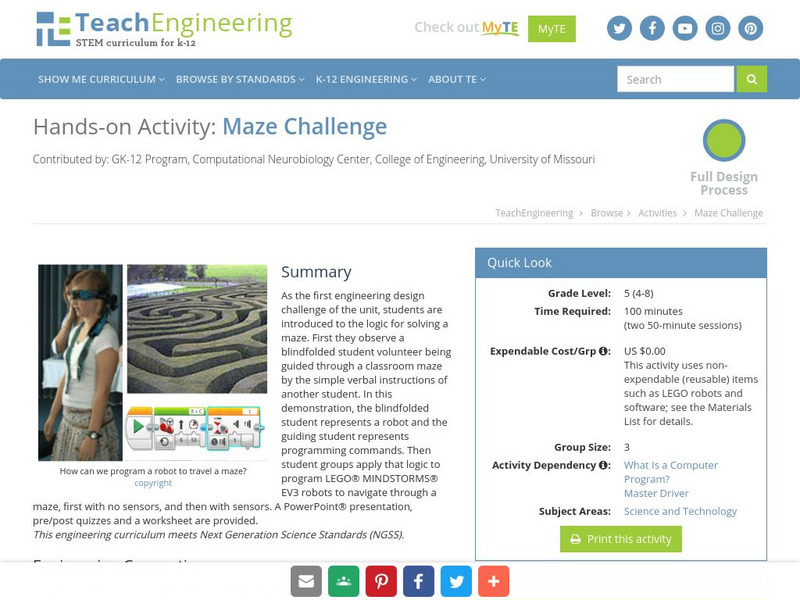
TeachEngineering
Teach Engineering: Maze Challenge
As the first engineering design challenge of the unit, students are introduced to the logic for solving a maze. student groups apply that logic to program LEGO MINDSTORMS NXT robots to navigate through a maze, first with no sensors, and...
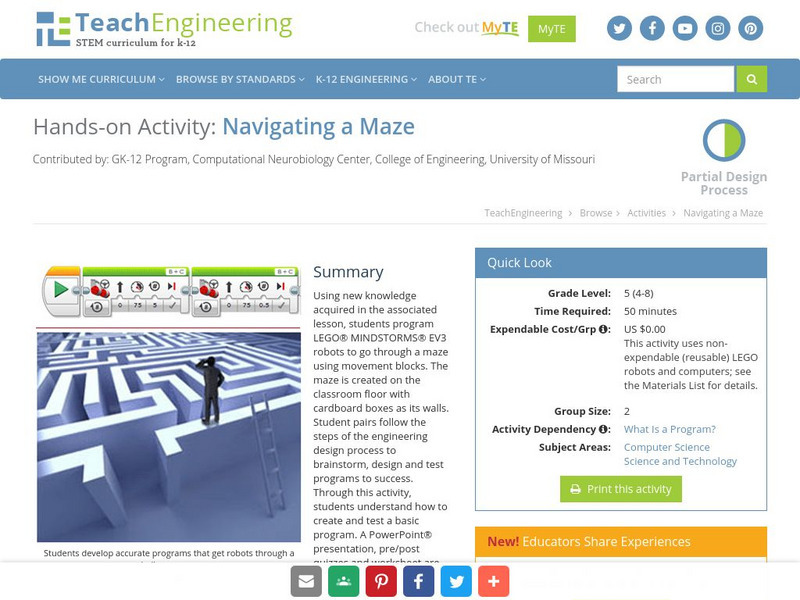
TeachEngineering
Teach Engineering: Navigating a Maze
Students program LEGO MINDSTORMS NXT robots to go through a maze using movement blocks.
TeachEngineering
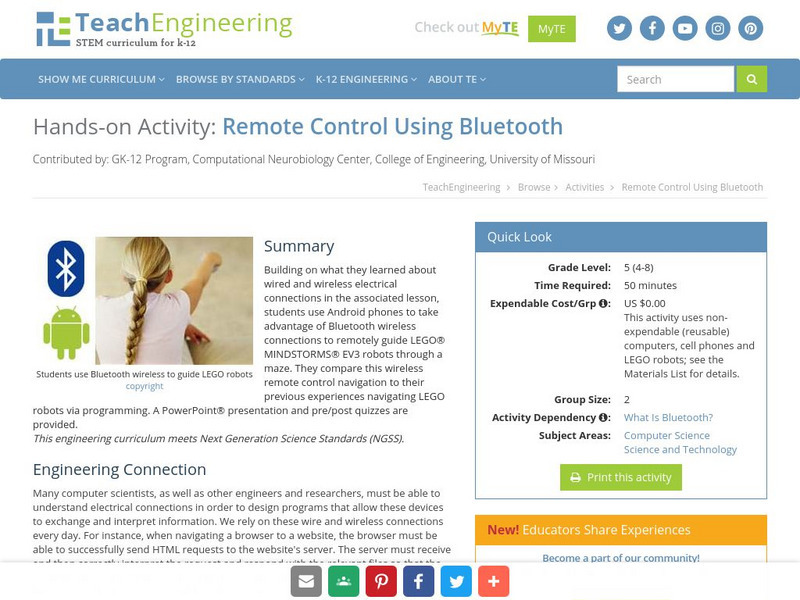
Teach Engineering: Remote Control Using Bluetooth
Building on what they learned about wired and wireless electrical connections in the associated lesson, students use Android phones to take advantage of Bluetooth wireless connections to remotely guide LEGO MINDSTORMS NXT robots through...
TeachEngineering
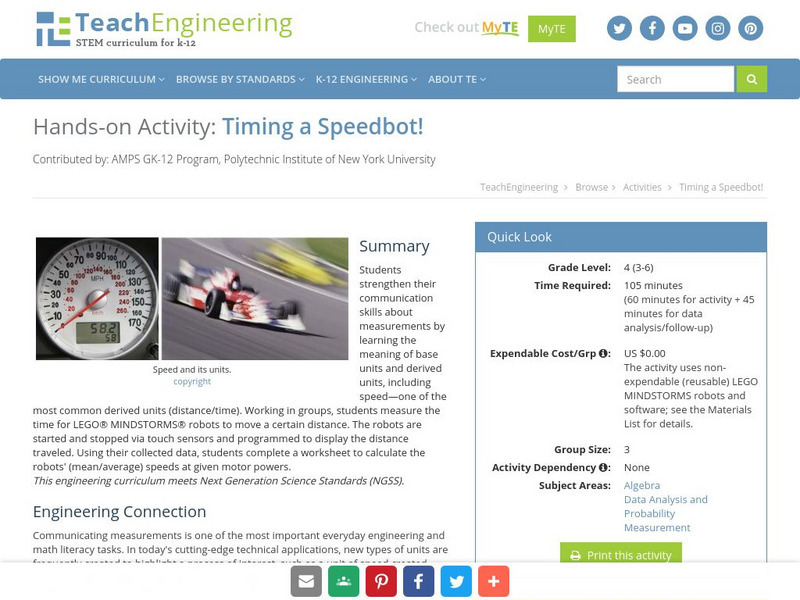
Teach Engineering: Timing a Speedbot!
Students strengthen their communication skills by first learning the meaning of base units and derived units. Then, working in groups, students measure the time for LEGO MINDSTORMS NXT robots and calculate the robots' average speeds at...
TeachEngineering
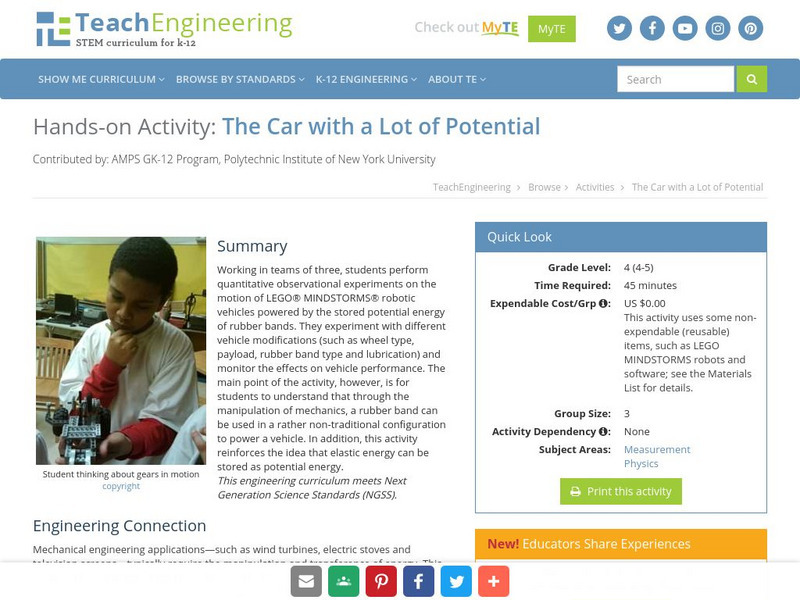
Teach Engineering: The Car With a Lot of Potential
Working in teams, students perform quantitative observational experiments on the motion of LEGO MINDSTORMS NXT robotic vehicles powered by the stored potential energy of rubber bands. Students understand that through the manipulation of...
TeachEngineering
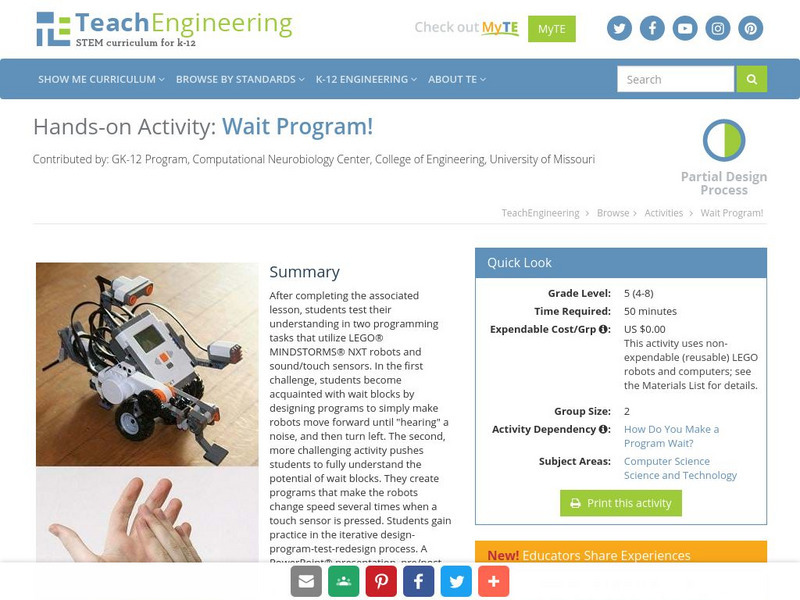
Teach Engineering: Wait Program!
After completing an associated lesson, students test their understanding in two programming tasks that utilize LEGO MINDSTORMS NXT robots and sound/touch sensors. Students gain practice in the iterative design-program-test-redesign process.
TeachEngineering
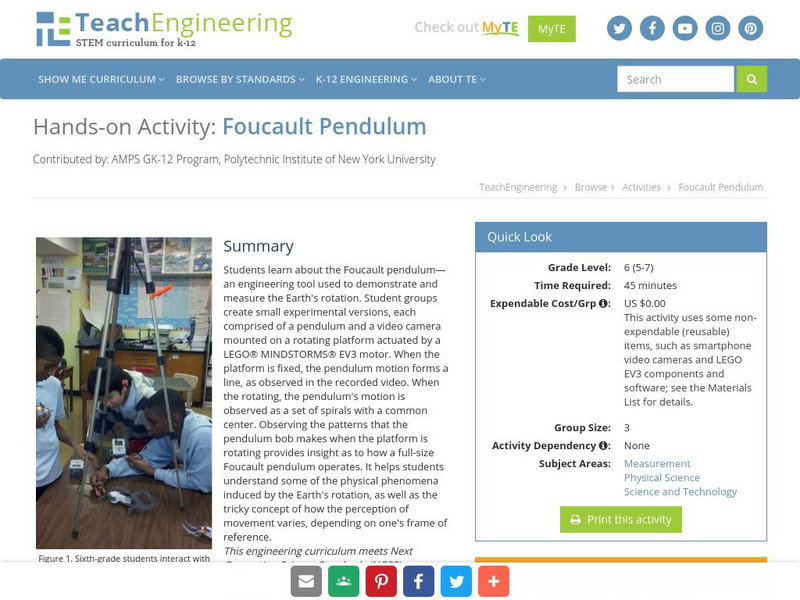
Teach Engineering: Foucault Pendulum
Students learn about the Foucault pendulum, an engineering tool used to demonstrate and measure the Earth's rotation. Student groups then create small experimental versions, each comprised of a pendulum and a video camera mounted on a...
TeachEngineering
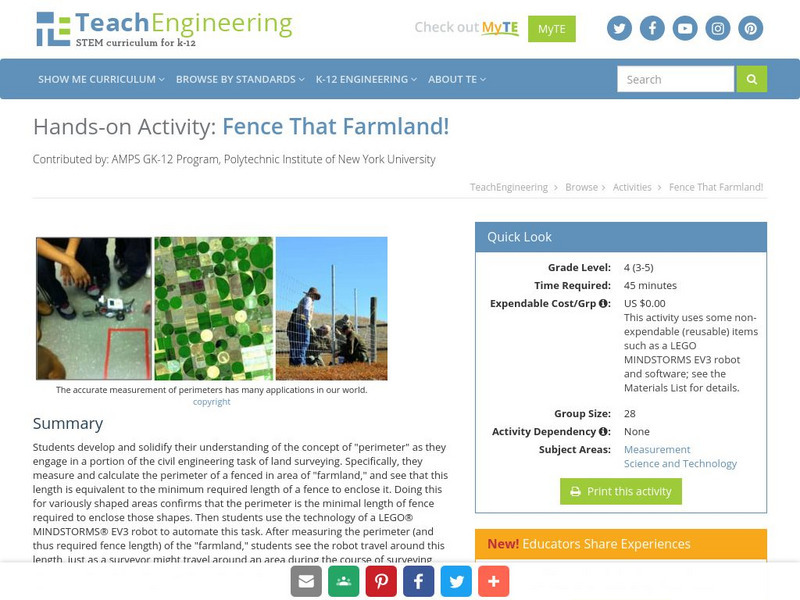
Teach Engineering: Fence That Farmland!
Students develop and solidify their understanding of the concept of perimeter as they engage in a portion of the civil engineering task of land surveying, using the technology of a LEGO MINDSTORMS NXT robot to automate this task.
TeachEngineering
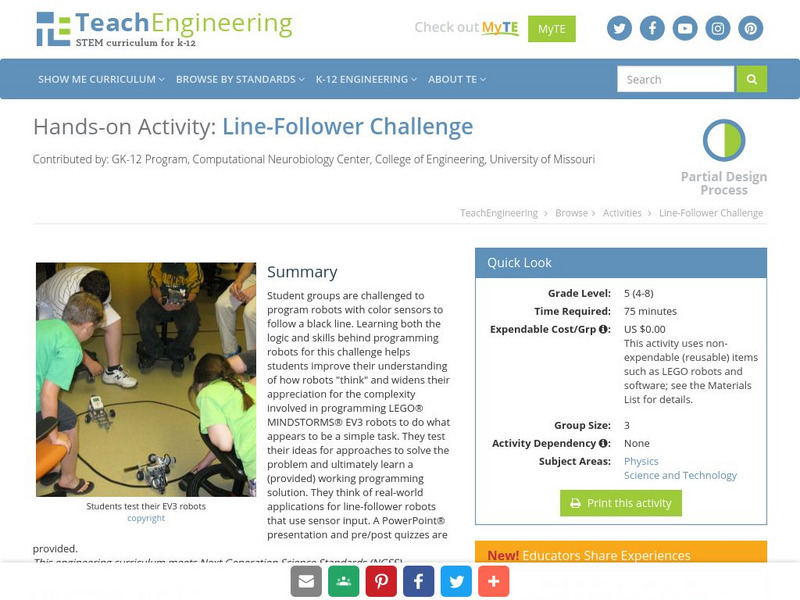
Teach Engineering: Line Follower Challenge
Student groups are challenged to program robots with light sensors to follow a black line. Learning both the logic and skills behind programming robots for this challenge helps students improve their understanding of how robots work, and...
TeachEngineering
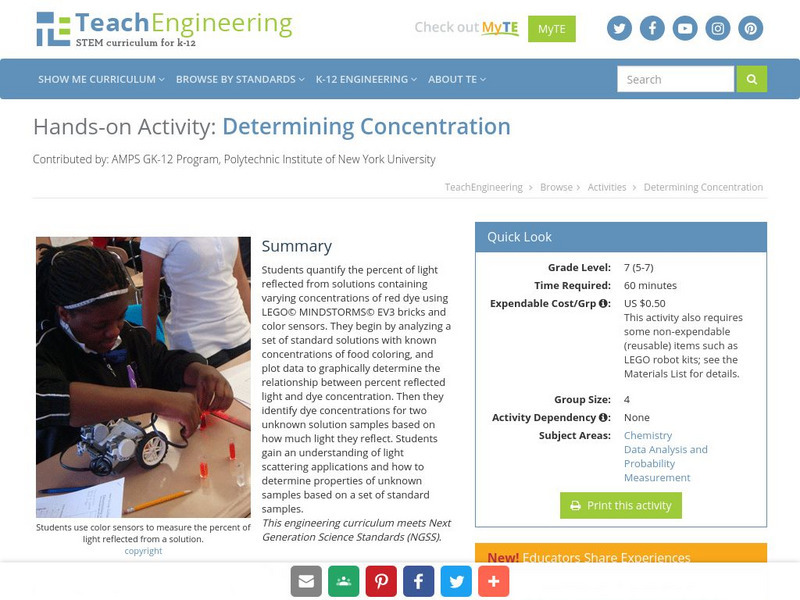
Teach Engineering: Determining Concentration
Students quantify the percent of light reflected from solutions containing varying concentrations of red dye using LEGO MINDSTORMS NXT bricks and light sensors. They begin by analyzing a set of standard solutions with known...
TeachEngineering
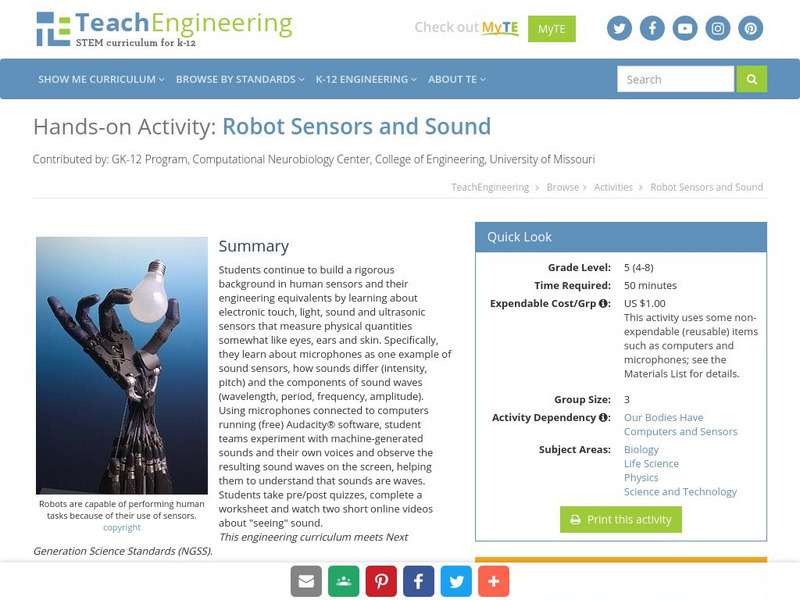
Teach Engineering: Robot Sensors and Sound
Using microphones connected to computers running Audacity software, student teams experiment with machine-generated sounds and their own voices and observe the resulting sound waves on the screen, helping them to understand that sounds...
TeachEngineering
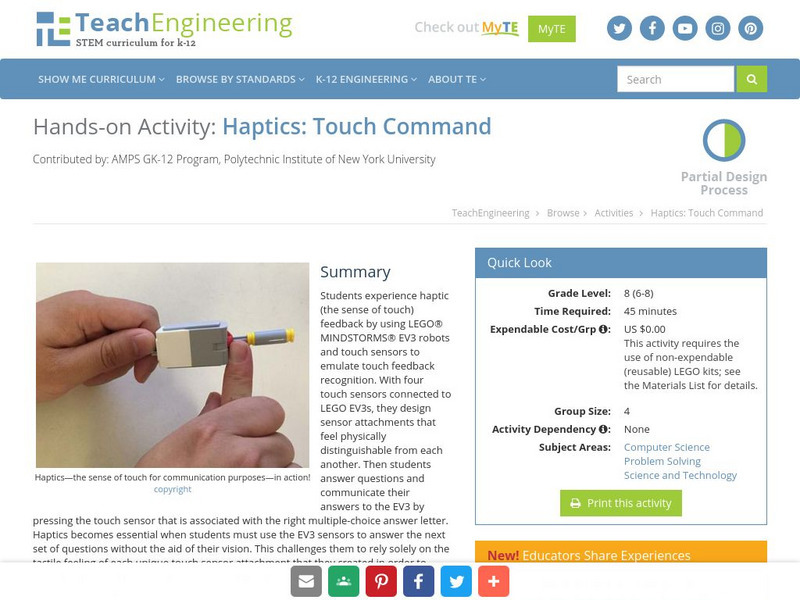
Teach Engineering: Haptics: Touch Command
Students experience haptic (the sense of touch) feedback by using LEGO MINDSTORMS NXT robots and touch sensors to emulate touch feedback recognition. With four touch sensors connected to LEGO NXTs, they design sensor attachments that...
TeachEngineering
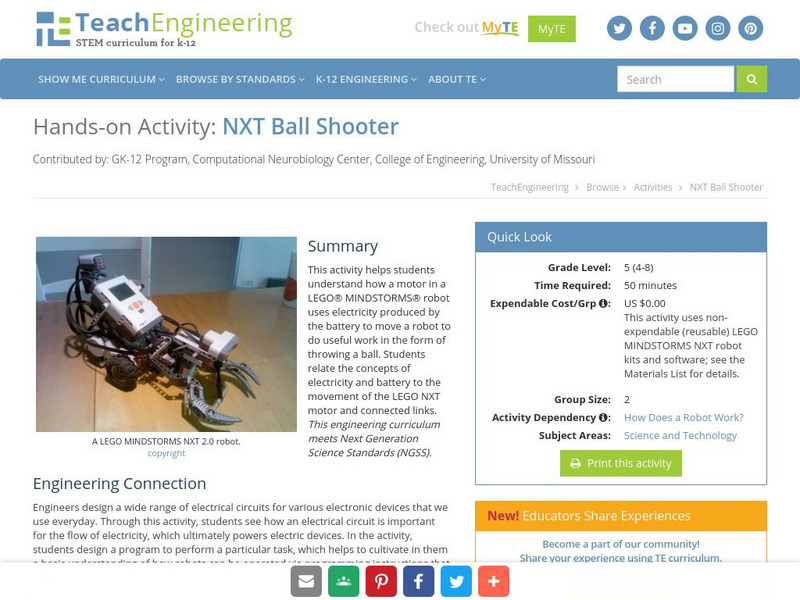
Teach Engineering: Nxt Ball Shooter
This activity helps students understand how a motor in a LEGO MINDSTORMS NXT robot uses electricity produced by the battery to move a robot to do useful work in the form of throwing a ball. Students relate the concepts of electricity and...
TeachEngineering
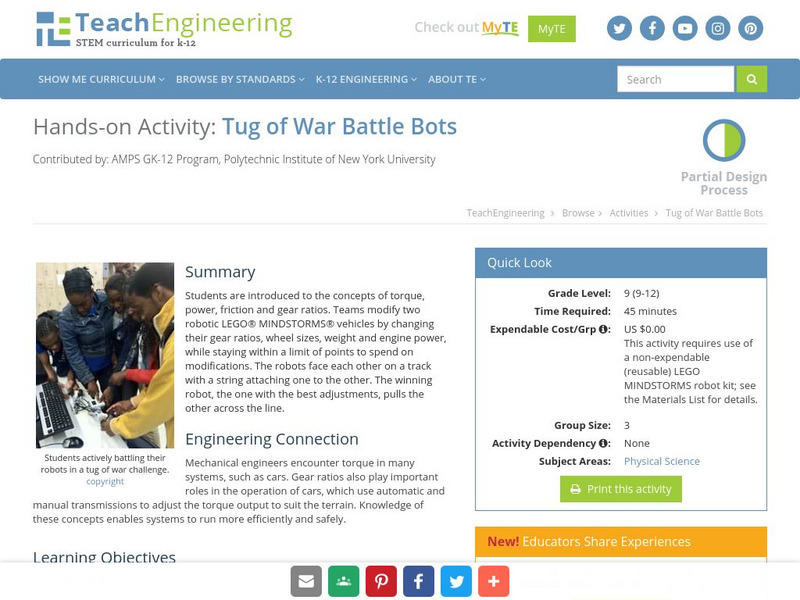
Teach Engineering: Tug of War Battle Bots
Students are introduced to the concepts of torque, power, friction and gear ratios. Teams modify two robotic LEGO vehicles by changing their gear ratios, wheel sizes, weight and engine power, while staying within a limit of points to...