Hi, what do you want to do?






Common Sense Media
Common Sense Media: Education: Lesson: Show Respect Online (K 2)
Young scholars explore the similarities and differences between in-person and online communications, and then learn how to write clear and respectful emails. Requires free membership.
Common Sense Media
Common Sense Media: Education: Lesson: Super Digital Citizen: Grades 3 5
Students explore what it means to be responsible and respectful to their offline and online communities as a step toward learning how to be good digital citizens. Students create digital superheroes who exhibit exemplary attributes and...
Common Sense Media
Common Sense Media: Education: Lesson: Follow the Digital Trail: K 2
Students learn that the information they put online leaves a digital footprint or "trail." This trail can be big or small, helpful or hurtful, depending on how they manage it. Free membership required.
Committee for Children
Second Step: Grade K: Lesson 18: Handling Being Knocked Down
This lesson will help students understand how to calm down after getting hurt by another person.
Better Lesson
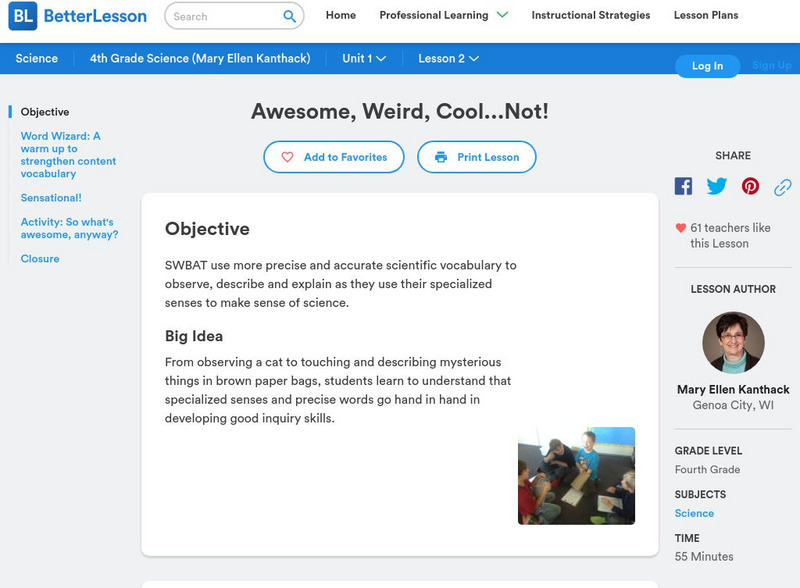
Better Lesson: Awesome, Weird, Cool Not!
From observing a cat to touching and describing mysterious things in brown paper bags, 4th graders learn to understand that specialized senses and precise words go hand in hand in developing good inquiry skills.

Alabama Learning Exchange
Alex: Nocturnal Animals Lesson #1
This lesson plan can be part of a two-week integrated thematic unit on nocturnal animals. During this lesson plan, students will be introduced to nocturnal animals. They will have an opportunity to navigate web sites to learn more about...
PBS
Pbs Learning Media: Back to School Collection
Get ready for the start of school with some of our favorite back-to-school resources! This collection features activities and video resources to help students get to know each other and their new school routines, and lesson plans to help...
PBS
Pbs Learning Media: Binky Goes Nuts
Teach children how to manage a peanut allergy with this lesson plan from Arthur: "Binky Goes Nuts." Includes resources in Spanish.
PBS
Pbs Learning Media: Zombie Autopsies: Spooky Psychiatric Medicine to Save World
After looking at zombies to learn about brain disease that alters behavior, students now must develop a cure for zombies. They use Skittles, where each color represents a different neurotransmitter. They then present their cure to the...
HotChalk
Hot Chalk: Lesson Plans Page: Penguin Theme Unit
This lesson is designed to help young students learn about penguins over a five-day unit.
TED Talks
Ted: Ted Ed: Why Is Yawning Contagious?
*Yaaawwwwwn* Did just reading the word make you feel like yawning yourself? Known as contagious yawning, the reasons behind this phenomenon have been attributed to both the physiological and psychological. It's been observed in children...
Common Sense Media
Common Sense Media: Education: What's Cyberbullying? Grades 3 5
Students discuss positive and negative aspects of interacting with others online. They learn the definition of cyberbullying and help the teacher fill in a Venn diagram that compares in-person bullying with cyberbullying. They then read...
TeachEngineering
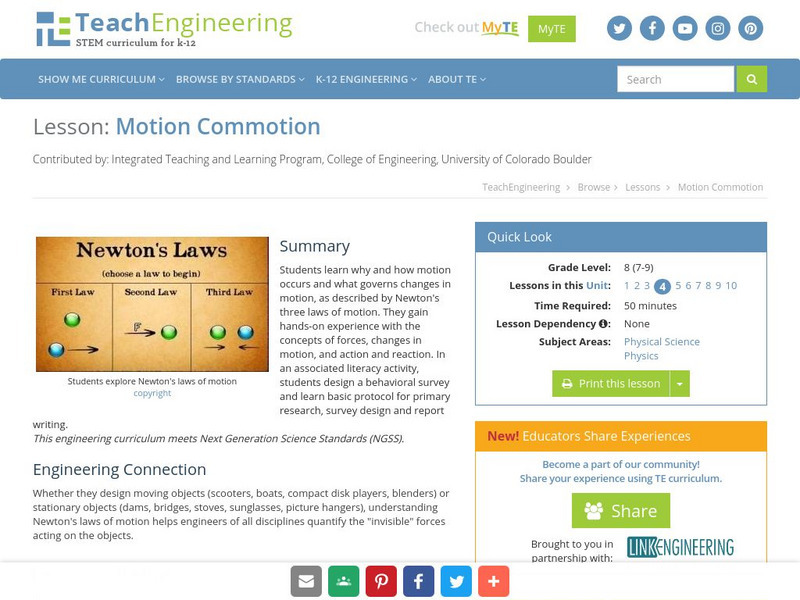
Teach Engineering: Motion Commotion
Students learn why and how motion occurs and what governs changes in motion, as described by Newton's three laws of motion. They gain hands-on experience with the concepts of forces, changes in motion, and action and reaction. In an...
TeachEngineering
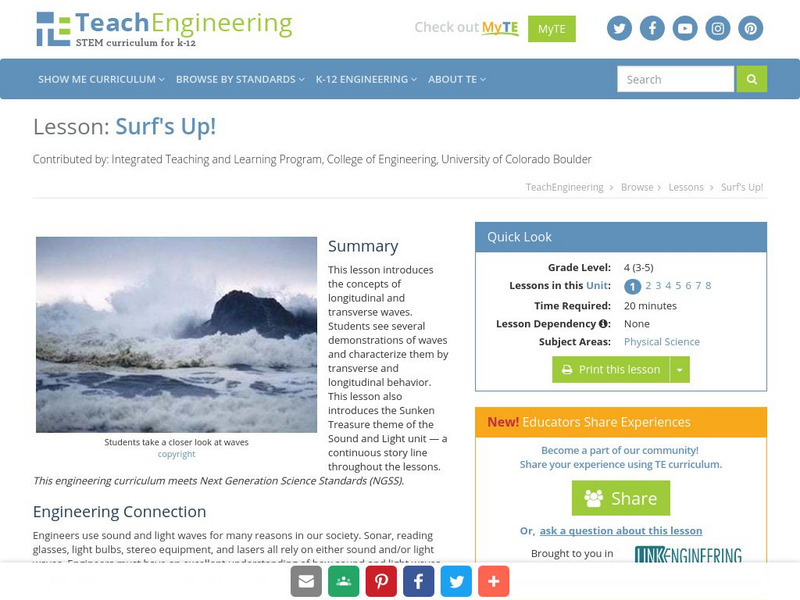
Teach Engineering: Surf's Up!
This lesson introduces the concepts of longitudinal and transverse waves. Young scholars see several demonstrations of waves and characterize them by transverse and longitudinal behavior. This lesson also introduces the Sunken Treasure...
TeachEngineering
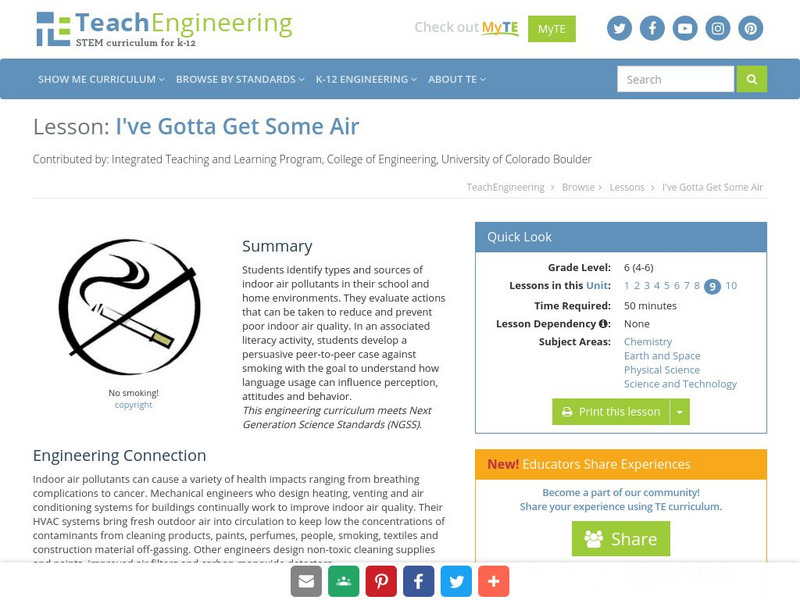
Teach Engineering: I've Gotta Get Some Air
Students identify types and sources of indoor air pollutants in their school and home environments. They evaluate actions that can be taken to reduce and prevent poor indoor air quality. In an associated literacy activity, students...

TeachEngineering
Teach Engineering: What Makes Airplanes Fly?
Learners begin to explore the idea of a force. To further their understanding of drag, gravity and weight, they conduct activities that model the behavior of parachutes and helicopters. An associated literacy activity engages the class...
Bryn Mawr College
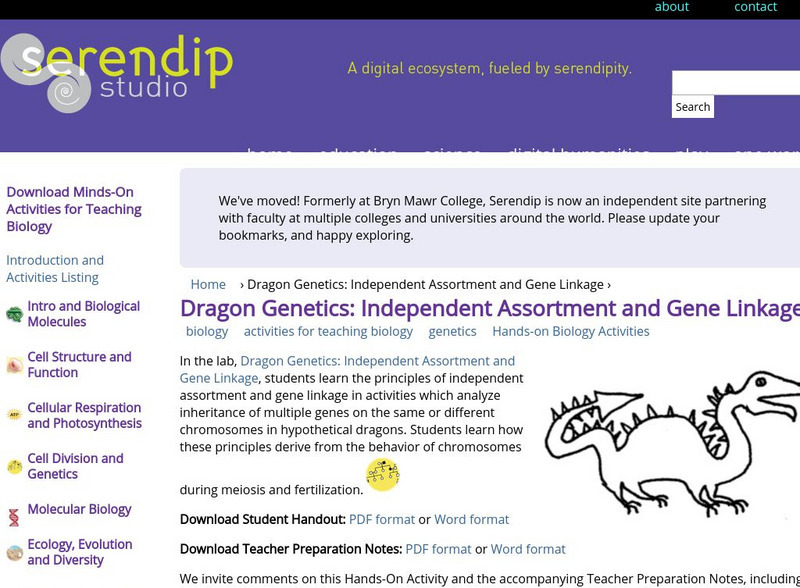
Serendip: Dragon Genetics: Independent Assortment and Gene Linkage
Brief text summary of what students learn in the Dragon Genetics I lab along with links to download Student Handouts and Teacher Preparation Notes in PDF and Word formats. Multiple gene inheritance and the cause of genetic linkage are...
BioEd Online
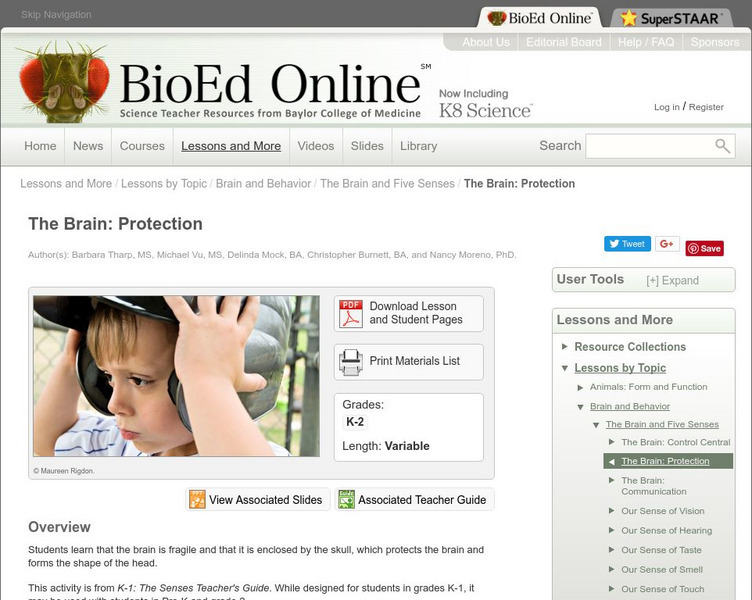
Bio Ed Online: The Brain: Protection
What protects the brain? Why does the brain need to be protected? In this lesson plan students will learn about the fragility of the brain and that it is enclosed by the skull, which protects the brain and forms the shape of the head.
BioEd Online
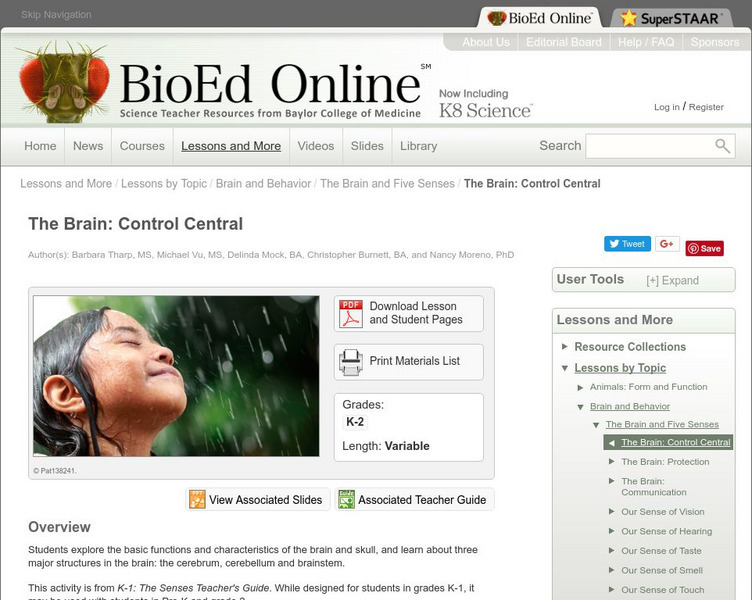
Bio Ed Online: The Brain: Control Central
What do you know about the brain? For this early learners lesson, students will explore the basic functions and characteristics of the brain and skull, and also learn about three major structures in the brain: the cerebrum, cerebellum...
BioEd Online
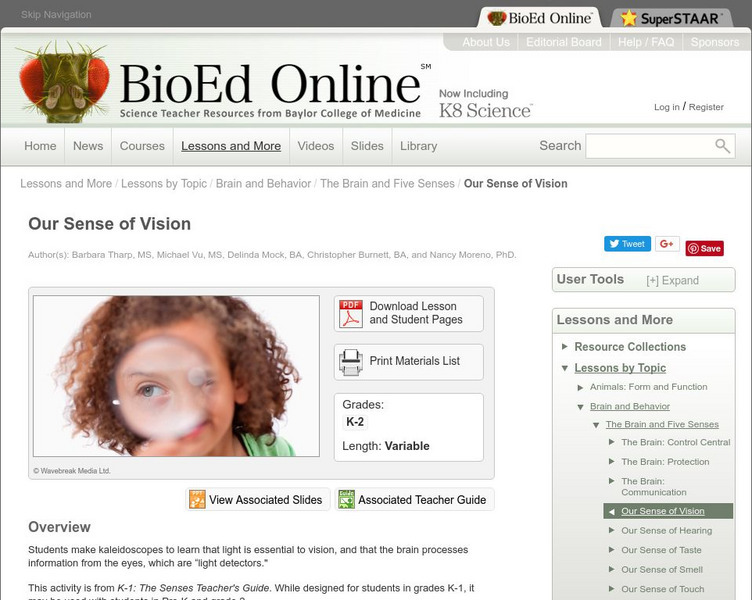
Bio Ed Online: Our Sense of Vision
Which parts of the body are involved in vision (seeing)? Is light important for vision? In this lesson students make kaleidoscopes to learn that light is essential to vision, and that the brain processes information from the eyes, which...

BioEd Online
Bio Ed Online: Our Sense of Smell
How does our sense of smell work? In this lesson students use four different flavors of dry soft drink mix to investigate the sense of smell, and learn that the nose can detect very small particles in air, and transmit the information to...
BioEd Online
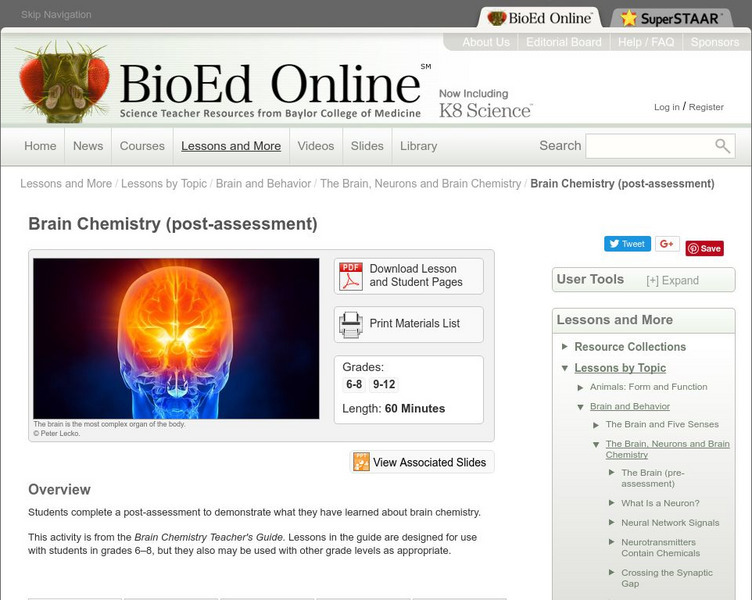
Bio Ed Online: Brain Chemistry Post Assessment
The human brain is complex. Messages within the brain and the rest of the nervous system are conducted by cells called neurons. Drugs and other substances can interfere with or modify the transmission of messages between neurons. In this...
BioEd Online
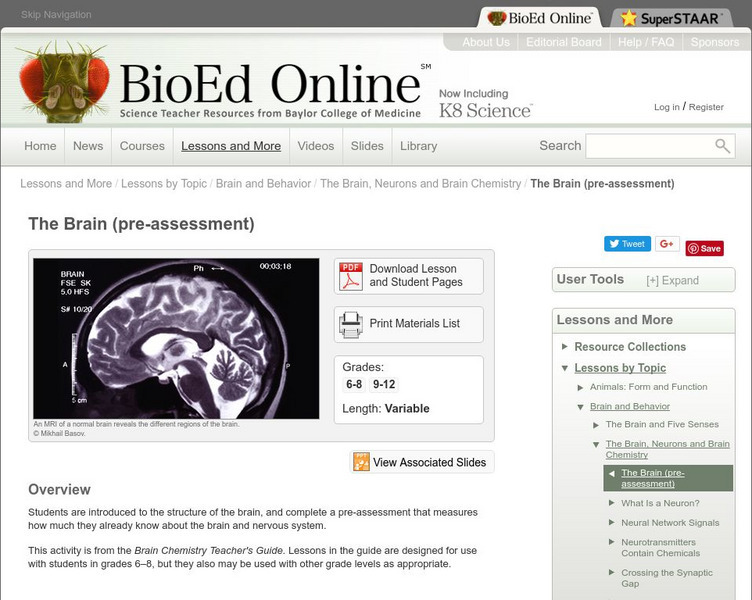
Bio Ed Online: The Brain: Pre Assessment
The brain has unique physical characteristics and it is specialized into many different areas, each with a different job. Brain functions and abilities develop over time. Assess student's knowledge of the structure of the brain by having...
Council for Economic Education
Econ Ed Link: Demand Shifters
Check out this informative economics lesson plan that teaches about demand, and factors that cause demand for a good or service to change. Students learn to recognize factors that influence one's behavior as a consumer.