Hi, what do you want to do?





TeachEngineering
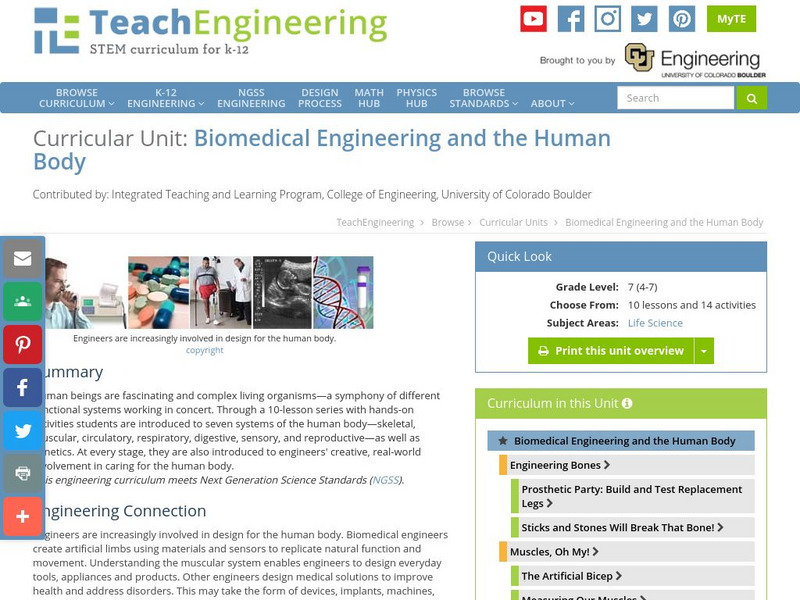
Teach Engineering: Biomedical Engineering and the Human Body
Human beings are fascinating and complex living organisms-a symphony of different functional systems working in concert. Through a 10-lesson series with hands-on activities students are introduced to seven systems of the human...
TeachEngineering
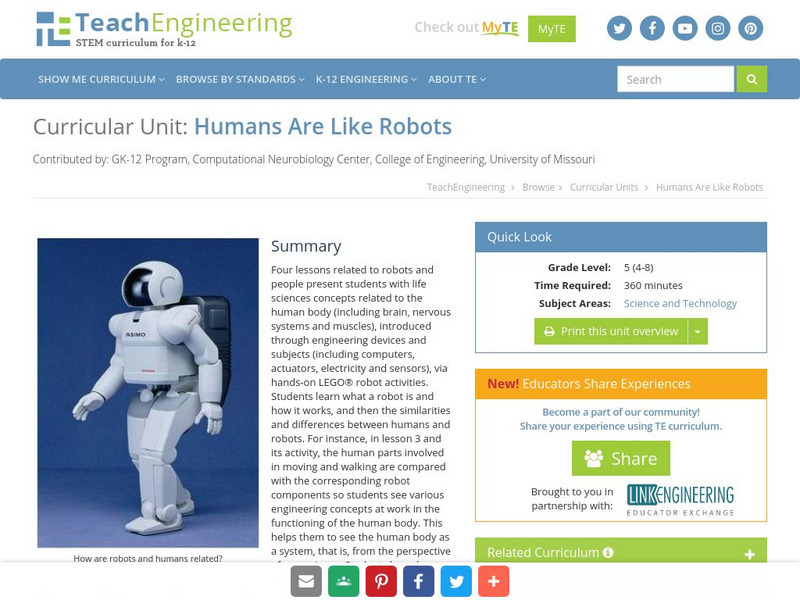
Teach Engineering: Humans Are Like Robots
Four lessons related to robots and people present students with life sciences concepts related to the human body (including brain, nervous systems and muscles), introduced through engineering devices and subjects (including computers,...
TeachEngineering
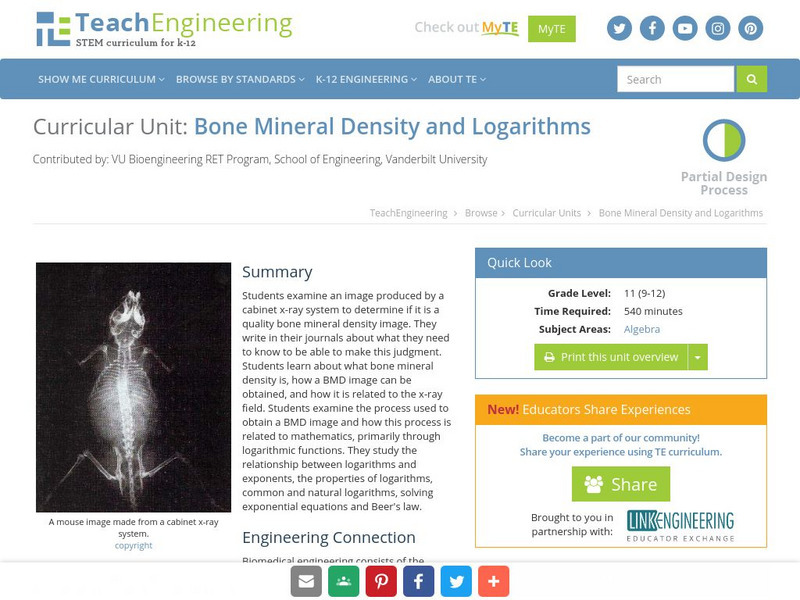
Teach Engineering: Bone Mineral Density and Logarithms
Students examine an image produced by a cabinet x-ray system to determine if it is a quality bone mineral density image. Students write in their journals about what they need to know to be able to make this judgment. Students learn about...
TeachEngineering
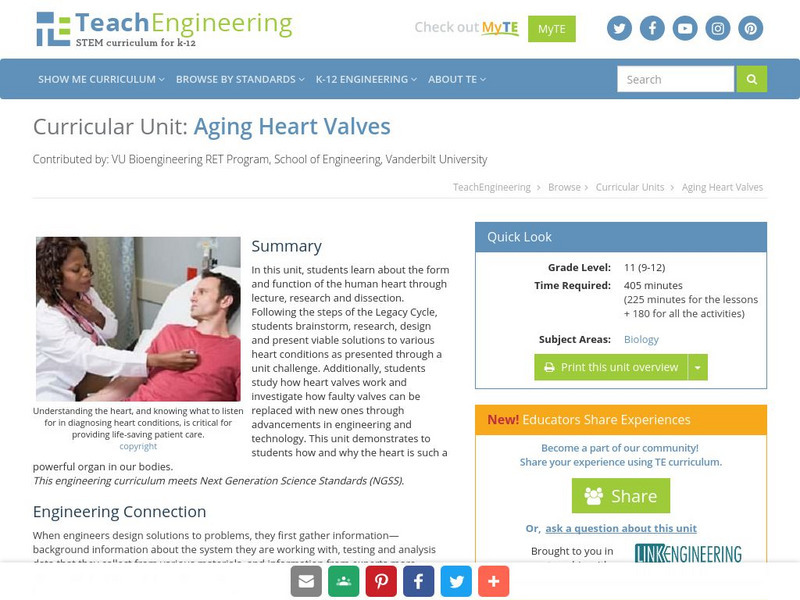
Teach Engineering: Aging Heart Valves
In this unit, students learn about the form and function of the human heart through lecture, research and dissection. Following the steps of the Legacy Cycle, students brainstorm, research, design and present viable solutions to various...
TeachEngineering
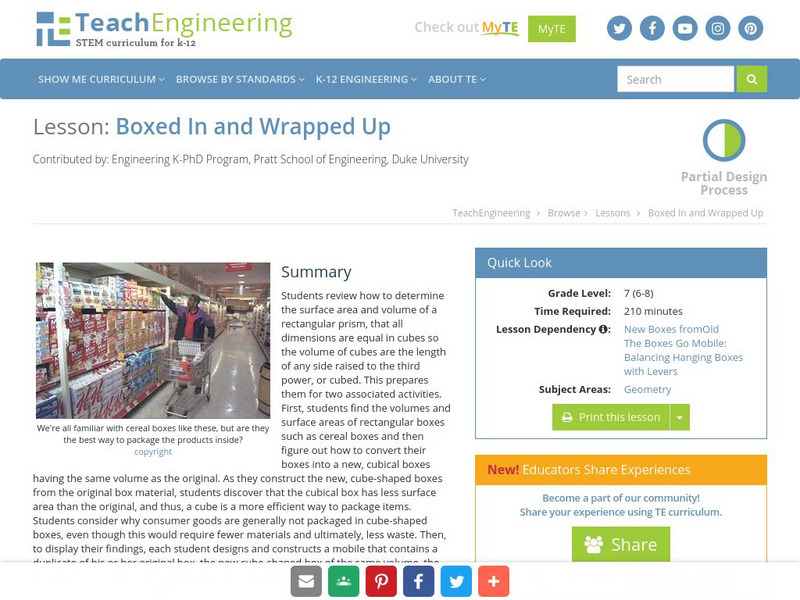
Teach Engineering: Boxed in and Wrapped Up
Students find the volume and surface area of a rectangular box (e.g., a cereal box), and then figure out how to convert that box into a new, cubical box having the same volume as the original. As they construct the new, cube-shaped box...
TeachEngineering
Teach Engineering: Food Chains and Food Webs
This instructional activity, supported by the provided power point lecture (LESSON 1 and 2 Ecology Lecture Supplement ), introduces young scholars to the concepts of food chains and food webs. Through its use, students learn the...
TeachEngineering
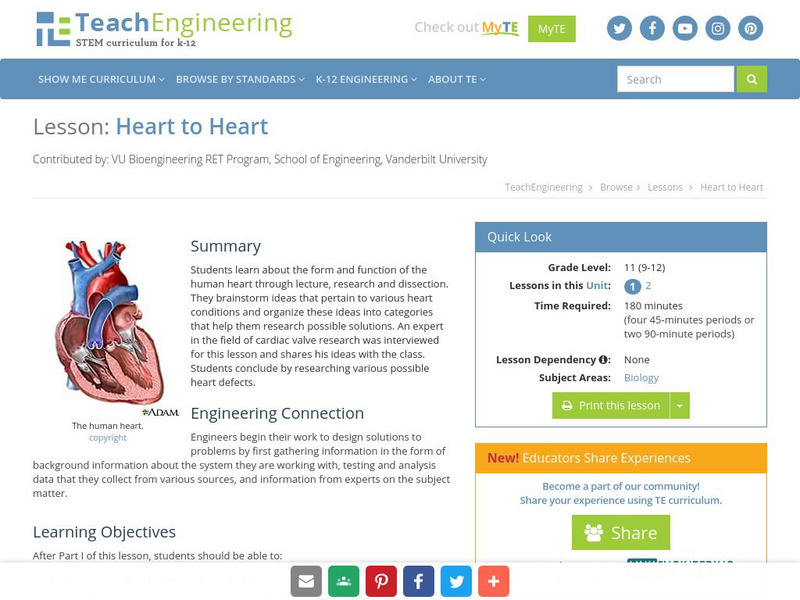
Teach Engineering: Heart to Heart
Students learn about the form and function of the human heart through lecture, research and dissection. They brainstorm ideas that pertain to various heart conditions and organize these ideas into categories that help them research...
TeachEngineering
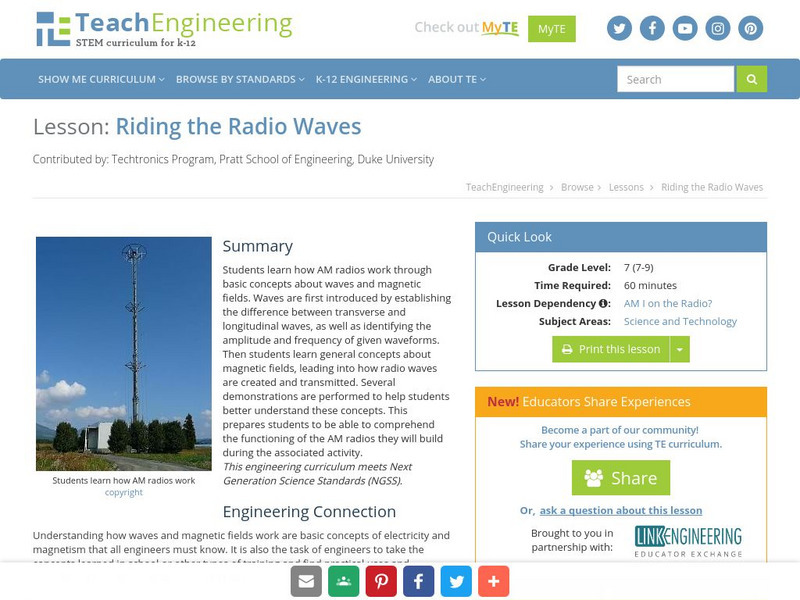
Teach Engineering: Riding the Radio Waves
In this lesson students learn how AM radios work through basic concepts about waves and magnetic fields. Waves are first introduced by establishing the difference between transverse and longitudinal waves, as well as identifying the...
TeachEngineering
Teach Engineering: Population Growth Curves
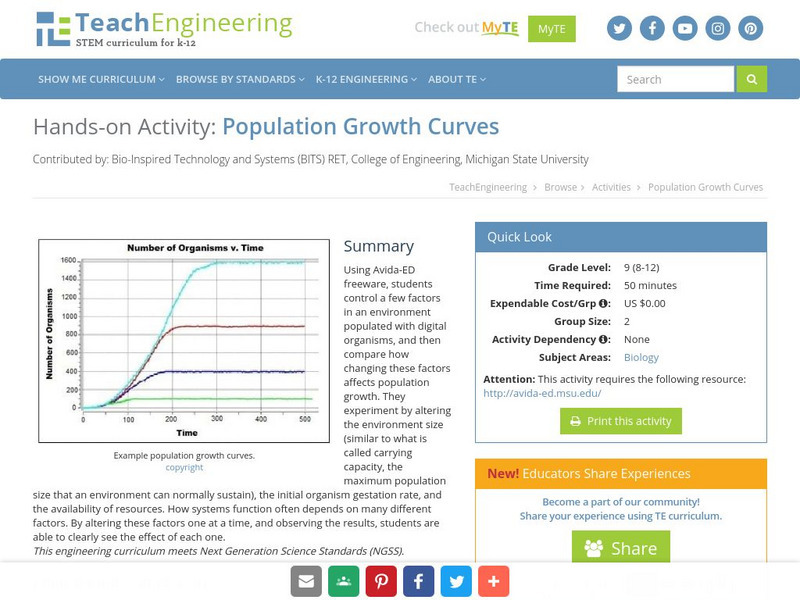
Using Avida-ED freeware, students control a few factors in an environment populated with digital organisms, and then compare how changing these factors affects population growth. They experiment by altering the environment size (similar...

National Cancer Institute at the National Institutes of Health
Seer Training Modules: Introduction to the Nervous System
Self-guided learning activity where students learn about the structure and function of the human nervous system. There is a short quiz at the end of the lesson to check for understanding.

Annenberg Foundation
Annenberg Learner: The Brain: Teaching Modules
A collection of 32 video learning modules on everything to do with the brain.
TeachEngineering
Teach Engineering: Design Step 2: Research the Problem
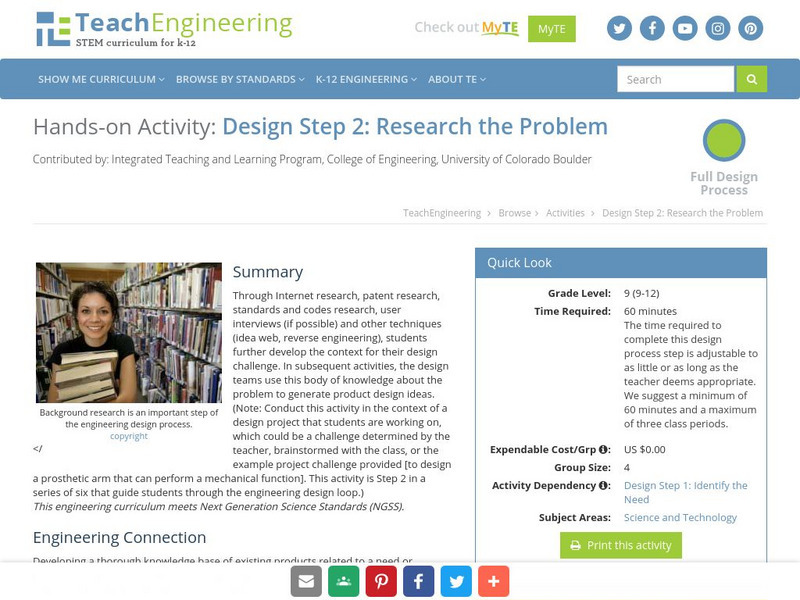
Through Internet research, patent research, standards and codes research, user interviews (if possible) and other techniques (idea web, reverse engineering), students further develop the context for their design challenge. In subsequent...
TeachEngineering
Teach Engineering: Saving a Life: Heart Valve Replacement
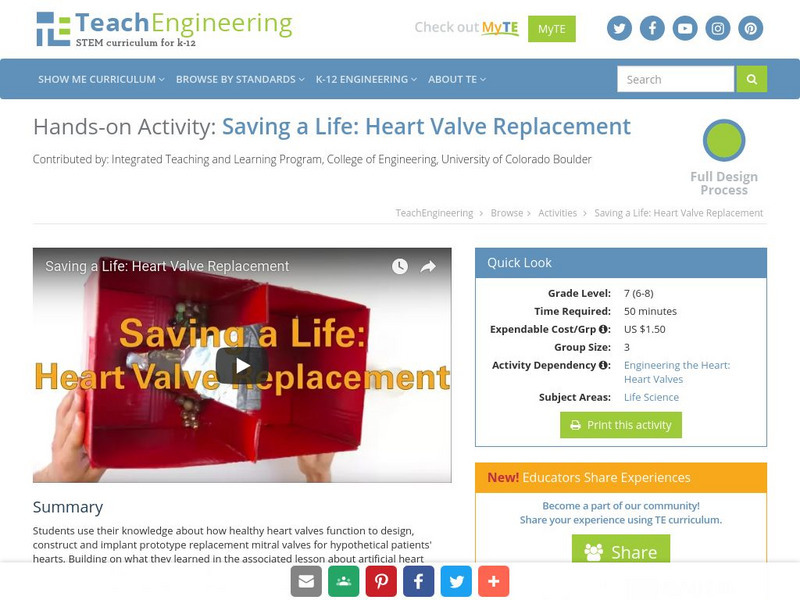
Students use their knowledge about how healthy heart valves function to design, construct and implant prototype replacement mitral valves for hypothetical patients' hearts. Building on what they learned in the associated lesson about...
TeachEngineering
Teach Engineering: Magic Magnetic Fluid
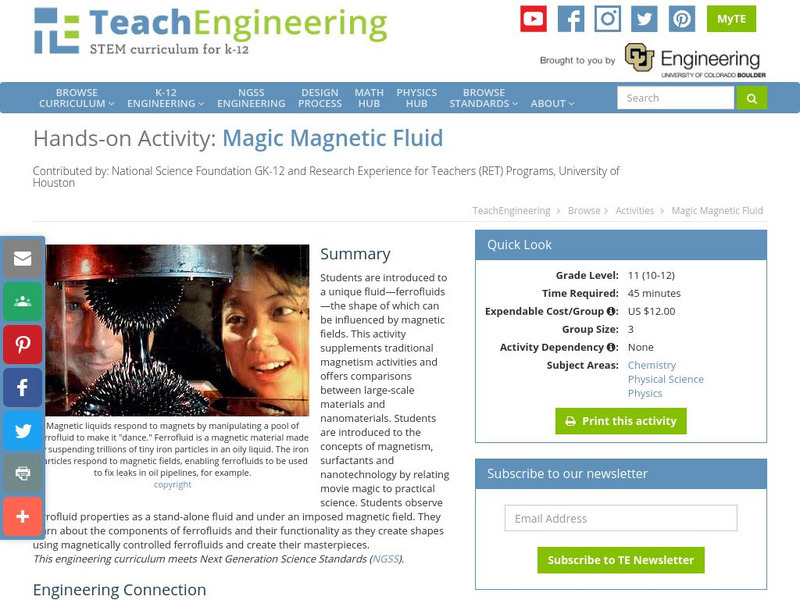
Students are introduced to a unique fluid--ferrofluids--the shape of which can be influenced by magnetic fields. This activity supplements traditional magnetism activities and offers comparisons between large-scale materials and...
TeachEngineering
Teach Engineering: Magnetic Fluids
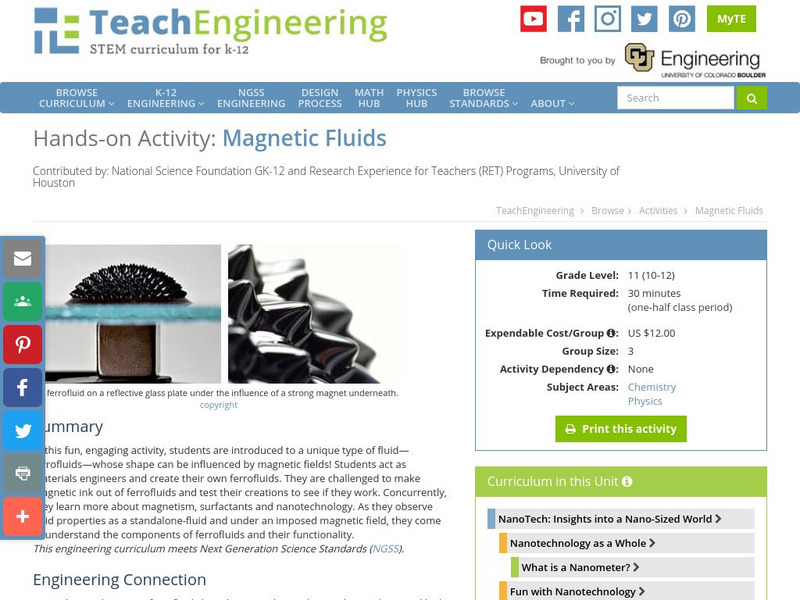
In this fun, engaging activity, students are introduced to a unique type of fluid--ferrofluids--whose shape can be influenced by magnetic fields! Students act as materials engineers and create their own ferrofluids. They are challenged...
TeachEngineering
Teach Engineering: Creative Engineering Design
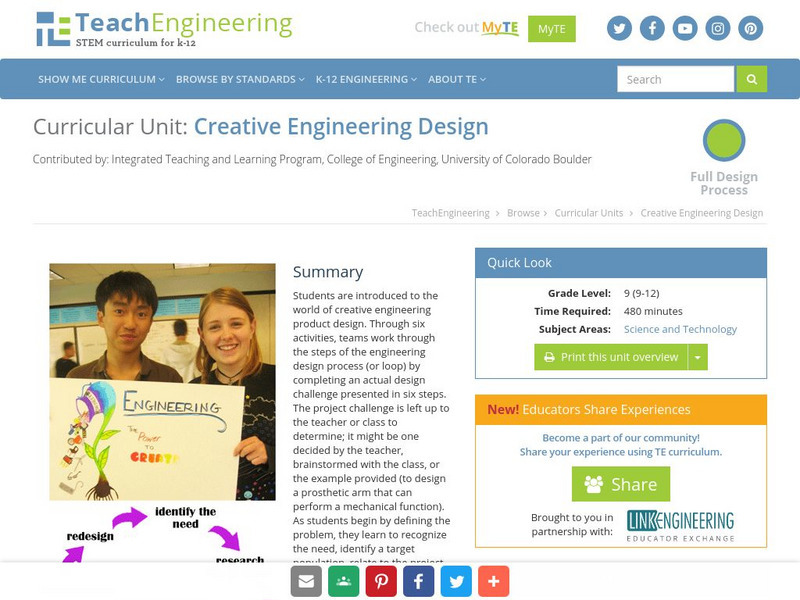
Students are introduced to the world of creative engineering product design. Through six activities, teams work through the steps of the engineering design process (or loop) by completing an actual design challenge presented in six...