Hi, what do you want to do?





TeachEngineering
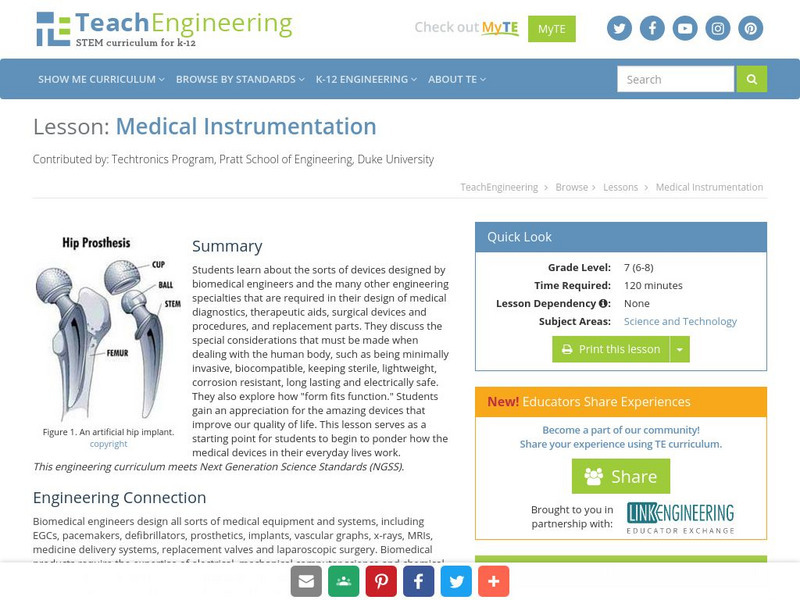
Teach Engineering: Medical Instrumentation
Students will discuss the special considerations that must be made when dealing with the human body, and will gain an appreciation for the amazing devices that have improved our quality of life. They will also explore how 'Form Fits...
TeachEngineering
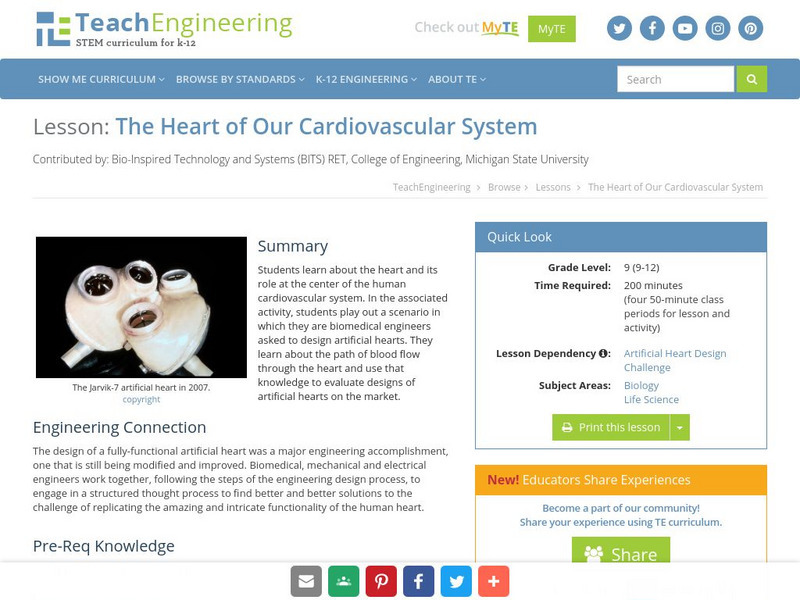
Teach Engineering: The Heart of Our Cardiovascular System
Students learn about the heart and its role at the center of the human cardiovascular system. In the associated activity, students play out a scenario in which they are biomedical engineers asked to design artificial hearts. They learn...
TeachEngineering
Teach Engineering: Pharmaceutical Research Design Problem
Through this lesson and its associated activity, students explore the role of biomedical engineers working for pharmaceutical companies. First, students gain background knowledge about what biomedical engineers do, how to become a...
TeachEngineering
Teach Engineering: How Far Does a Lava Flow Go?
While learning about volcanoes, magma and lava flows, students learn about the properties of liquid movement, coming to understand viscosity and other factors that increase and decrease liquid flow. They also learn about lava composition...
TeachEngineering
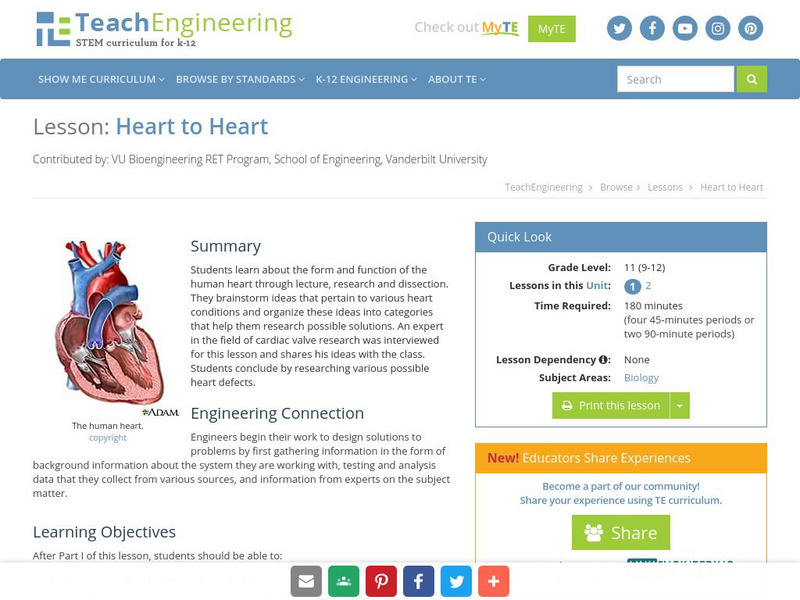
Teach Engineering: Heart to Heart
Students learn about the form and function of the human heart through lecture, research and dissection. They brainstorm ideas that pertain to various heart conditions and organize these ideas into categories that help them research...
TeachEngineering
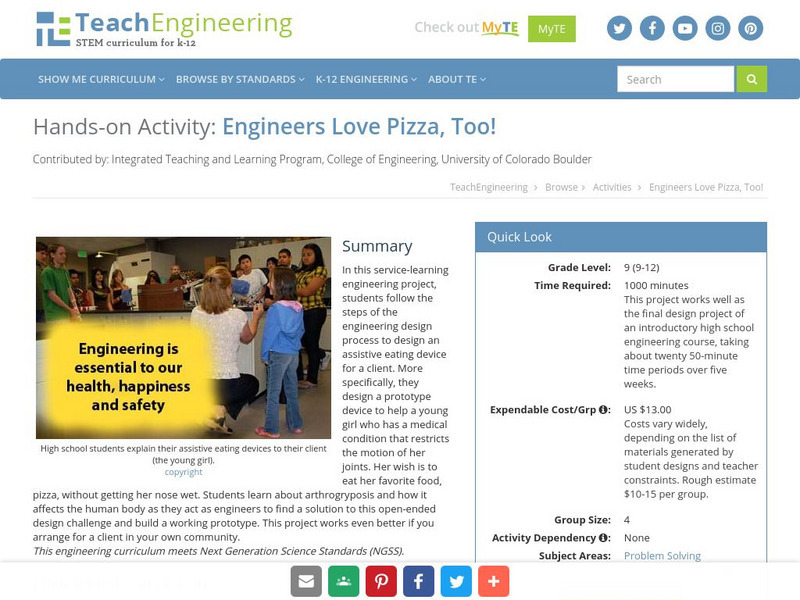
Teach Engineering: Engineers Love Pizza, Too!
In this service-learning engineering project, students follow the steps of the engineering design process to design an assistive eating device for a client. More specifically, they design a prototype device to help a young girl who has a...
TeachEngineering
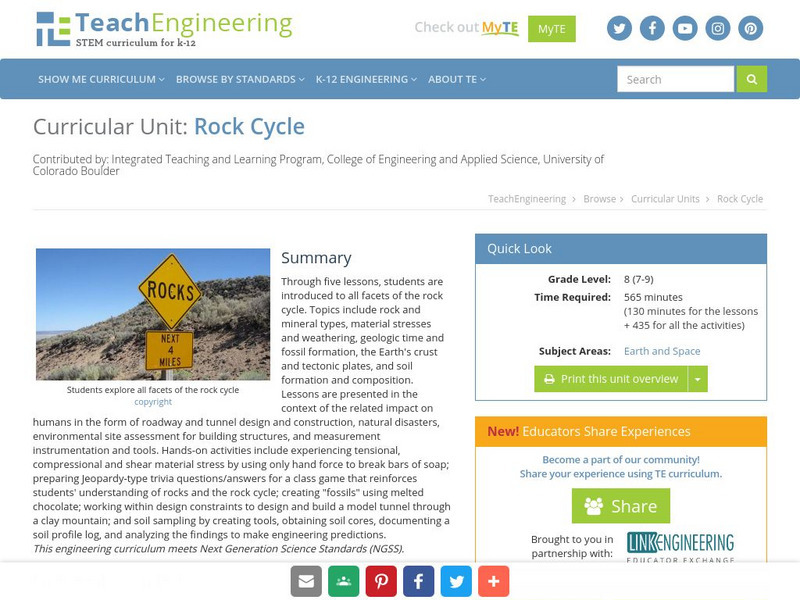
Teach Engineering: Rock Cycle
Through five lessons, students are introduced to all facets of the rock cycle. Topics include rock and mineral types, material stresses and weathering, geologic time and fossil formation, the Earth's crust and tectonic plates, and soil...
SEDL
Sedl: Five Senses
Elementary students will gain great insight into the workings of our five senses through this collection of detailed, integrated lesson plans for grades K-3. Each lesson contains a list of needed materials, hands-on explorations...
TeachEngineering
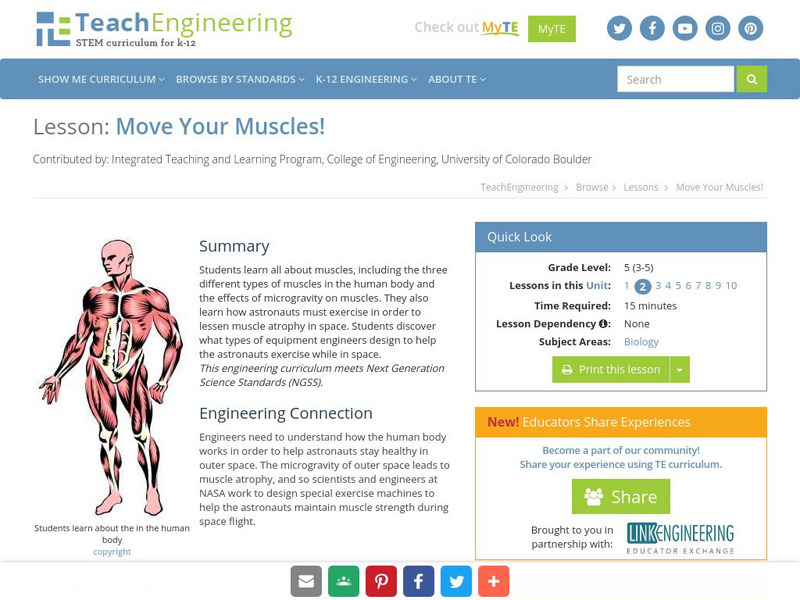
Teach Engineering: Move Your Muscles!
This instructional activity covers the topic of muscles. Students learn about the three different types of muscles in the human body and the effects of microgravity on muscles. Students also learn how astronauts need to exercise in order...
TeachEngineering
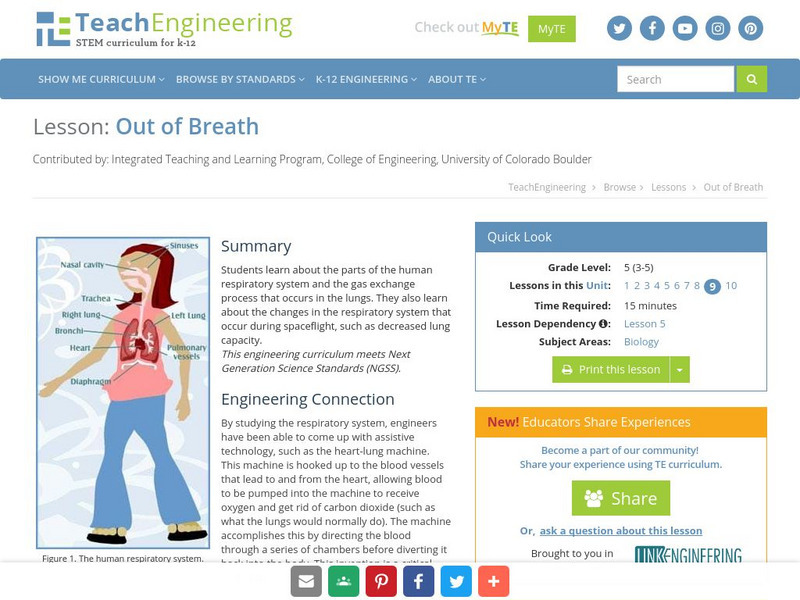
Teach Engineering: Out of Breath
This lesson goes over the parts of the human respiratory system and the gas exchange process that occurs in the lungs. It also covers changes in the respiratory system that occur during spaceflight, such as decreased lung capacity.
TeachEngineering
Teach Engineering: What Is Energy? Short Demos
Three short, hands-on, in-class demos expand students' understand of energy. First, using peanuts and heat, students see how the human body burns food to make energy. Then, students create paper snake mobiles to explore how heat energy...
TeachEngineering
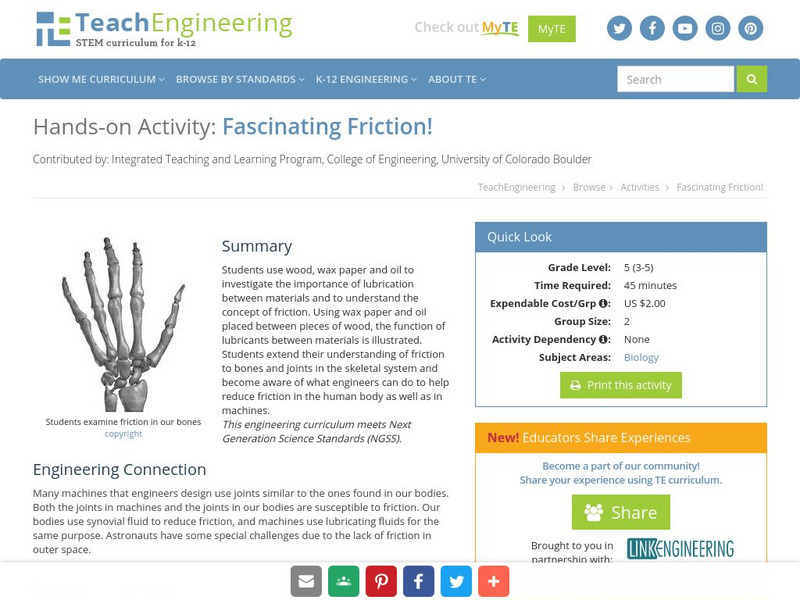
Teach Engineering: Fascinating Friction!
In this activity, students use wood, wax paper and oil to investigate the importance of lubrication between materials and to understand the concept of friction. Using wax paper and oil placed between pieces of wood, the function of...
TeachEngineering
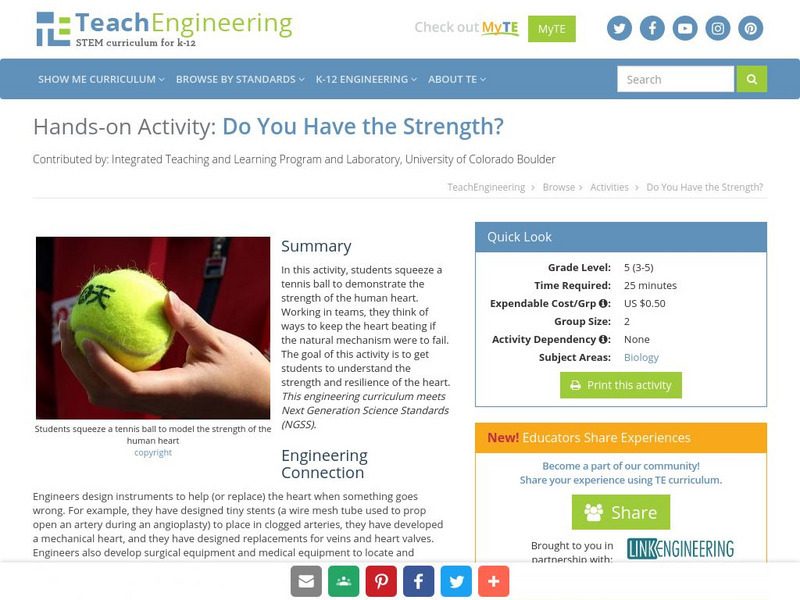
Teach Engineering: Do You Have the Strength?
In this activity, students squeeze a tennis ball to demonstrate the strength of the human heart. Working in teams, they think of ways to keep the heart beating if the natural mechanism were to fail. The goal of this activity is to get...
TeachEngineering
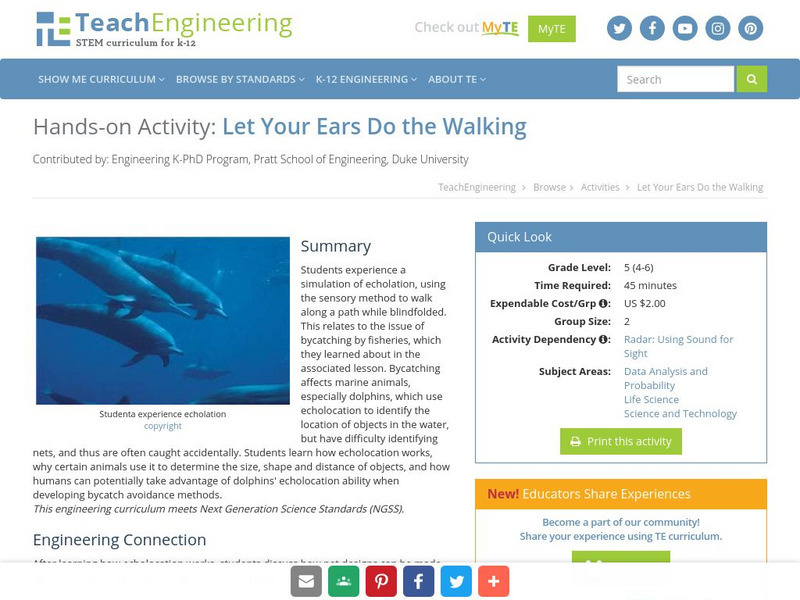
Teach Engineering: Let Your Ears Do the Walking
In the previous lesson, students learned about the issue of bycatching by fisheries and how it affects marine habitats. Dolphins are one of the main species affected by bycatching. Dolphins use echolocation to identify the location of...
TeachEngineering
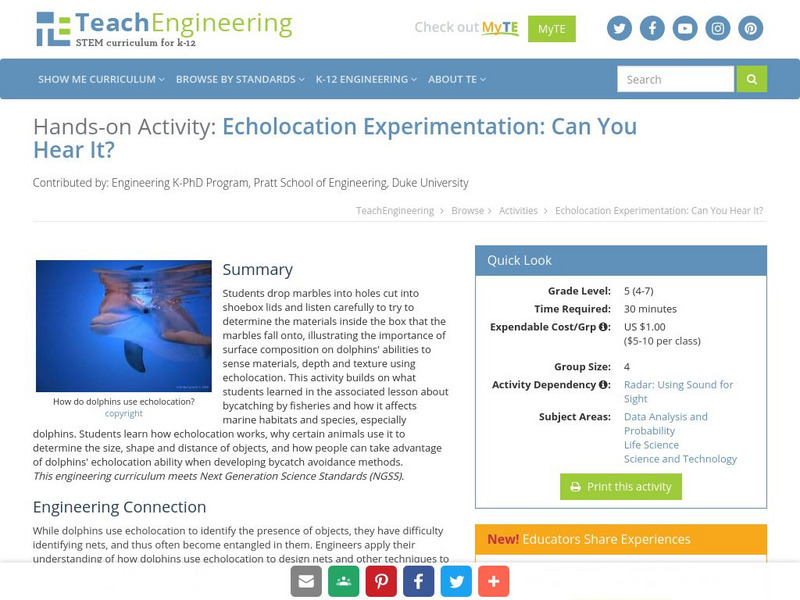
Teach Engineering: Can You Hear It?
In the previous lesson, students learned about the issue of bycatching by fisheries and how it affects marine habitats. Dolphins are one of the main species affected by bycatching. While dolphins can use echolocation to identify the...
TeachEngineering
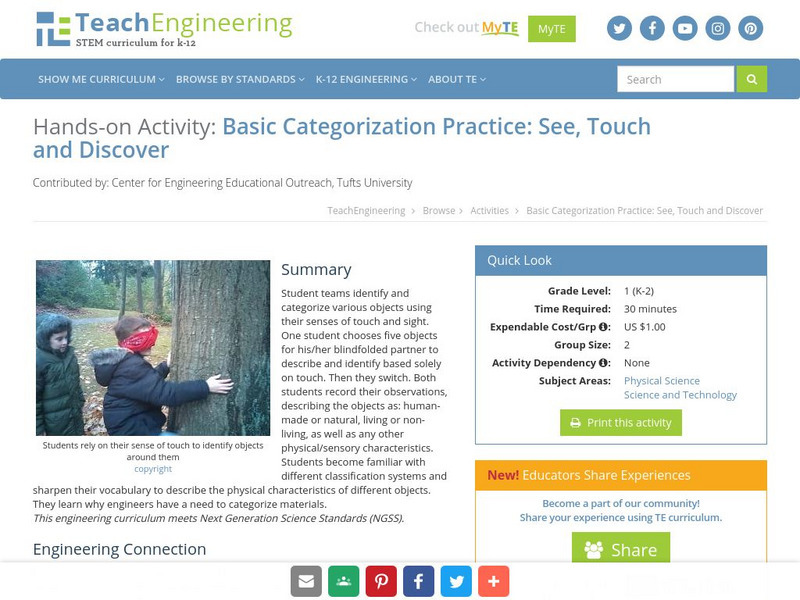
Teach Engineering: Touch and Discover
Students work in pairs or small groups to identify and categorize various objects. One student is blindfolded and the other student chooses five objects for their partner to identify. The blindfolded student has to describe and try to...
TeachEngineering
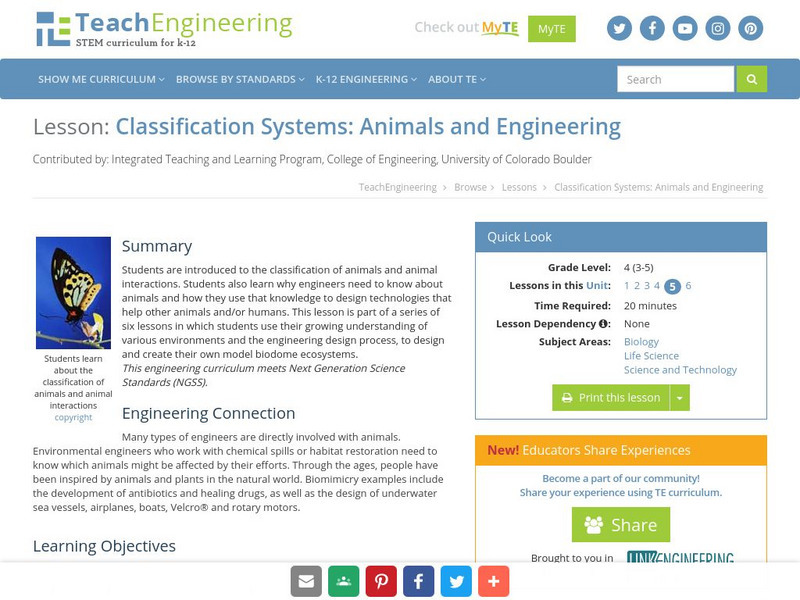
Teach Engineering: Animals and Engineering
Students are introduced to the classification of animals and animal interactions. Students also learn why engineers need to know about animals and how they use that knowledge to design technologies that help other animals and/or humans....
TeachEngineering
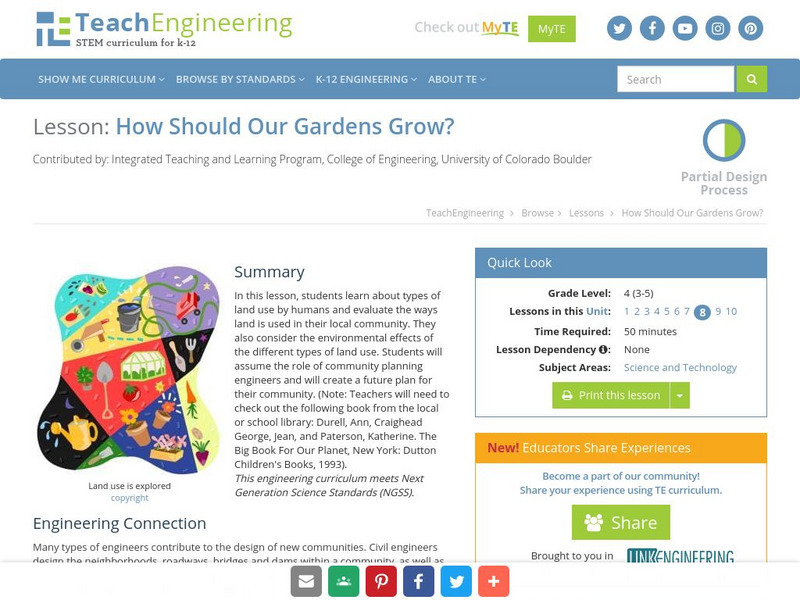
Teach Engineering: How Should Our Gardens Grow?
In this instructional activity, students will learn about types of land use by humans and evaluate the ways land is used in their local community. They will also consider the environmental effects of the different types of land use....
TeachEngineering
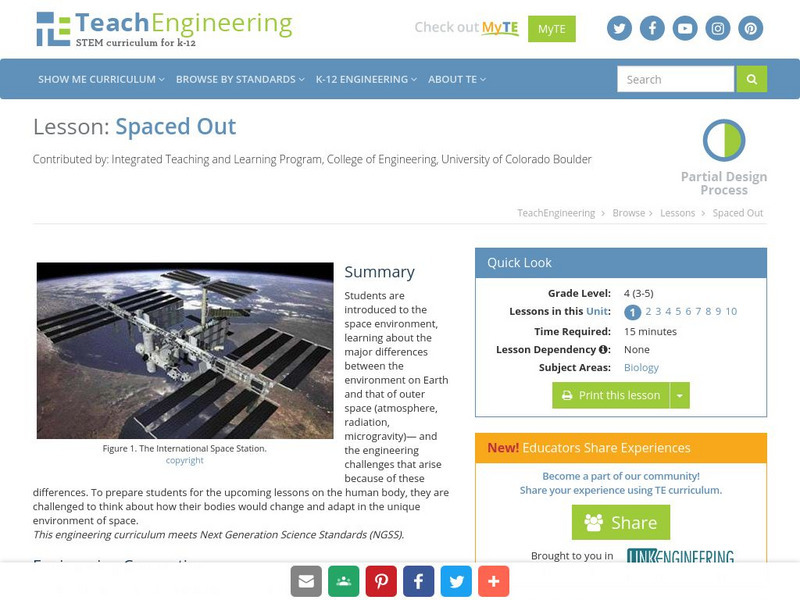
Teach Engineering: Spaced Out
This lesson introduces students to the space environment. It covers the major differences between the environment on Earth and that of outer space and the engineering challenges that arise because of these discrepancies. In order to...
TeachEngineering
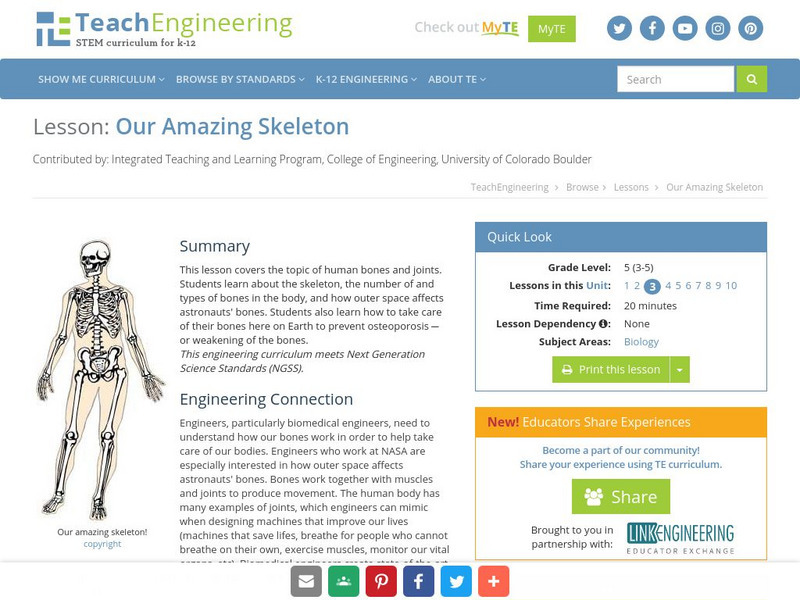
Teach Engineering: Our Amazing Skeleton
This lesson covers the topic of human bones and joints. Students learn about the skeleton, the number of and types of bones in the body, and how outer space affects astronauts' bones. Students also learn how to take care of their bones...
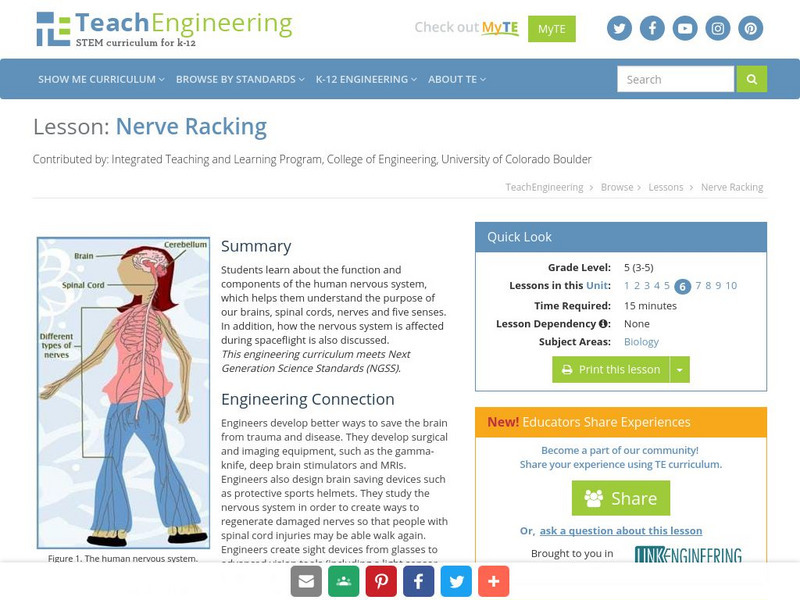
TeachEngineering
Teach Engineering: Nerve Racking
This lesson describes the function and components of the human nervous system. It helps students understand the purpose of our brain, spinal cord, nerves and the five senses. How the nervous system is affected during spaceflight is also...
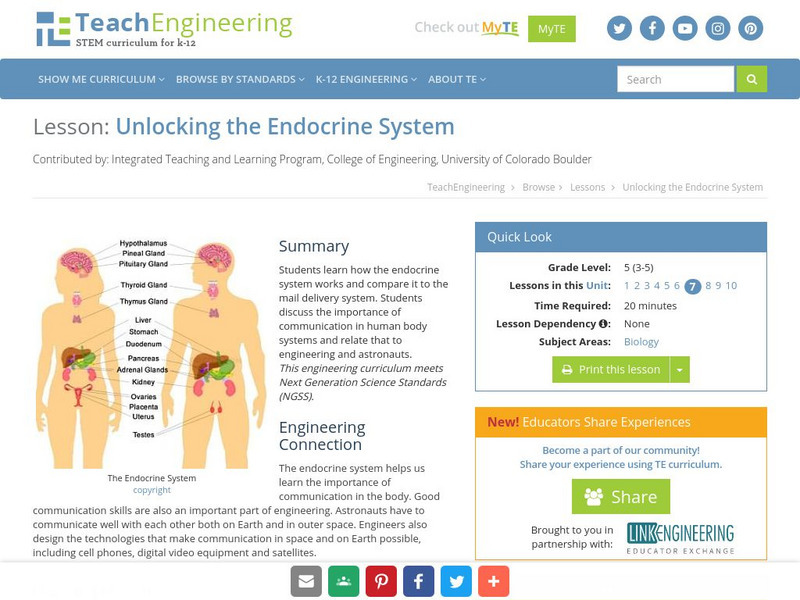
TeachEngineering
Teach Engineering: Unlocking the Endocrine System
Students learn how the endocrine system works and compare it to the mail delivery system. Students discuss the importance of communication in human body systems and relate that to engineering and astronauts.
TeachEngineering
Teach Engineering: Transportation and the Environment
Looking at transportation and the environment, students learn that some human-made creations, such as vehicles, can harm the environment. They also learn about alternative fuels and vehicles designed by engineers to minimize pollution....
TeachEngineering
Teach Engineering: Manned Mission to Mars
This lesson will discuss the details for a possible future manned mission to Mars. The human risks are discussed and evaluated to minimize danger to astronauts. A specialized launch schedule is provided and the different professions of...