Hi, what do you want to do?






TeachEngineering
Teach Engineering: Cells
In this unit, students look at the components of cells and their functions and discover the controversy behind stem cell research. The first lesson focuses on the difference between prokaryotic and eukaryotic cells. In the second lesson,...

TeachEngineering
Teach Engineering: Environment
Through 10 lessons and more than 20 hands-on activities, students are introduced to the concept of an environment and the many interactions within it. As they learn about natural and human-made environments, as well as renewable and...
TeachEngineering
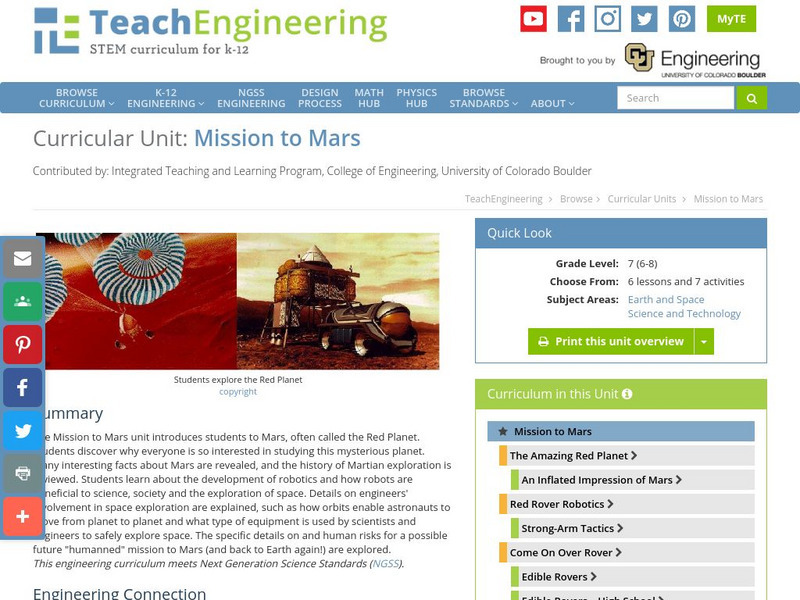
Teach Engineering: Mission to Mars
The Mission to Mars curricular unit introduces students to Mars-the Red Planet. Students discover why scientists are so interested in studying this mysterious planet. Many interesting facts about Mars are revealed, and the history of...
TeachEngineering
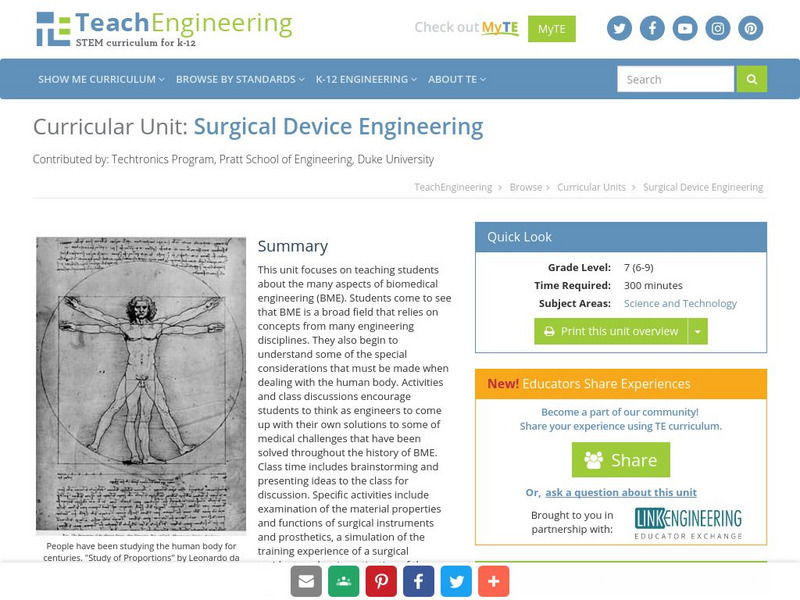
Teach Engineering: Surgical Device Engineering
This unit focuses on teaching students about the many aspects of biomedical engineering (BME). Students will see that it is a broad field that relies on concepts from each of the other disciplines of engineering. They will also begin to...
TeachEngineering
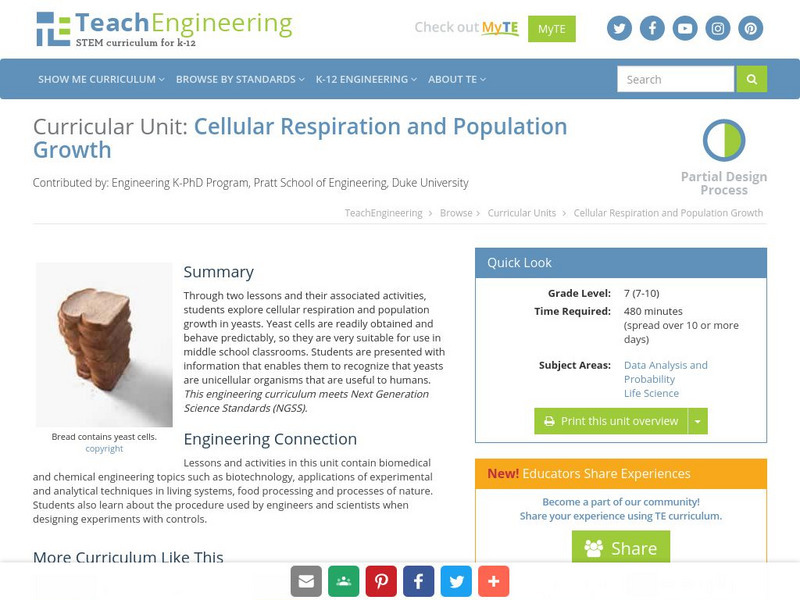
Teach Engineering: Cellular Respiration and Population Growth
Two lessons and their associated activities explore cellular respiration and population growth in yeasts. Yeast cells are readily obtained and behave predictably, so they are very appropriate to use in middle school classrooms. In the...
TeachEngineering
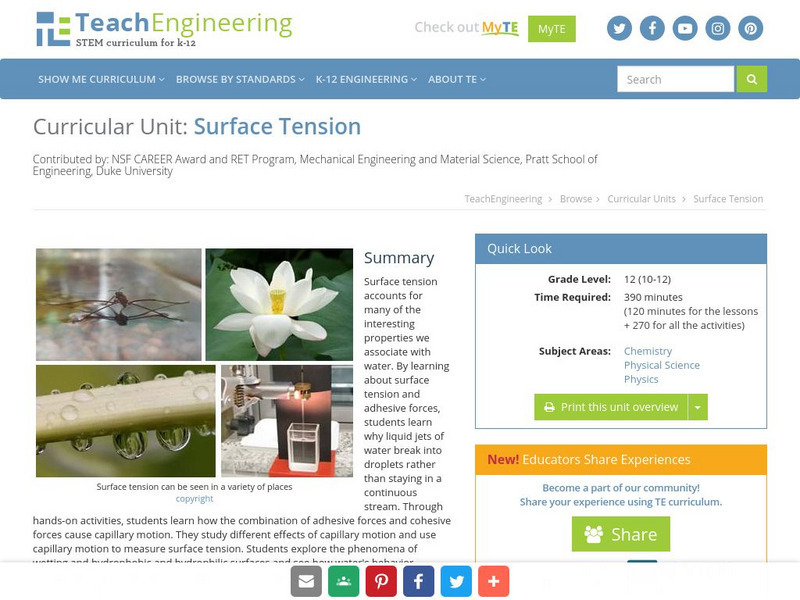
Teach Engineering: Surface Tension
Surface tension accounts for many of the interesting properties we associate with water. By learning about surface tension and adhesive forces, students learn why liquid jets of water break into droplets rather than staying in a...
TeachEngineering
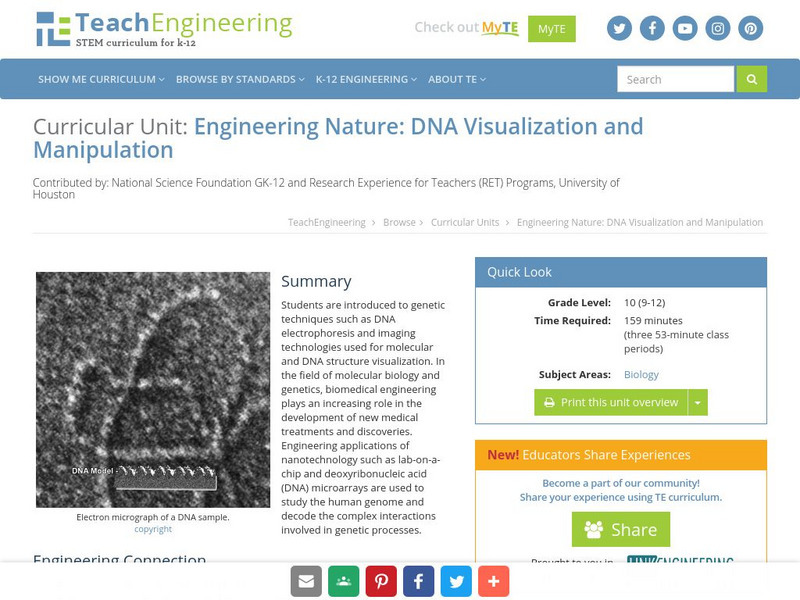
Teach Engineering: Engineering Nature: Dna Visualization and Manipulation
Students are introduced to genetic techniques such as DNA electrophoresis and imaging technologies used for molecular and DNA structure visualization. In the field of molecular biology and genetics, biomedical engineering plays an...
TeachEngineering
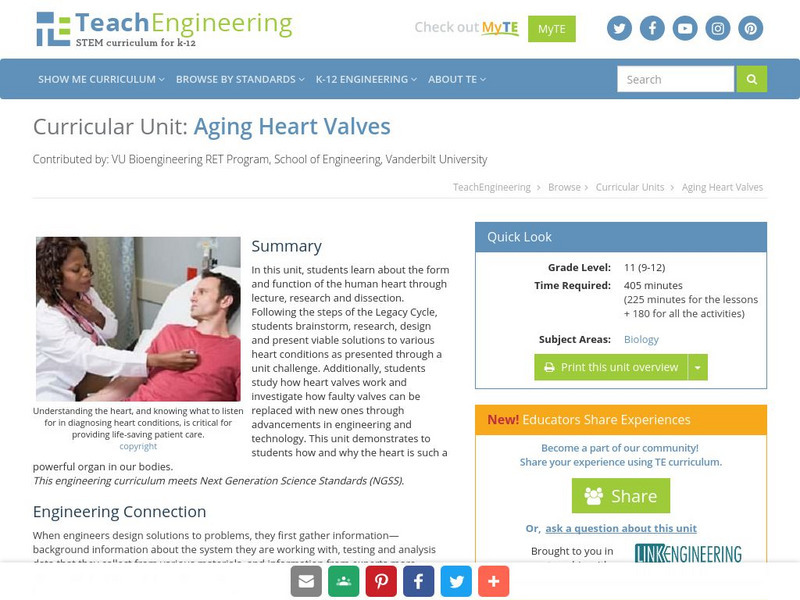
Teach Engineering: Aging Heart Valves
In this unit, students learn about the form and function of the human heart through lecture, research and dissection. Following the steps of the Legacy Cycle, students brainstorm, research, design and present viable solutions to various...
TeachEngineering
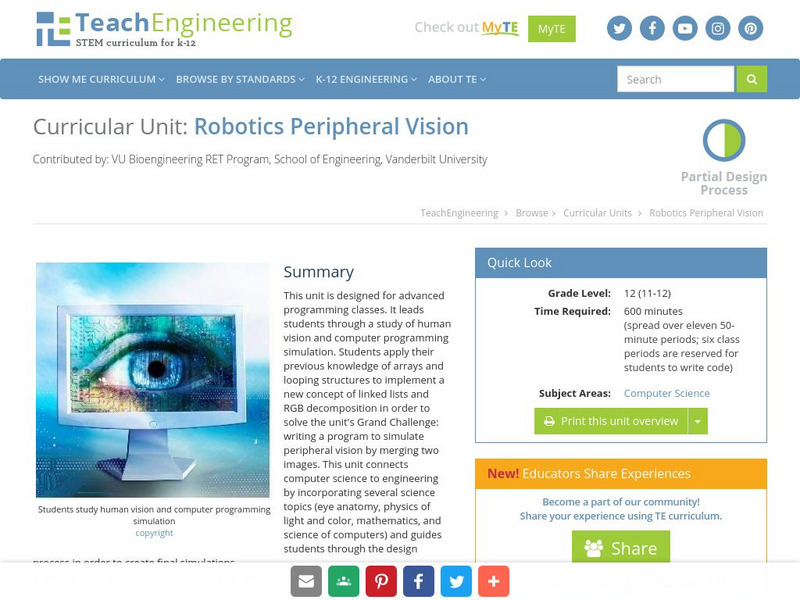
Teach Engineering: Robotics Peripheral Vision
This unit is designed for advanced programming classes. It leads students through a study of human vision and computer programming simulation. Students apply their previous knowledge of arrays and looping structures to implement a new...
TeachEngineering
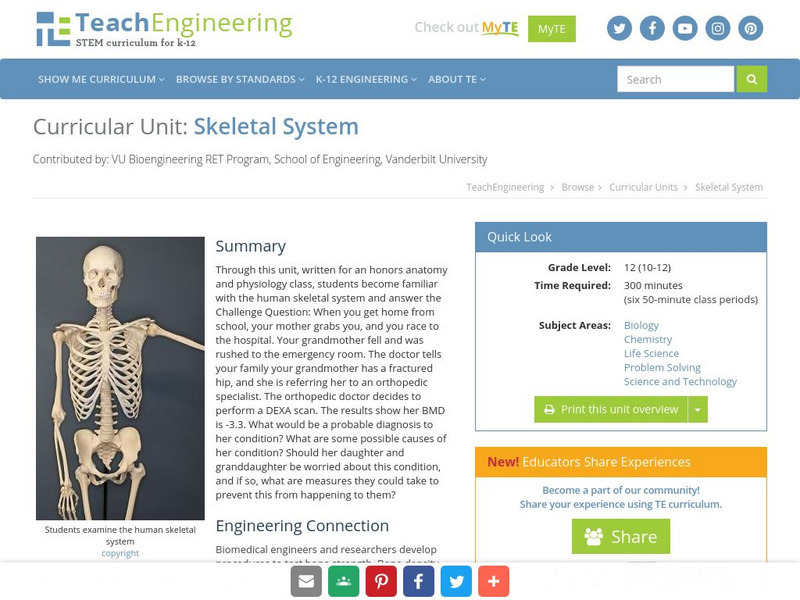
Teach Engineering: Skeletal System
Through this unit, written for an honors anatomy and physiology class, students become familiar with the human skeletal system and answer the Challenge Question: When you get home from school, your mother grabs you, and you race to the...
TeachEngineering
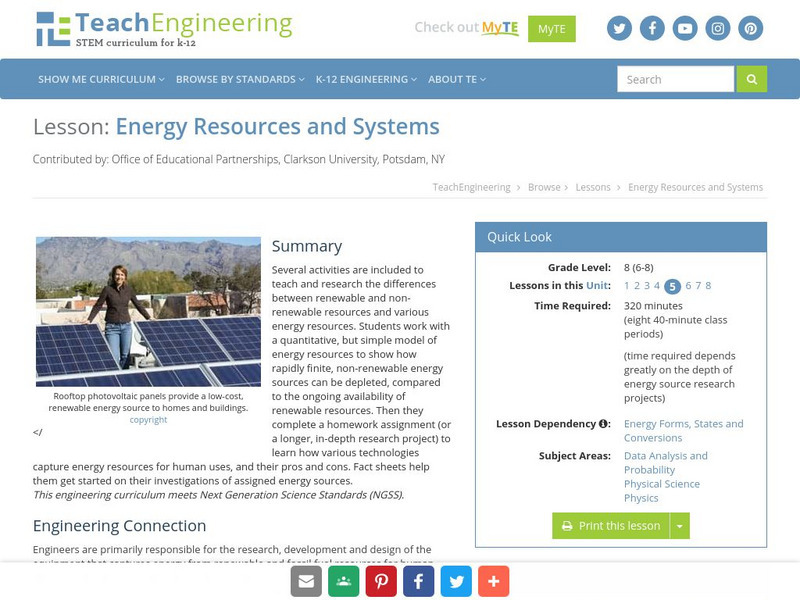
Teach Engineering: Energy Resources and Systems
Several activities are included to teach and research the differences between renewable and non-renewable resources and various energy resources. Young scholars work with a quantitative, but simple model of energy resources to show how...
TeachEngineering
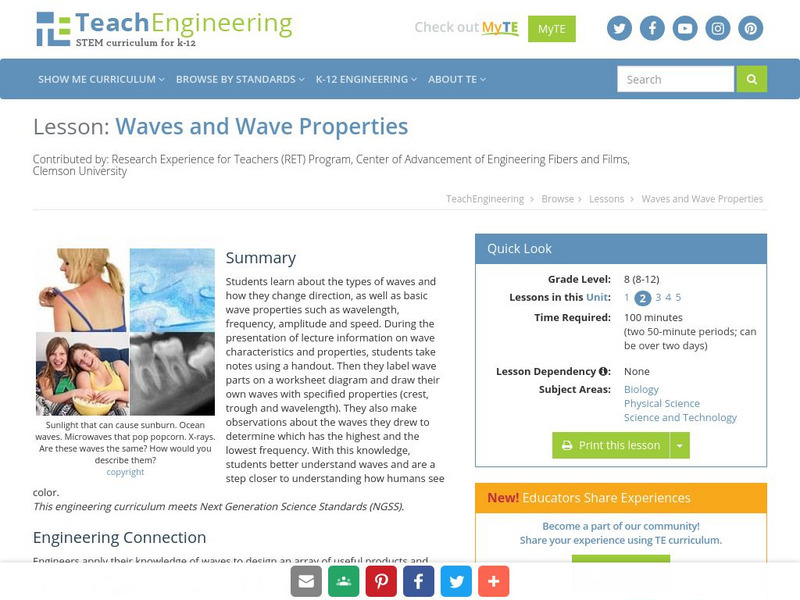
Teach Engineering: Waves and Wave Properties
Students learn about the types of waves and how they change direction, as well as basic wave properties such as wavelength, frequency, amplitude and speed. During the presentation of lecture information on wave characteristics and...
TeachEngineering
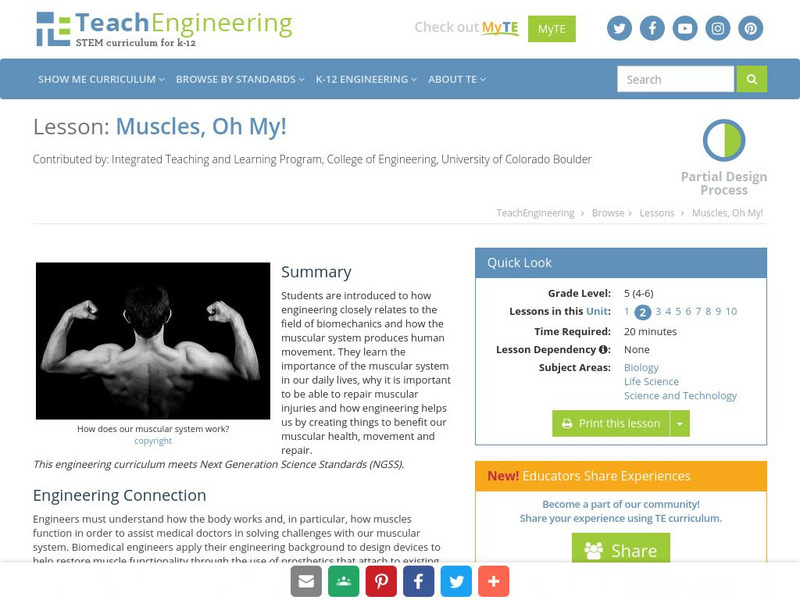
Teach Engineering: Muscles, Oh My!
Students are introduced to how engineering closely relates to the field of biomechanics and how the muscular system produces human movement. They learn the importance of the muscular system in our daily lives, why it is important to be...
TeachEngineering
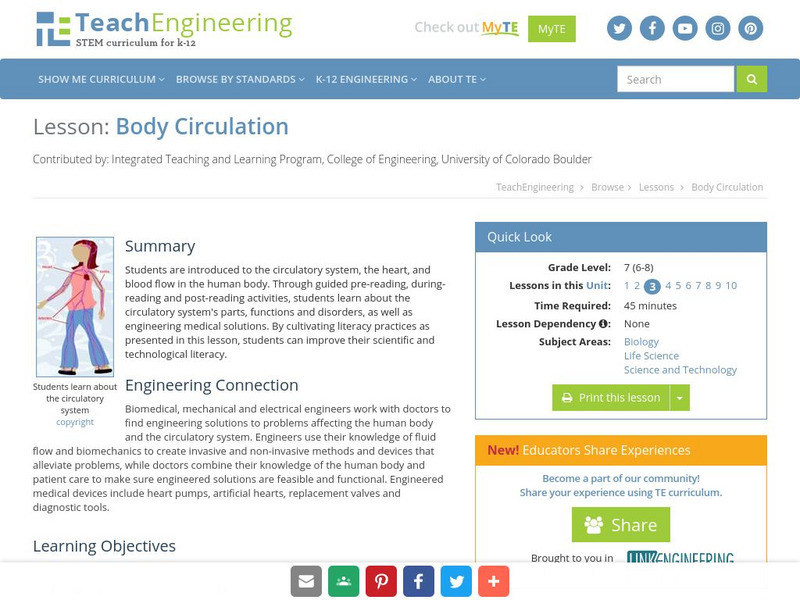
Teach Engineering: Body Circulation
Students are introduced to the circulatory system, the heart, and blood flow in the human body. Through guided pre-reading, during-reading and post-reading activities, students learn about the circulatory system's parts, functions and...
TeachEngineering
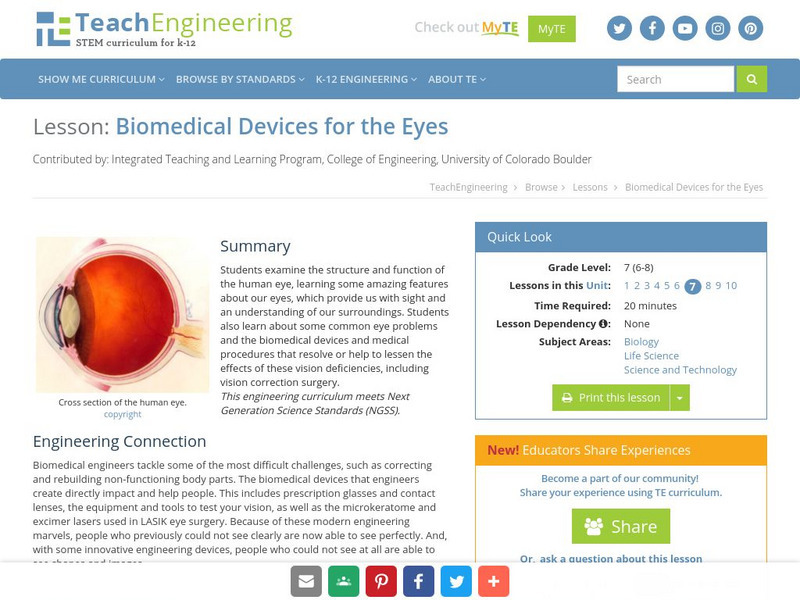
Teach Engineering: Biomedical Devices for the Eyes
Middle schoolers examine the structure and function of the human eye, learning some amazing features about our eyes, which provide us with sight and an understanding of our surroundings. Students also learn about some common eye problems...
TeachEngineering
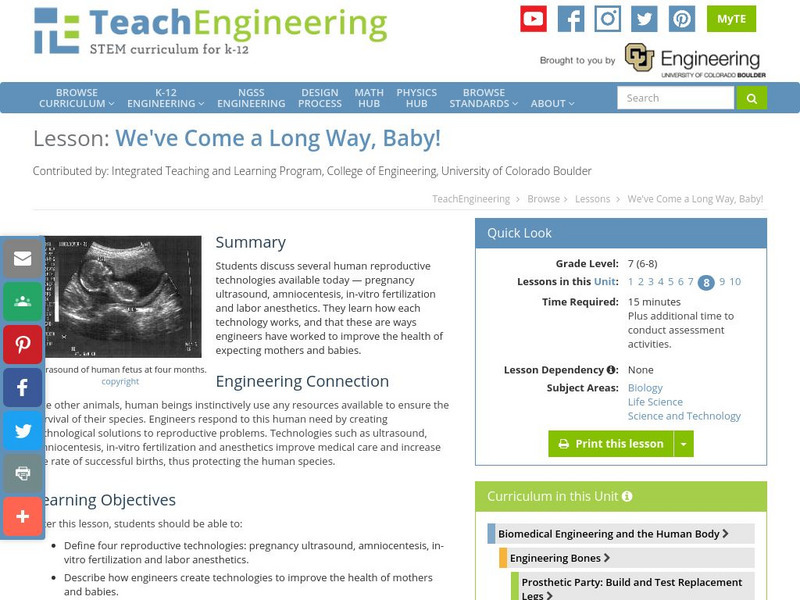
Teach Engineering: We've Come a Long Way, Baby!
Students discuss several human reproductive technologies available today--pregnancy ultrasound, amniocentesis, in-vitro fertilization and labor anesthetics. They learn how each technology works, and that these are ways engineers have...
TeachEngineering
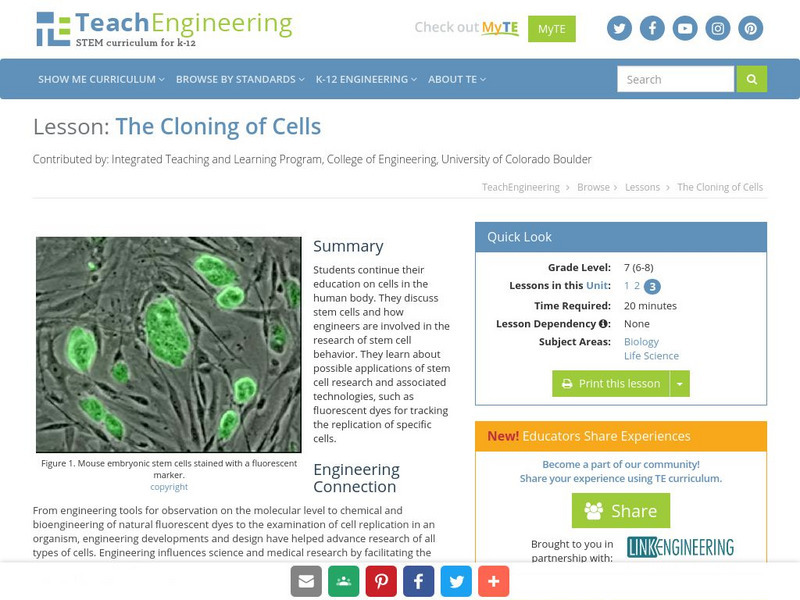
Teach Engineering: The Cloning of Cells
Young scholars continue their education on cells in the human body. They discuss stem cells and how engineers are involved in the research of stem cell behavior. They learn about possible applications of stem cell research and associated...
TeachEngineering
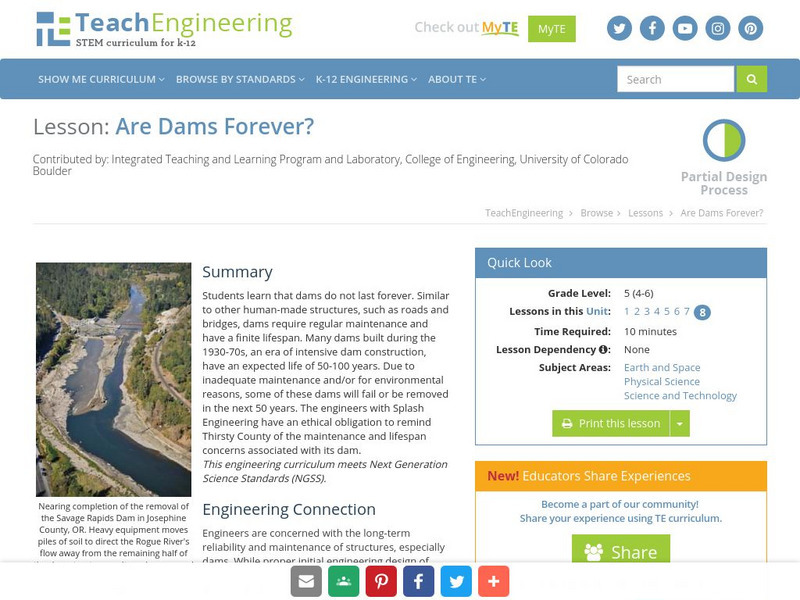
Teach Engineering: Are Dams Forever?
Students learn that dams do not last forever. Similar to other human-made structures, such as roads and bridges, dams require regular maintenance and have a finite lifespan. Many dams built during the 1930-70s, an era of intensive dam...
TeachEngineering
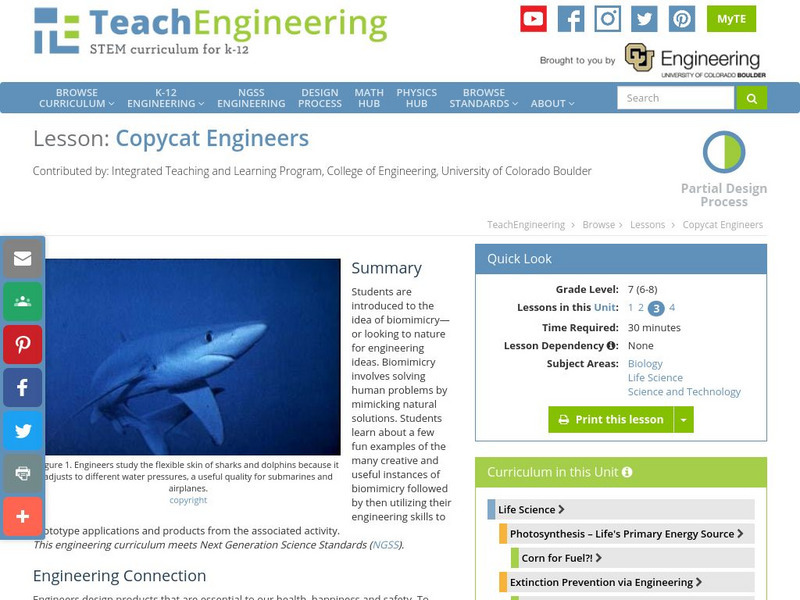
Teach Engineering: Copycat Engineers
This lesson introduces students to the idea of biomimicry, or looking to nature for engineering ideas. Biomimicry involves solving human problems by mimicking natural solutions, and it works well because the solutions exist naturally....
TeachEngineering
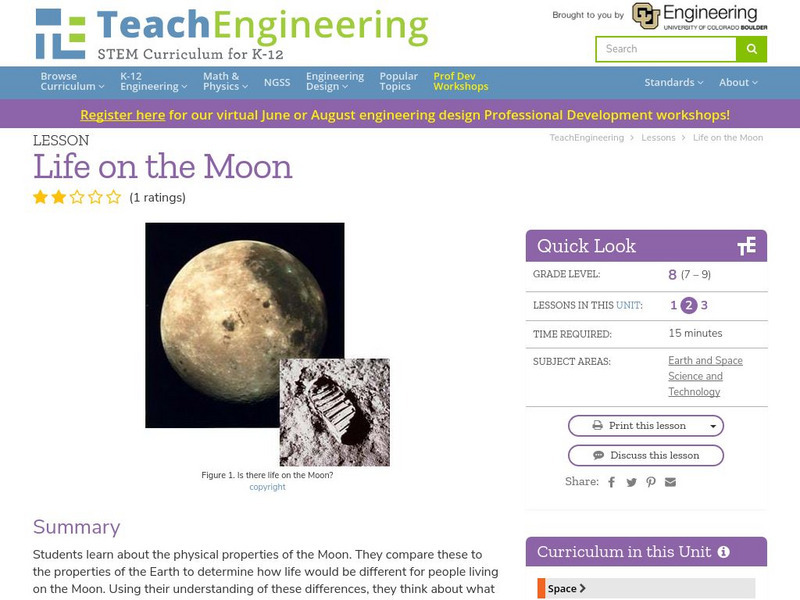
Teach Engineering: Life on the Moon
Students learn about the physical properties of the Moon. They compare these to the properties of the Earth to determine how life would be different for people living on the Moon. Using their understanding of these differences, they...
TeachEngineering
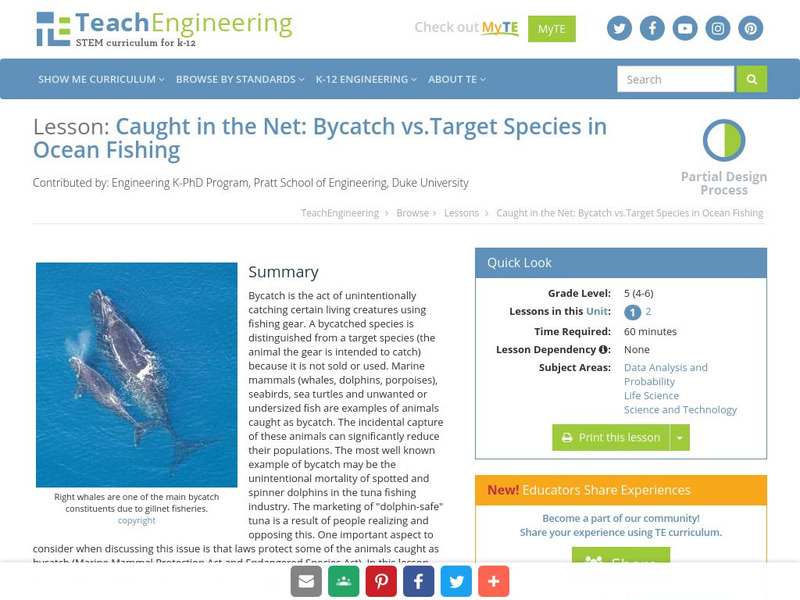
Teach Engineering: Caught in the Net
Bycatch can be defined as the act of unintentionally catching certain living creatures using fishing gear. A bycatched species is distinguished from a target species (the animal the gear is intended to catch) because it is not sold or...
TeachEngineering
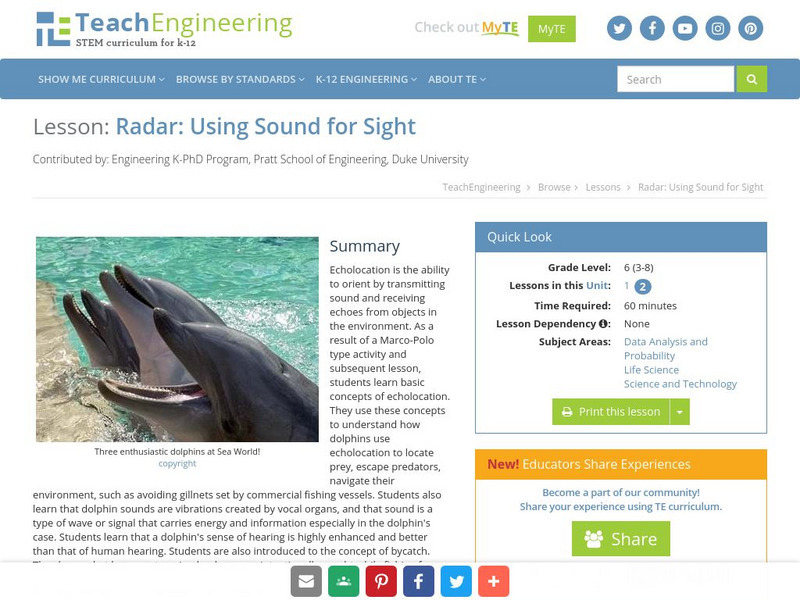
Teach Engineering: Sound for Sight
Echolocation is the ability to orient by transmitting sound and receiving echoes from objects in the environment. As a result of a Marco-Polo type activity and subsequent lesson, students learn basic concepts of echolocation. They use...

TeachEngineering
Teach Engineering: What's Dominant?
In a class discussion format, the teacher presents background information about basic human genetics. The number of chromosomes in both body cells and egg and sperm cells is covered, as well as the concept of dominant and recessive...
TeachEngineering
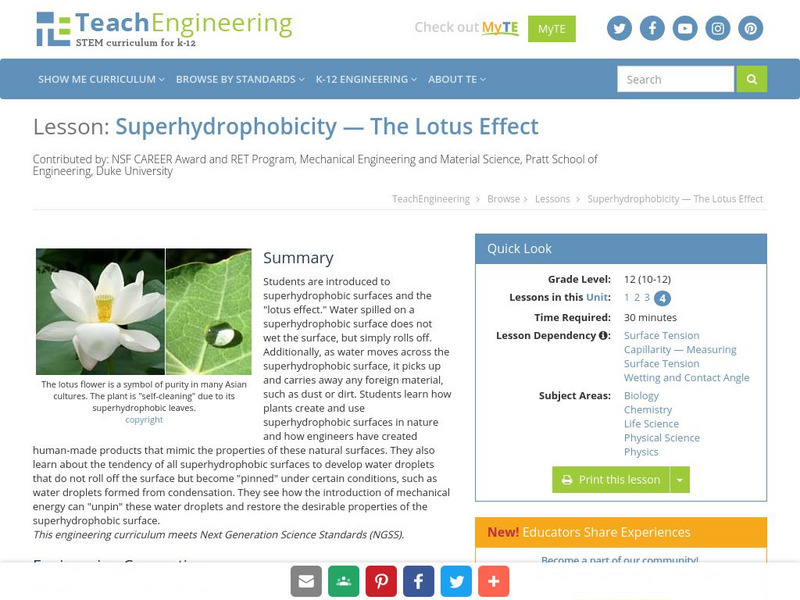
Teach Engineering: Superhydrophobicity: The Lotus Effect
Students are introduced to superhydrophobic surfaces and the "lotus effect." Water spilled on a superhydrophobic surface does not wet the surface, but simply rolls off. Additionally, as water moves across the superhydrophobic surface, it...