Hi, what do you want to do?





TeachEngineering
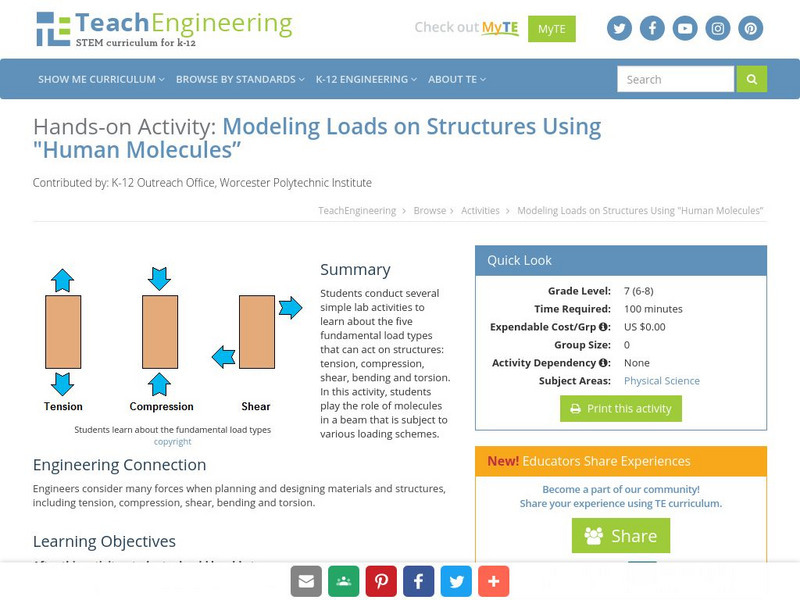
Teach Engineering: Forces on the Human Molecule
Students will conduct several simple lab activities to learn about the five fundamental load types that can act on structures: tension, compression, shear, bending, and torsion. In this activity, students will play the role of molecules...

Other
Baltimore Co. Public Schools: Chesapeake Bay Food Webs (Online Research Model)
Food webs lesson, which focuses on Chesapeake Bay habitats, integrates biological concepts with literacy knowledge and skills. Lesson directs students to answer the question, how does a human-caused stress placed on the environment...
TeachEngineering
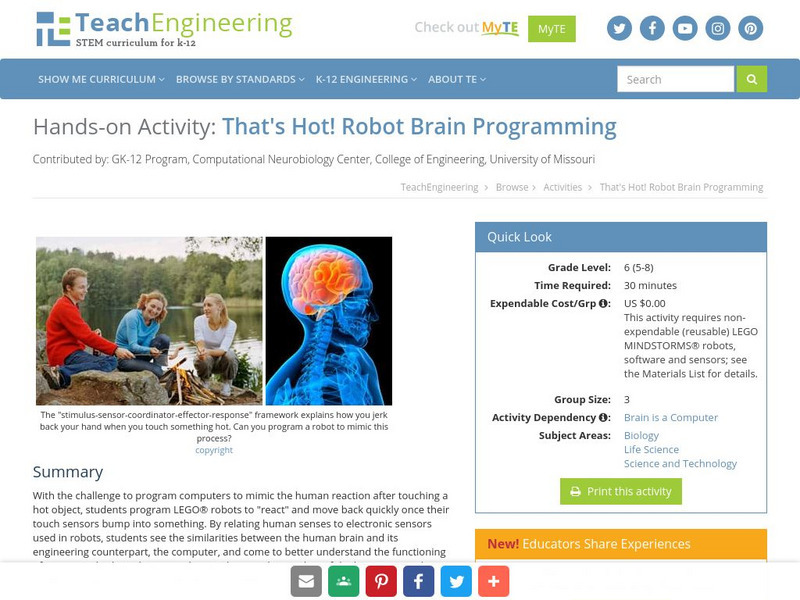
Teach Engineering: That's Hot! Robot Brain Programming
With the challenge to program computers to mimic the human reaction after touching a hot object, students program LEGO robots to "react" and move back quickly once their touch sensors bump into something. By relating human senses to...
Other
Lehigh University: Land Use Change
An inquiry-based science unit for middle school students centered on how human activities affect environmental changes related to land use. The lessons integrate technology and lab activities while teaching about today's land use and how...
TeachEngineering
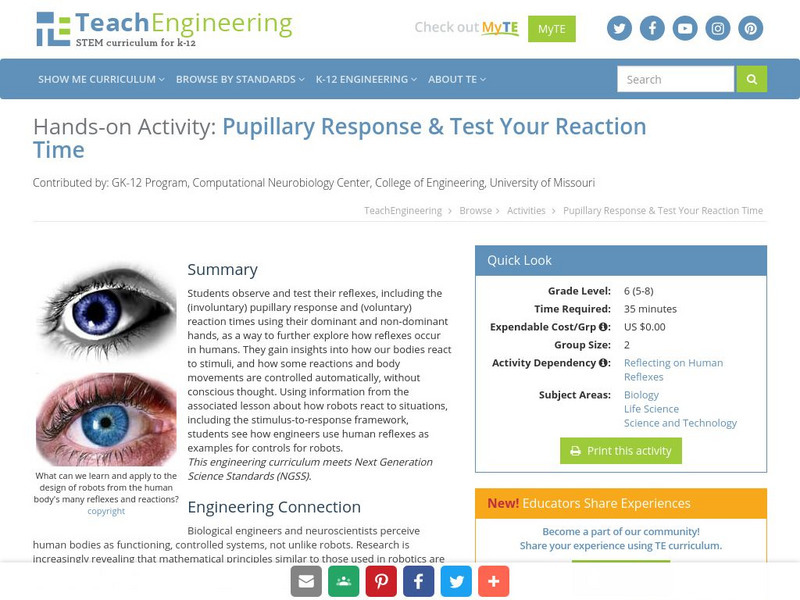
Teach Engineering: Pupillary Response & Test Your Reaction Time
Students observe and test their reflexes, including the (involuntary) pupillary response and (voluntary) reaction times using their dominant and non-dominant hands, as a way to further explore how reflexes occur in humans. They gain...
TeachEngineering
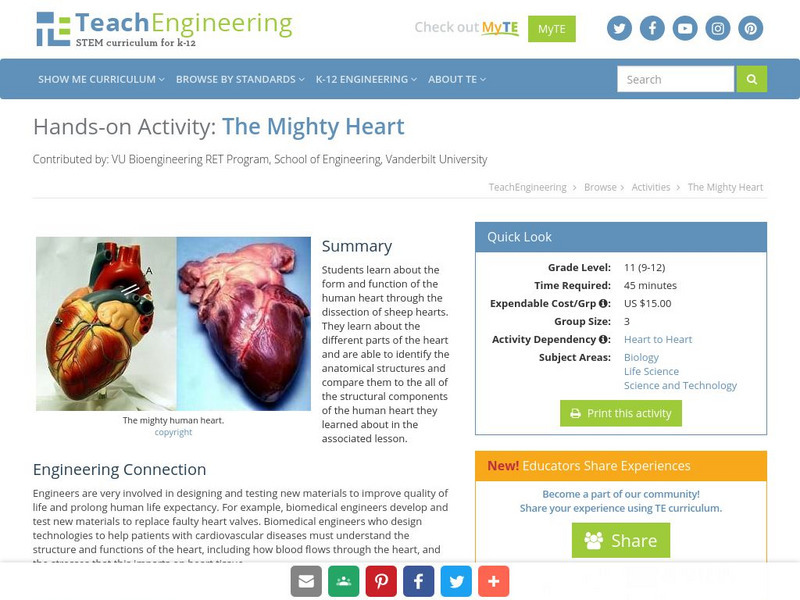
Teach Engineering: The Mighty Heart
Students learn about the form and function of the human heart through the dissection of sheep hearts. They learn about the different parts of the heart and are able to identify the anatomical structures and compare them to the all of the...
TeachEngineering
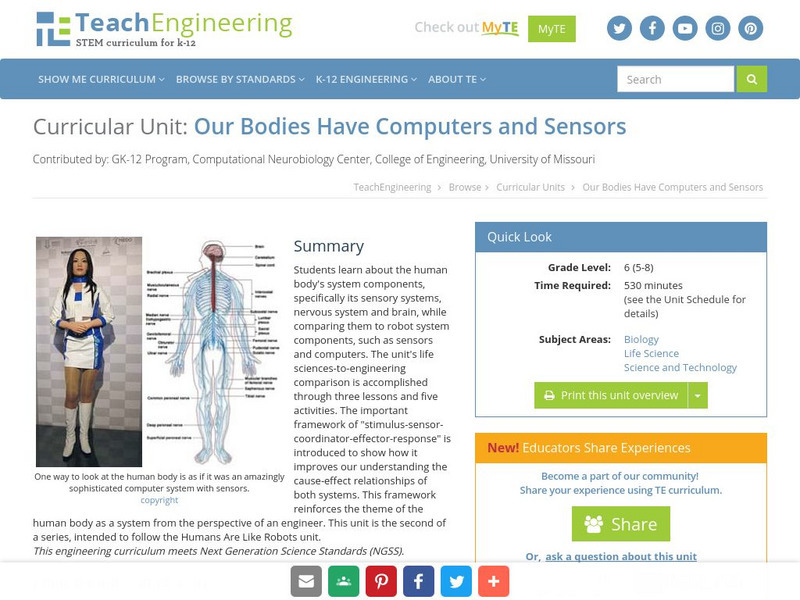
Teach Engineering: Our Bodies Have Computers and Sensors
Students learn about the human body's system components, specifically its sensory systems, nervous system and brain, while comparing them to robot system components, such as sensors and computers. The unit's life sciences-to-engineering...
TeachEngineering
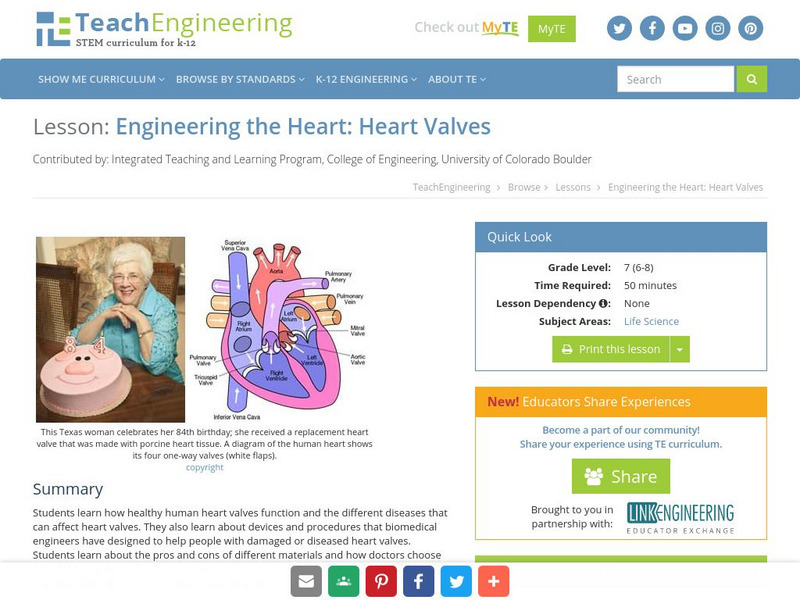
Teach Engineering: Engineering the Heart: Heart Valves
Middle schoolers learn how healthy human heart valves function and the different diseases that can affect heart valves. They also learn about devices and procedures that biomedical engineers have designed to help people with damaged or...
TeachEngineering
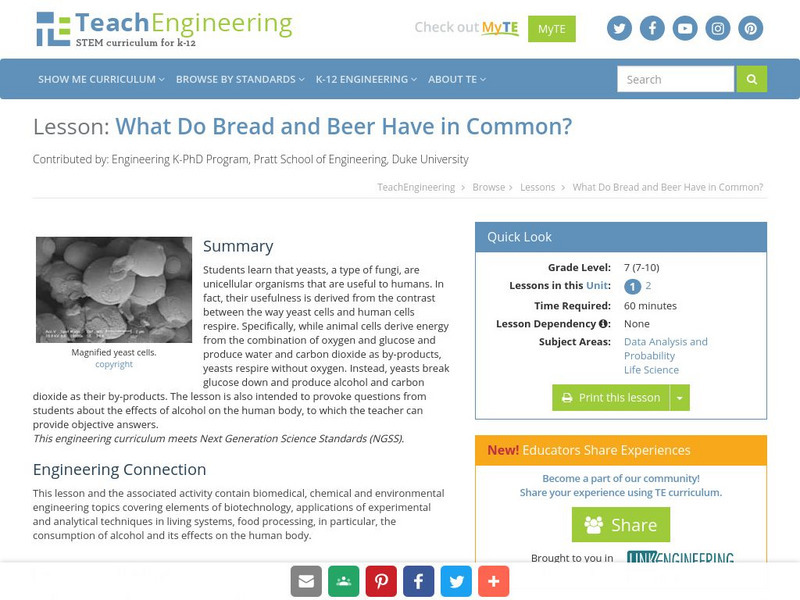
Teach Engineering: What Do Bread and Beer Have in Common?
Middle schoolers are presented with information that will allow them to recognize that yeasts are unicellular organisms that are useful to humans. In fact, their usefulness is derived from the contrast between the way yeast cells and...

TeachEngineering
Teach Engineering: The Other Water Cycle
For students that have already been introduced to the water cycle, this lesson is intended as a logical follow-up. Students will learn about human impacts on the water cycle that create a pathway for pollutants beginning with urban...
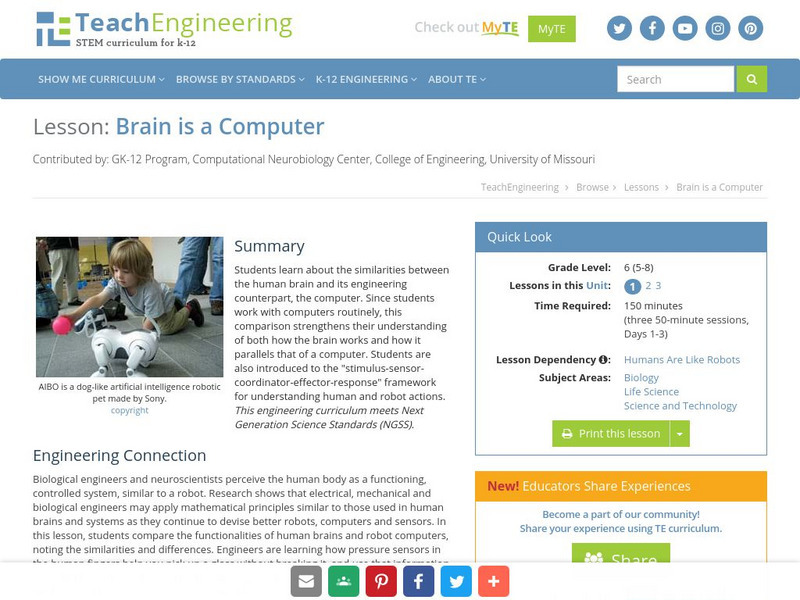
TeachEngineering
Teach Engineering: Brain Is a Computer
Students learn about the similarities between the human brain and its engineering counterpart, the computer. Since students work with computers routinely, this comparison strengthens their understanding of both how the brain works and...
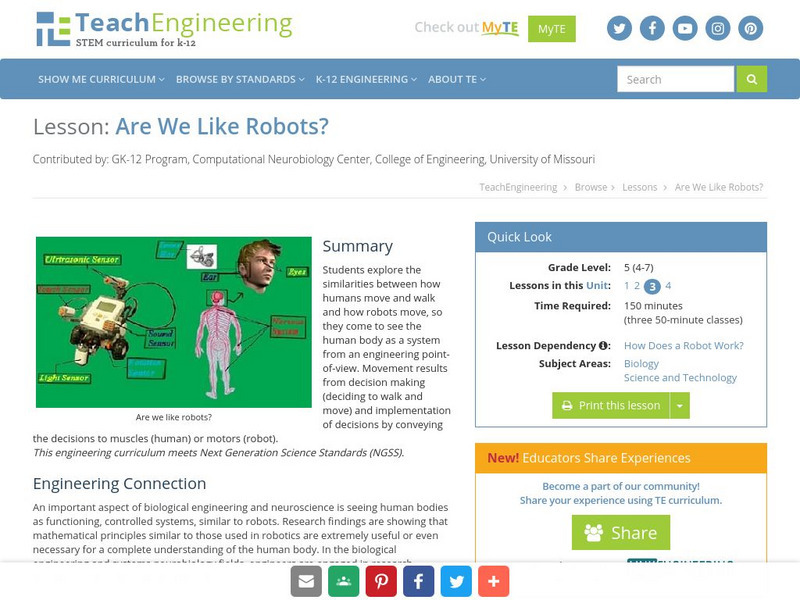
TeachEngineering
Teach Engineering: Are We Like Robots?
Learners explore the similarities between how humans move and walk and how robots move, so they come to see the human body as a system from an engineering point-of-view. Movement results from decision making (deciding to walk and move)...
Other
Lehigh University: Climate Change
An inquiry-based science unit for middle school students centered on weather and climate. The lessons integrate technology and lab activities while teaching about Earth system energy balance, greenhouse gases, paleoclimatology, and how...
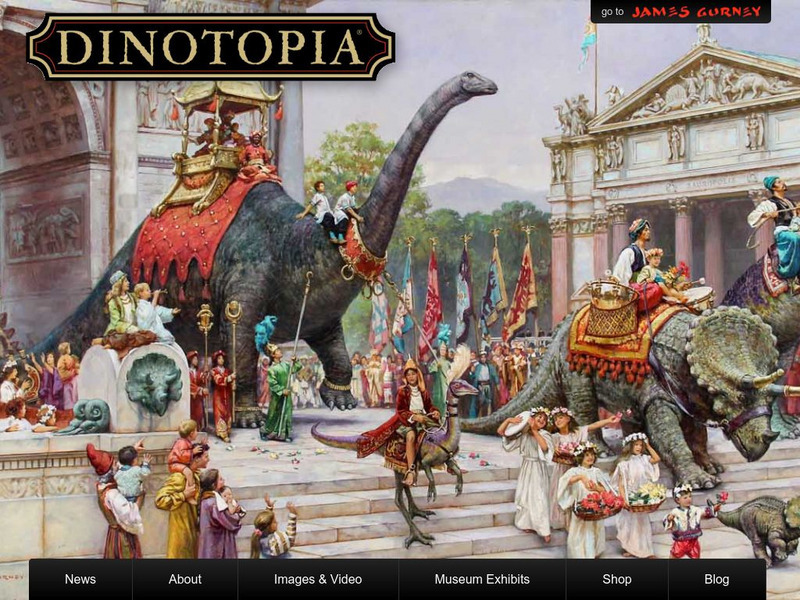
Other
James Gurney: Dinotopia
Dinotopia is a fabulous series by James Gurney that takes place in a fantasy world populated with humans and dinosaurs. The books were made into a television miniseries which is available on DVD. The Dinotopia site is rich with pictures...
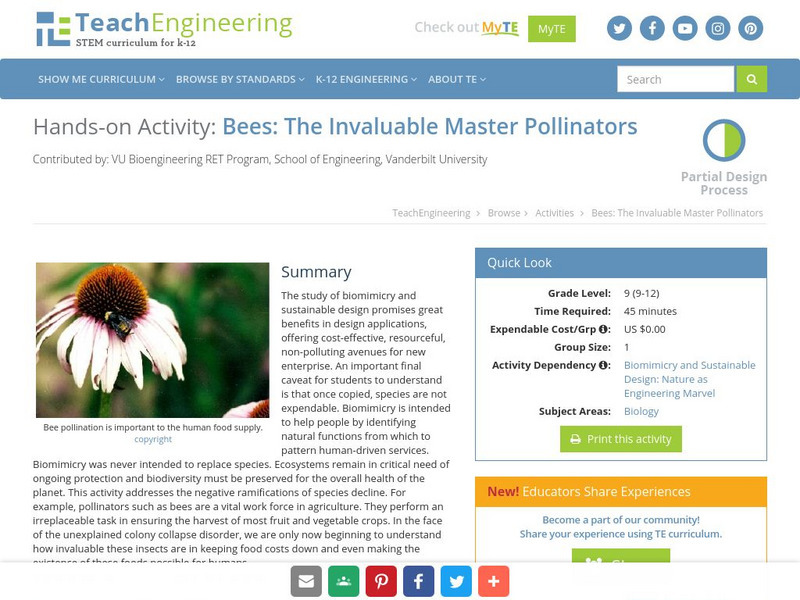
TeachEngineering
Teach Engineering: Bees Are Master Pollinators
The study of biomimicry and sustainable design promises great benefits in design application. It affords means by which to promote cost-effective, resourceful, non-polluting avenues for new enterprise. These "blueprints" have existed...
TeachEngineering
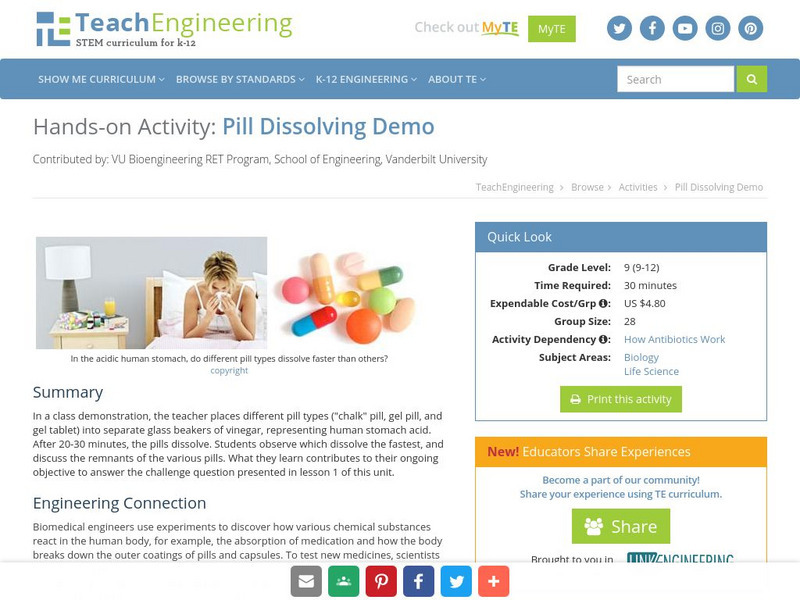
Teach Engineering: Pill Dissolving Demo
In a class demonstration, the teacher places different pill types ("chalk" pill, gel pill, and gel tablet) into separate glass beakers of vinegar, representing human stomach acid. After 20-30 minutes, the pills dissolve. Students observe...
TeachEngineering
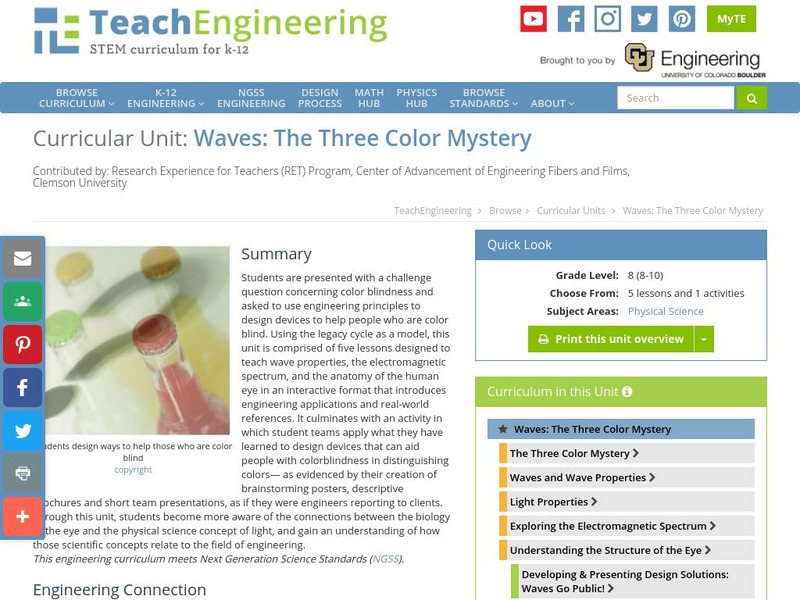
Teach Engineering: Waves: The Three Color Mystery
Students are presented with a challenge question concerning color blindness and asked to use engineering principles to design devices to help people who are color blind. Using the legacy cycle as a model, this unit is comprised of five...
TeachEngineering
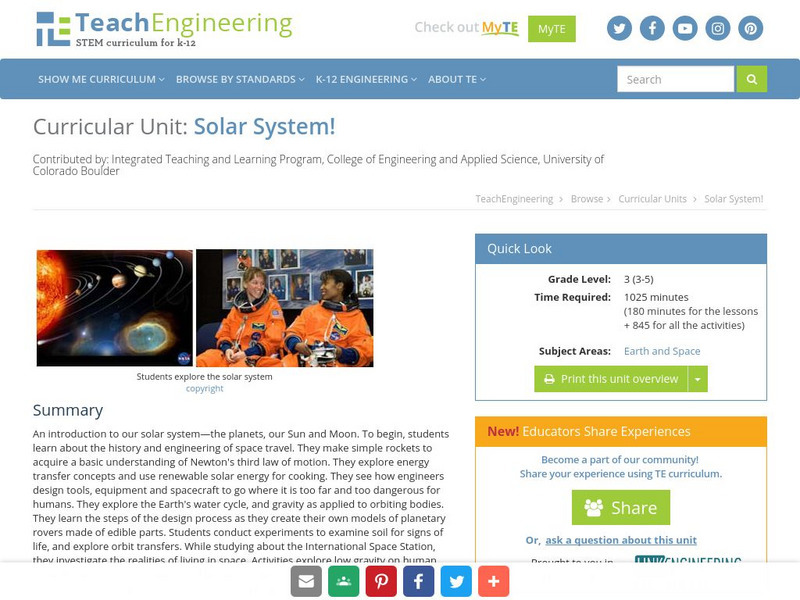
Teach Engineering: Solar System!
An introduction to our solar system: the planets, our Sun and our Moon. Students begin by learning the history and engineering of space travel. They make simple rockets to acquire a basic understanding Newton's third law of motion. They...
TeachEngineering
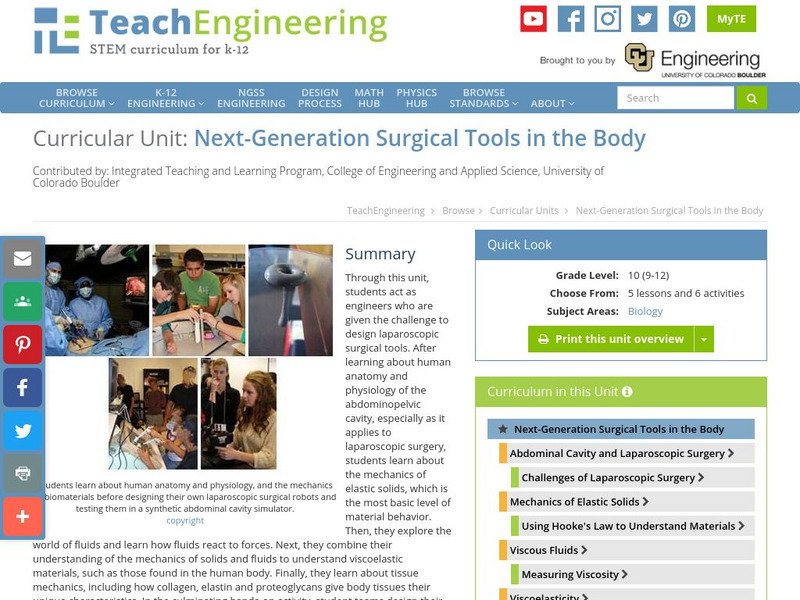
Teach Engineering: Next Generation Surgical Tools in the Body
Through this unit, students act as engineers who are given the challenge to design laparoscopic surgical tools. After learning about human anatomy and physiology of the abdominopelvic cavity, especially as it applies to laparoscopic...
TeachEngineering
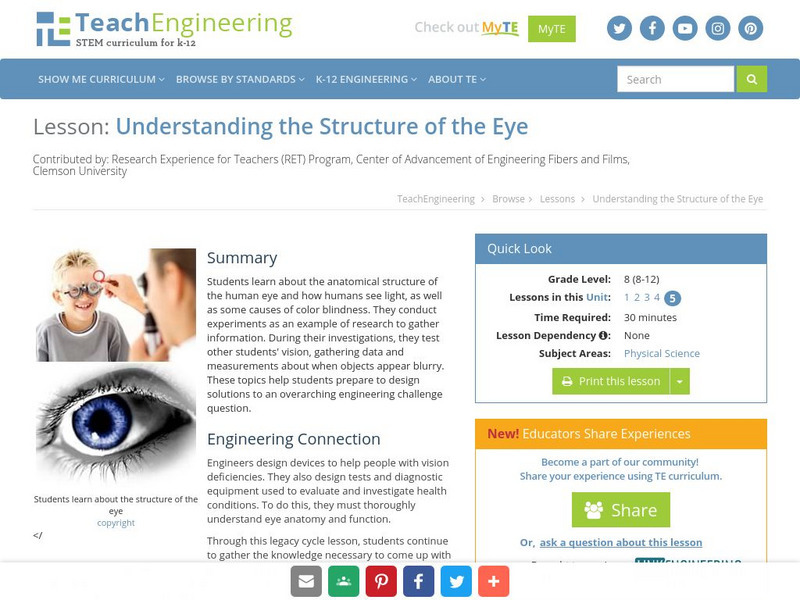
Teach Engineering: Understanding the Structure of the Eye
Young scholars learn about the anatomical structure of the human eye and how humans see light, as well as some causes of color blindness. They conduct experiments as an example of research to gather information. During their...
TeachEngineering
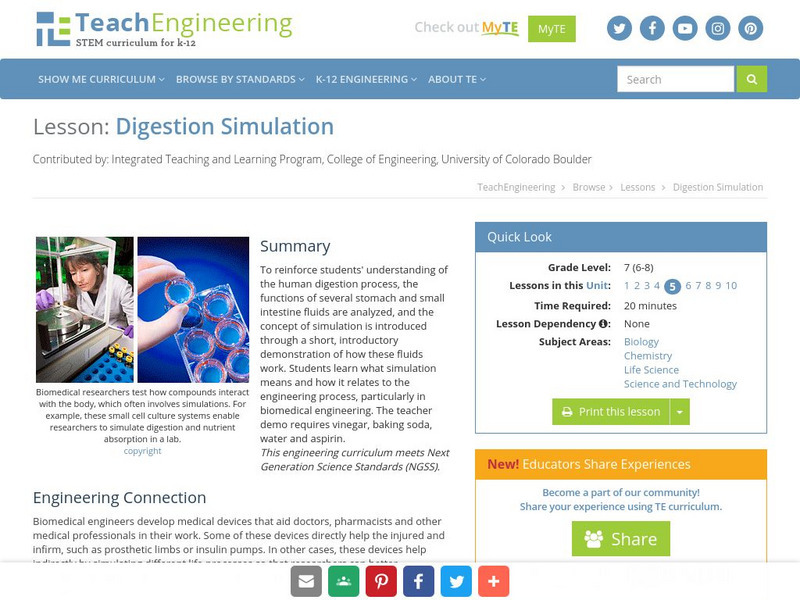
Teach Engineering: Digestion Simulation
To reinforce students' understanding of the human digestion process, the functions of several stomach and small intestine fluids are analyzed, and the concept of simulation is introduced through a short, introductory demonstration of how...
TeachEngineering
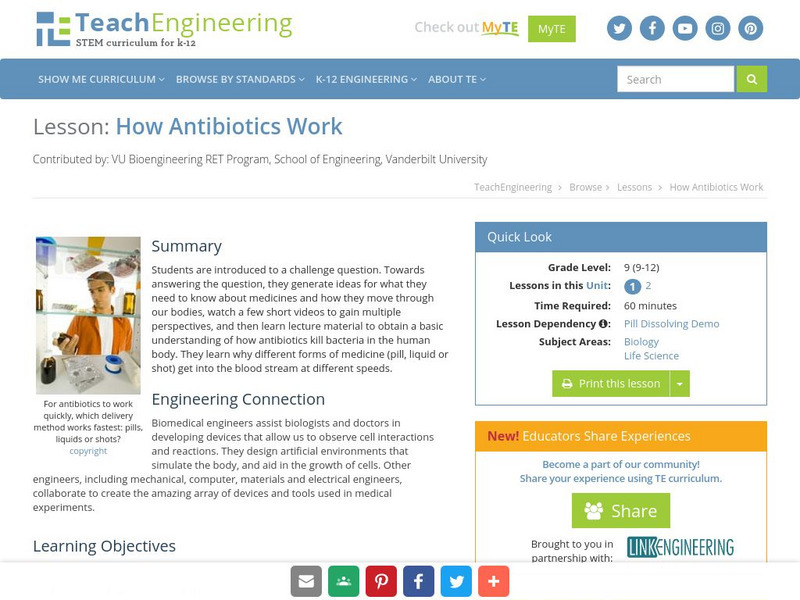
Teach Engineering: How Antibiotics Work
Learners are introduced to a challenge question. Towards answering the question, they generate ideas for what they need to know about medicines and how they move through our bodies, watch a few short videos to gain multiple perspectives,...
National Cancer Institute at the National Institutes of Health
Seer Training Modules: Introduction to the Nervous System
Self-guided learning activity where students learn about the structure and function of the human nervous system. There is a short quiz at the end of the lesson to check for understanding.
National Endowment for the Humanities
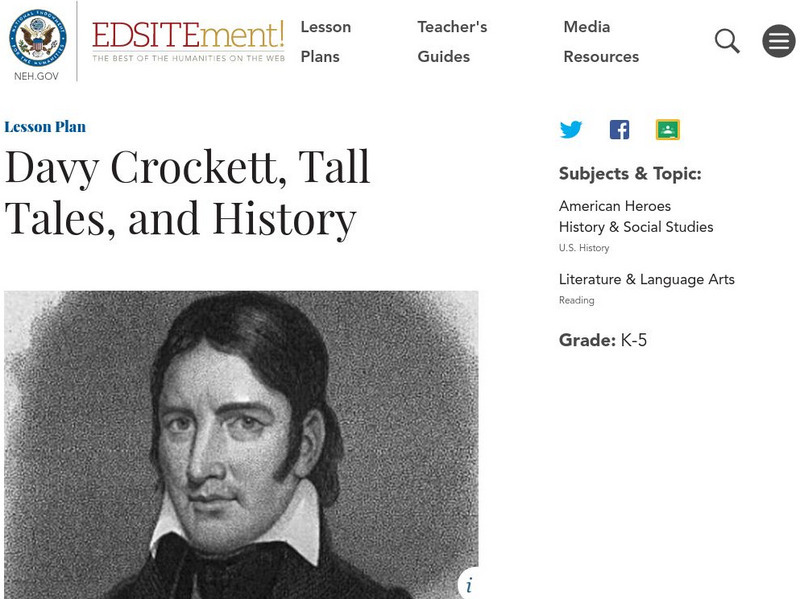
Neh: Edsit Ement: Born on a Mountaintop: Davy Crockett, Tall Tales & History
These four lesson plans integrate the life of Davy Crockett and the tall tales that were created about him. Includes a printable rubric, lesson extensions, links, and much more!