Hi, what do you want to do?





Texas A&M University
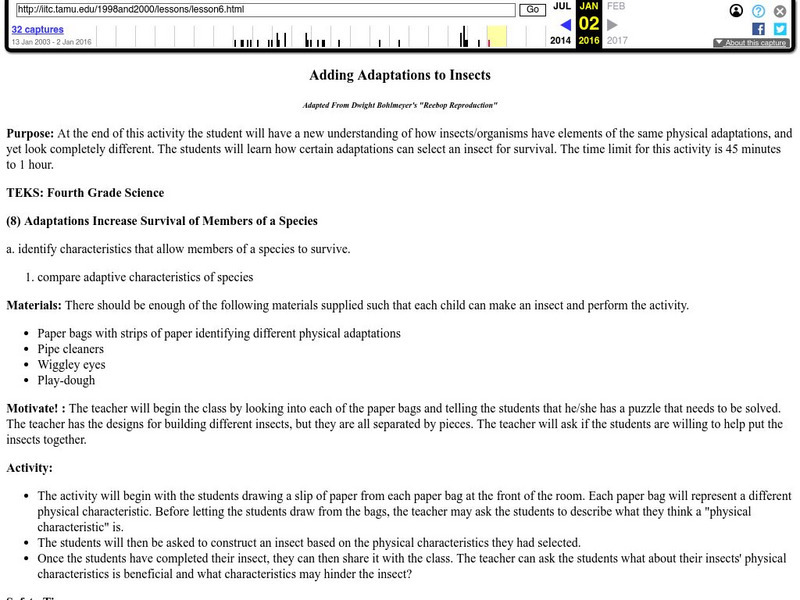
Texas A&m: Adding Adaptations to Insects
A lesson plan site that illustrates how certain adaptations will enhance an insects chances for survival.
CK-12 Foundation
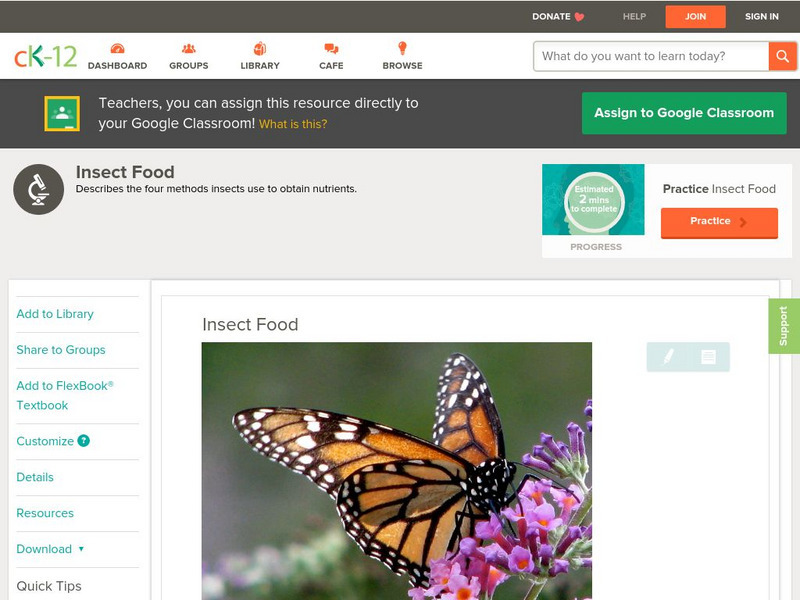
Ck 12: Life Science: Insect Food
[Free Registration/Login may be required to access all resource tools.] Insects have different types of appendages adapted for capturing and feeding on prey. They also have special senses that help them detect prey. Furthermore, insects...
Science Education Resource Center at Carleton College
Serc: Insect Investigations
In this lesson, students will explore the life cycles of insects, how they are classified by Entomologists and their role within an ecosystem. Students will also investigate different habitats to observe the biodiversity of insects found...
University of Kentucky
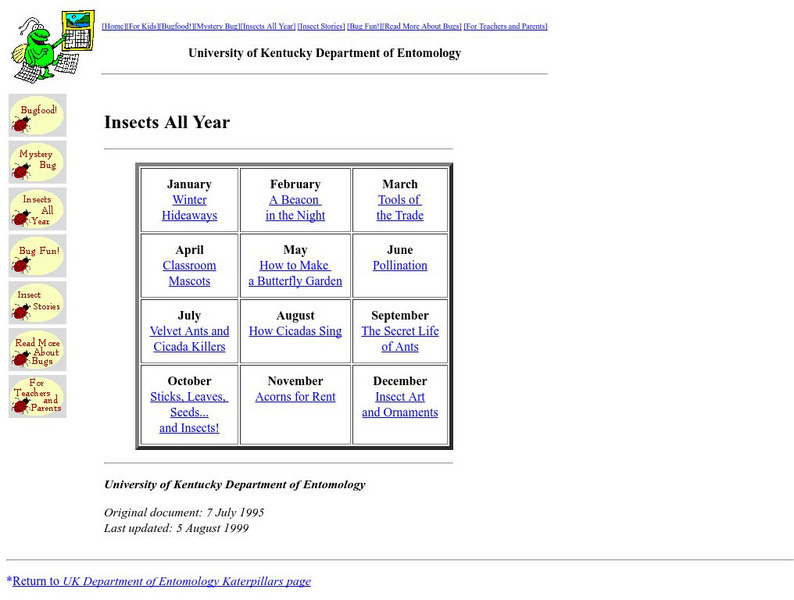
University of Kentucky: Insects All Year
The University of Kentucky provides information and activities about insects for each month of the year. Projects include art and observational activities.

TED Talks
Ted: Ted Ed: The Sexual Deception of Orchids
Anne Gaskett dives into the surprisingly complex ways orchids attract insects.
University of Kentucky
University of Kentucky: Bug Fun
This fun site is designed for teachers who want to have interactive fun in the classroom. "Several articles give resources and basic information about insects and their relatives while others outline activities with different insect...
Open Door Team
Open Door Web Site: Movement in the Air
A site on how birds fly discusses their anatomy that allows them to fly. Also discusses the role that feathers play in flight. Also includes a section which discusses other insects that fly.
Scholastic
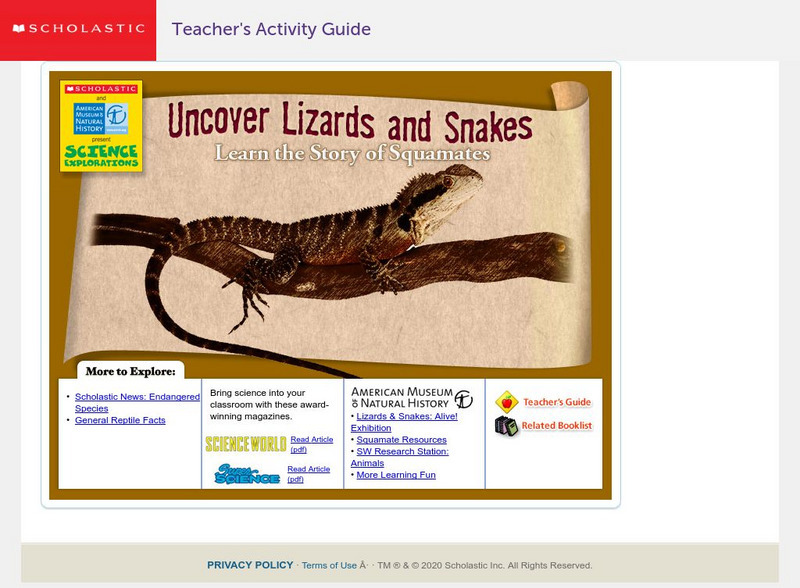
Scholastic: Science Explorations: Uncover Lizards and Snakes
An exploration of squamates, or scaled reptiles. Take notes about lizards and snakes using the pdf "Squamate Chart" while viewing a slideshow, investigate the squamate anatomy and how squamates differ from other animals, such as insects...

University of Southern California
Structure of Matter: Animals
A slide show that demonstrates the development of physical structure in the animal world, moving from sponges through mammals.

PBS
Pbs Teachers: Flying High: Taking to the Air
Explore the science of surface tension, the evolution of flight in insects and insects' anatomical adaptations. Construct insect models that illustrate the action of these adaptations and calculate the force per unit area of water surface.
CK-12 Foundation
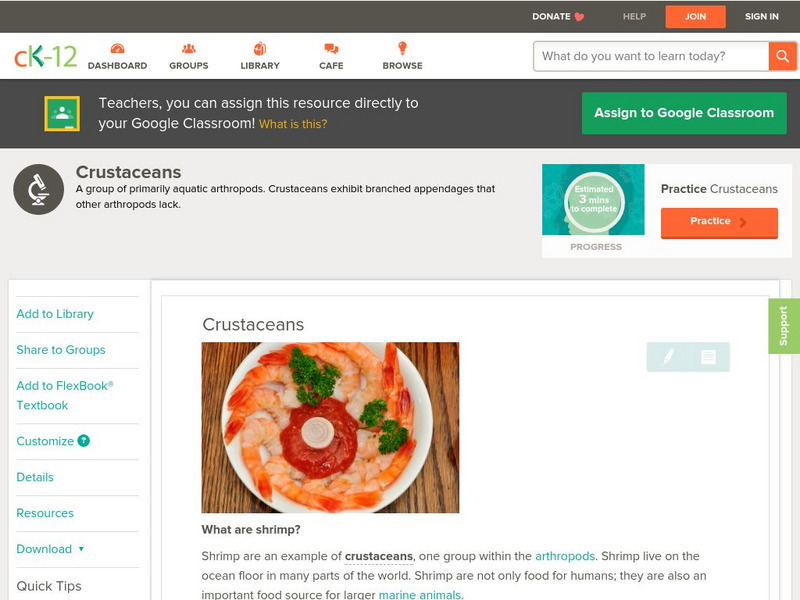
Ck 12: Life Science: Crustaceans
[Free Registration/Login may be required to access all resource tools.] Crustaceans are a large group of arthropods, consisting of almost 52,000 species. The majority of crustaceans are aquatic. A few groups have adapted to living on...
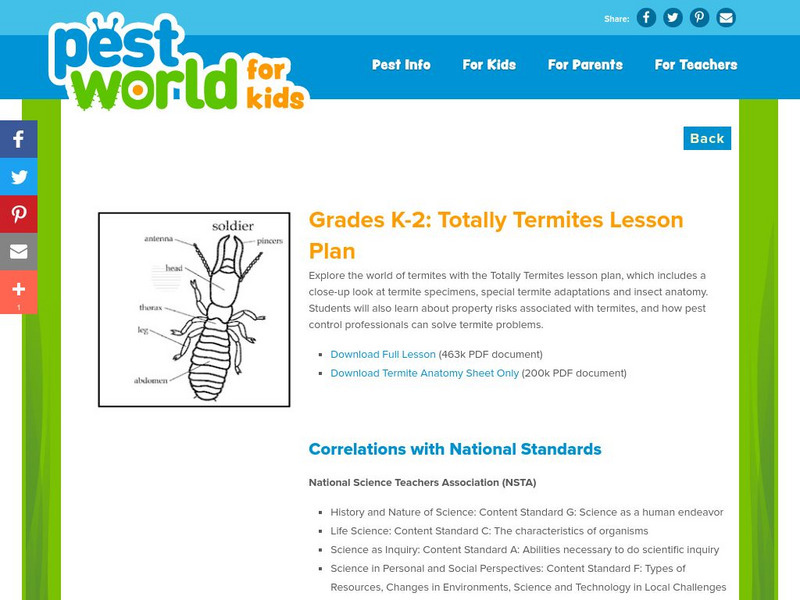
National Pest Managment Association
Pest World for Kids: Totally Termites
Explore the world of termites with this lesson, which includes a close-up look at termite specimens, special termite adaptations and insect anatomy. Students will also learn about property risks associated with termites, and how pest...

TED Talks
Ted: Ted Ed: How Life Came to Land
This video explores arthropods, who first made the transition from water to land and who outnumber all terrestrial animals. [5:28] Followed by a short quiz and a list of additional resources to explore.
Missouri Botanical Garden
Missouri Botanical Garden: Grassland Plants
This site from the Missouri Botanical Garden explores some commonly asked questions about the prairie and prairie plants.

Other
Unusual Pollination: Bee Orchid
Some flowers have developed adaptations that lure insects to them for pollination. Visit this website to learn about the very unusual adaptations of the bee orchid.