Hi, what do you want to do?






CommonLit
Common Lit: Scientists Clone Human Embryos to Make Stem Cells
A learning module that begins with "Scientists Clone Human Embryos to Make Stem Cells" by Rob Stein and Michaeleen Doucleff, accompanied by guided reading questions, assessment questions, and discussion questions. The text can be printed...

TeachEngineering
Teach Engineering: Cells
In this unit, students look at the components of cells and their functions and discover the controversy behind stem cell research. The first lesson focuses on the difference between prokaryotic and eukaryotic cells. In the second lesson,...
PBS
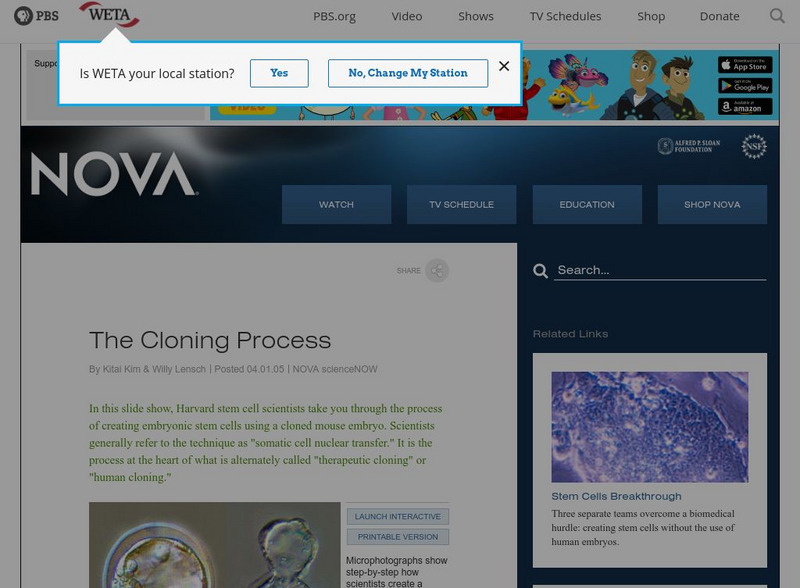
Pbs: The Cloning Process
This slide show provides an illustration of the process of creating embryonic stem cells using a cloned mouse embryo. Scientists generally refer to the technique as "somatic cell nuclear transfer." It is the process at the heart of what...
TED Talks
Ted: Ted Ed: The Immortal Cells of Henrietta Lacks
Imagine something small enough to float on a particle of dust that holds the keys to understanding cancer, virology, and genetics. Luckily for us, such a thing exists in the form of trillions upon trillions of human, lab-grown cells...
The Association of the British Pharmaceutical Industry
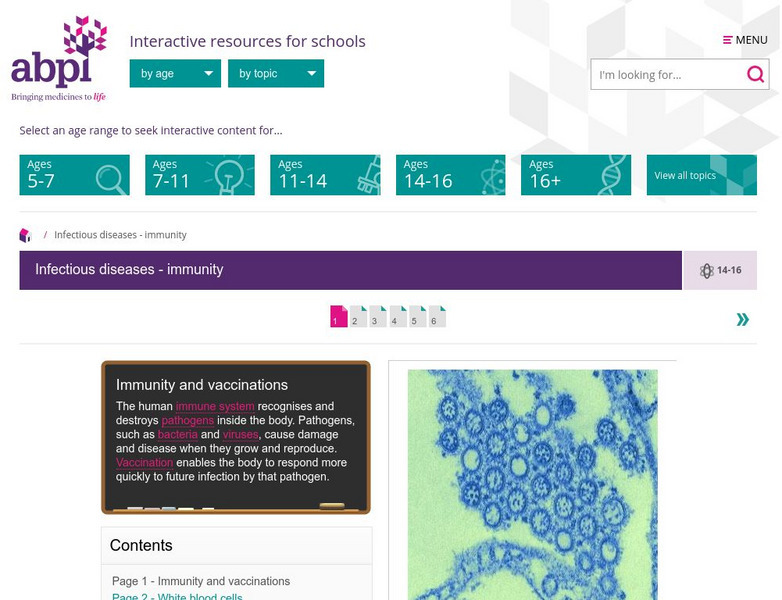
Abpi: Infectious Diseases: Immunity
An interactive, self-guided lesson on the function of the human immune system and how medical intervention prevents disease. This lesson has many descriptive animations as well as graphs and diagrams to help with understanding. There is...

Scholastic
Scholastic: Study Jams! Science: The Human Body: The Nervous System
A video and a short quiz on the central and peripheral nervous systems.
TeachEngineering
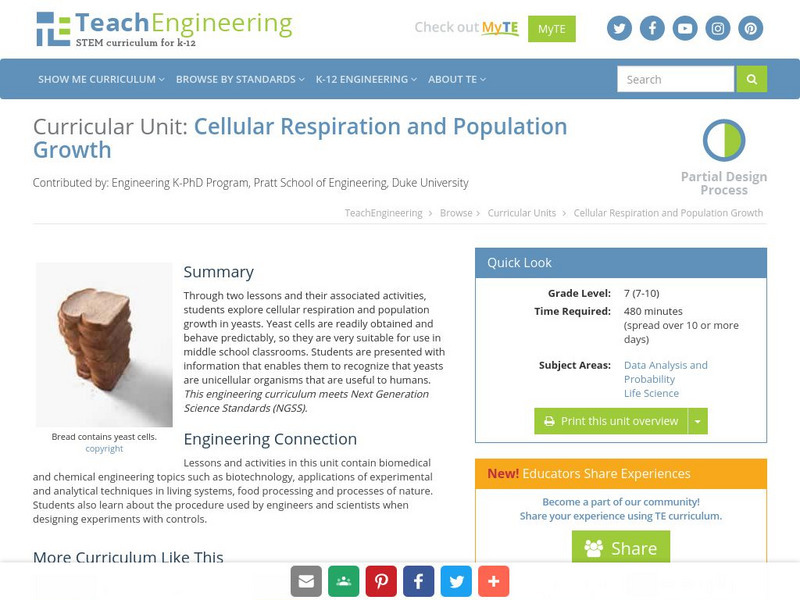
Teach Engineering: Cellular Respiration and Population Growth
Two lessons and their associated activities explore cellular respiration and population growth in yeasts. Yeast cells are readily obtained and behave predictably, so they are very appropriate to use in middle school classrooms. In the...