Hi, what do you want to do?






Core Knowledge Foundation
The Human Body—Systems and Senses Tell It Again!™ Read-Aloud Anthology
Nine lessons over three weeks explore the human body through read-alouds. Third graders listen to and discuss a reading followed by extension activities, including word work and comprehension practice. Learners draft a narrative essay.

Southwest Educational Development Laboratory
The Human Body
Nothing is more relevant than the study of the human body. A series of 10 human body lessons begins with growth, ends with reproduction, and hits all the major systems in between. Each lesson provides opening and closing activities as...

Curated OER
It's All About Me!
Students study the five major body system in this unit. They examine how to keep themselves healthy.
CK-12 Foundation
Ck 12: Life Science: Organization of the Human Body
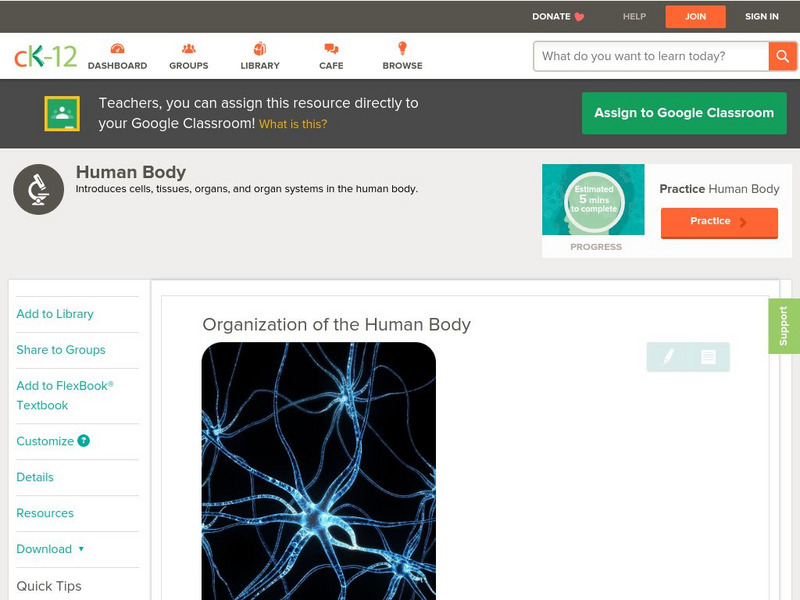
[Free Registration/Login may be required to access all resource tools.] Cells, like these nerve cells, do not work in isolation. To send orders from your brain to your legs, for example, signals pass through many nerve cells. These cells...

Scholastic
Scholastic: Study Jams! Science: The Human Body: The Nervous System
A video and a short quiz on the central and peripheral nervous systems.
OpenStax
Open Stax: Pressures in the Body
From a chapter on Fluid Statics in a Physics textbook. This section of the chapter covers the different types of fluid pressures in the human body and how they are measured. Includes problems and exercises.
Smithsonian Institution
National Museum of Natural History: What Does It Mean to Be Human, Human Characteristics
Explore walking upright, tools and food, bodies, brains, social life, language and how humans ultimately changed the world. Excellent charts, pictures and videos accompany easy-to-understand text on the earliest humans.
TeachEngineering
Teach Engineering: Humans Are Like Robots
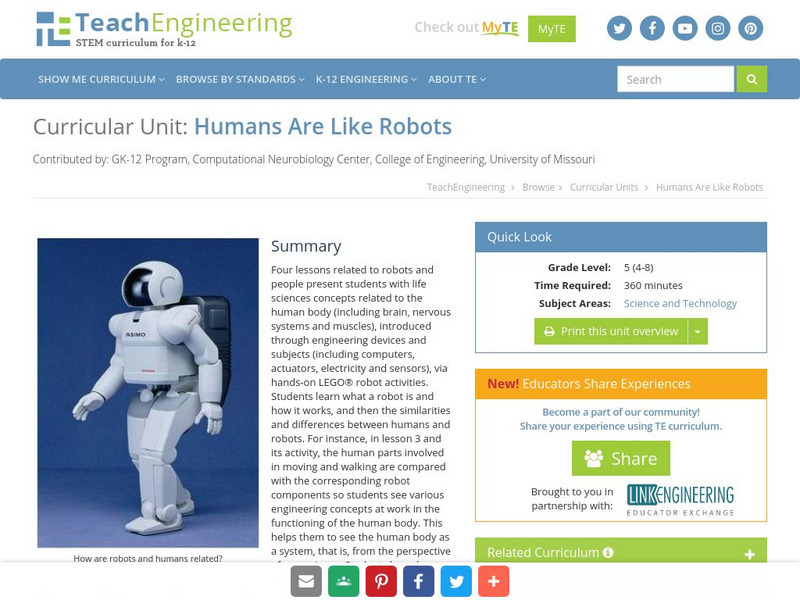
Four lessons related to robots and people present students with life sciences concepts related to the human body (including brain, nervous systems and muscles), introduced through engineering devices and subjects (including computers,...
Georgia Department of Education
Ga Virtual Learning: Psychology: Biological Foundations
Virtual learning course on human biology and brain function and how it affects our behaviors. Extensive collection of engaging materials, assignments, and activities for review.

CommonLit
Common Lit: Text Sets: Science of the Body
Introduce students to how the body looks and works with these texts on biology and genetics. This collection includes 20 Grade-Leveled texts (5-10) on the topic of Science of the Body. [Free account registration required for specific...
National Cancer Institute at the National Institutes of Health
Seer Training Modules: Introduction to the Nervous System
Self-guided learning activity where students learn about the structure and function of the human nervous system. There is a short quiz at the end of the lesson to check for understanding.
TeachEngineering
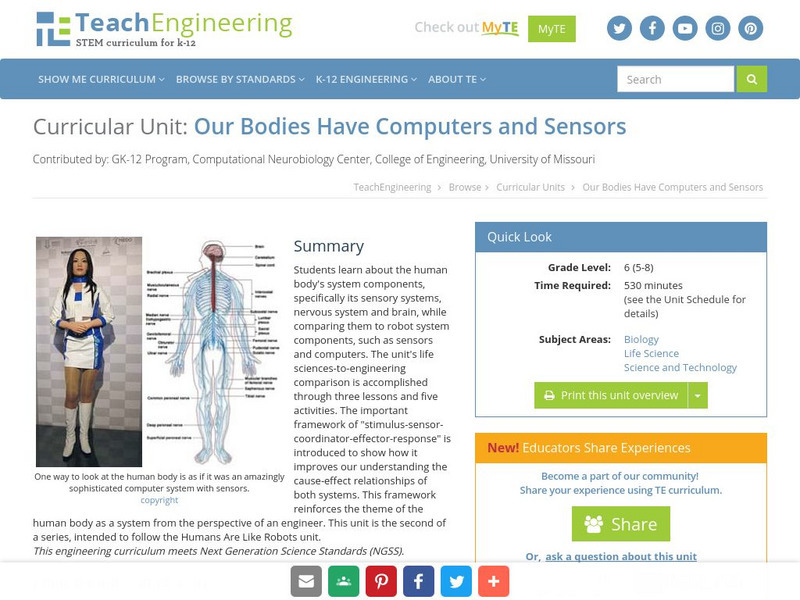
Teach Engineering: Our Bodies Have Computers and Sensors
Students learn about the human body's system components, specifically its sensory systems, nervous system and brain, while comparing them to robot system components, such as sensors and computers. The unit's life sciences-to-engineering...
TED Talks
Ted: Ted Ed: What Are Mini Brains?
Shielded by our thick skulls and swaddled in layers of protective tissue, the human brain is extremely difficult to observe in action. Madeline Lancaster shares how to make a brain in a lab.
Other
Get Body Smart: Human Nervous System: Anatomy and Physiology
The innovative tutorial investigates the human nervous system. Some topics explored are nerve cells, support cells, neurophysiology, brain, and spinal cord. Visual quizzes are also included.