Hi, what do you want to do?






Harvard University
Harvard University: Neurosurgical Service
This site from Harvard University offers a rating system of diagnosing Parkinson's Disease. It also presents the Unified Parkinson Disease Rating Scale (UPDRS) which measures mentation, behavior and mood, activities in daily life and...
American Rhetoric
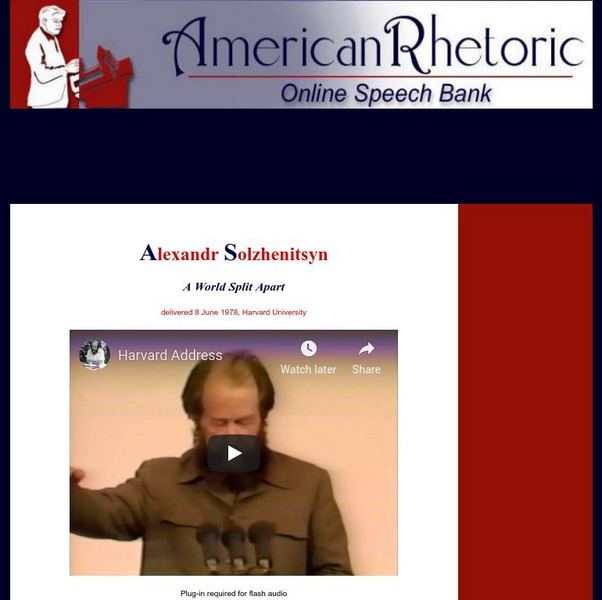
American Rhetoric: Alexander Solzhenitsyn: Harvard Address: A World Split Apart
This is the text and audio of Alexander Solzhenitsyn's commencement address at Harvard University on June 8, 1978.
Harvard University
The Harvard Project on the Soviet Social System Online
The Harvard Project on the Soviet Social System Online is a collection of hundreds of interviews of Soviet Refugees in the years of the Cold War. The collection is comprehensive including aspects of all walks of life of these refugees...
Harvard University
Harvard: Chaucer: "Chaucer's Pardoner" by George Lyman Kittredge
This is the article "Chaucer's Pardoner" by George Lyman Kittredge which was originally published in The Atlantic Monthly, Vol. 72, 1893, pp. 829-33. It uses quoted passages to analyze "The Pardoner's Tale" from The Canterbury Tales by...
Harvard University
Harvard Business Review: 8 Ground Rules for Great Meetings
This article describes the different types of ground rules for a meeting, behaviors that improve meeting outcomes, and what members can do to ensure the rules are followed. (Published June 15, 2016)
Other
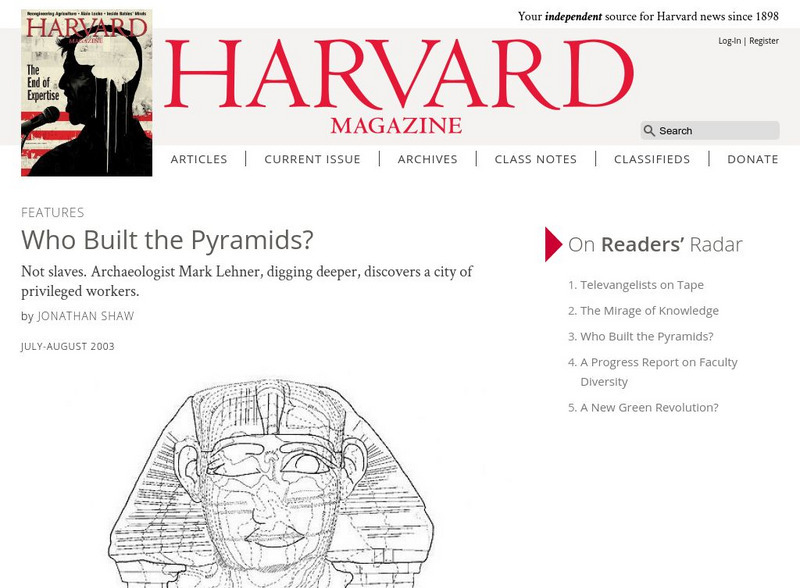
Harvard Magazine: Who Built the Pyramids?
An extensive article discussing the work of Dr. Mark Lehner, a specialist on the history of the Pyramids and their construction. The article includes a number of excellent illustrations.
Harvard University
Harvard University Library: Open Collections: Contagion: Florence Nightingale
Biographical information about Florence Nightingale along with access to Nightingale's letters and books (scanned originals plus transcripts) from Harvard's collections. Part of a larger site about historical perspectives on disease.

History of Computing Science
History of Computing Science: Harvard Mark I
The Harvard Mark I computer was the first large-scale automatic digital computer in the USA. This lecture provides a brief description of the Harvard Mark I computer.
Harvard University
Harvard University: Bar Yosef Reads Ancient Campfires
An absolutely fascinating account of the findings at various caves such as Qafzeh and Kebara that signified the emergence of man out of Africa.
Harvard University
Harvard University: Howard Aiken: Makin' a Computer Wonder
About Howard Aiken's mission to build the first programmable computer.
Harvard University
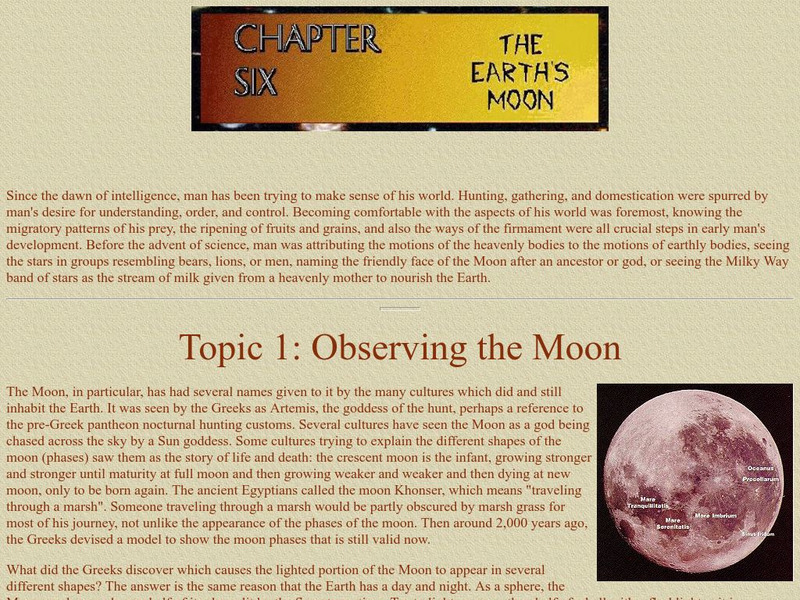
Harvard University: Eyes on the Sky, Feet on the Ground: The Earth's Moon
In this online textbook, students explore the phases of the moon, the moon's orbit, the origin of the moon, and the tides. Includes numerous inquiry-based activities.
Harvard University
Harvard University: The Sun
Includes a brief history of the sun's development and its future. Also provides simple statistics, solar activities, and references.
Harvard University
Harvard School of Public Health: The Nutrition Source: Fiber
Why is fiber important to our diets? How can we get the fiber we need from the food we eat? In addition to answering the above questions, this website also describes the diseases and disorders we can avoid by eating fiber-rich foods.

Harvard University
Harvard U.: Agency by Design: A Take Apart Toolkit: What We Learn From Unmaking
This article discusses the benefits of teaching students how to take things apart. Includes examples of how students record the process of disassembling something, what the parts are named, and their relationships of components to each...
Famous Scientists
Famous Scientists: Grace Murray Hopper
Learn about Grace Murray Hopper, a pioneer in her field and one of Harvard Mark I computer's first programmers.
Harvard University
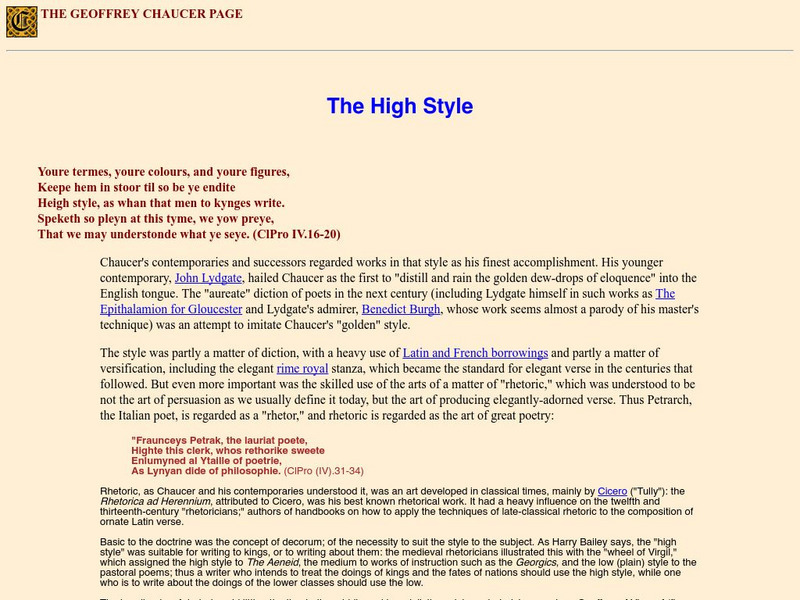
The Harvard Chaucer Page: The High Style
Essay about Geoffrey Chaucer's use of the "high style" in middle English verse, characterized by an elegantly adorned diction reliant upon Latin and French borrowings.
Harvard University
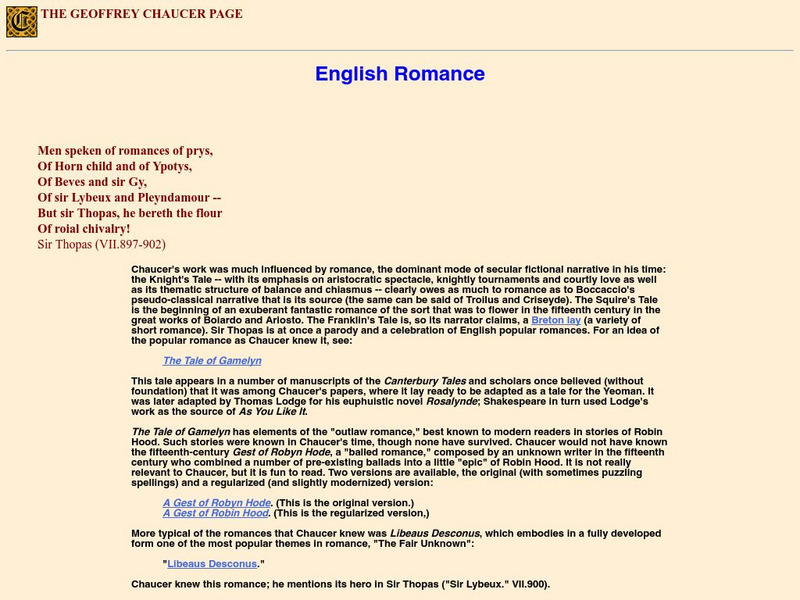
The Harvard Chaucer Page: English Romance
A survey of Geoffrey Chaucer's work, which was much influenced by romance, the dominant mode of secular fictional narrative in his time.
Harvard University
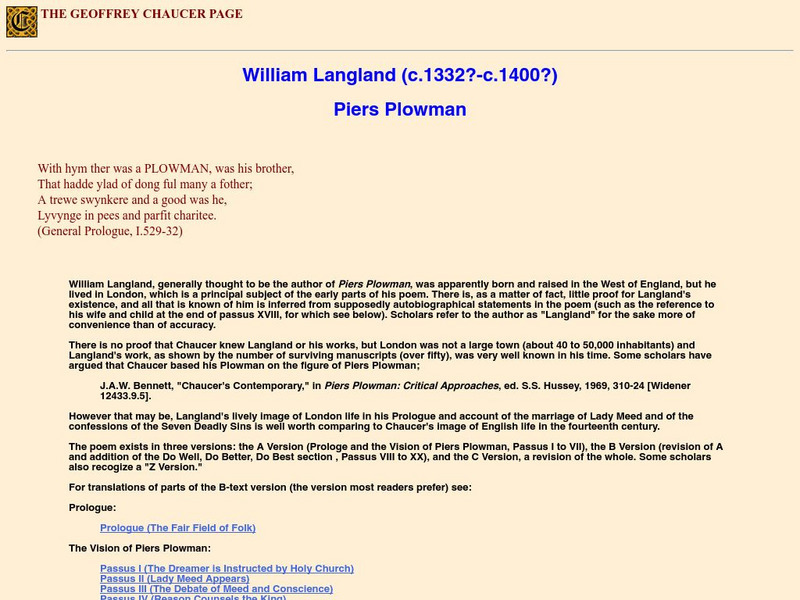
The Harvard Chaucer Page: "Piers Plowman"
Full text of William Langland's (1332?-1400?) middle English narrative poem "Piers Plowman." Includes scholarly introduction that notes parallels between the poem and Chaucer's Canterbury Tales.
Other
Harvard Business School: Communicating in the Workplace
Today's workplace in very diverse. Investigate tips for communicating more effectively in today's workplaces.
Harvard University
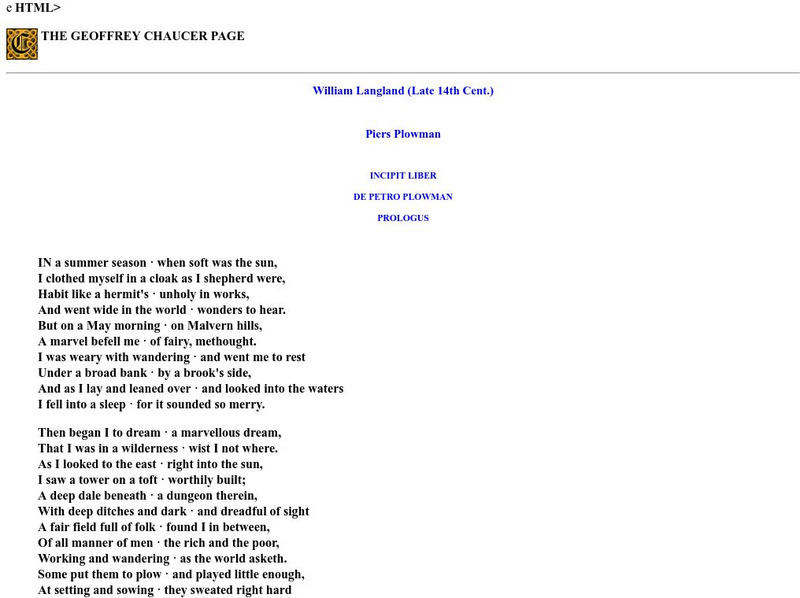
Harvard University: Geoffrey Chaucer Page: William Langland "Piers Plowman"
Provides the text to William Langland's "Piers Plowman".
Harvard University
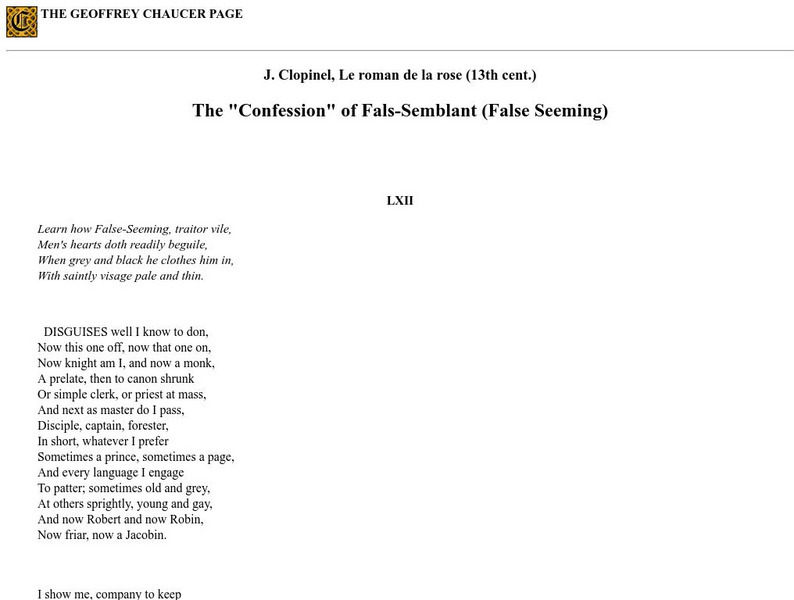
The Geoffrey Chaucer Page:"confession" of Fals Semblant
This site from The Geoffrey Chaucer Page provides information from a 1901 English translation offered as a resource in the Harvard Chaucer curriculum. This article from Le Roman de la rose is medium size in length.

Annenberg Foundation
Annenberg Learner: American Passages: Utopian Promise: Edward Taylor
Born in England, emigrant Edward Taylor was a Harvard educated minister, writer, and poet of orthodox Puritan theology. Click on "Edward Taylor Activities" for related materials.
PBS
Pbs Learning Media: How Big Is Our Universe?
This interactive resource from Harvard Smithsonian Center for Astrophysics uses images and activities to understand the scope and scale of our universe. Featured are technologies used by generations of explorers.
PBS
Pbs Learning Media: Black Urban Poor, William Julius Wilson
In this 1998 FRONTLINE interview, Harvard sociologist Dr. William Julius Wilson explains why, despite an overall increase in the standard of living among African Americans, a segment of the population is falling farther and farther behind.