Hi, what do you want to do?





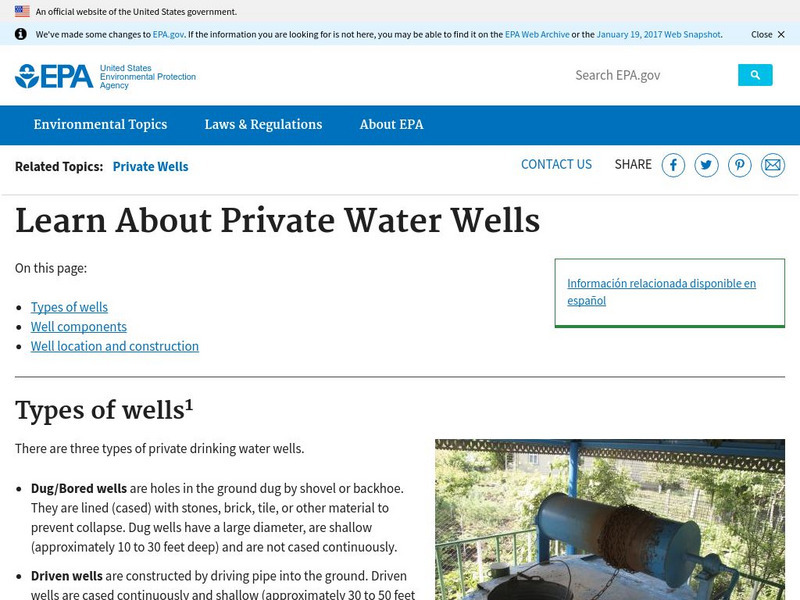
US Environmental Protection Agency
Epa: Private Drinking Water Wells
Provides information on what to do after a flood to protect well water from contamination, the testing of private well water, and protecting private well water.
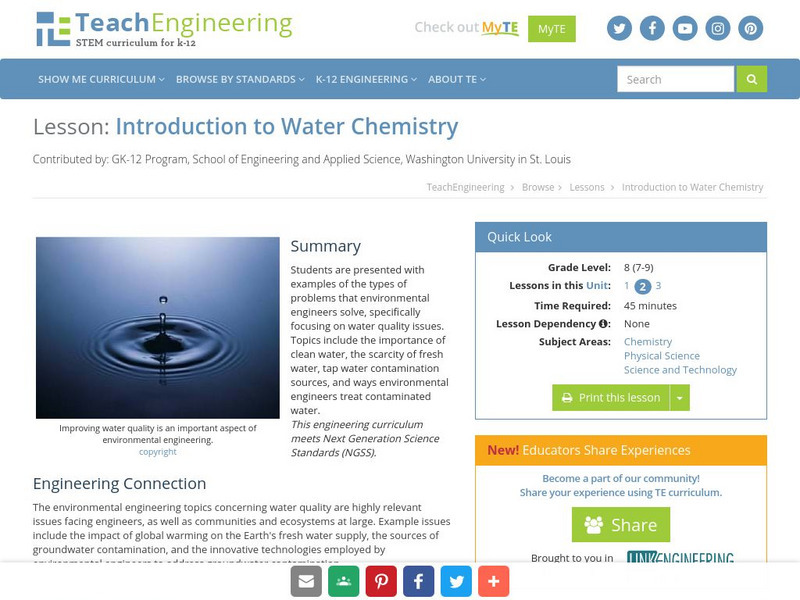
TeachEngineering
Teach Engineering: Introduction to Water Chemistry
Students are presented with examples of the types of problems that environmental engineers solve, specifically focusing on water quality issues. Topics include the importance of clean water, the scarcity of fresh water, tap water...
Other
Clean Ocean Action
This site defines and describes causes of ocean pollution. Easily navigated links to education, research, and current issues on pollution.
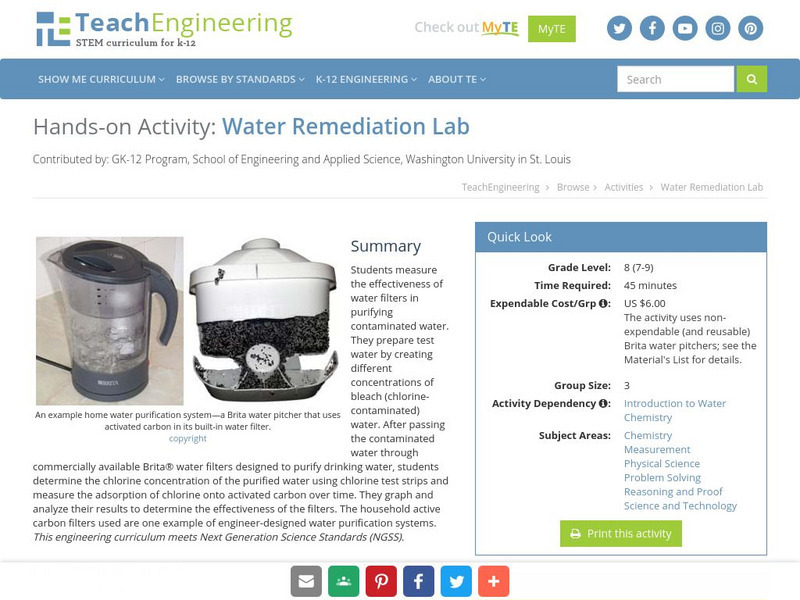
TeachEngineering
Teach Engineering: Water Remediation Lab
Students measure the effectiveness of water filters in purifying contaminated water. They prepare test water by creating different concentrations of bleach (chlorine-contaminated) water. After passing the contaminated water through...
Smithsonian Institution
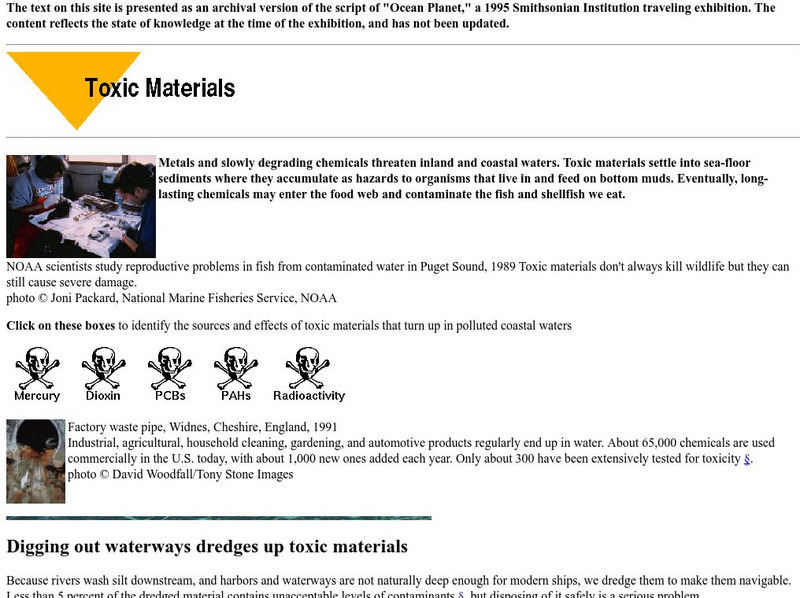
National Museum of Natural History: Ocean Planet: Water Pollution Toxic Materials
This site, from an archived Smithsonian exhibit, describes and illustrates the effects of toxic materials on wildlife in bodies of water.
Other
Uk Rivers Network: Finding Out About Water Pollution
Excellent site covers all types of water pollution. Hundreds of links including books, articles, organizations, specific topics.
US Environmental Protection Agency
Epa: List of Drinking Water Contaminants
Table outlines the EPA's standards for safe drinking water, defining levels of contaminants and listing possible sources of these contaminants.
Michigan Reach Out
Reach Out Michigan!: Contaminated Drinking Water
This site is provided for by Reach Out Michigan! Use the site to learn if our eyes and taste buds can detect contaminated drinking water by doing a simple experiment.

TeachEngineering
Teach Engineering: Who's Down the Well?
Drinking water comes from many different sources, including surface water and groundwater. Environmental engineers analyze the physical properties of groundwater to predict how and where surface contaminants will travel. In this lesson,...
Chemistry Collective
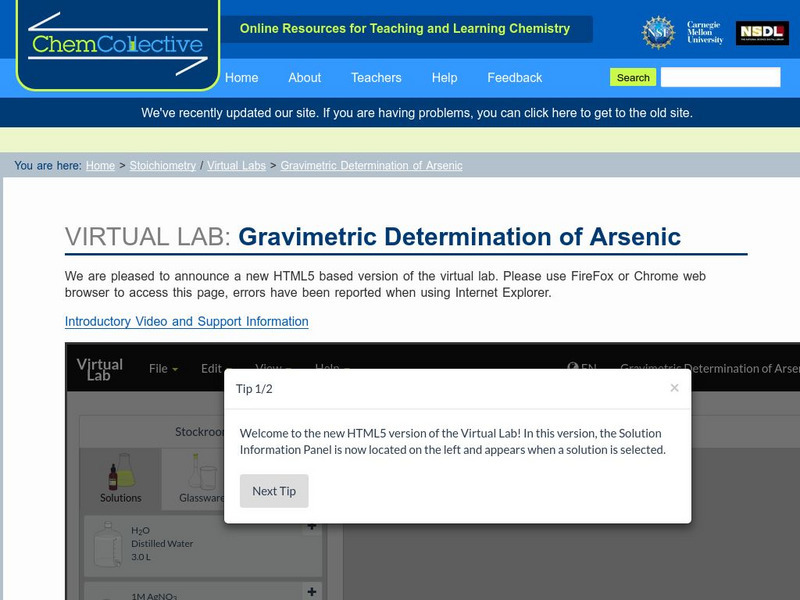
Chem Collective: Gravimetric Determination of Arsenic
Set in the context of ground water contamination in Bangladesh, this stoichiometry and analytical chemistry activity examines the issues around identifying wells contaminated with arsenic. In this activity, students perform a gravimetric...
Other
Science Projects: Fecal Contamination of Waters
Talks about history of public health and water systems and what kind of projects are being used to improve them.
TeachEngineering
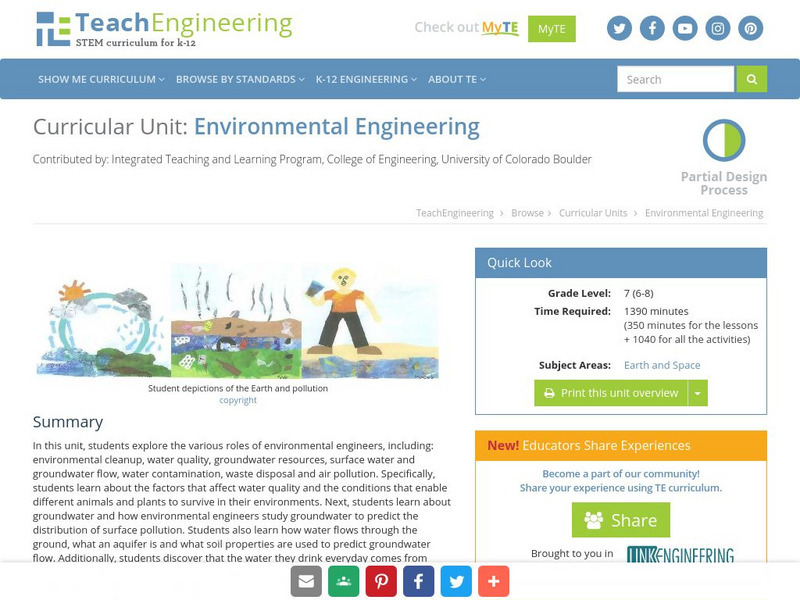
Teach Engineering: Environmental Engineering
In this unit, students explore the various roles of environmental engineers, including: environmental cleanup, water quality, groundwater resources, surface water and groundwater flow, water contamination, waste disposal and air...
TeachEngineering
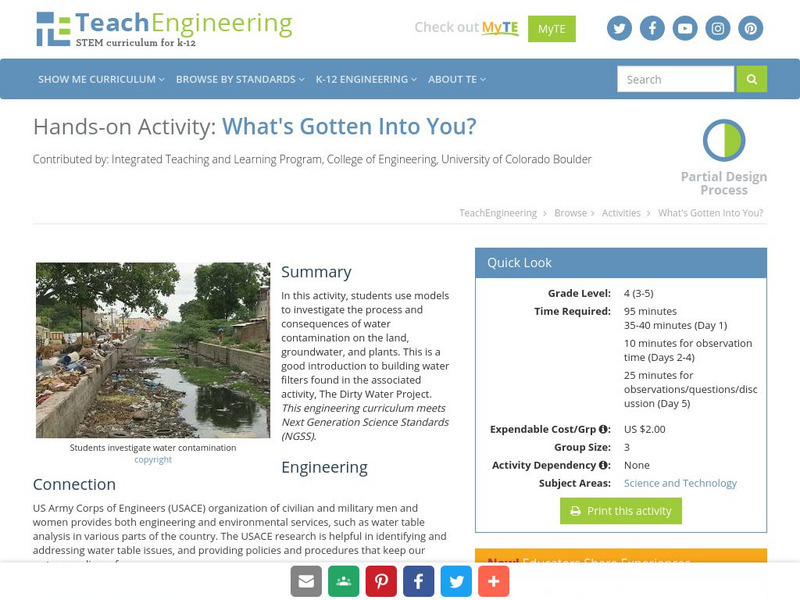
Teach Engineering: What's Gotten Into You?
In this activity, students use models to investigate the process and consequences of water contamination on the land, groundwater, and plants. This is a good introduction to building water filters found in the associated activity, The...
Wisconsin Department of Natural Resources
Wdnr: Information for Homeowners With Private Wells
Provides information about water quality, contamination in private wells, well construction and pump installation for private wells, a list of laboratories certified to test for bacteria and other contaminants, recommendations for...
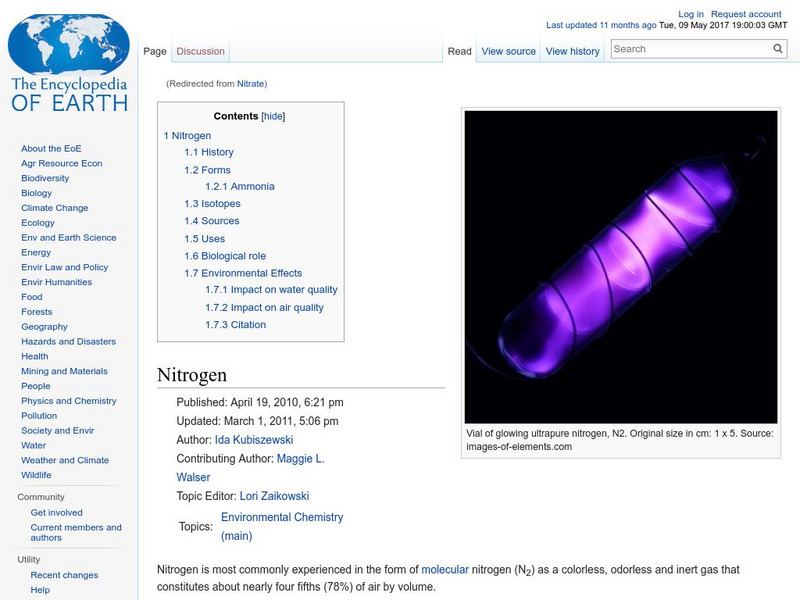
Encyclopedia of Earth
Encyclopedia of Earth: Physics & Chemistry: Nitrate
Discusses the chemistry of nitrate, the negative agricultural effects of too much nitrate in soil and in water sources, its toxicity to plants and livestock, and the impact on human health.
![Us Geological Survey: Bioremediation: Nature's Way to a Cleaner Environment[pdf] Handout](https://statictemp.lp.lexp.cloud/images/attachment_defaults/resource/large/FPO-knovation.png "Us Geological Survey: Bioremediation: Nature's Way to a Cleaner Environment[pdf] Handout")
US Geological Survey
Us Geological Survey: Bioremediation: Nature's Way to a Cleaner Environment[pdf]
Excellent information provided by the U.S. Geological Survey.
Other
Virtual Field Trip: Water/aquifers
This virtual field trip for middle school students looks at aquifers and their place in the hydrologic cycle. Students learn why and how it is important to protect the source of your drinking water and some unique details about the...
PBS
Pbs Learning Media: Quest: Water Pollution Investigation
Water pollution is the contamination of water resources by harmful wastes or toxins. This type of pollution can be dangerous to animals and plant populations in and around lakes, rivers, polluted groundwater areas or oceans, and can pose...
Other
Ngwa: National Well Owners Association
This site from the National Ground Water Association provides information on ground water, the use of ground water, private water system, well maintenance, and protecting your own well water supply.
Idaho State University
Idaho State University: Aquifer Facts [Pdf]
A document features the Pocatello aquifer in Idaho. Find a description of the structure and function of the aquifer and the concerns of contamination.
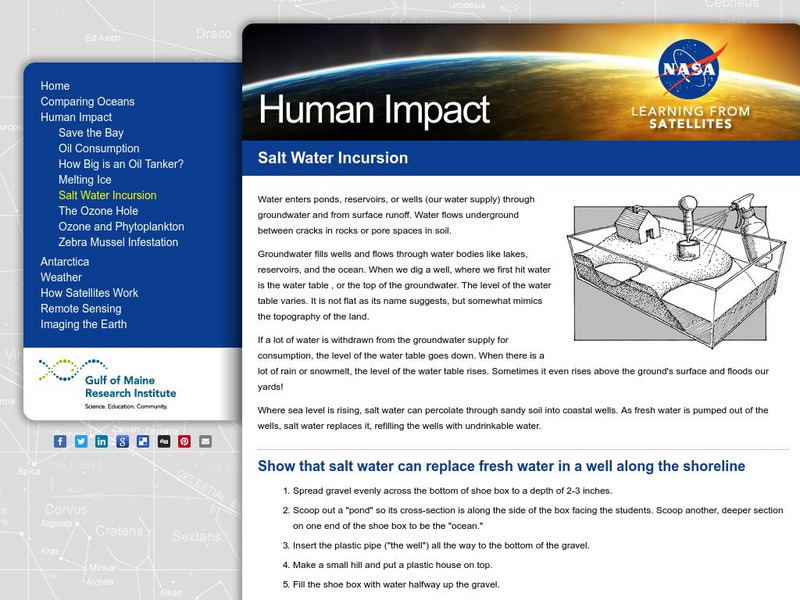
Gulf of Maine Research Institute
Human Impact: Salt Water Incursion
Lesson plan shows students that salt water can replace fresh water in a well along the shoreline.
American Geosciences Institute
American Geosciences Institute: What Are Natural Solutes?
Find out about naturally occurring substances that also affect water quality.
![Epa: Where Does Your Water Come From? [Pdf] Lesson Plan](https://content.lessonplanet.com/knovation/original/41160-83ff7c05b0f0460206fa551d2700d8dc.jpg?1661270414 "Epa: Where Does Your Water Come From? [Pdf] Lesson Plan")
US Environmental Protection Agency
Epa: Where Does Your Water Come From? [Pdf]
Where does your drinking water come from? This resource features a clear and concise explanation for this question. This resource will be beneficial to students and teachers.
University of Arizona
University of Arizona: Pulse: Cultures and Cycles: Arsenic and Human Health
Interdisciplinary unit about the risk of exposure to arsenic in public drinking water. Math, language arts, social studies, and science are incorporated into the lessons.