Hi, what do you want to do?





Capital Community College Foundation
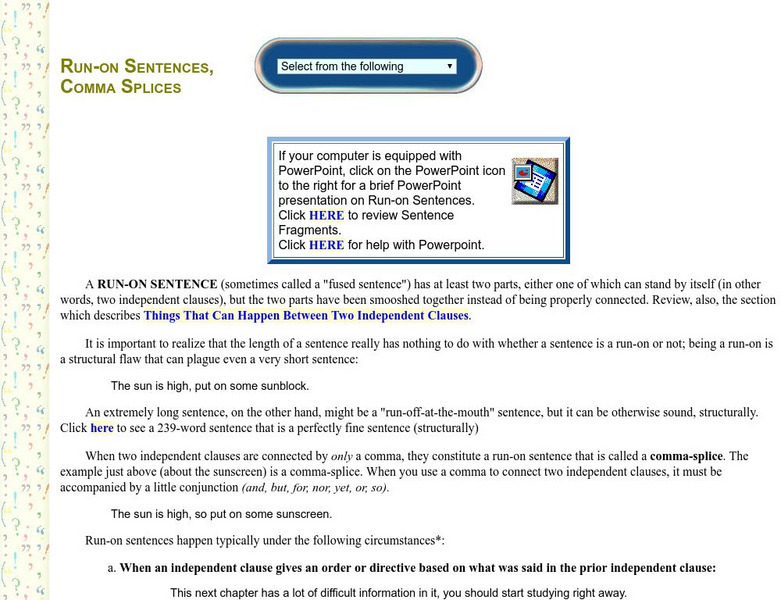
Guide to Grammar and Writing: Run on Sentences
This site shows how to repair run-on sentences. Students and teachers will find this interactive resource helpful.
Texas Education Agency
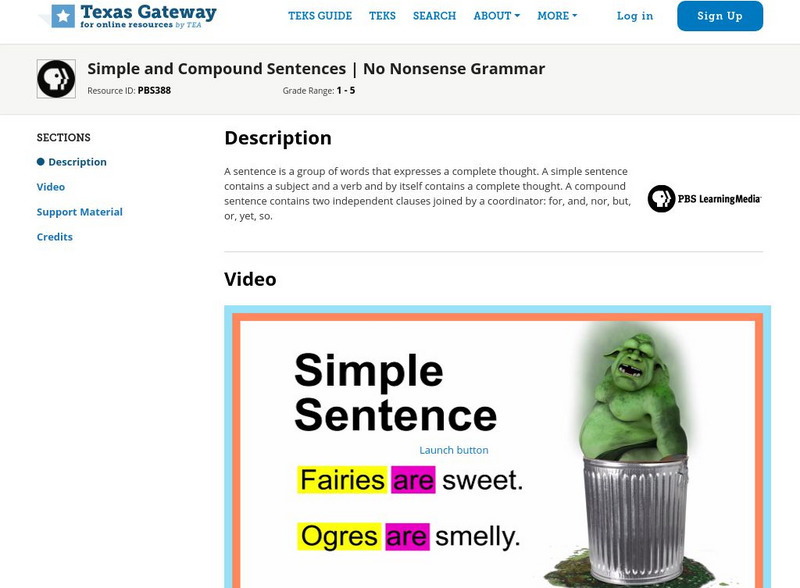
Texas Gateway: Simple and Compound Sentences | No Nonsense Grammar
A sentence is a group of words that expresses a complete thought. A simple sentence contains a subject and a verb and by itself contains a complete thought. A compound sentence contains two independent clauses joined by a coordinator:...

ClassFlow
Class Flow: Revising Verbs
[Free Registration/Login Required] To review and extend work on verbs, focusing on: tenses: past, present, future; investigating how different tenses are formed using auxiliary verbs (have, was, shall, will); forms: active,...
Language Guide
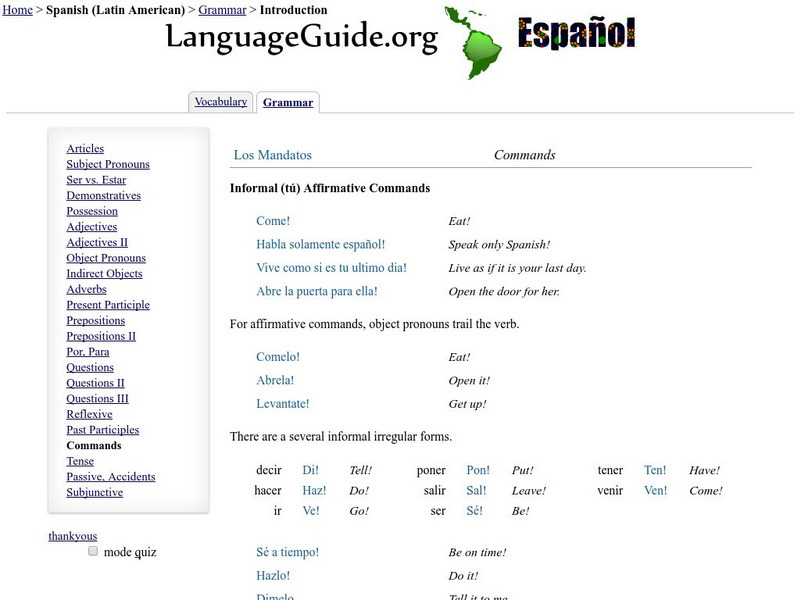
Language Guide: Los Mandatos
Formation of informal commands, regular and irregular forms are addressed with links to interactive practice activities. In addition, the formation of formal commands are explained with a link to interactive practice activities. A couple...
Study Languages
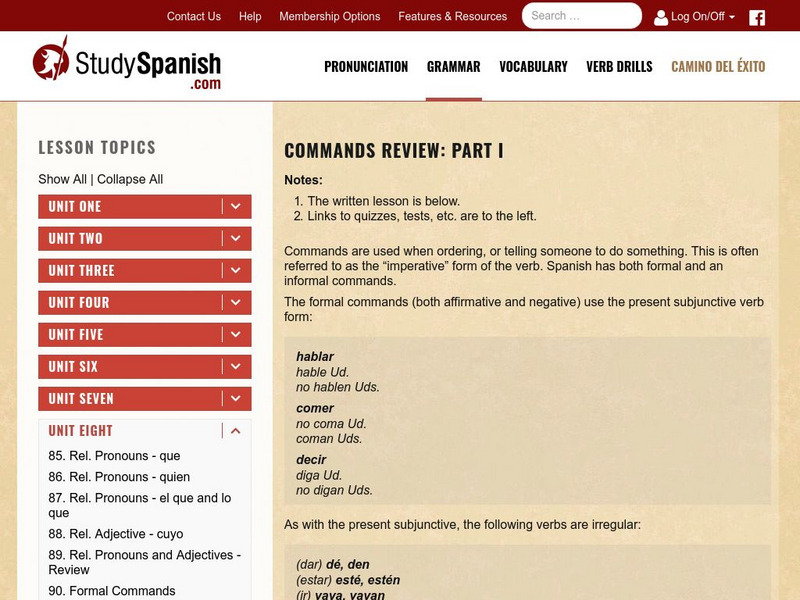
Study Spanish: Commands Review Part 1
Great review of regular and irregular command forms for the pronouns tu and usted. A quiz at the end of the lesson tests the student's mastery of these informal and formal command forms.
Study Languages
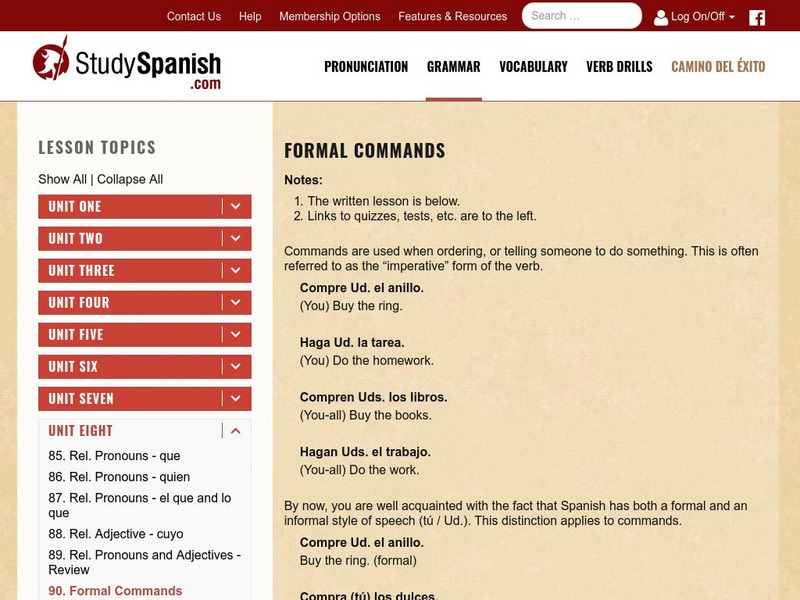
Study Spanish: Formal Commands
Excellent explanation of formal commands in Spanish that use the pronouns "usted" and "ustedes." Stem-changers and irregulars are included in this lesson. Ample examples illustrate the formation and use of formal commands. A quiz at the...

Study Languages
Study Spanish: Irregular Commands (Tu)
Great introduction to irregular affirmative commands in Spanish that use the pronoun tu: decir, hacer, ir, poner, salir, ser, tener, and venir. A quiz at the end of the lesson tests the student's mastery of these irregular command forms.
Colby College
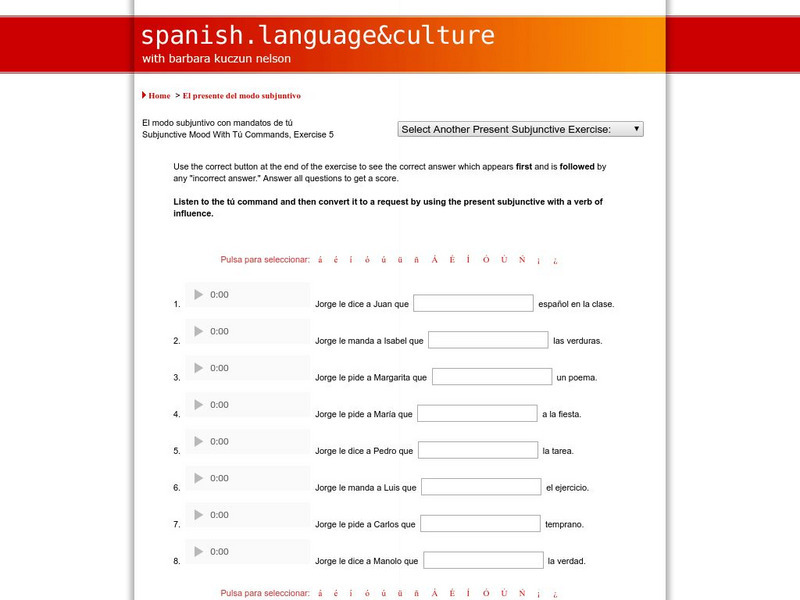
Spanish Language & Culture: Subjunctive With Commands
Hear a "tu" command and complete the indirect command with the correct form of the verb in the present subjunctive. Answers may be checked and corrected.

ClassFlow
Class Flow: Complete Sentences
[Free Registration/Login Required] In this flipchart students can interact with the board while learning about complete sentences. They can use the Activotes for the answers if the teacher chooses.