Hi, what do you want to do?





NASA
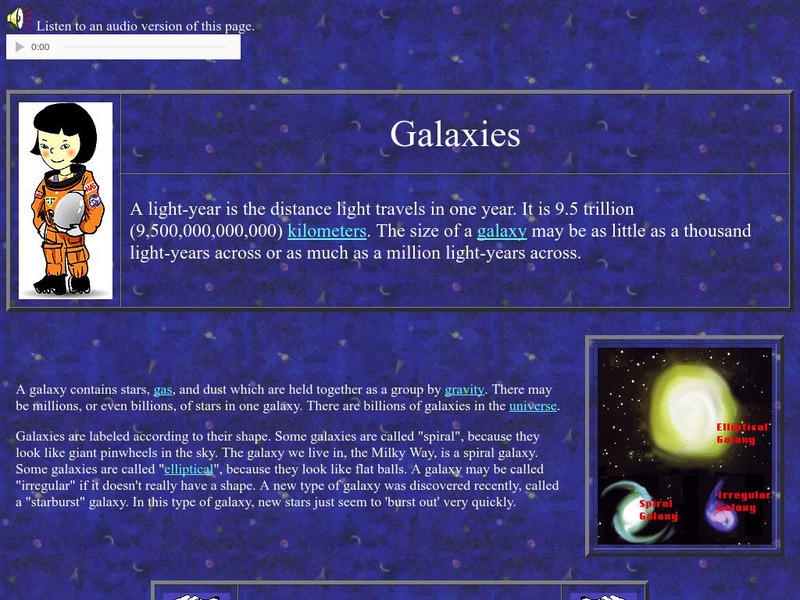
Nasa Star Child: Galaxies (Level 1)
This site provides an introduction to galaxies for the younger student, that is divided into 2 levels of understanding. Find out what type of galaxy looks like a giant pinwheel. Audio content included. Good glossary, and a printable...

NASA
Nasa Space Place: What Is a Galaxy?
This resource explores the different types of galaxies through text and images.
NASA
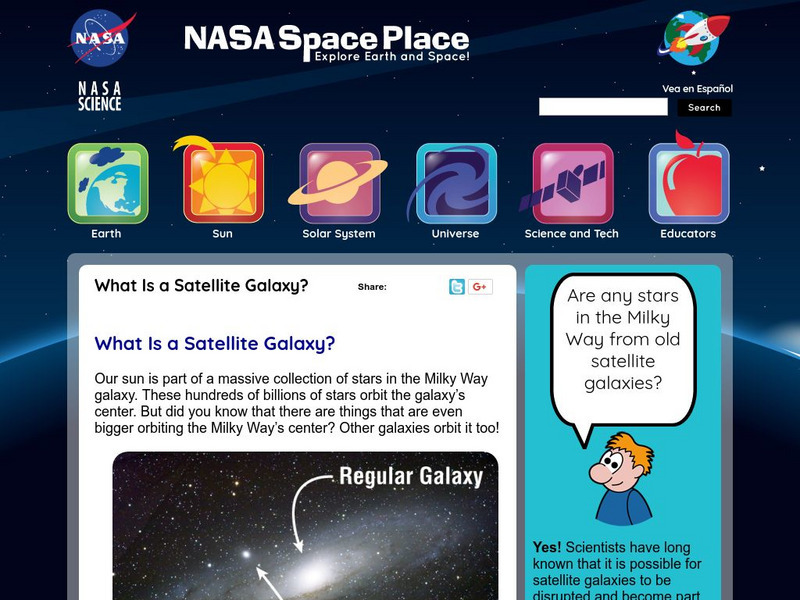
Nasa: Space Place: What Is a Satellite Galaxy?
Find out about the behavior and characteristics of the many satellite galaxies that orbit other galaxies.
University of Texas at Austin
The University of Texas Mc Donald Observatory: Stars and Galaxies
Do galaxies collide? Apply concepts of scale to grasp the distances between stars and galaxies.
NASA
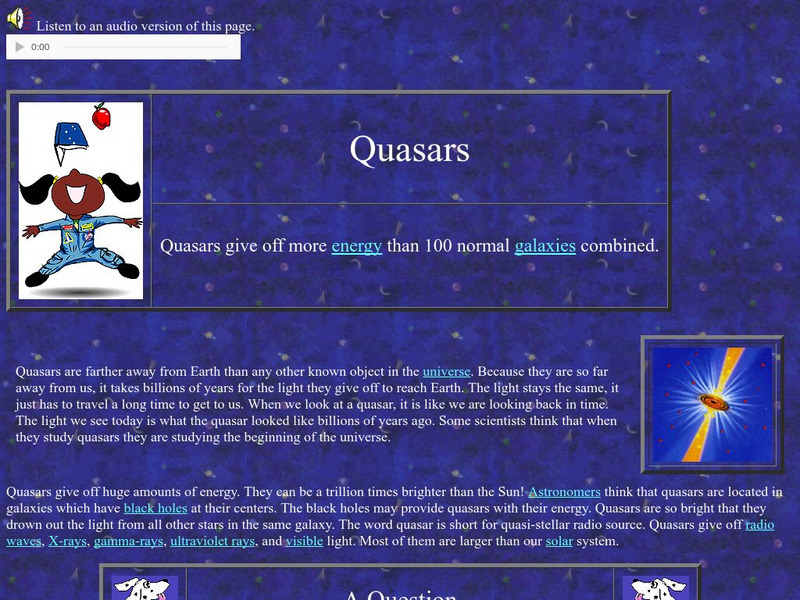
Nasa Star Child: Quasars (Level 1)
Learn why quasars are the brightest things in the universe. Vocabulary words linked to a glossary of terms and a printable version are available.
NASA
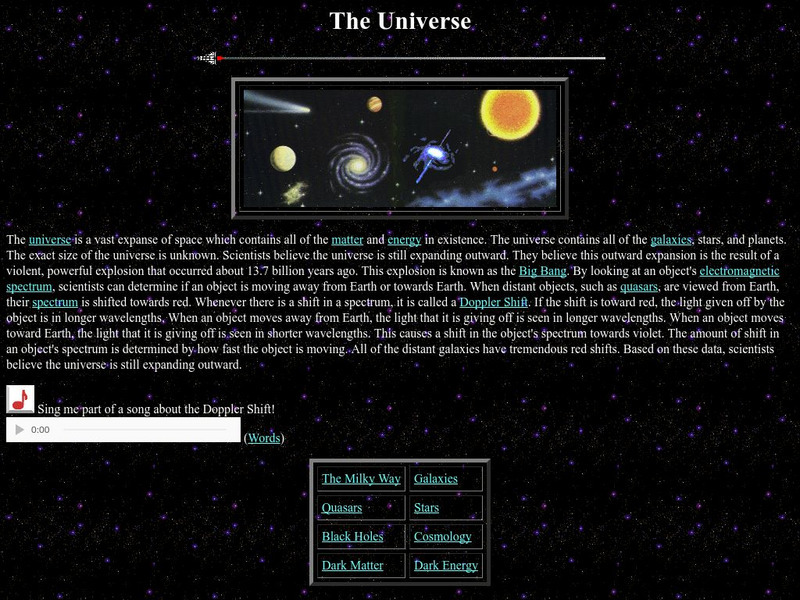
Nasa Star Child: The Universe (Level 2)
This site provides a description of the universe and what it contains. Includes links to definitions, activities, and an audio song. Printable version available.
Smithsonian Institution
Smithsonian Learning Lab: The Universe, an Introduction
Start with the questions all learners ask: How big is the universe, how far away are the planets and stars, how did they form and when, how do they move and why? Build on their natural curiosity. The Smithsonian, in cooperation with...
Cosmos 4 kids
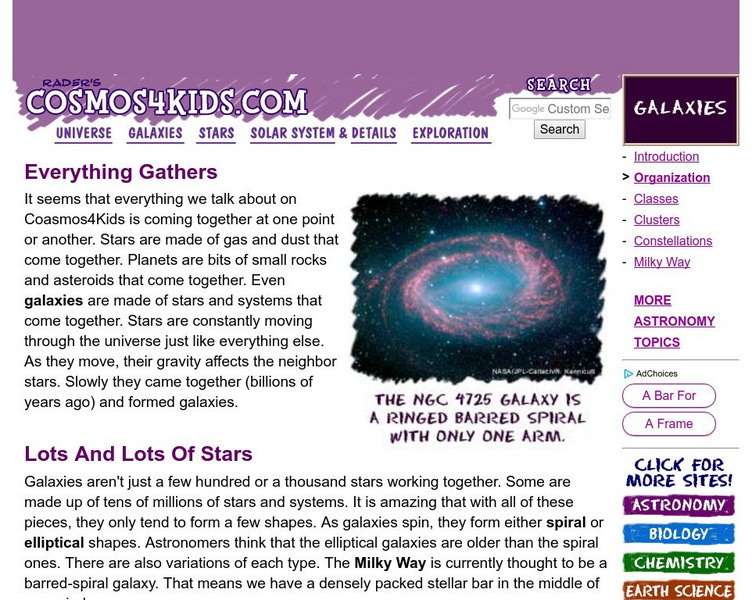
Cosmos4 Kids: Everything Gathers
Understand that smaller parts make up the larger parts of our solar system. See that gas and dust come together to form a star, small rocks and asteroids come together to form planets, and so on. This page is a reference page that...
NASA
Nasa Space Place: What Is a Light Year?
Brief description of light-years with examples and images.