Hi, what do you want to do?






American Museum of Natural History
Around with World with DNA
A mammalogist, ornithologist, ichthyologist, and a conservation geneticist share their work and their hopes that their research will help protect and save endangered species and their habitats.

American Museum of Natural History
Bio-Benefits
Kick-start a discussion of the importance of biodiversity with a colorful resource that touts the benefits of maintaining healthy ecosystems. The images stress the interdependence of all the elements of an ecosystem.

PBS
Pbs Learning Media: Forest Elephants
Although the rainforest is a demanding environment for a cameraman, photographer Martyn Colbeck manages to capture a glimpse of forest elephants in the Congo in this video segment from Nature.
Environmental Education for Kids
Eek!: Habitats: Forest
Forests are more than just trees. They are a complex community of plants and animals that constantly change, grow, and interact with each other and the nutrient-bearing soils upon which they depend. Read about some of the many plants and...
US Department of Agriculture
Idaho Panhandle National Forest
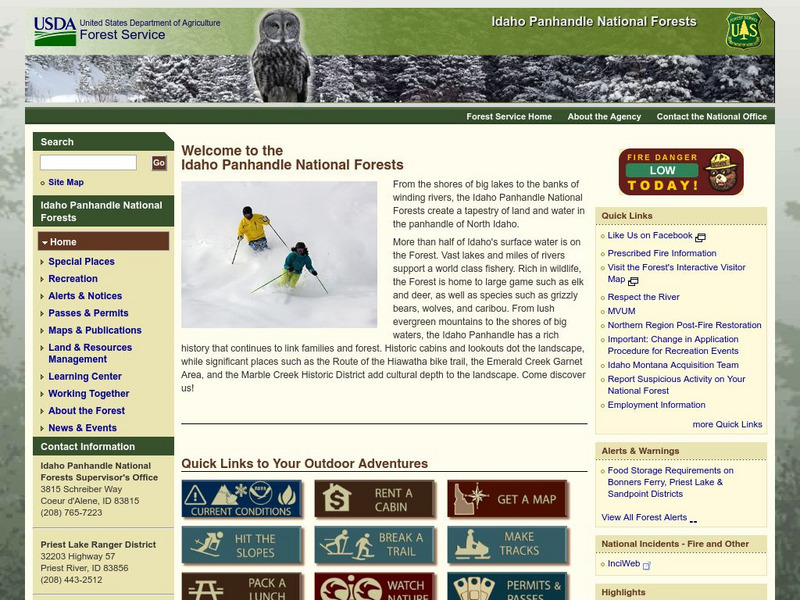
The Panhandle National Forest has programs that focus on trees and nature walks. They study wildlife habitats and wildfire restoration. Learn how nature repairs itself after a fire.
Enchanted Learning
Enchanted Learning: Biomes
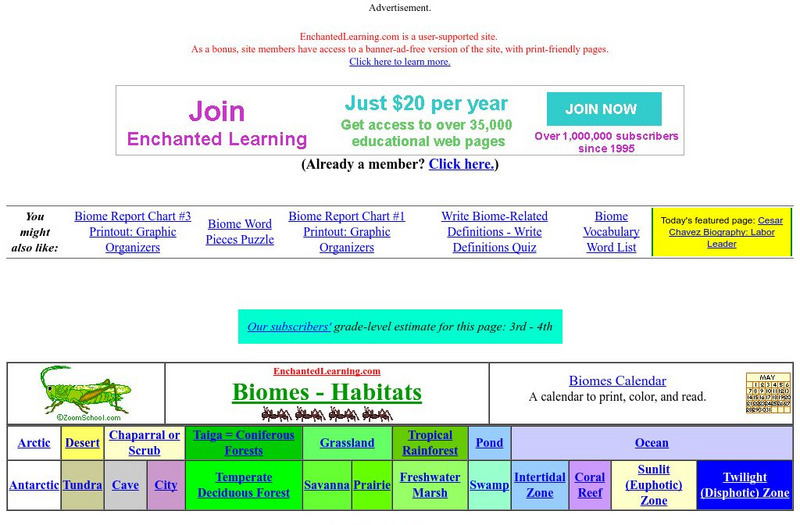
Discover the hidden treasures in the different habitats on the earth! The earth is filled with many biomes. Examples of different biomes are listed and include hyperlinks to additional information such as the animals found there.

Ducksters
Ducksters: Science for Kids: Taiga Forest Biome
Kids learn about the taiga forest biome. The largest of the land biomes is known for its evergreen trees.

Ducksters
Ducksters: Science for Kids: Temperate Forest Biome
Kids learn about the temperate forest biome. Four distinct seasons and lots of trees.
PBS
Pbs Learning Media: Biomes
This interactive resource adapted from NASA describes the different temperature, precipitation, and vegetation patterns in seven biomes: coniferous forest, temperate deciduous forest, desert, grassland, rainforest, shrubland, and tundra.
Other
Wildlands League
Wildlands League is a registered charity in Ontario, and a chapter of the Canadian Parks and Wilderness Society (CPAWS). It aims to preserve wilderness areas and the biological diversity of lakes, forests, rivers, grasslands and...
Canadian Wildlife Federation
Hinterland Who's Who: Snowshoe Hare
Get the facts about the snowshoe hare. Besides finding a detailed description of this common forest creature that only lives in North America, you'll also learn about some of its unique facts and characteristics. Also included in this...
Canadian Wildlife Federation
Hinterland Who's Who: Red Breasted Nuthatch
Get the facts about the Red-breasted Nuthatch. Besides finding a detailed physical description of this forest-found bird, you?ll also learn about some its unique facts and characteristics. Also included in this Bird Fact Sheet on the...

Other
World Biomes
World Biomes is a site covering five of the major world biomes: aquatic, desert, forest, grassland, and tundra. It gives information on the various sub-divisions of the biomes and provides numerous images.
Science Museum of Minnesota
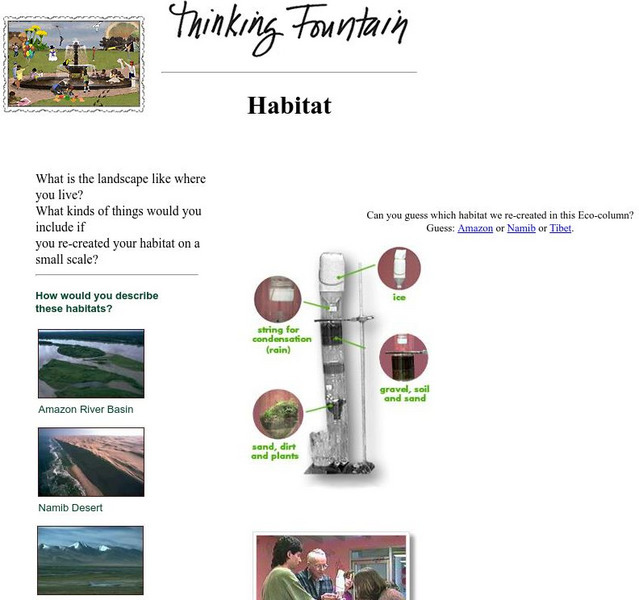
Science Museum of Minnesota: Thinking Fountain: Habitat
Explore the basics of a few habitats and then create an ecocolumn--a simulated cross-section of a biome such as a rain forest--with your own environment.
Other
Nh F&w: Nongame and Endangered Wildlife Program
New Hampshire offers a problem/solution section of their conservation page that illustrates wildlife management challenges in varied habitats.
PBS
Bill Moyers Reports: Earth on Edge
PBS presents this report by Bill Moyer on the current state of the earth. Information is provided on each of the planets ecosystems as well as ways to get involved. You are even able to access portions of the program that was aired.
Other
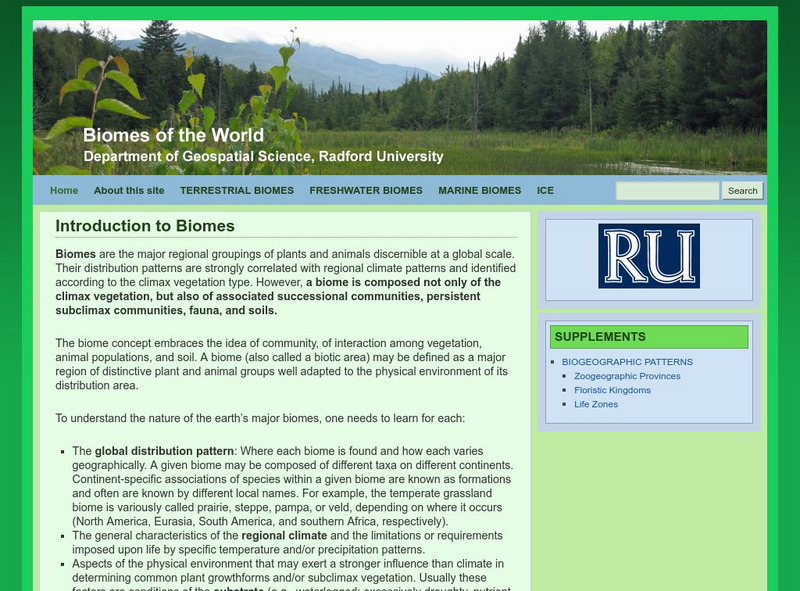
Introduction to Biomes
This site provides an introduction to biomes. There are also links to each different type of biome.

Ducksters
Ducksters: Science for Kids: Tropical Rainforest Biome
Kids learn about the tropical rainforest biome. This diverse ecosystem produces much of the Earth's biodiversity.

Ducksters
Ducksters: Science for Kids: World Biomes and Ecosystems
Kids learn about the world's biomes and ecosystems. The network of life and biodiversity needed for all to survive.