Hi, what do you want to do?






Science Buddies
Science Buddies: Project Ideas: Understanding How Food Becomes Rancid
In this cooking and food science fair project, the student will determine how light and air can oxidize fat in potato chips and cause the chips to go rancid. The Science Buddies project ideas are set up consistently beginning with an...
Science Buddies
Science Buddies: Project Ideas: Perfecting Pastries: Role of Fats
In this cooking and food science fair project the student will investigate the effect that fat and its temperature have on the taste and texture of pastry shells. The Science Buddies project ideas are set up consistently beginning with...

Science Buddies
Science Buddies: Project Ideas: How Much Water Is Absorbed by Dried Beans?
In this cooking and food science fair project, measure how the water content of dried beans changes with time. The Science Buddies project ideas are set up consistently beginning with an abstract, objective, and introduction, followed by...

Science Buddies
Science Buddies: Project Ideas: Save Those Spoiling Strawberries!
In this food science fair project, the student will determine if thermotherapy can inhibit strawberries from becoming moldy and decaying. The Science Buddies project ideas are set up consistently beginning with an abstract, objective,...
Science Buddies
Science Buddies: Project Ideas: Kimchi Chemistry
In this cooking and food science fair project, the student will make a batch of kimchi, the national dish of Korea, and investigate the changes in pH and glucose concentration as it ferments. The Science Buddies project ideas are set up...
Science Buddies
Science Buddies: Project Ideas: How Much Water Is Required to Cook Pasta?
In this cooking and food science fair project, determine if you really need 6 quarts of water to cook a pound of pasta. The Science Buddies project ideas are set up consistently beginning with an abstract, objective, and introduction,...
Science Buddies
Science Buddies: Project Ideas: Sauce to Solid: Science of Cranberry Condiments
Determine how the cooking time of cranberry sauce affects its ability to form a pectin-supported solid. The Science Buddies project ideas are set up consistently beginning with an abstract, objective, and introduction, followed by a...
Science Buddies
Science Buddies: How Do You Make the 'Best' Cookie?
The benefit to cooking food from scratch versus store bought food is that you determine the taste. In this science fair project, discover if you can perfect the taste of your favorite cookie right in your own kitchen by experimenting...
Science Buddies
Science Buddies: Lowering the Freezing Point of Water
When it comes to making ice cream, in order to make the mixture cold enough to freeze, you surround the container with ice and rock salt. This experiment helps you learn how the addition of salt (or other substances) affects the freezing...

Science Buddies
Science Buddies: Project Ideas: Processed Cheese
The goal of this cooking and food science fair project is to understand how processed cheese is made, and to determine which percentage of emulsifying salt produces the best processed cheese. The Science Buddies project ideas are set up...
Science Buddies
Science Buddies: Project Ideas: Simple Device to Measure the Strength of Tea
In this science fair project, measure the strength of tea, using plastic cups, a photoresistor, and a multimeter. The Science Buddies project ideas are set up consistently beginning with an abstract, objective, and introduction, followed...
Science Buddies
Science Buddies: Project Ideas: Bitter to Sweet: Sugar Changes in Ripening Fruit
In this science fair project, use a refractometer to measure changes in sugar content in ripening fruit. The Science Buddies project ideas are set up consistently beginning with an abstract, objective, and introduction, followed by a...
Science Buddies
Science Buddies: When Science Is Sweet: Growing Rock Candy Crystals
Though rock candy seems to be a simple enough treat, it is also pretty interesting to make. Crystallized sugar that can be grown from a sugar-water solution is just how rock candy is made. In this experiment, you will learn to make your...
Science Buddies
Science Buddies: Mag Nificent Breakfast Cereal
You will devise a way of testing foods for supplemental iron additives in this experiment provided by Science Buddies. Then you will use your design to test different breakfast cereals to see how much iron they contain. The goal is to...
Science Buddies
Science Buddies: How Much Do Different Pet Species Eat?
How much food do you think your pet eats compared to other kinds of pets? In this experiment you will compare the food intake of your family pets to find out which pet eats more for its body weight.
Science Buddies
Science Buddies: How Does Packaging Affect the Ripening of Fruit?
Why do different types of fruits come packaged in different ways? In this project, you will experiment with different ways of packaging fruit to see if it has an effect on the freshness of the fruit. Will a different kind of packaging...

Science Bob Pflugfelder
Science Bob: Do Birds Care What Color Their Food Is?
Science Bob provides instructions for setting up an experiment to determine if birds care what color their food is.
Science Buddies
Science Buddies: Do You Love the Taste of Food? Find Out if You're a Supertaster
To supertasters, the flavors of foods are much stronger than to average tasters. This can explain why some people are more picky about their food than others, because they experiences tastes in a much stronger form. Find out if you are a...
Science Buddies
Science Buddies: Got Iron? Measure the Concentration of Iron in Water
Iron is an important mineral essential for good health. Iron deficiency can be a problem. In this science fair project, use a simple iron test kit to measure the concentration of iron in water. This experiement is explained clearly and...
Science Buddies
Science Buddies: Yeast Reproduction in Sugar Substitutes
There's nothing quite like the smell of fresh-baked bread to make your mouth water. As any baker can tell you, you can't bake bread without yeast. This project makes clever use of bread dough to measure yeast reproduction three different...
Science Buddies
Science Buddies: Go and Stop? Ant Traffic Signals
Have you ever stopped to watch a trail of ants moving back and forth between a food source and their nest? Have you ever wondered how they establish their trail? You've probably read that ants use chemical signals to communicate with one...
Science Buddies
Science Buddies: Drawing Circles Around Ants
Do ants sometimes ruin your picnic? There are some chemical ant repellents you can spray to keep them away, but who wants to spray poison all over their food? In this experiment you can investigate some less toxic solutions that may be...
TeachEngineering
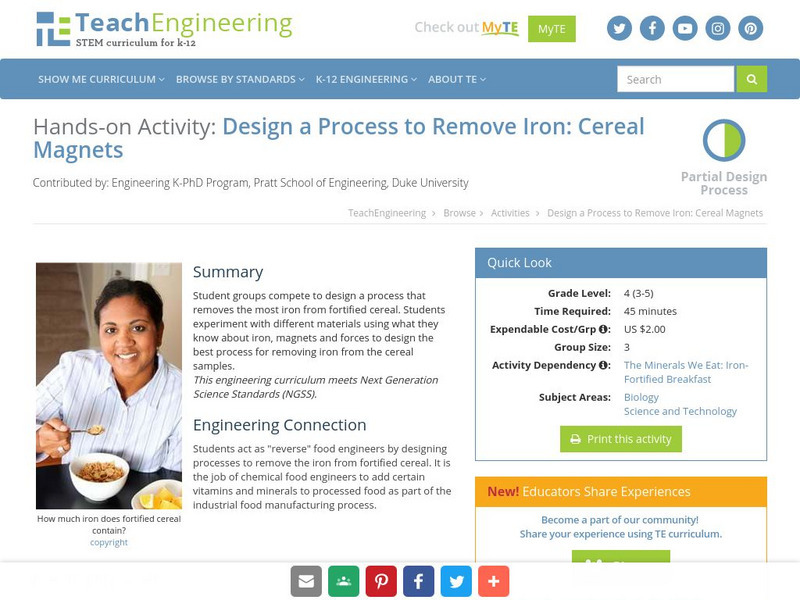
Teach Engineering: Cereal Magnets
In this activity, students will design a process that removes the most iron from the cereal. This activity is meant for the students to experiment with different materials using what they know about iron, magnets, and forces to design...
Other
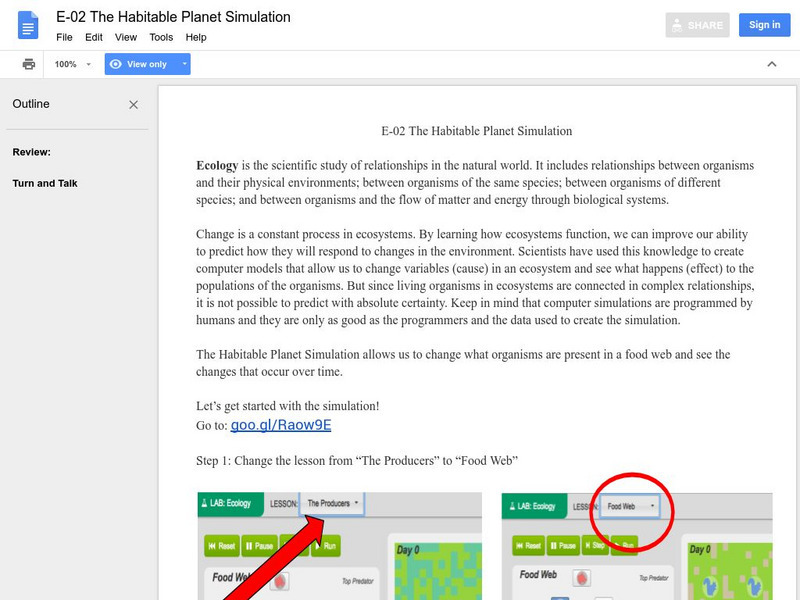
The Habitable Planet Simulation
This activity is designed to accompany an interactive on the Annenberg Learner website. Students investigate the changes that take place in an ecosystem when they alter the organisms in a food web. As they work with the simulation, they...