Hi, what do you want to do?






American Museum of Natural History
American Museum of Natural History: Welcome to Dzanga Sangha
Connect the dots to investigate three different habitats either the forest, bai or river of the rain forest. By connecting the dots students make a food chain to see how organisms in each habitat depend on each other.
American Museum of Natural History
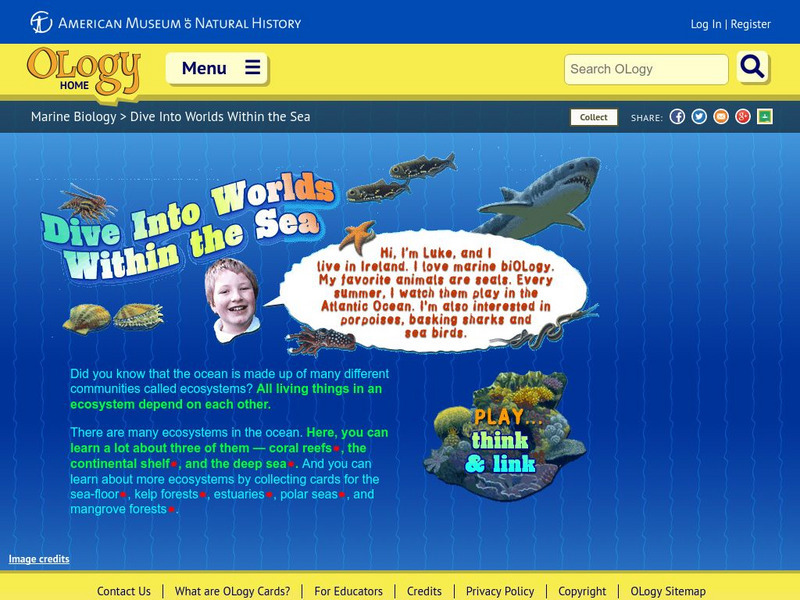
American Museum of Natural History: Dive Into Worlds Within the Sea
Think and Link to investigate three different ecosystem either the deep sea, coral reef or continental shelf. By connecting the dots students make a food chain to see how organisms in each habitat depend on each other.
Museum of Science
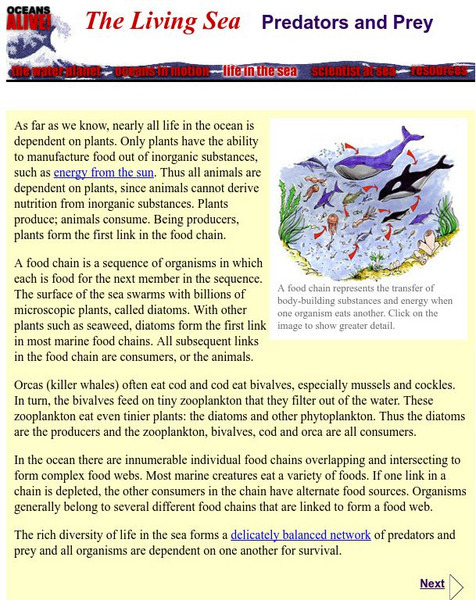
Museum of Science: The Living Sea: Predators and Prey
This Museum of Science page does an excellent job of explaining the importance of plants as producers in the sea. The food chain or food web has to start with the plants.

Sophia Learning
Sophia: Food Webs: Lesson 1
This lesson will explain how to create a food web to show transfer of energy within a community. It is 1 of 4 in the series titled "Food Webs."
CK-12 Foundation
Ck 12: Life Science: Consumers and Decomposers
[Free Registration/Login may be required to access all resource tools.] Producers make their own food through photosynthesis. But many organisms are not producers and cannot make their own food, but must get their energy from other...
CK-12 Foundation
Ck 12: Biology: Autotrophs and Heterotrophs
[Free Registration/Login may be required to access all resource tools.] Discusses how autotrophs and heterotrophs obtain energy.

ClassFlow
Class Flow: Animals: Food Chains, Characteristics, and Habitats Around the Worl
[Free Registration/Login Required] This flipchart is a great introduction to ways animals get food, characteristics of animals, habitats around the world. It contains pictures that will help students understand life cycles and where to...
The Wonder of Science
The Wonder of Science: 5 Ps3 1: Food Energy From the Sun
Work samples, phenomena, assessment templates, and videos that directly address standard 5-PS3-1: food energy from the sun.
CPALMS
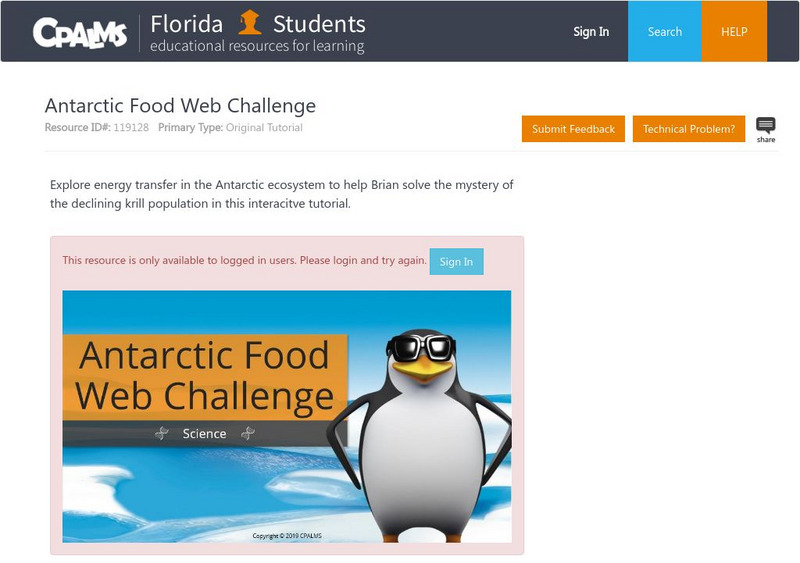
Florida State University Cpalms: Florida Students: Antarctic Food Web Challenge
Discover how energy flows as part of a food web. Identify the ultimate source of energy for organisms on Earth.
SMART Technologies
Smart: Energy Flow in an Ecosystem
Students learn about Abiotic and Biotic Factors and how they affect the ecosystem in which an animal might live in.
The Wonder of Science
The Wonder of Science: Ms Ls2 3: Matter Cycling and Energy Flow in Ecosystems
Work samples, phenomena, assessment templates, and videos that directly address standard MS-LS2-3: matter cycling and energy flow in ecosystems.
PBS
Pbs Teachers:yellowstone: Yellowstone Food Web
Investigate the interdependence of wildlife in the Yellowstone ecosystem and draw an ecosystem showing the interdependence of life forms.
CK-12 Foundation
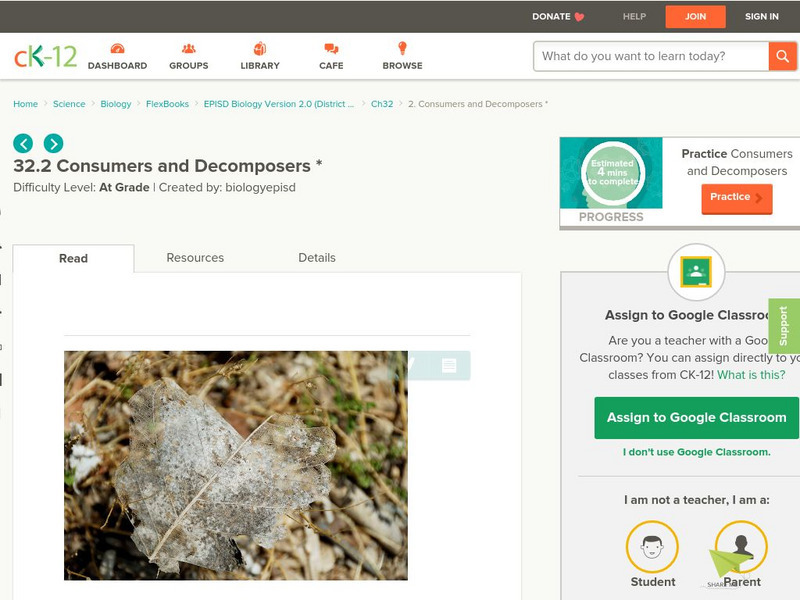
Ck 12: Episd: Consumers and Decomposers
[Free Registration/Login may be required to access all resource tools.] Based upon the way organisms acquire their energy students will understand how to group them as consumers, decomposers or producers.
Other
Segfl: Sebastian Swan: Pond Web
This interactive ebook "Pond Web" demonstrates a pond food chain. Students can click on the ? to find answers to questions posed in the text. Students are asked to retell the story using pictures provided at the end of the book.
Other
My Science Box: Food Webs
In this lesson, students will choose an organism of their choice and research its life cycle, food chain, diet, and habitat, then predict how habitat change might affect the organisms living within it.
Science Struck
Science Struck: Decomposers in the Ocean: Role and Examples
Describes five different types of decomposers that feed on decaying organic matter in the oceans and that are at the bottom of the ocean food chain.
TeachEngineering
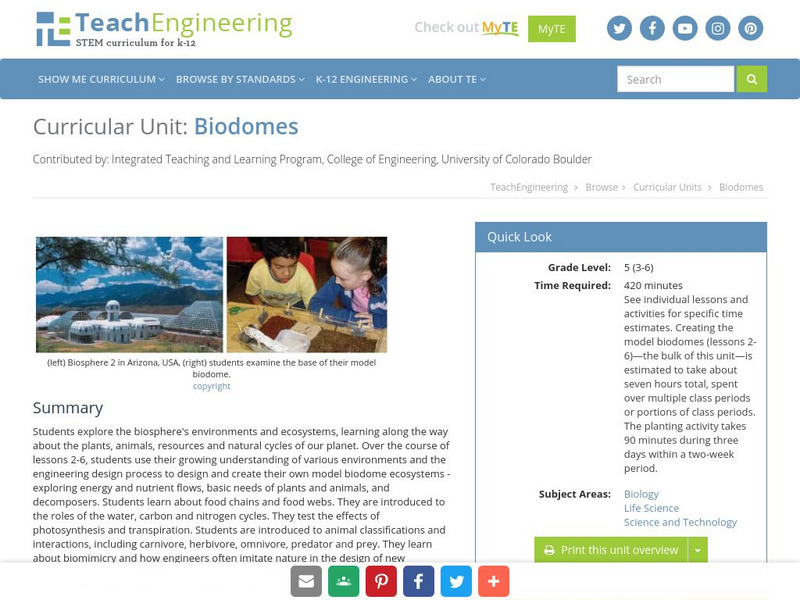
Teach Engineering: Biodomes
Students explore the biosphere's environments and ecosystems, learning along the way about the plants, animals, resources and natural cycles of our planet. Over the course of lessons 2-6, students use their growing understanding of...
CK-12 Foundation
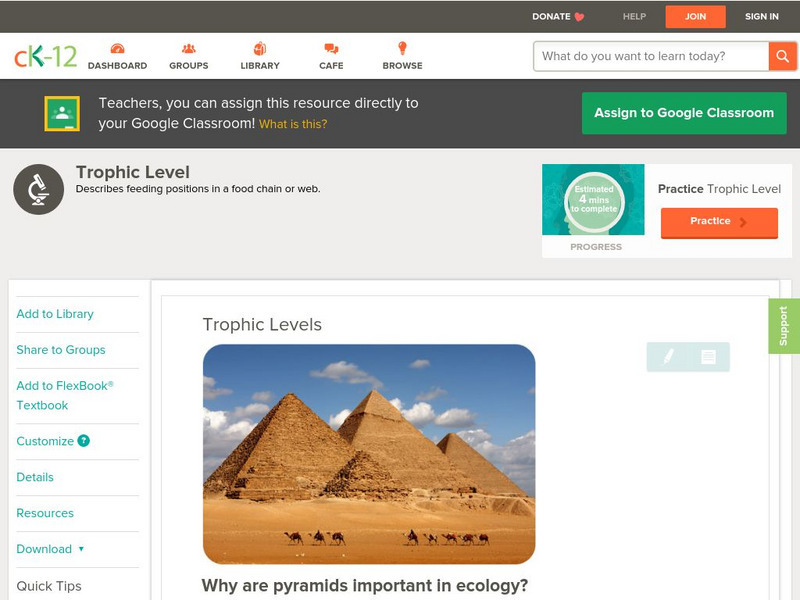
Ck 12: Biology: Trophic Levels
[Free Registration/Login may be required to access all resource tools.] Describes how to identify trophic levels in a food chain or food web.
Other
Marietta College: Biology: Energy Flow Through the Ecosystem
Read to understand how energy and inorganic nutrients flow through a food chain in an ecosystem.
Teachers TryScience
Teachers Try Science: Breathing Yeasties
See how combining yeast, sugar, and water can demonstrate the carbon cycle and show how microorganisms work in the food chain.
OpenStax
Open Stax: Energy Flow Through Ecosystems
Understand how organisms acquire energy and how that energy is passed from one organism to another through food webs and their constituent food chains.
CK-12 Foundation
Ck 12: Episd: Producers
[Free Registration/Login may be required to access all resource tools.] Students will recognize and understand the role of producers in the food chain within different ecosystems.

Open Curriculum
Open Curriculum: Flow of Energy in Ecosystems
Students will understand and describe food chains and food webs, and explain how energy is transferred between their trophic levels.

ClassFlow
Class Flow: What Animals Eat
[Free Registration/Login Required] To show the dependence of animals on the plant world, these flipchart pages contain examples of food chains and food webs, as well as other information about animals and habitats.