Hi, what do you want to do?






Curated Video
How Atomic Bombs Work—and Why Few Nations Have Them
At 5:30AM, dawn on July 16, 1945 near a small town called Alamagordo New Mexico, the course of human history was changed. The first atomic bomb was detonated that day, and sealed the fate of humanity....
One Minute History
051 Truman and the Atomic Bomb - One Minute History
The use of atomic weapons forced the Japanese to surrender. Many argue that the bombings were unnecessary, stating that more conventional methods may have been as effective. Casualty estimates for an invasion of mainland Japan were in...
One Minute History
President Truman and the Decision to Drop the Atomic Bomb - World War II - One Minute History
The history behind President Truman and his decision to use atomic weapons at the end of World War II
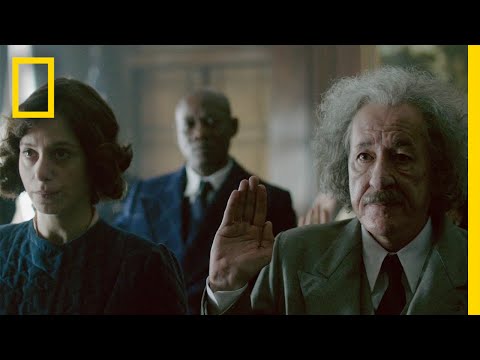
National Geographic
The Letter That Led to the Atomic Bomb | Genius
SciShow
What Really Happened the First Time We Split a Heavy Atom in Half
When scientists first split the atom, they didn’t realize what they’d done until physicist Lise Meitner figured out they had discovered what we now call nuclear fission.
Curated Video
How Nuclear Bombs Work: Atomic vs. Hydrogen Bombs Explained
Hydrogen bomb how does it work? The bomb on Hiroshima released the energy equivalent of 15,000 tons of TNT. The first hydrogen bomb released the energy equivalent of 10,000,000 tons of TNT.
While...
While...
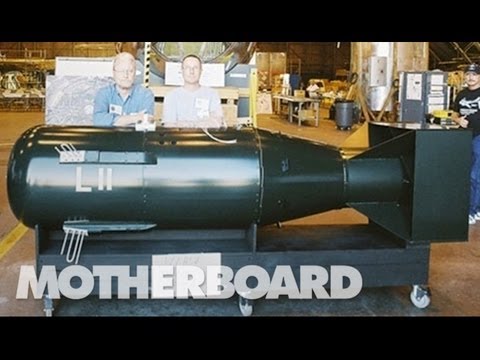
Curated Video
How a Truck Driver "Rebuilt" the Atomic Bomb
John Coster-Mullen is a truck-driver with minimal college education who taught himself how to build the most detailed replica of an A-bomb ever made. "The secret of the atomic bomb is how easy they are to make," admits Coster-Mullen....
Espresso Media
Garwin: Inside the Historic Site of Nuclear Weapon Assembly
Garwin part 4/11: This video provides a glimpse into the historical significance of Los Alamos, the site where the first atomic bomb was assembled during the Manhattan Project. The video also touches on the transition from the Manhattan...

Curated Video
This Is the Only Color Photo of the First Atomic Explosion
With more than 405,000 American casualties and Japan rejecting unconditional surrender, the United States begins testing the atomic bomb in New Mexico. This is some of the only footage recorded of these powerful tests. From: THE DAY THE...
Crash Course
World War II: Crash Course European History
Only a couple of decades after the end of the First World War--which was supposed to be the War that Ended All Wars--another, bigger, farther-flung, more destructive, and deadlier war began. Today, you'll learn about how the war in...
Debunked
How To Survive The First Hour Of A Nuclear Blast / Fallout! #SURVIVAL #MYTHS #
How To Survive The First Hour Of A Nuclear Blast / Fallout!
The situation has played out in TV and movies for years, but what should you really do if a nuke detonated near
you?
Will the fireball automatically obliterate...
The situation has played out in TV and movies for years, but what should you really do if a nuke detonated near
you?
Will the fireball automatically obliterate...
Veritasium
Why Apollo Astronauts Trained in Nuclear Bomb Craters
On July 20th, 1969, Neil Armstrong and Buzz Aldrin made history as the first humans to set foot on the Moon. Before their lunar journey, they trained at the Nevada Test Site, an area where the U.S. conducted 928 nuclear tests. This site,...
Curated Video
Inside the Making of Oppenheimer: The Legacy of the Little Boy and Fat Man
Little Boy And Fat Man are the nicknames given to the two weapons of mass destruction that devastated Hiroshima and Nagasaki, seem ridiculous when thinking about what they were capable of doing. Little Boy was the first nuclear bomb to...
Science ABC
Inside the Making of Oppenheimer: The Legacy of the Little Boy and Fat Man
Little Boy And Fat Man are the nicknames given to the two weapons of mass destruction that devastated Hiroshima and Nagasaki, seem ridiculous when thinking about what they were capable of doing. Little Boy was the first nuclear bomb to...
Espresso Media
Garwin: The History of Los Alamos
Garwin part 2/11: This video explores the history of Los Alamos and its role in the development of the atomic bomb during World War II. It highlights the isolation and secrecy of the Los Alamos Laboratory, as well as the experiences of...
Curated Video
Chien-Shiung Wu: The First Lady of Physics
We hear a lot about famous scientists like Marie Curie and Albert Einstein, but have you ever heard of Chien-Shiung Wu and her work on the Manhattan Project?
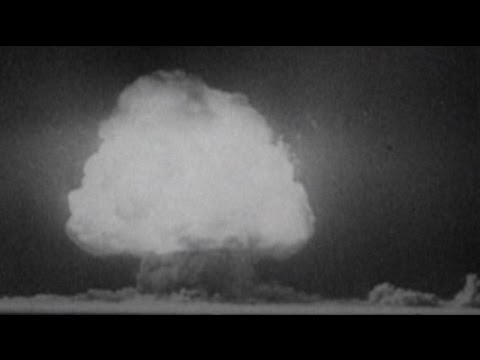
The Telegraph
Archive footage of Hiroshima bombing
The Boeing B29 Stratofortress bomber aircraft 'Enola Gay' dropped the first atomic weapon used in combat over the Japanese city of Hiroshima at 08:15 local time on 6 August 1945. Between 80,000 and 250,000 people perished in the attack...

AsapSCIENCE
What If We Have A Nuclear War?
What would happen if a nuclear weapon was dropped near you? How To Survive A Nuclear WarhSubscribe!://youtu.be/iONIkV0IHBOOKtarget='_blank' rel='nofollow'>War
Curated Video
How the World’s First Cyberweapon Destroyed Physical Objects!
It is thought that a person working at an Iranian nuclear facility inserted a malware-infected USB drive into a computer. This malware is called Stuxnet and was developed by the USA and Israel specifically to...
Encyclopaedia Britannica
This Week in History, October 12-18
Overview of the events of October 12-18. First Oktoberfest celebrated; Chilean miners rescued; first episode of I Love Lucy airs; China detonates its first atomic bomb; Puerto Rico turned over to the United States
Encyclopaedia Britannica
This Week in History, July 14-19
Overview of the events of July 14-19. A Paris mob storms the Bastille; the first atomic bomb is tested in New Mexico; Disneyland opens in Anaheim, California; first perfect gymnastics score in the history of the Olympic Games is awarded;...
Curated Video
The Nuclear Arms Race: From First Lightning to Limited Test Ban Treaty
This video provides an overview of the nuclear arms race between the United States and the Soviet Union following the end of World War II. It highlights key events such as the testing of atomic and hydrogen bombs by both superpowers, the...
Curated Video
Animation shows the deadly evolution of nuclear weapons
Be Smart
When Science Fiction Becomes Science Fact
Do Ray Bradbury, Arthur C. Clarke, Jules Verne, Philip K. Dick, Hugo Gernsback, Robert Heinlein, or Isaac Asimov hold a candle to H.G. Wells when it comes to correctly predicting the future of science via science fiction? And why does...