Hi, what do you want to do?






Khan Academy
Khan Academy: Us History: 1945 1980: Liberation Movements of the 1970s
Learn about the emergence of the American Indian Movement, the gay rights movement, and second-wave feminism.
Other
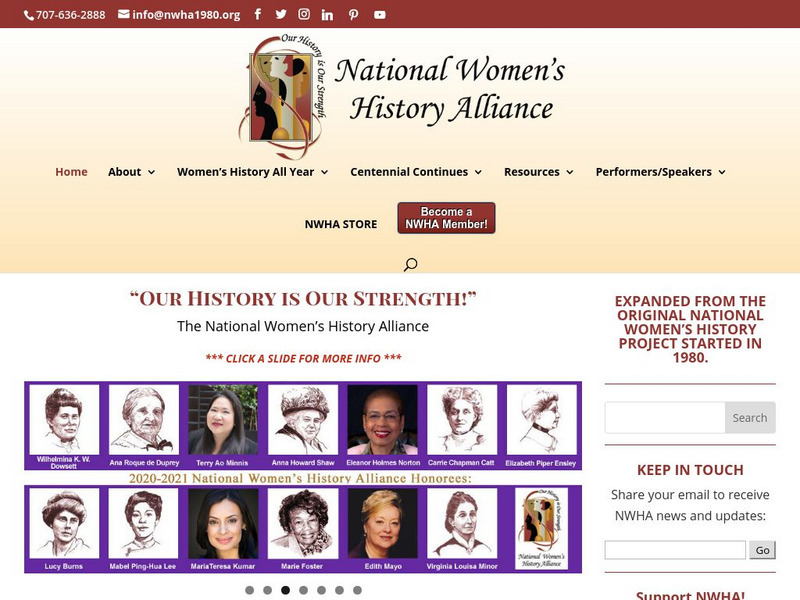
Living the Legacy: The Women's Rights Movement
The homepage of the National Women's History Project, this site includes links to suffrage history, timeline, a chat room, and student projects. Also information about the 150th anniversary of the Seneca Falls convention and national...
NBC
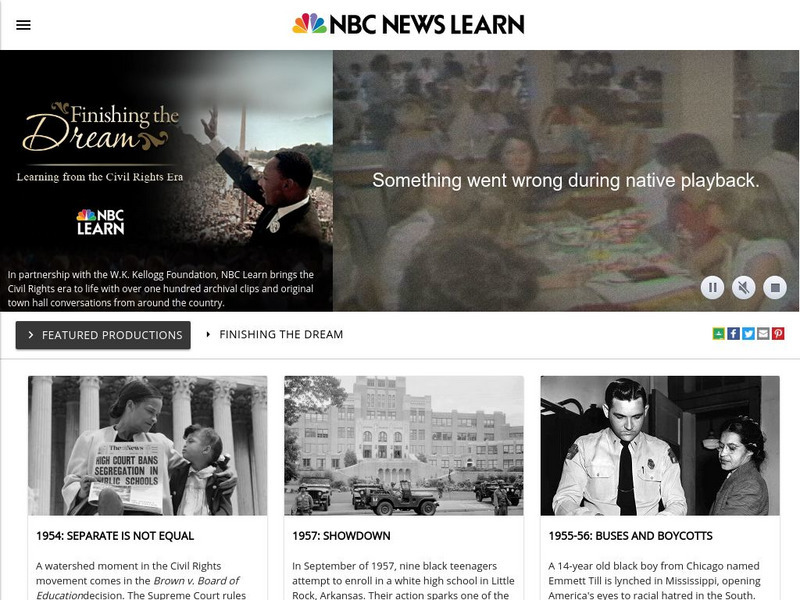
Nbc Learn: Finishing the Dream
A collection of over one hundred archival video clips highlighting significant events in the history of the Civil Rights Movement since the Brown v. Board of Education Supreme Court decision in 1954. There are ten collections covering...

PBS
The March on Washington and Its Impact : Lesson Plan
Learn about the social conditions in the United States that led up to the Civil Rights Movement. Also, explore peaceful resistance and the immediate impact of the march.
Other
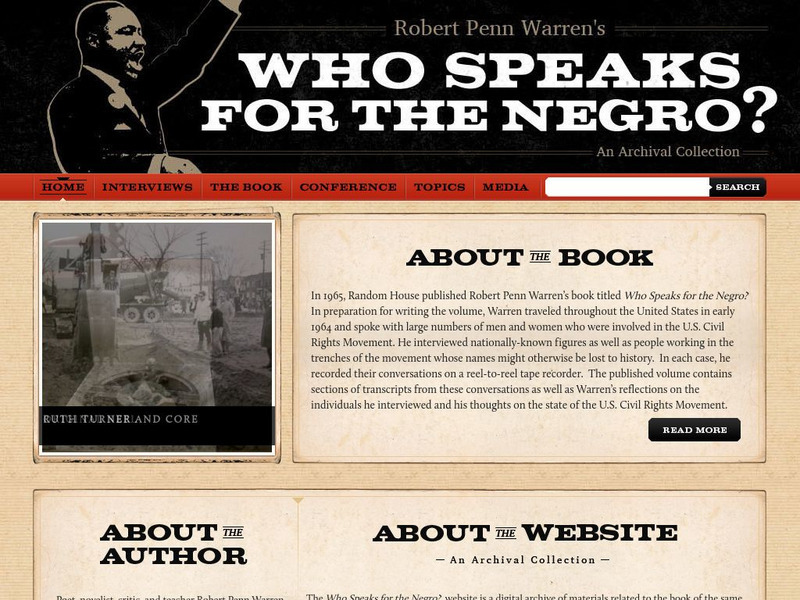
Vanderbilt University: Heard Library: R. P. Warren: Who Speaks for the Negro?
An extensive archival collection of material that formed the core of Who Speaks for the Negro?, a book Robert Penn Warren published in 1965 of his interviews with prominent African American writers and activists whose ideas were critical...
US National Archives
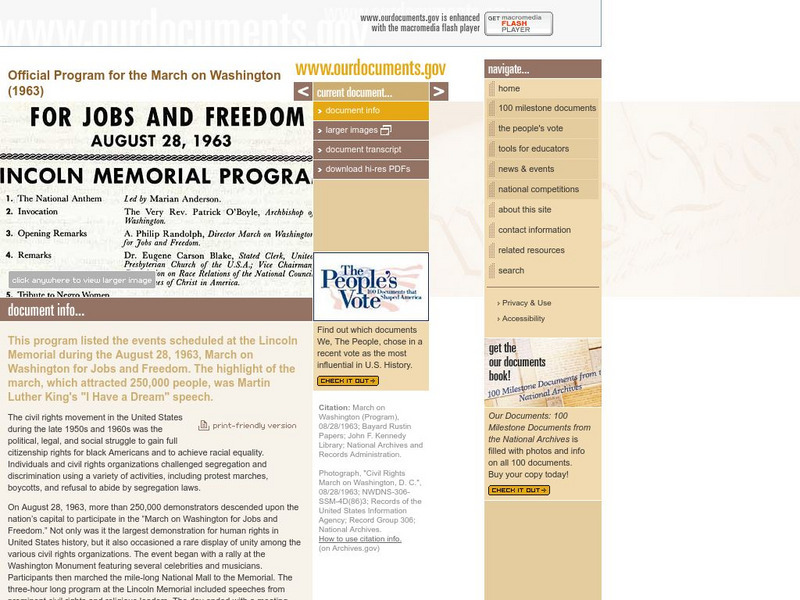
Our Documents: Official Program for March on Washington(1963)
Contains a copy of the original program for the March on Washington that featured Martin Luther King. Provides a summary of the civil rights movement at that time.
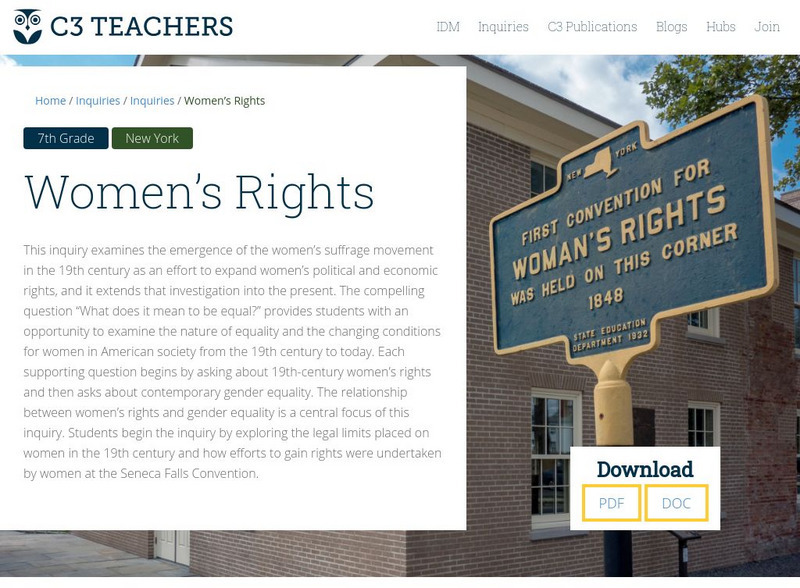
C3 Teachers
C3 Teachers: Inquiries: Women's Rights
A comprehensive learning module on women's rights that includes three supporting questions accompanied by formative tasks and primary source materials, followed by a summative performance task. Topics covered include the women's suffrage...

Other
Aclu: Women's Rights
This resource contains a summary of the role of the ACLU in gaining women's rights in a variety of areas. Informative timeline is available.
Texas State Historical Association
Texas State Historical Association: Civil Rights
An overview of the state and progress of civil rights in the state of Texas since its emancipation from slavery in 1865.
Made From Media
Made From History: State by State History of 20th Century American Civil Rights
This interactive United States Map allows students to see how slavery split the country into two sides, but the Civil War did not resolve their differences. Each state featured is assigned a short quote, story, or fact that illuminates...
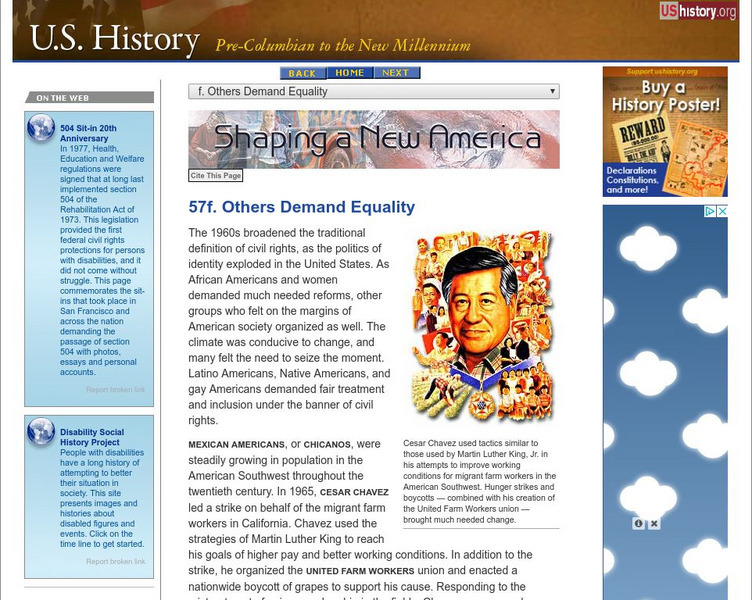
Independence Hall Association
U.s. History: Others Demand Equality
Many other groups learned how to push for their civil rights from African Americans' civil rights movement. Read about the Mexican Americans, Native Americans, and gays as they worked to achieve equal treatment under the law.

Encyclopedia Britannica
Encyclopedia Britannica: Britannica Kids: Women Who Changed the World: Women's Movement
Encyclopedia Britannica provides an overview of the women's movement, which sought equality for women and the changing of a male-dominated power structure.
Other
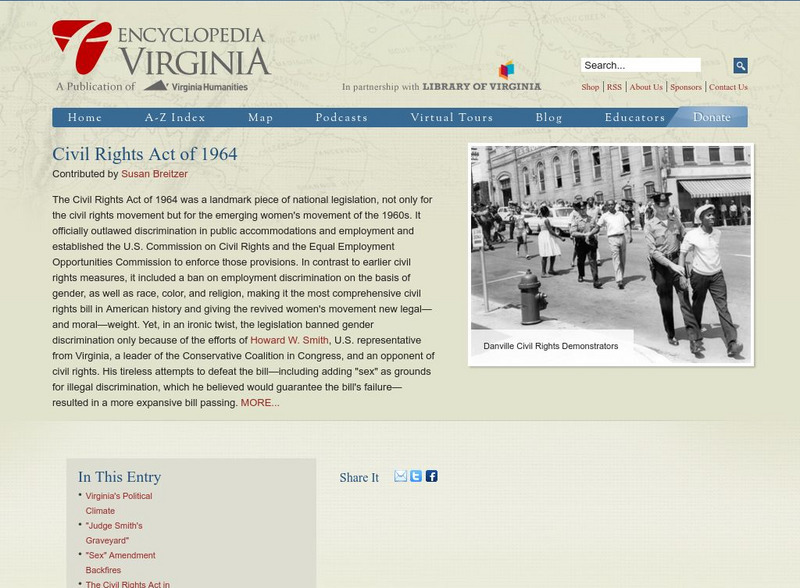
Encyclopedia Virginia: Civil Rights Act of 1964
A detailed look at the Civil Rights Act of 1964, paying particular attention to how Virginia Representative Howard W. Smith added an amendment intended to kill the act by making it cover gender discrimination as well as racial. Read...
Virginia Commonwealth University
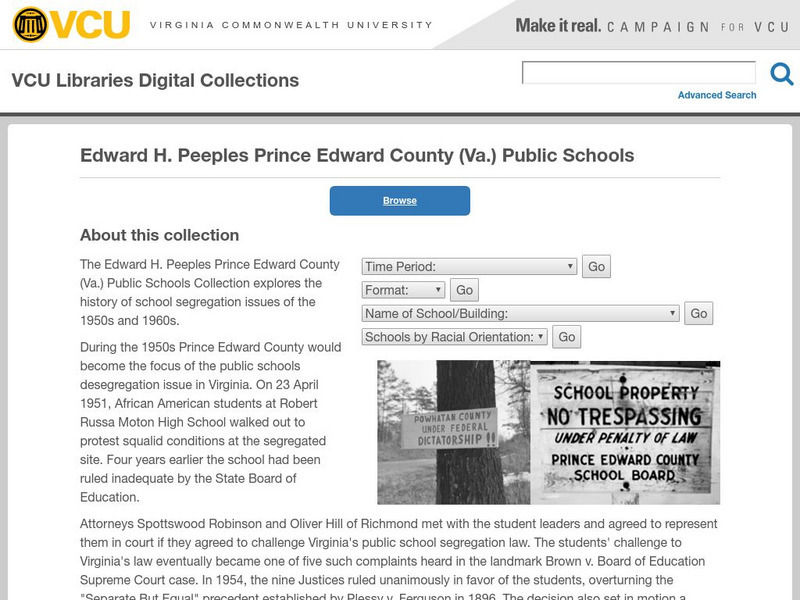
Virginia Commonwealth University: Separate but Not Equal
Telling pictures of elementary schools for Blacks and Whites during the 50s and 60s. Discusses the situation in Prince Edward County that led to the Davis v. County School Board of Prince Edward County court case.
PBS
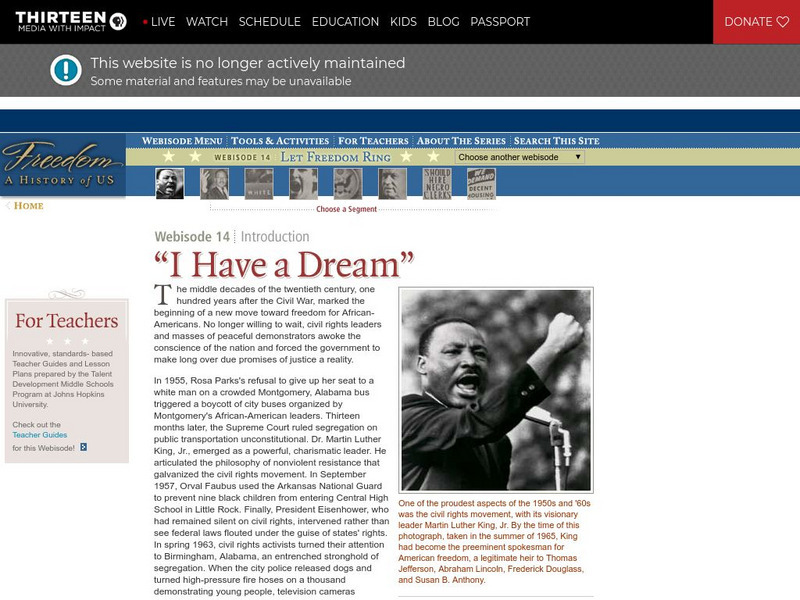
Wnet: Thirteen: Freedom: A History of Us: Webisode 14: Let Freedom Ring
Series episode covers the civil rights movement and the struggle for equality in post-World War II America.
Annenberg Foundation
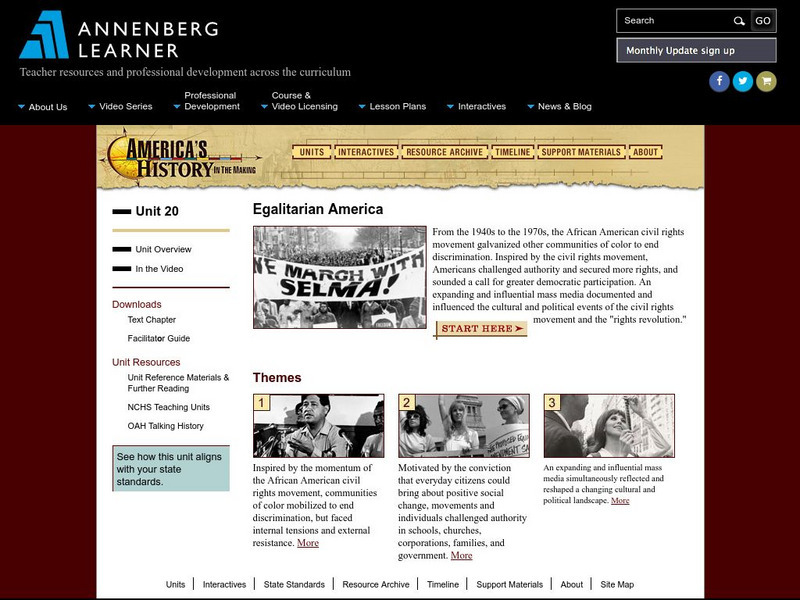
Annenberg Learner: America's History in the Making: Egalitarian America
Comprehensive teaching unit on egalitarian America: Americans that demanded political, social, and economic equality in all walks of life. Learn how the civil rights movement and an expanding mass media helped to reshape a changing...
University of Groningen
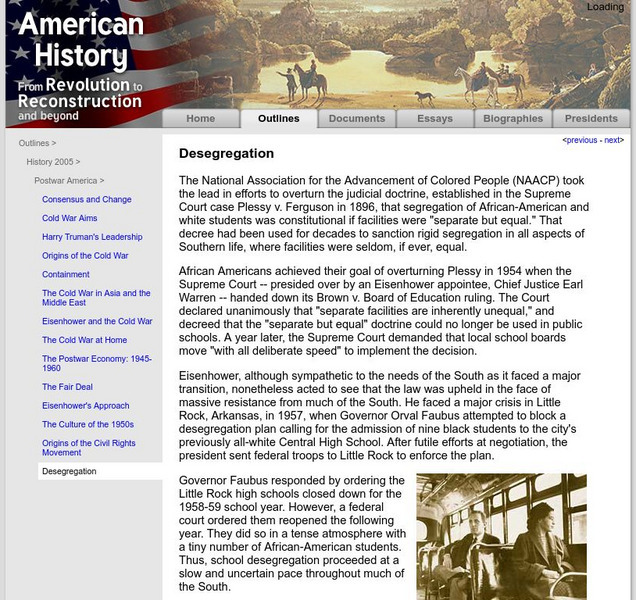
American History: Outlines: Desegregation
Overview of efforts to overthrow Plessy v Ferguson and desegregate public schools and other places during the Civil Rights Movement.

A&E Television
History.com: Greensboro Sit Ins
The Greensboro Sit-In was a critical turning point in Black history and American history, bringing the fight for civil rights to the national stage. Its use of nonviolence inspired the Freedom Riders and others to take up the cause of...
Stanford University
Mlk and Global Freedom Struggle: Congress of Racial Equality
Encyclopedia entry explores the involvement of the Congress of Racial Equality (CORE) in America's civil rights struggle throughout the late 1950s and into the mid-1960s.
Texas State Library and Archives Commission
Texas State Library and Archives Commission: Texas Joins the Battle: A Haunting Question
Suffragists in Texas attempted to have their voice heard. However, the issue of race often tore these women apart, and ultimately ended the Texas Equal Rights Association in 1896. Explore the words and strategies of this period's...

National Endowment for the Humanities
Neh: Edsit Ement: Women's Equality: Changing Attitudes and Beliefs
In this lesson plan, students will consider "Women's Equality: Changing Attitudes and Beliefs." The plan includes worksheets and other student materials that can be found under the resource tab.

Wikimedia
Wikipedia: Susan B. Anthony
A detailed look at the life of Susan B. Anthony. Highlights her accomplishments as well as her involvement with the women's rights movement.
National Women’s History Museum
National Women's History Museum: Betty Friedan
Journalist, activist, and co-founder of the National Organization for Women, Betty Friedan was one of the early leaders of the women's rights movement of the 1960s and 70s.
Khan Academy
Khan Academy: Sncc and Core
Read about the Congress for Racial Equality (CORE) and the Student Nonviolent Coordinating Committee (SNCC), two groups that played pivotal roles in organizing nonviolent protests during the Civil Rights Movement of the 1950s and 1960s.